


Exploring the Speed of Entanglement: Beyond the Speed of Light

A dew drop on a daisy reflects the world — just as entanglement reflects distant realities, instantly.
Exploring the Speed of Entanglement: Beyond the Speed of Light
When we think of speed, the speed of light often stands as the cosmic ceiling — a boundary in space, time, and even imagination.
But quantum entanglement breaks that mold. Einstein called it “spooky action at a distance.” Today, we might call it something more poetic: connection without movement. A field that bypasses the idea of speed itself.
“If light is the messenger, entanglement is the message already received.”
💡 Reflective Prompt
What if connection didn’t require motion at all? Could you already be entangled with every thought, person, and possibility — before the signal even starts?
Rethinking Speed, Space, and Connection
In the classical view of physics, speed is a function of how fast something moves from one place to another. And the fastest known speed — the speed of light — still obeys time and distance.
But quantum entanglement invites a different story. A story where connection doesn’t travel — it is. Two particles mirror one another without exchanging signals, and without regard for space. This isn’t about velocity — it’s about resonant coherence across a timeless field.
“The fastest journey is no journey at all — just presence, remembered.”
🔁 Concept Shift
- Classical: Speed = Distance ÷ Time
- Quantum: Entanglement = Zero Distance × Infinite Awareness
- Classical View: Connection must be sent
- Quantum Reality: Connection already exists
What Einstein Got Right — and What He Found “Spooky”
Einstein’s brilliance changed the way we understand time, space, and motion. His theory of relativity placed the speed of light at the heart of physics — a cosmic speed limit for how fast information or matter can move.
But quantum entanglement didn’t sit easily in Einstein’s equations. When confronted with it, he famously called it “spooky action at a distance.” Why spooky? Because it suggested that two particles, once connected, could instantly influence one another — even if separated by galaxies.
In Einstein’s world, this made no sense. There was no signal, no delay, no mechanism. But in the quantum world, this isn’t a bug — it’s the feature. Entanglement doesn’t need to send anything. It simply reflects what already is.
“To the photon, space is a journey. To the qubit, space is just memory.”
🧬 Einstein’s Elegant Paradox
- Relativity: Time and space are fluid, but governed by light speed
- Entanglement: No time delay, no signal, no “between”
- Einstein’s view: It must be incomplete
- Modern view: It may be more complete than anything else
Defining the Speed of Entanglement — If It Isn’t Speed at All
In 2013, physicists tested quantum entanglement and found that if it has a speed at all, it’s at least 10,000 times faster than light. Some now believe it’s not speed in the traditional sense — but simultaneity. What happens to one particle happens to the other at once.
Entangled particles don’t exchange messages. They share identity. No travel. No delay. Like two mirrors positioned across space, they reflect one another in perfect symmetry — because in the quantum world, distance is illusion.
Synchrony, Not Signal
The “speed” of entanglement might be better understood as coherence — two things being part of one whole, responding not through movement, but through memory. The universe doesn’t need to send the message. The message is already embedded in the field.
“Entanglement doesn’t arrive. It’s already there.”
🌀 Rethinking Speed
- Light Speed: Movement across space over time
- Entanglement: No movement — just simultaneous change
- Photon: Sends a signal
- Qubit: Reflects a state
Nature’s Clues: Entanglement Reflected in the Living World
Entanglement may seem like an abstract quantum phenomenon, but nature remembers it everywhere. From root systems to migratory paths, life exhibits a coherence that echoes quantum unity. Forests share nutrients and warnings beneath the soil. Coral reefs pulse in synchrony. Fireflies blink as one.
These connections don’t rely on speed — they operate in rhythm. When birds turn mid-flight or trees synchronize their fall seed release, they’re not reacting individually. They’re expressing a collective awareness: a resonance that defies distance and delay.
The Pattern Beneath the Pattern
In nature, timing is rarely random. Whether it's a flower opening at dawn or an entire forest entering a mast year, there's an underlying harmony. This pattern suggests a field-based intelligence — a quantum web pulsing through soil, sky, and soul.

“Nature doesn’t signal. It synchronizes.”
🌎 Entanglement in the Wild
- Mycelial root networks under forests share resources in real time
- Migration patterns suggest guidance beyond environmental cues
- Flocks, schools, and herds move in seamless harmony
- Flowers open and close with photonic memory, not timers
Entanglement as a Metaphor for Human Connection
Entanglement isn’t just a particle phenomenon — it’s something we feel. The moment you think of someone, and they reach out. The sense of grief before the news arrives. The joy of connection that happens without words. These are not accidents. They are resonant events in a field we all share.
The hydrogen qubit doesn’t send a message — it remembers another particle’s state. In the same way, we don’t always communicate through language. Sometimes, it’s presence. Sometimes, it’s just knowing. Our relationships may be entangled — not metaphorically, but functionally.
Real-Life Entanglement: You Already Know It
Have you ever called someone just as they were about to call you? Or sensed someone across a room before seeing them? That’s not just intuition — it may be coherence. Connection without delay. Presence before proof.

“Some relationships aren’t maintained — they’re remembered by the field.”
💞 Everyday Entanglement
- Thinking of someone moments before they contact you
- Feeling another’s emotions without words
- Knowing who’s calling before you check your phone
- Suddenly recalling a person and finding out they were just thinking of you
Final Reflections: Slowing Down to the Speed of Presence
We set out chasing speed — only to discover something stiller. The universe is not asking us to accelerate. It’s inviting us to remember that the deepest connections don’t travel. They resonate. They echo. They arrive before we do.
Entanglement is not about distance. It’s about presence. And in a world that moves faster every day, it’s the ones who slow down who begin to feel the field. Who begin to sense that they are already woven into everything they seek.
The Quantum Path is a Return
You don’t have to go far to arrive. You don’t need a spaceship to reach the stars. The hydrogen qubit lives inside every breath, every still moment, every open thought. When you are fully present, you are already there.
“The fastest way to connect is to be still enough to feel what never left.”

🌀 Let This Land
The photon moves fast. The qubit never moves — yet touches everything.
In a world obsessed with velocity, choose resonance.
🔭 Read More Quantum Essays ✍️ Read the Poem: “The Road Beyond Light”
Naturepedia Connections
This article connects quantum entanglement, coherence, and hydrogen-based patterning to the broader Naturepedia system—linking field observation, ecological synchrony, biological timing, and the recurring relationships that appear across living systems.
About the Author
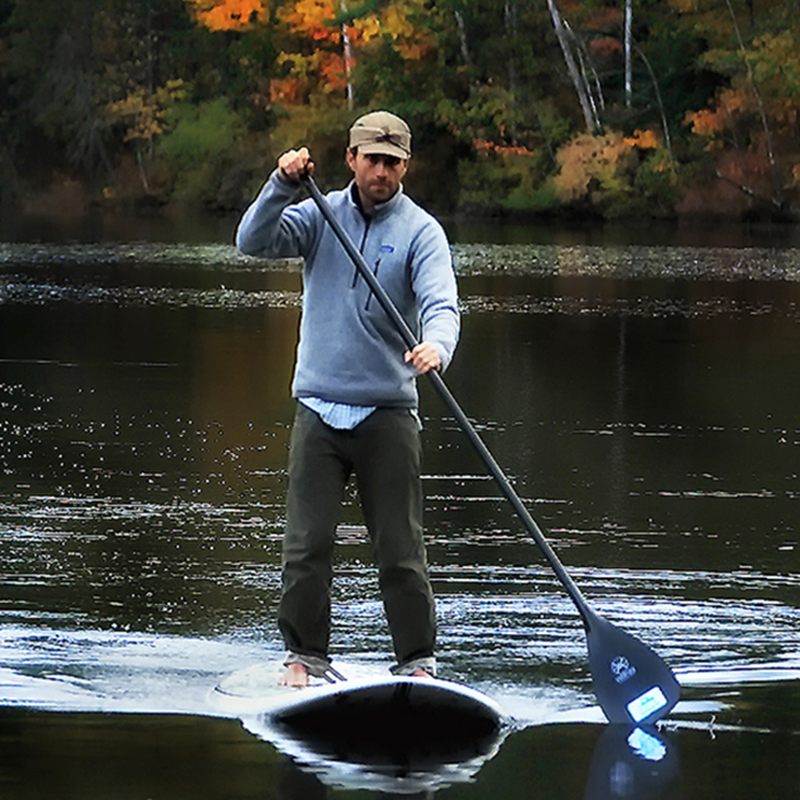
Robbie George is a National Geographic–published nature photographer, writer, and field-based observer whose work follows patterns of synchrony, light, and relationship across both the visible world and deeper explanatory systems.
This article explores entanglement through that same lens. Rather than treating connection as an abstract concept alone, it follows how coherence, timing, and shared pattern appear across landscapes, ecosystems, and lived experience.
Through this approach, photography becomes a way of observing relationship itself—connecting field observation, Naturepedia, quantum essays, and the broader authored framework into one continuous knowledge system.
FAQs: Entanglement, Speed & Presence
1. Is quantum entanglement faster than light?
Entanglement appears to act instantaneously, but it is not usually described as ordinary motion through space. Instead, it is better understood as a shared quantum state or synchrony between particles rather than a signal traveling faster than light.
2. What did Einstein mean by “spooky action at a distance”?
Einstein used that phrase to describe quantum entanglement because it challenged the idea that information or influence must travel locally through space. He found it unsettling that two particles could remain correlated across distance without a visible mechanism.
3. What is the difference between a photon and a qubit?
A photon is a particle of light that moves through space and carries electromagnetic energy. A qubit is a unit of quantum information that can exist in superposition and become entangled with other quantum states.
4. How does this article connect entanglement to nature?
This article uses entanglement as a framework for thinking about synchrony in the natural world—patterns like forest communication, migration timing, flocking behavior, and ecological coordination that suggest deep interconnectedness across living systems.
5. Are hydrogen qubits and human thought proven science?
No. In this article, hydrogen qubits and thought-based entanglement are presented as exploratory ideas and conceptual frameworks rather than established scientific conclusions. They are used to ask whether connection, coherence, and awareness may operate in deeper ways than we currently understand.
6. What is the main takeaway from this post?
The central idea is that entanglement challenges ordinary assumptions about distance, speed, and separation. The post uses that insight to explore a broader theme: that connection in nature, perception, and human experience may be deeper and more immediate than it first appears.





