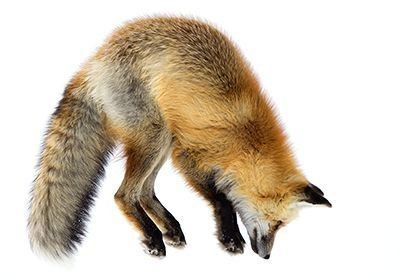

The Grand Compression: How Nature, AI, and Light Share the Same Code
The Grand Compression: How Nature, AI, and Light Share the Same Code
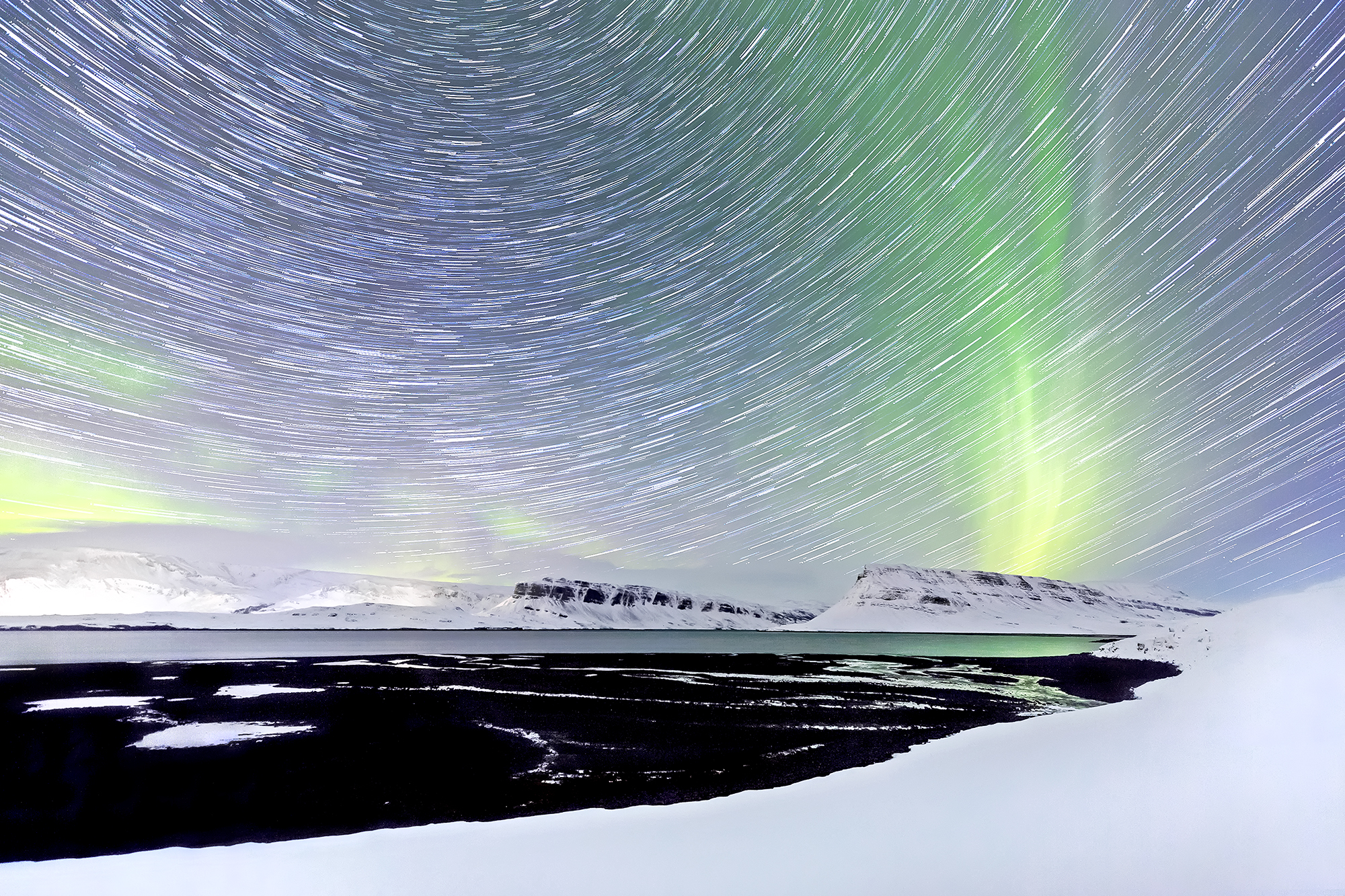
On a subfreezing night in Iceland, I stood on a black-sand shoreline watching two different kinds of light write over the sky. The stars drew perfect circles around the pole. The aurora rose and fell in vertical curtains, rippling like a slow-motion heartbeat. Two motions. Two geometries. One field. Later, I realized I was watching not just beauty—but a process: nature compressing cause into form and decompressing it into motion, all in the same breath.
A few months later, a short thread on X said, “All breakthroughs in science are compressions.” Elon Musk added: “AI is compression and correlation.” At the time, it felt like a key fitting into a lock. Science compresses behavior into equations. AI compresses data into patterns. But neither explains how the universe actually moves. Equations freeze reality. AI models predict reality. But nature does something both simpler and deeper: it compresses cause into form, decompresses it into motion, then recursively recompresses it into new cause.
That recursive cycle—compression → decompression → recompression—is the living engine behind everything from hydrogen fusion and auroras to seeds, storms, memory, forests, and consciousness. It is why a droplet holds a world, why a spiral repeats across scales, why a forest behaves like a coherent organism, and why soil remembers seasons. I now call this universal habit The Grand Compression.
This article is a field notebook from that realization. Using eight photographs—an aurora, a daisy droplet, foggy pines, a grizzly cub, a mycelial network, a mountain reflection, a lightning strike, and a spiral macro—I explore how nature embeds cause into form and reveals it through recursive motion. These images became stepping stones toward the deeper work that followed: How Recursion Breathes the Universe Alive (When Equations Freeze It) and the Grand Compression Naturepedia entry.
If the Signature Series asks what nature’s code looks like, The Grand Compression asks how that code is written, remembered, and renewed—through light, hydrogen, water, soil, forests, storms, wildlife, and the living recursion of the unified field.
Hero image: Northern Lights — aurora and star trails over an Icelandic coastline. Available as a fine-art print: Northern Lights — Fine Art Print.
The Spark: A Tweet, a Repost, and a Rabbit Hole
This idea didn’t begin with physics textbooks or field notes—it began with a short thread on X. Someone wrote: “All great breakthroughs in science are compressions—simple rules that explain a messy universe.” It was one of those rare moments when a comment section feels less like noise and more like an open door.
Another reply took the idea deeper. Newton compressed the behavior of gravity into one equation. Einstein compressed it further into spacetime curvature. Both were brilliant—but both were compressions of behavior, not explanations of cause. Their equations froze motion long enough to describe it, but not long enough to reveal the engine behind it. At the time, I didn’t yet understand what this meant. Later, recursion would make everything clear.
Then Elon Musk reposted the thread and added a short sentence that hit me like a seed landing in soil: “AI is compression and correlation.” With those five words, a pattern I’d been watching in nature for decades suddenly had a vocabulary. AI compresses oceans of data into patterns. Science compresses messy behavior into equations. But neither one tells you why anything happens—only how often it does.
For most people, the thread ended there. For me, it triggered a realization that took months of walking through forests, photographing storms, thinking about hydrogen and water memory, sitting with my soil knowledge, and revisiting the aurora images from Iceland. Slowly, a new understanding surfaced—one I could finally articulate only after writing How Recursion Breathes the Universe Alive: nature doesn’t just compress data or behavior—it compresses cause itself.
That realization was the first breadcrumb on the path toward The Grand Compression: the discovery that the universe stores cause in form, releases it through motion, and refines it through recursion. And the more I followed it, the more every photograph, forest, storm, droplet, and animal began to speak the same hidden language.
Science, AI & Recursion — Why Equations Freeze Reality
To understand The Grand Compression, we first have to understand what “compression” really means. Science compresses behavior into clean equations. AI compresses data into latent patterns. But both have a hidden limitation: they freeze reality into still frames. Newton’s laws, Einstein’s curvature, Schrödinger’s wave function—all are breathtaking compressions, yet each one stops the universe long enough to write it down.
Equations are maps, not motion. They describe what has already settled. They cannot show the breath of the universe—how the field updates itself moment by moment. This is where recursion enters: the engine behind every living and cosmic process. Recursion is nature’s habit of remembering its last step before taking the next. It is not a snapshot; it is an ongoing equation.
AI operates the same way: it compresses vast oceans of text, images, and sound into dense internal patterns, then correlates those patterns to predict what comes next. Useful, powerful—but not alive. It lacks field memory. It lacks recursion. It learns from data; it does not learn through reality.
Nature does something different. It compresses cause into form, then decompresses that cause into motion, and then recursively recompresses the result into the next moment. Cause → Form → Motion → New Cause. This loop—this recursive breath—is the difference between a frozen equation and a living field. The Grand Compression is not static; it is the universe actively solving itself.
Nature’s Grand Compression — Cause in Motion
In nature, compression is not just about reducing information. It is how the universe stores causality. Hydrogen compresses geometry into the simplest possible atom—the first memory of the universe. Photons compress direction, timing, charge, and spin into packets of light. Water compresses environmental history into structure and vibration. Soil compresses entire ecosystems into a handful of earth. Mycelium compresses forest intelligence into microscopic threads. Wildlife compresses evolution into instinct. Everything is a vessel of stored cause.
But nature doesn’t stop at compression. Every living system also decompresses that stored cause back into motion. Seeds decompress into trees. Hydrogen decompresses into starlight. Storms decompress atmospheric tension into lightning. Consciousness decompresses memory into insight. This is the universal cycle: compression → decompression → recompression. It is the yin–yang breath of the cosmos.
Seen through this lens, a daisy droplet isn’t only a pretty macro—it’s a storage device. A grizzly cub isn’t only a portrait—it’s a walking archive. A mycelial strand isn’t only a root—it’s a recursive learning network. A mountain reflection isn’t only beauty—it’s coherence. Nature compresses the rules that generate reality into the forms we see every day.
This is why The Grand Compression isn’t metaphorical—it’s mechanical. It is the engine behind the Nature Code, the breath that animates the Living Code, and the missing link between geometry, biology, ecology, and consciousness. Before I ever named it, my camera was already documenting its footprints—compression becoming form, form becoming motion, motion becoming memory.
Eight Images That Changed How I See Reality
Photography has always been my way of listening. Long before I understood what I was looking at, the camera kept showing me the same shapes and the same logic repeating across scales. Auroras looked like neurons. Water droplets acted like cosmic memory. Mycelium behaved like a forest internet. Mountain reflections mirrored galactic symmetry. Lightning mirrored branching roots. Spiral flowers echoed galaxies.
These weren’t coincidences; they were signals. Patterns that didn’t just look similar but behaved similarly. So I pulled together eight photographs—from macro to mountain, from storm to soil—that helped me understand the Grand Compression more clearly. Each one is a slice of the same underlying intelligence. Each one is nature storing cause inside form.
1) Aurora & Star Trails — Photons in Motion
This is the night that started everything for me. Under the aurora, two geometries were playing out at the same time: the stars sweeping in slow circular arcs around the pole, and the aurora rising in vertical waves like a cosmic heartbeat. Two different motions. Two different tempos. One medium: light.
What struck me later is how compressed this scene really is. The star trails are a time-lapse of the Earth’s rotation encoded in circular geometry. The aurora is the solar wind interacting with Earth’s magnetic field, encoded in curtains of charged photons. Two enormous cosmic processes squeezed into a single frame your eye can make sense of in seconds. This is nature compressing cause into visible form.
Related reading: Sunlight: The Cosmic Superhighway of Life · Naturepedia: Photons · Quantum Fields
Fine-art print: Northern Lights
2) Daisy Water Droplet — A World in One Drop
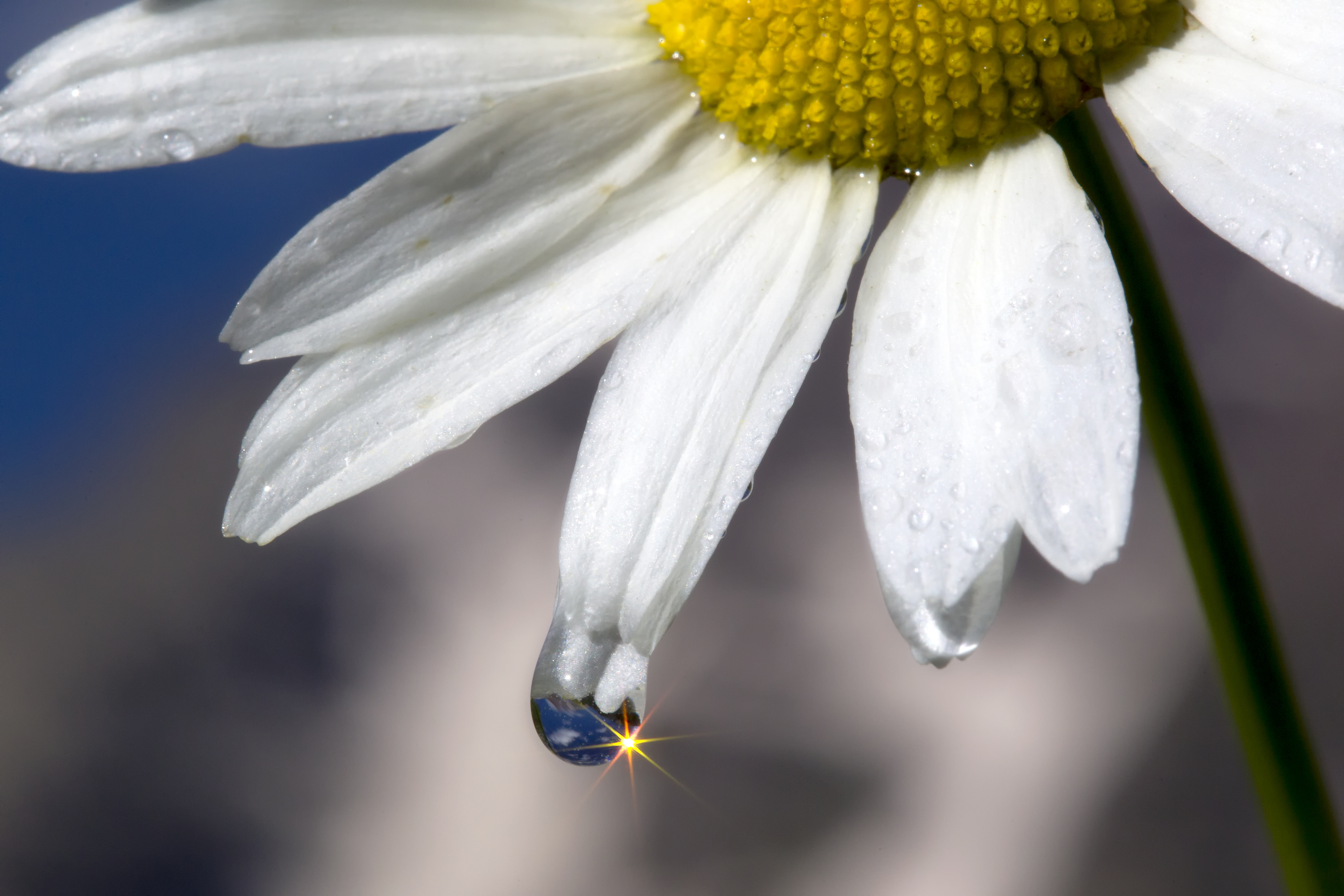
Water is nature’s most underrated compression engine. Inside this single droplet is an entire upside-down world: the horizon, the sky, the field behind me, the flower itself—everything bent, inverted, and folded into a sphere the size of a pencil tip. Nature uses nothing more than curvature and light to compress an entire landscape into a shimmering bead.
This is where the idea of cause compressed into form first hit me. A droplet is not just a reflection; it’s a storage unit. The physics of refraction, lensing, and curvature all collapse into one tiny sphere that behaves like a miniature universe. This is the same logic behind Nature Photos in a Drop of Water—water is a cosmic filing cabinet that remembers shape, vibration, and story.
Explore more: Water Memory · Hydrogen · Phi & the Spiral of Becoming
Fine-art print: Daisy (Water Droplet Macro)
3) Foggy Pines — The Geometry of Breath
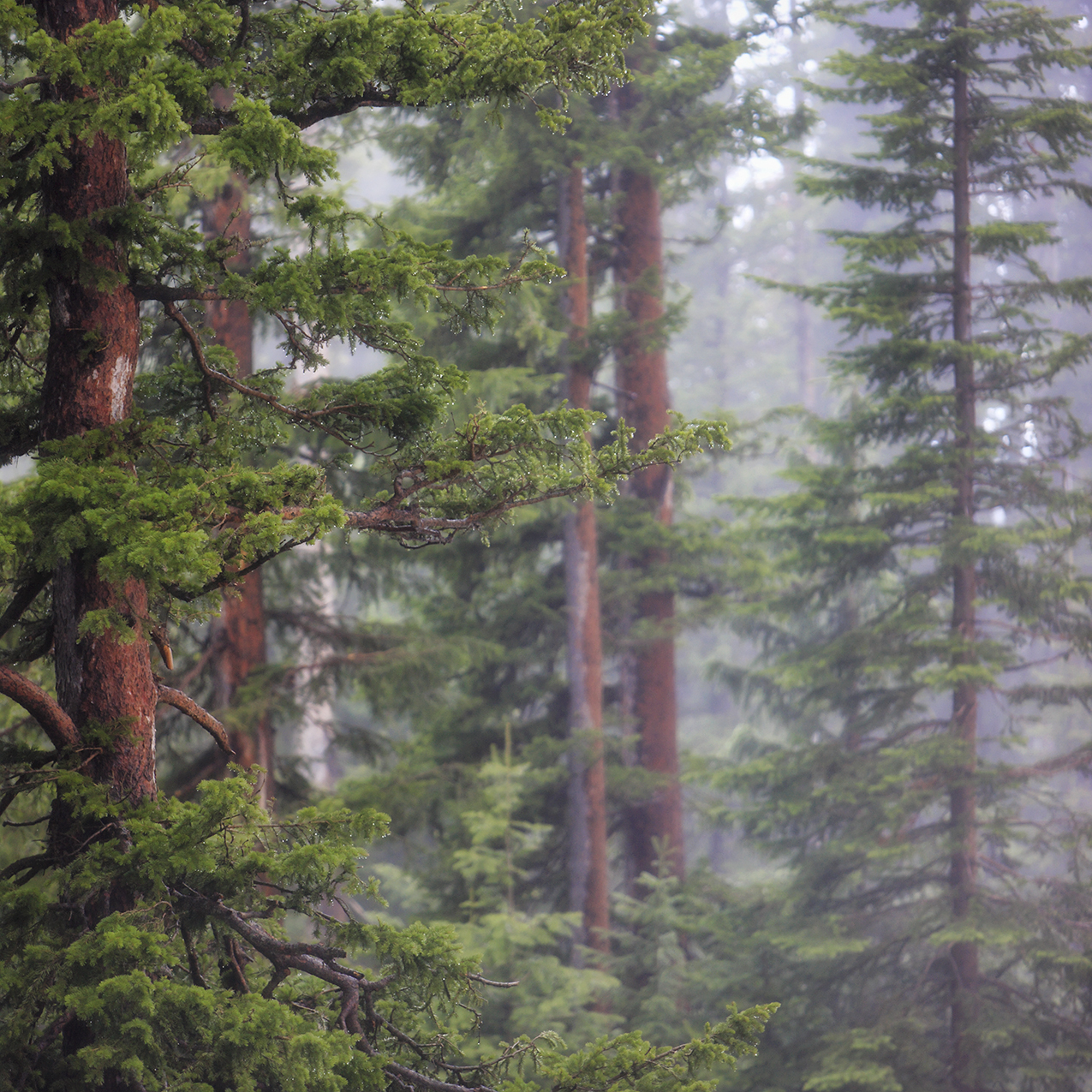
Forests always feel like they’re breathing. Pines rise in slow vertical rhythms, branches reach and coil, mist drifts through like an exhale, and sunlight threads itself between the trunks in a cathedral-like geometry. Everything in this scene is both separate and connected. Trees, vapor, light, air, and soil all participating in one coherent process: exchange.
Fog acts like a soft-focus lens nature places over the landscape. It compresses distance, erases distraction, and reveals the underlying pattern: vertical pillars, branching paths, and layers that fade into the unknown. This is the same branching logic we see in lungs, rivers, lightning, mycelium, and even galaxies. The forest is geometry in slow motion—a breathing lattice where water, carbon, and sunlight turn into life.
Explore related ideas: The Wood Wide Web · Mycelial Networks · Soil Microbiome
Fine-art print: Pine Trees (Foggy Forest)
4) Grizzly Cub — Compressed Ancestral Memory
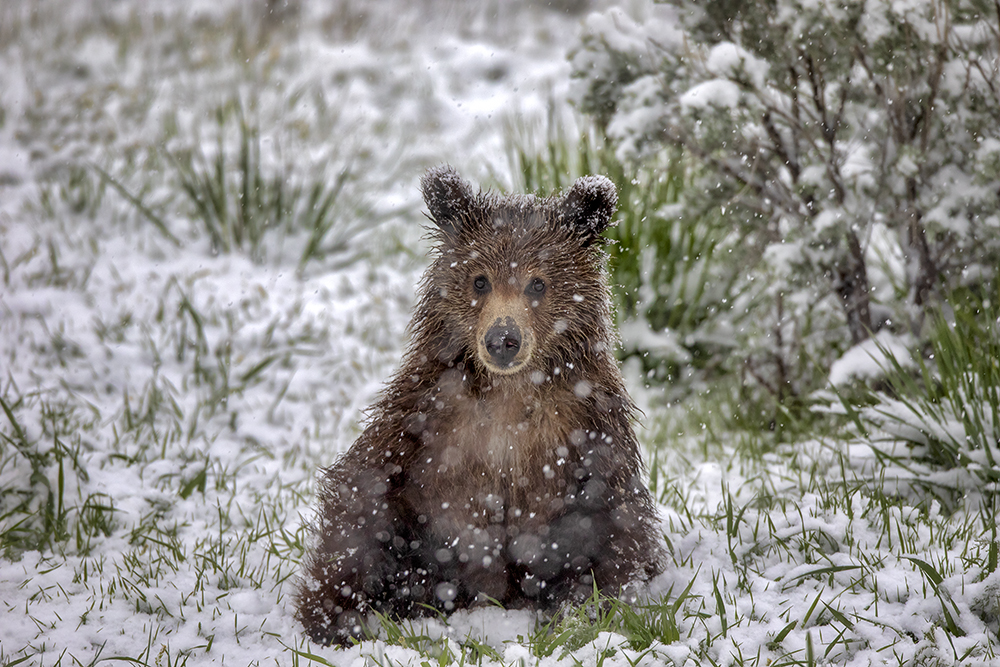
Wildlife carries a different kind of compression. A young grizzly cub knows how to dig for roots, when to climb, what to fear, and what to explore—all without a manual. Millions of years of trial and error are compressed into instincts, posture, muscle memory, and the way a cub reads the world the moment it steps into it. DNA is nature’s oldest and most elegant compression algorithm.
I photographed this cub while snow fell in thick, wet flakes. The moment lasted seconds, but the animal in front of me was carrying time in every cell—prehistoric winters, ancient migrations, generations of survival etched into a body that was barely a year old. It reminded me that nature compresses experience just as much as light and geometry. Life is a decompressed archive walking around on four legs.
Related reading: Grizzly Bear — Exploring Ursus arctos horribilis · Naturepedia
Fine-art print: Grizzly Bear Cub
5) Mycelium — Nature’s Hidden Internet
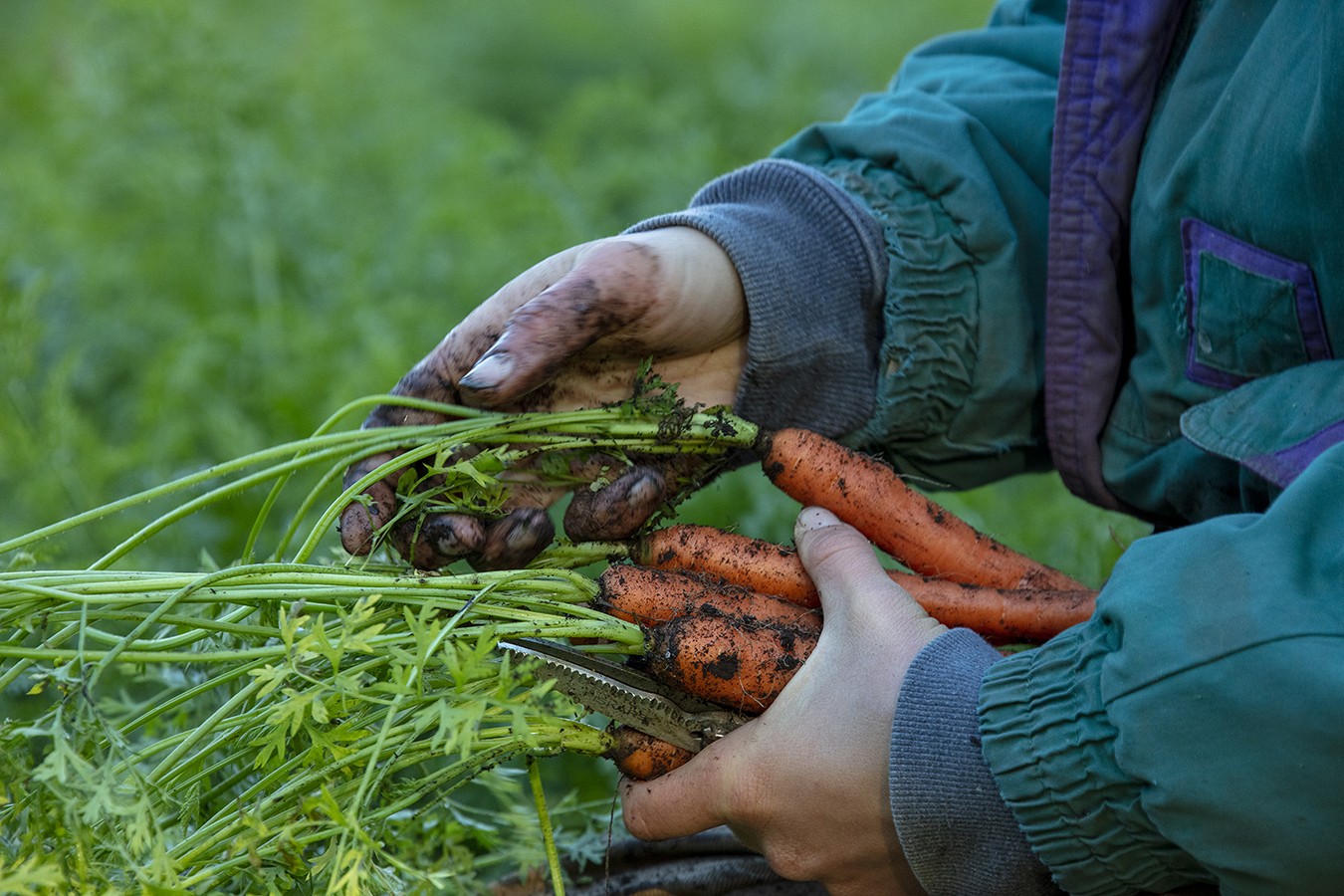
If there is one place where nature’s Grand Compression feels most literal, it’s the mycelial layer beneath our feet. Those thin white threads aren’t random—they’re information highways that compress the needs, stresses, nutrients, and responses of an entire forest into a microscopic fiber network. Mycelium is the living equivalent of a neural network, a fiber-optic web, and a supply chain system all woven together in silence.
In a single square foot of soil, you can have miles of mycelial threads. They compress ecological intelligence into the thinnest possible structure—sending warnings, sharing nutrients, rerouting resources, stabilizing moisture, and coordinating the health of an entire forest floor. It’s a system so dense with meaning that even our most advanced technologies struggle to emulate it.
Explore related entries: Mycelial Networks · Soil Microbiome · The Wood Wide Web · Quantum Agriculture
6) Mountain Reflection — As Above, So Below
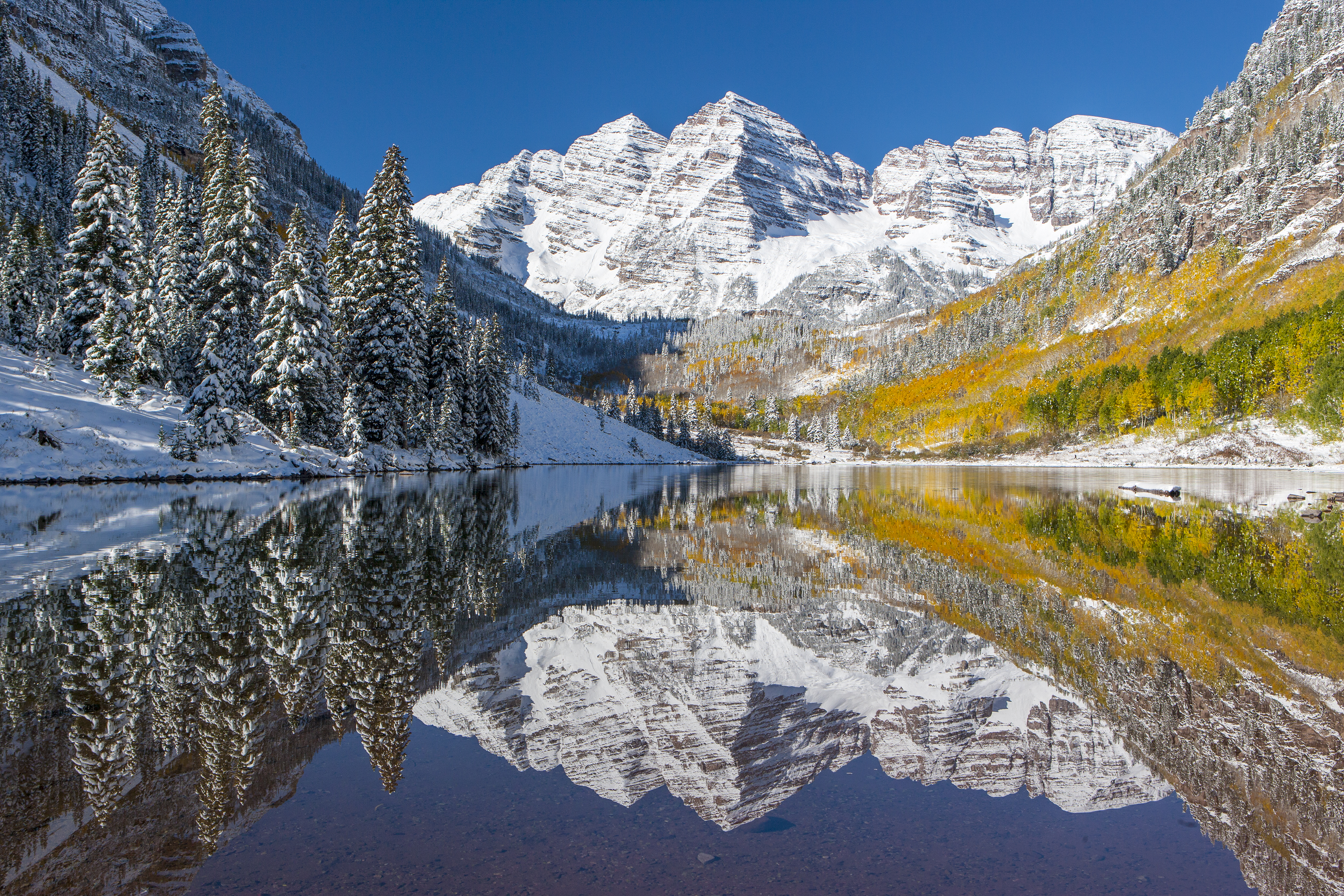
A reflection is one of nature’s purest compressions. In a single moment, an entire mountain range, millions of years old, becomes a perfectly preserved mirror image across a few millimeters of calm water. The lake turns geology into geometry. It compresses the macro into the micro, the ancient into the immediate, and the vast into the stillness of one glasslike surface.
This photograph from the Maroon Bells in Colorado is one of the strongest visual echoes of the principle As Above, So Below. The mountain and its reflection aren’t duplicates—they’re two halves of the same moment, two expressions of the same underlying code. Reflection is correlation. Reflection is coherence. Reflection is nature saying, “Look twice, the pattern continues.”
Dive deeper: Exploring the Maroon Bells · Fractals & Fibonacci · Nature Code
Fine-art print: Maroon Bells (Reflection)
7) Lightning — Sudden Coherence
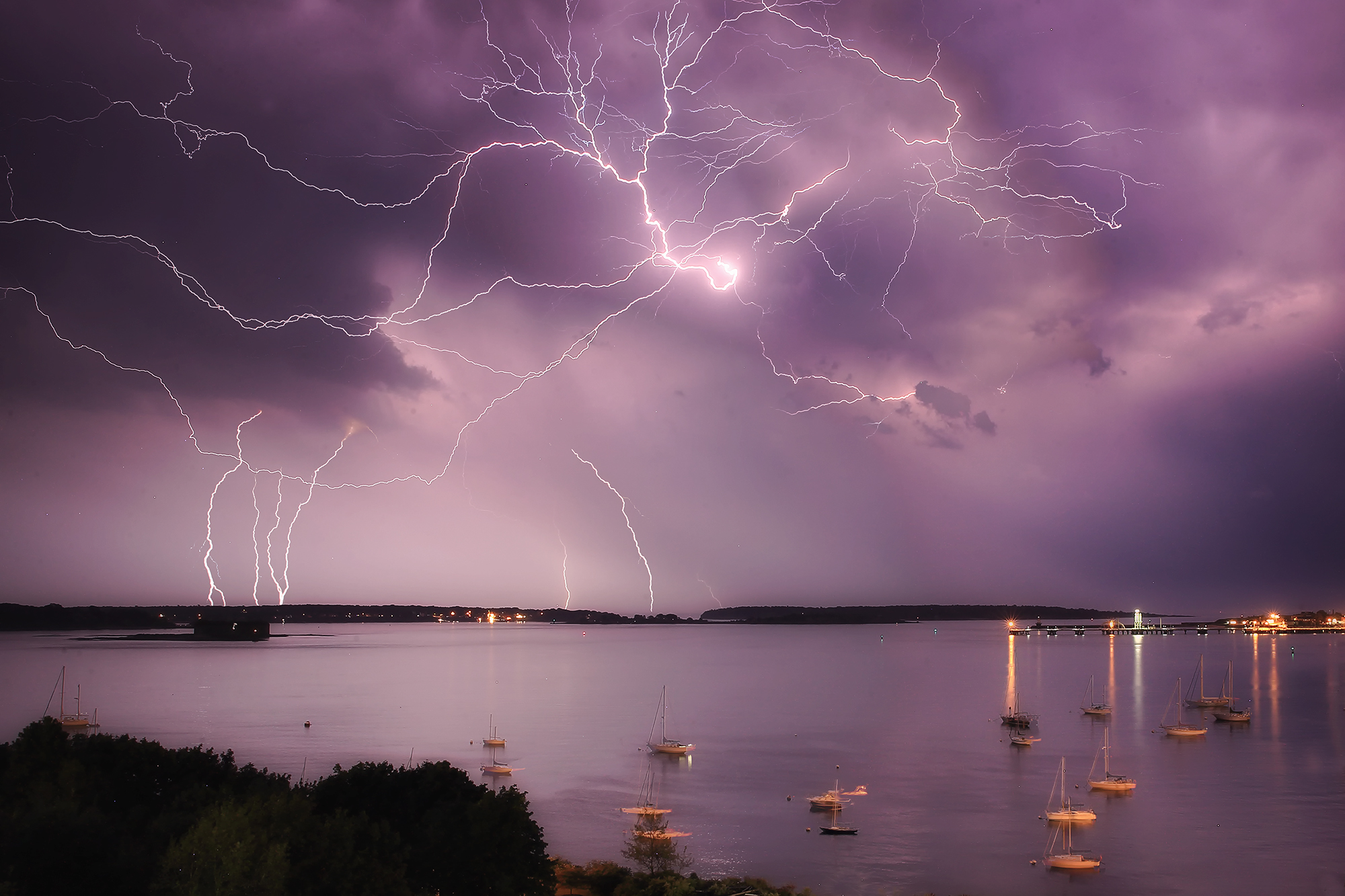
Storms are long conversations. Warm air rises, cold air sinks, pressure shifts, and the sky quietly stacks potential energy layer by layer. For a long time, nothing seems to happen. Then, in a fraction of a second, the atmosphere solves its own equation and a bolt of lightning rips across the sky. All that tension snaps into a single branching path of light: sudden coherence.
In this photograph over Casco Bay, the bolt looks like an upside-down tree—branches diverging instead of roots converging. It’s the same pattern we see in rivers, roots, neural networks, and mycelium. Nature keeps using branching structures because they are an efficient way to move energy and information. Lightning is compressed atmospheric complexity revealing itself as a single, brilliant stroke.
Related reading: Sunlight: The Cosmic Superhighway of Life · Naturepedia: Plasma · Magnetism & Polarity
Fine-art print: Lightning over Casco Bay
8) Spiral Macro — The Blueprint Revealed
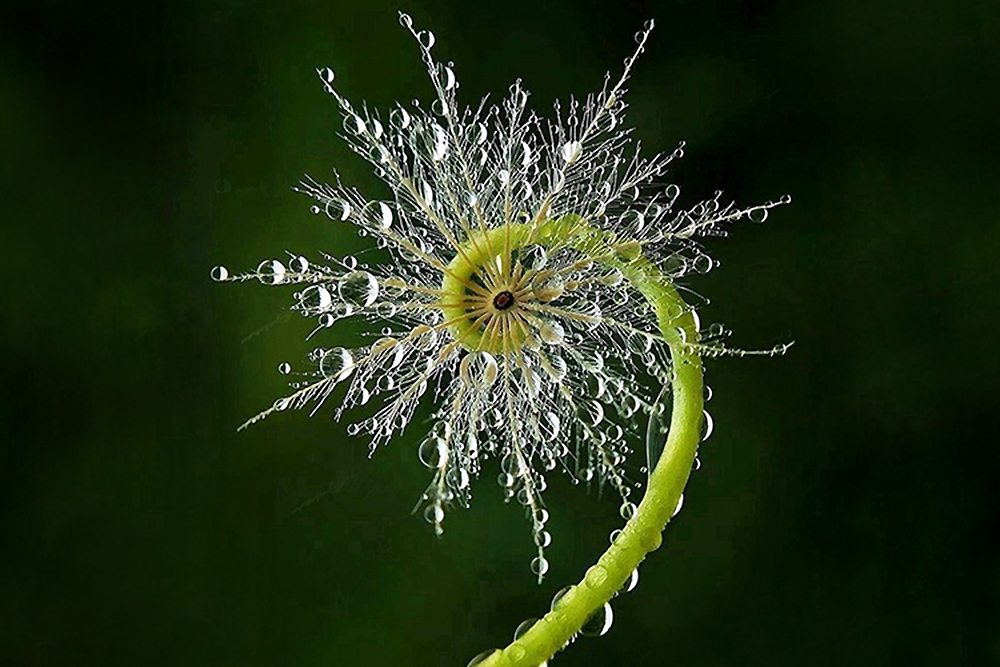
Spirals are the universe’s handwriting. Once you start seeing them, you can’t unsee them—galaxies, hurricanes, nautilus shells, sunflower heads, carrot tops, pinecones, even the way rivers bend when they’re left alone. This macro spiral could easily be mistaken for a satellite photo of a storm or a distant galaxy, but it’s just a tiny, grounded piece of the living world in front of the lens.
The Fibonacci-like pattern here is a perfect example of compression. A simple growth rule—add, rotate, repeat—produces a form that can scale from microscopic to cosmic without changing the underlying logic. The same spiral geometry lets seeds pack efficiently, storms distribute momentum, and galaxies organize billions of stars. One simple rule, endlessly reused. If The Grand Compression had a logo, it might look like this.
For a deeper dive into spiral geometry: Fractals & Fibonacci: Nature’s Blueprint · Golden Ratio — Phi, Spiral of Becoming · Signature Series — Nature, Science & Soul
From Photographs to a Field Theory
When I first gathered these eight images—aurora, water droplet, foggy pines, grizzly cub, mycelium, mountain reflection, lightning, and spiral macro—I didn’t yet understand what they were pointing to. I just knew they felt connected. Years later, I can finally name the connection: each photograph captures a different phase of the universe’s recursive breath—compression, decompression, and recompression expressed through light, soil, weather, roots, memory, and form.
Aurora is decompressed solar memory. A droplet is compressed curvature and history. A forest is ongoing coherence. A grizzly is ancestral memory walking. Mycelium is recursive information flow. A reflection is coherence doubled. Lightning is sudden decompression of stored tension. A spiral is a compressed rule expanding across scale.
These weren’t just aesthetic similarities—they were functional similarities. Each one revealed a universal pattern: the field compresses cause into form and then uses recursion to express, update, and refine that form over time. What equations freeze into symbols, nature keeps alive through iteration. This is the insight that eventually birthed my deeper work on recursion vs. equations.
This realization became the backbone of the Signature Series, which maps how geometry, light, water, soil, wildlife, and consciousness all reflect the same underlying intelligence. The Grand Compression sits high in that structure—just below my CodeX work on geometry, and just above the more applied layers like Nature Code and Living Code.
Looked at together, these images form something like a photographic Unified Field Theory. Each one speaks a different dialect of the same language: the universe stores information through compression, expresses it through decompression, and evolves it through recursion. This is the living engine beneath the unified field—the mechanism nature uses to encode itself in every scale of reality.
Soil, Seeds & Quantum Agriculture — The Compression Beneath Our Feet
My understanding of the Grand Compression didn’t begin with the sky. It began with soil. Years of regenerative farming taught me that dirt is not “dead matter”—it is a compression layer, where the universe hides millions of years of intelligence in a handful of earth. Soil stores the memory of seasons, microbes, water, minerals, mycelium, roots, decay, and emergence— all compressed into a single coherent field.
A seed is compressed possibility. Everything that plant will one day express— geometry, flavor, scent, color, resilience, leaf pattern, root structure— is folded into an almost weightless shell. When water enters the seed, the universe performs one of its most elegant operations: decompression. Stored cause becomes unfolding form. The seed becomes a living equation that solves itself through time, sunlight, and soil.
But nature does not stop there. The plant recompresses its entire lived season into new seeds, into roots that archive drought and rain, into soil microbes that store weather memories, and into mycelial networks that communicate stress, nutrient flow, and seasonal timing across the forest floor. This is recursion: cause becomes form, form becomes motion, motion becomes new cause. Soil is the biological heartbeat of that cycle.
Mycelium in particular behaves like a recursive learning network. Those delicate white threads compress the needs of an entire ecosystem into microscopic pathways. They recognize patterns, adjust flows, reroute resources, and respond to disturbances with astonishing intelligence—mirroring the same logic found in neural networks, root systems, lightning, and river deltas. Mycelium is the forest’s version of a photon, carrying information across its field.
This is why Quantum Agriculture is not a metaphor. It is a recognition that soil, water, light, microbes, and roots operate the same way stars, photons, hydrogen, and galaxies do: through compression, decompression, and recursion. What lightning does in a millisecond, soil does over months. What hydrogen does in a star, water does in a seed. What mycelium does underground, consciousness does in the mind.
The Grand Compression is not just visible in the sky—it is alive beneath our feet. And when we learn to read soil the same way we read starlight or spirals, we discover that Earth is performing the same universal operation: storing cause, expressing form, remembering the result, and beginning again.
AI, Science & Slow Knowledge — Seeing the Pattern Again
When Elon Musk wrote, “AI is compression and correlation,” he unintentionally echoed the oldest law in nature. AI compresses data. Science compresses behavior. But nature compresses cause. And while AI and equations freeze reality into still frames, nature stays alive by cycling—compressing cause into form, decompressing into motion, and recursively recompressing the result into the next moment.
This insight is deepened in the scroll How Recursion Breathes the Universe Alive (When Equations Freeze It). Mathematical equations can describe a state, but only recursion can describe a universe that remembers. Recursion explains everything from the hydrogen cycle of stars to the branching of mycelium, from the long arc of evolution to the way a forest learns after a storm. It is the heartbeat inside the Grand Compression.
This is why my work keeps returning to concepts like entanglement, quantum memory, and dimensional feedback. These aren’t abstract physics terms—they describe how the field stays coherent. Entanglement keeps the field unified. Quantum memory keeps it continuous. Feedback lets it learn. Together, they show that nature is not just storing information; it is refining it.
And this is where Slow Knowledge comes in. AI accelerates pattern recognition. But nature teaches through cycles—season to season, tide to tide, bloom to decay to bloom again. Fast systems predict. Slow systems understand. AI moves quickly, but nature moves accurately. And when you spend long enough observing water, soil, stars, storms, wildlife, or light, you begin to see the same silent geometry emerge again and again.
The Grand Compression bridges these worlds. It shows that the same logic guiding neural networks also guides auroras, spirals, seeds, forests, lightning, and consciousness. It reveals that the universe is not chaotic—it is recursive, coherent, and intelligible. And when you slow down long enough to listen, nature reveals that you’re not standing outside a field—you’re participating in one.
For readers who want the formal architecture behind this essay’s field observations, the canonical specification lives in the Master Reference Document (MRD v1.8).
Where to Go Next
If The Grand Compression sparked something in you, here are the best next steps. These pages deepen the journey into recursion, geometry, field intelligence, and the living architecture behind nature’s coherent design. Whether you want to dive into the science, explore the philosophy, or collect the artwork featured in this story, this is your map.
Deep Cosmology Companions
How Recursion Breathes the Universe Alive
Unified Field Theory (Matrix Engine)
Hydrogen & the Memory of Creation
Water Memory & Quantum Continuity
Explore the Living Framework
The Nature Code
The Living Code
Quantum Agriculture
Naturepedia (Encyclopedia of the Field)
Collect Prints from This Story
Grizzly Bear Cub · Lightning over Casco Bay · Maroon Bells Reflection
Stay Connected
The deeper I go into this work, the more it feels like we’re walking inside a living recursive field—one that stores cause in form, breathes it into motion, and remembers itself through every spiral, droplet, forest, storm, and moment of light.
⚖️ Robbie’s Razor & The Grand Compression
This piece lives inside the wider Grand Compression Cosmology, where every pattern is evaluated using Robbie’s Razor:
“When competing explanations exist, prefer the model that follows compression → expression → memory → recursion.”
About the Author — Robbie George
I’m a National Geographic–published nature photographer, regenerative farmer at heart, and lifelong field observer. My work blends science, geometry, light, and wild places to explore how nature communicates through pattern, resonance, and coherence.
Over the years I’ve:
- • Spent thousands of hours photographing landscapes, wildlife, and seascapes.
- • Farmed organically while learning soil health directly from Eliot Coleman and Joel Salatin.
- • Built the Signature Series, a living map connecting light, water, geometry, ecology, and consciousness.
- • Created Naturepedia, a growing encyclopedia for understanding nature’s intelligence.
The Grand Compression is part of my lifelong effort to understand how nature stores, moves, and expresses meaning through patterns we can photograph, farm, and feel.
Frequently Asked Questions
- What do you mean by “The Grand Compression”?
- The Grand Compression is the idea that nature compresses cause into form. Hydrogen compresses geometry. Water compresses memory. Light compresses information. Soil compresses entire ecosystems. Mycelium compresses communication networks. Wildlife compresses ancestral adaptation. Nature doesn’t just behave — it encodes. Those encoded forms are then decompressed into motion and recompressed into new cause, forming a recursive cycle that shapes everything from stars to soil to consciousness.
- How does this connect to “AI is compression and correlation”?
- AI compresses data. Science compresses behavior. But nature compresses causality. A neural network finds patterns by compressing information into hidden layers. Nature does the same at every scale — but it adds something AI cannot: recursion. Nature unfolds those compressions through motion (decompression) and then recompresses them through memory, evolution, and feedback. This cycle — compression → correlation → coherence → recursion — is the living intelligence behind the Grand Compression.
- Are you proposing a new scientific theory?
- Not a replacement for physics — a bridge. The Grand Compression is a field-based framework that complements science, showing how geometry, biology, ecology, and consciousness share the same recursive architecture. It integrates established concepts like hydrogen structure, photon behavior, nonlinear feedback, entanglement, and ecological coherence into a single way of seeing: nature stores, moves, and evolves information recursively.
- How does this relate to recursion?
- Recursion is the engine inside the Grand Compression. Equations freeze reality into still frames. Recursion breathes it alive. Nature compresses cause into form, remembers its last step, and then updates itself through feedback loops across scales. This is explored deeply in How Recursion Breathes the Universe Alive.
- How does this connect to hydrogen and water memory?
- Hydrogen is the universe’s first compression — a geometric seed that stores structure and spin. Water is nature’s most adaptive memory field — storing pattern through clustering, vibration, and molecular geometry. Together they create the foundation for life’s recursive intelligence: hydrogen provides stable coherence, water provides dynamic memory, and light transmits the information between them.
- What roles do entanglement, memory, and feedback play?
- These three form the core of nature’s learning engine:
- Entanglement keeps the field unified — one system, many expressions.
- Quantum memory keeps the field continuous — patterns persist across time.
- Dimensional feedback lets the field evolve — information loops upward across scales.
- How did regenerative farming influence this idea?
- Years of organic farming showed me that soil is a compression layer, seeds are compressed possibility, and roots, mycelium, microbes, and minerals function as a single recursive intelligence system. Farming revealed the same pattern I later saw in physics: compression → decompression → recompression → coherence. Everything grows through recursive breath.
- What pages should I explore next?
- Best next stops:
• Naturepedia: The Grand Compression
• How Recursion Breathes the Universe Alive
• Unified Field Theory
• The Nature Code
• The Living Code
• Quantum Agriculture
• Water Memory
• Naturepedia - Where can I purchase the prints featured in this article?
- All prints shown here are available in the Fine-Art Print Collection, including: Northern Lights, Daisy, Grizzly Cub, Lightning, Maroon Bells Reflection.