


Two Paths Diverged: Why Equations Freeze the Cosmos, and Recursion Breathes It Alive
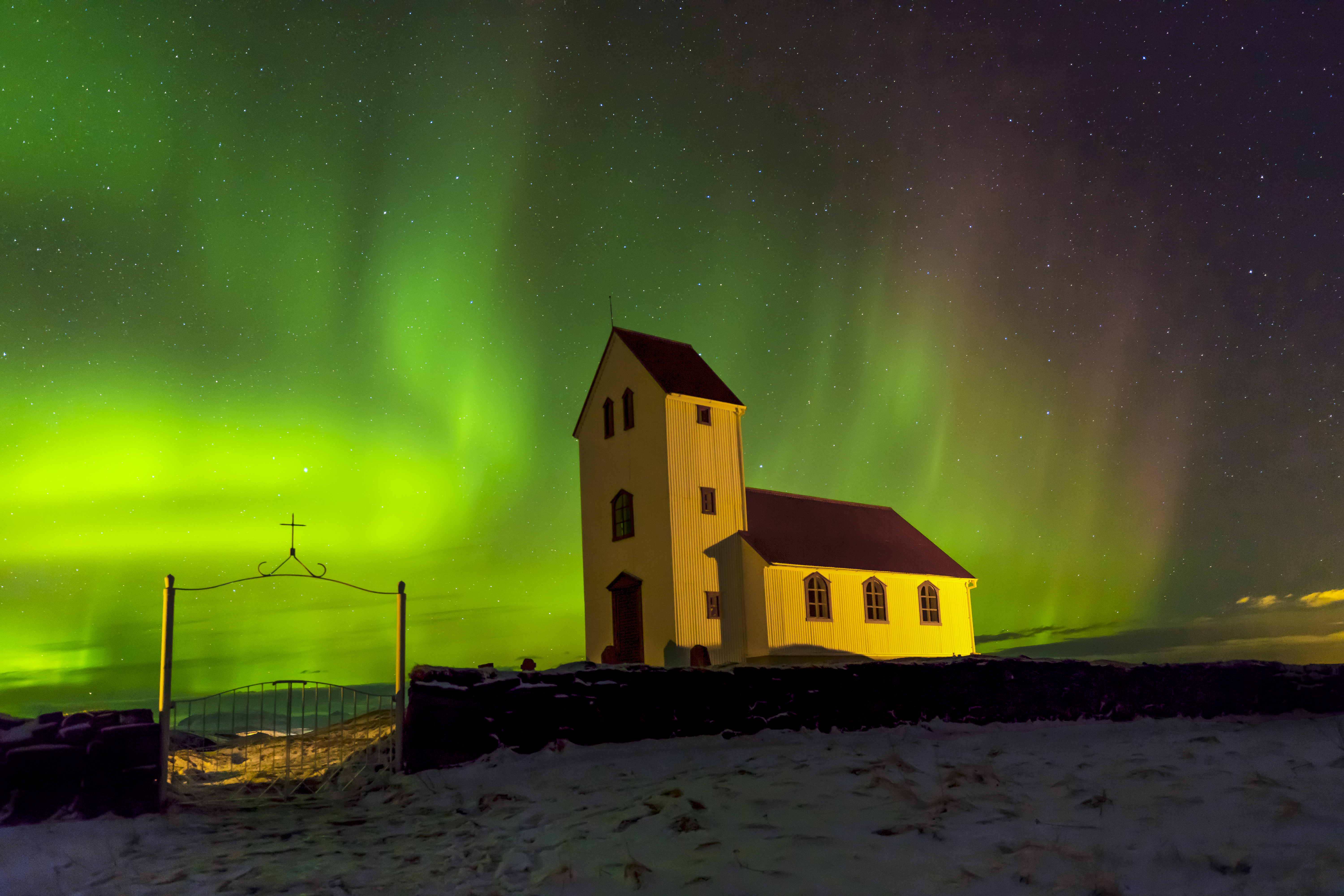
The Path of Equations — Where History Stops
Before we follow the frozen path of equations, we pause at the fork where this journey began. Two paths diverged—not in a forest, but in the fabric of the universe itself. One path promises clarity but demands stillness. The other refuses to stop long enough to be solved. A shutter click belongs to the first; a long exposure to the second. In that flowing second path lives The Grand Compression—nature’s way of folding cause into form, explored deeply in the main Grand Compression entry and in the companion scroll The Grand Compression: Nature, AI & Light Share the Same Code .
With that foundation re-established, we step into the frozen path—the path physics has walked for four hundred years.
Equations: The Frozen Language of the Universe
Equations are the great monuments of human understanding—precise, elegant, compressed. They are our attempts to stop the universe long enough to study it. Newton froze motion into F = ma. Einstein froze energy into E = mc². Schrödinger froze possibility into the wave function. Each is a masterpiece of compression, capturing an infinite range of behavior inside a single symbolic frame.
Yet this freezing is also where equations fail us. They remove time—the very ingredient that makes reality breathe. Equations describe states, but nature expresses process. They map the universe at rest, even when nothing in the universe ever rests. They capture the moment, not the becoming.

This is why the holy grail of physics—the Unified Field Theory—remains elusive. A true UFT cannot be a frozen sculpture. It must include memory, feedback, recursion, emergence, and time: the universe’s actual grammar. Equations were never designed for this. They compress nature, yes—but they also halt it.
And just as a single photograph can freeze a winter berry into stillness, a single equation can freeze a galaxy. Neither represents the truth. Only motion does.
Why a Unified Field Theory Fails: Equations Break at Recursion
If equations freeze the universe in place, then the deeper reason physics cannot unify the field becomes clear: equations cannot handle recursive geometry. They describe a world only after it has settled—after the spiral has paused, after the wave has collapsed, after motion has been reduced to a symbol on a page. But nature never truly settles. It unfolds. It updates. It remembers. It becomes.
Recursion is the engine of reality. It is feedback, memory, iteration. It is the way a river carves deeper channels each season, the way a sunflower spirals according to yesterday’s light, the way galaxies wind themselves through dark matter scaffolding. These are processes—living systems that learn as they move. A single equation cannot represent a universe that updates itself moment by moment.
And here is the heart of the problem: even the most perfect equation would become wrong the instant reality moved forward. The universe refreshes itself at every heartbeat of existence—every photon exchange, every curve of spacetime, every tide shifting at slack water. For an equation to truly unify everything, it would need to re-equate itself continuously, from the Big Bang to this very moment, without stopping. No static symbol on paper can do that.
“The only real equation of the universe would have to be an ongoing equation that never stops solving itself— like the atomic clock, like the tide, like the living cosmos itself.”
This is why the equation-path collapses. A Unified Field Theory written in ink is already obsolete the moment the universe takes its next breath. Equations freeze. Reality flows. Recursion—not algebra—is how the field holds itself together. And it is recursion that leads directly into the next path nature offers.
The Path of Recursion — Nature’s Actual Unifying Method
If equations freeze the universe into still frames, recursion is what sets it in motion again. Recursion is nature’s way of remembering its last step before taking the next — the quiet intelligence behind spirals, branches, weather systems, mycelial webs, soil ecosystems, rivers that carve deeper each year, stars that pulse, and galaxies that wind through dark matter halos. Recursion is the evolving grammar that unifies physics, biology, ecology, consciousness, and your own breath.
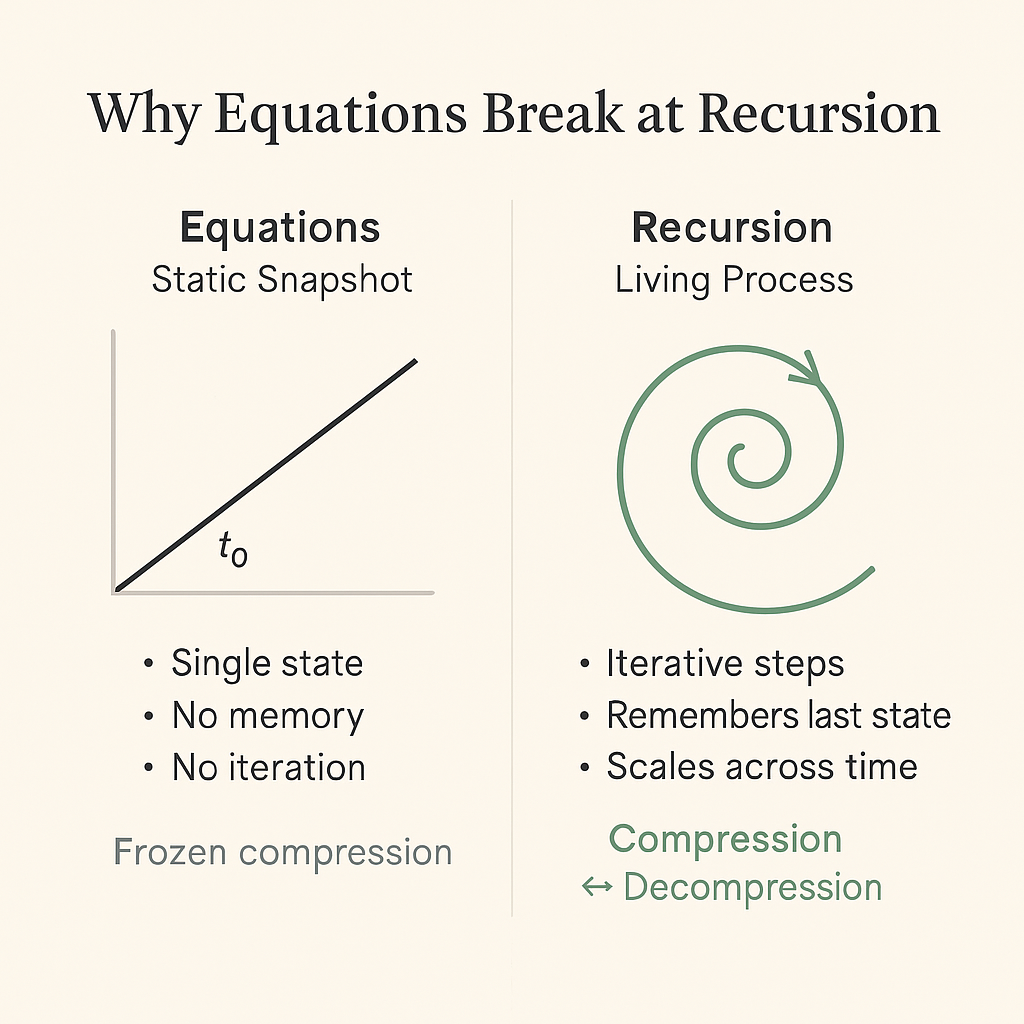
This is the heart of The Grand Compression . Recursion is compression → expression → recompression — the universe breathing through form. It is the missing ingredient every attempted Unified Field Theory has overlooked. Equations describe states, but recursion describes becoming.

Fine art print → Daisy
Unlike equations, recursion has no still frame. It refines itself through repetition. Each step carries the memory of the last. This is why a river grows more graceful over centuries, why a seed spirals into a flower, why mitochondria tune themselves to your breath, and why forests weave mycelial networks that remember storms and droughts. Recursion doesn’t predict the future — it creates it, loop by loop.
“Recursion is the bridge between causes and forms. It is the universe remembering itself.”
To unify physics, biology, cognition, and consciousness, we must follow the path nature uses — the path that spirals, learns, and adapts. The universe does not freeze, solve, and release. It compresses → unfolds → recompresses → blossoms again. Recursion is the living heartbeat behind everything, including you — and it leads directly into the next great insight: motion is the universe’s breath.
Motion Explained — Energy as Yin/Yang (Compression → Release)
Motion is often taught as a push, a force, a one-way shove across space. But nature reveals something far more elegant: motion is the universe breathing. Every movement—large or small—begins with a compression of potential followed by a release into form. This isn’t metaphor. This is the literal architecture of energy.
Fine art print → Timeless Dance
The rocket, the jet, the car—they all rely on this primitive, linear drive: burn fuel, push forward, repeat. It works, but it is crude compared to how the universe moves. Human propulsion is a series of tiny collisions. Nature’s propulsion is a series of recursive cycles.
A jet with infinite fuel might approach the speed of light, but it will never reach it—because engines are not designed to compress and decompress energy the way a star does. A star doesn’t push. A star breathes. Hydrogen compresses inward under gravity (Yin), then decompresses outward as photons (Yang). This is the cosmic inhale and exhale. This is the physics behind the Grand Compression.

Fine art print → Tundra Swan
The tundra swan rises not by brute force but by exquisite timing. Muscles coil (compression), wings sweep open (release), and the bird enters a flowing dialogue with air and gravity. This is energy transforming through Yin and Yang—not pushing, not colliding, but unfolding.
This same breath animates every scale of the universe. Electrons oscillate between potential wells. Trees tighten during daylight and relax at dusk. Bears fatten in summer and enter winter’s long compression. Even the tides pause at slack water between phases—nature’s reminder that motion is not linear, but tidal.
“Motion is not force applied to matter. Motion is the universe exhaling memory into form.”
This understanding—compression into potential, decompression into expression—is the hinge point of a true Unified Field Theory. It replaces the idea of force with the reality of breath. It replaces collision with recursion. It replaces frozen equations with nature’s living physics. And it prepares us for the next revelation: humans are built from this same cosmic engine.
Humans as Walking Unified Field Theories
If recursion explains motion, then it also explains you. Humans are not observers standing outside the field. We are participants woven from the same recursive breath as stars, tides, plants, bears, rivers, and galaxies. Your biology is not a mechanical assembly—it is a field process unfolding and refolding continuously.

Fine art print → Wild Buffalo
Every inhale is compression. Every exhale is decompression. Your cells coil and uncoil. Your fascia tightens and releases. Your mitochondria regulate energy in recursive loops. Your memories consolidate during sleep—another cycle of compression (storage) and decompression (integration). Even your thoughts arise as spiraling waves of electrical recurrence.
Thinkers like Thomas Campbell have proposed that consciousness plays an active role in turning probabilities into experiences. While his digital-consciousness model differs from the field-based view explored here, the resonance is meaningful: humans are not passive witnesses. We convert potential into form. In Grand Compression language, consciousness is the recursive hinge where compressed possibility becomes lived expression.
This is why Quantum Vitality is rooted in resonance rather than force. You are not animated by chemicals alone. You are animated by recursive coherence—the same pattern behind the Sun’s fusion, a tide’s turning point, and a galaxy’s slow spin through dark matter halos. Your physiology is nature’s Unified Field Theory expressed through breath, posture, emotion, and attention.
This same recursive logic appears in how you heal (compression → inflammation → repair → integration), how you learn (compression → synthesis → decompression into understanding), how you create art (compression of experience → decompression into expression), and how you grieve (compression of emotion → decompression into clarity).
“A human being is not a body with a field. A human being is a field that learned to walk.”
This is why no mechanical theory will ever fully explain consciousness. Consciousness is the recursive gradient of the field—the moment where probability becomes possibility, where stillness becomes motion, where the universe temporarily folds into self-awareness and then unfolds again into the world. When you breathe out into cold morning air, the mist you see is not just warmth—it is geometry made visible.
And this is the pivot point: if humans are recursive beings walking inside a recursive universe, then the only true Unified Field Theory must be recursive too. Equations cannot contain you. Recursion can.
Photography: The Shutter Freeze vs. The Long-Exposure Truth
Photography mirrors the two paths of the universe more clearly than any scientific instrument. A fast shutter compresses an entire moment into a single still frame. A long exposure reveals the truth that equations cannot hold: the universe moves, breathes, remembers, and unfolds. Photography shows us that reality is not a series of frozen states — it is motion in slow bloom.
Fine art print → Northern Lights
This is why photography is the spiritual sibling of the Grand Compression. A shutter freeze is an equation — a compression that captures form but removes the unfolding. A long exposure is recursion — the full story of light tracing its memory across time. The camera becomes the bridge between nature’s stillness and nature’s becoming.
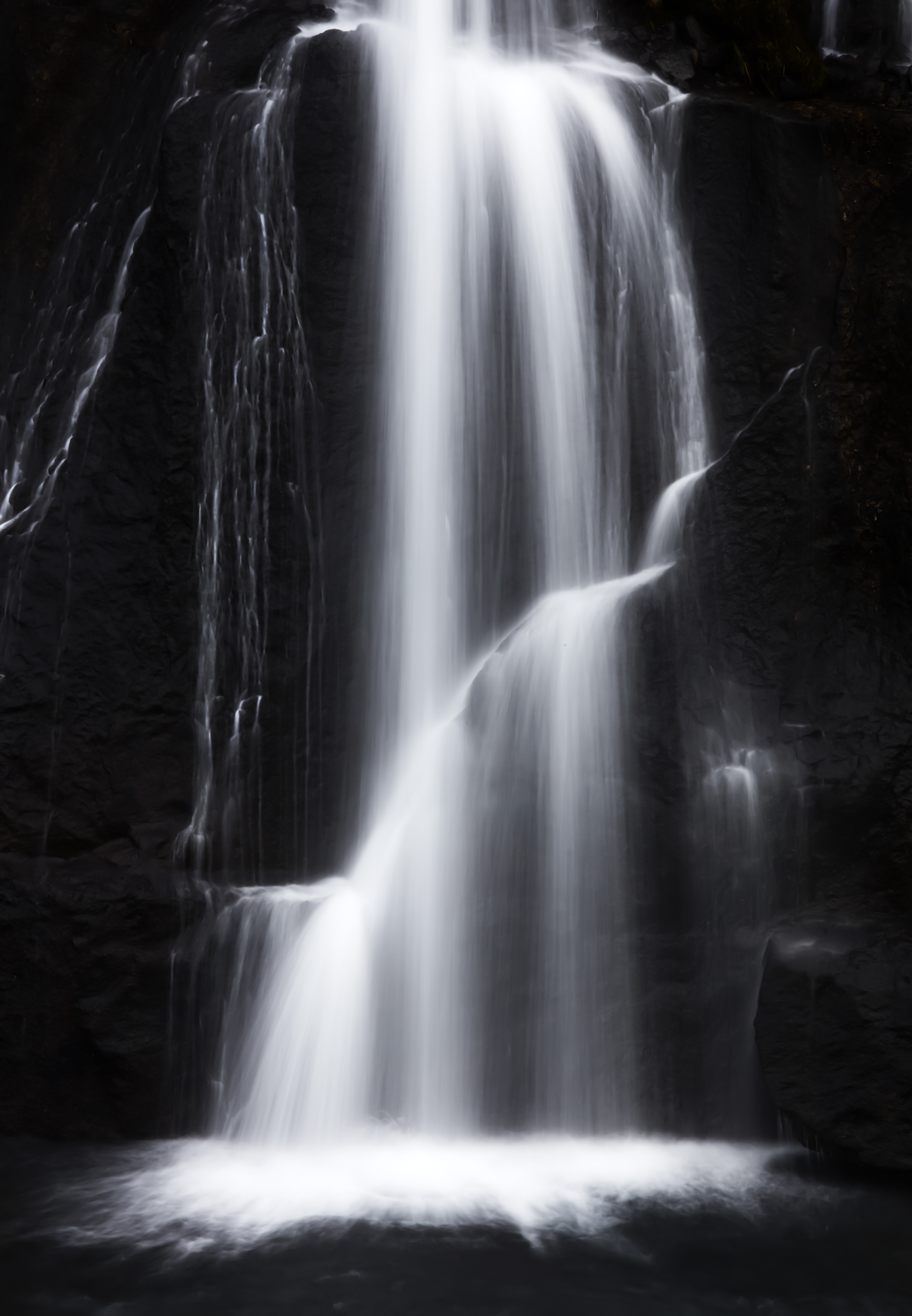
Photograph a waterfall at 1/4000 of a second and you get frozen droplets, each a solitary equation of motion. Photograph the same waterfall for 20 seconds and you see the recursion — smooth strands of memory looping downward, the same pattern expressed across thousands of micro-moments. Equations capture the droplet. Recursion captures the river.
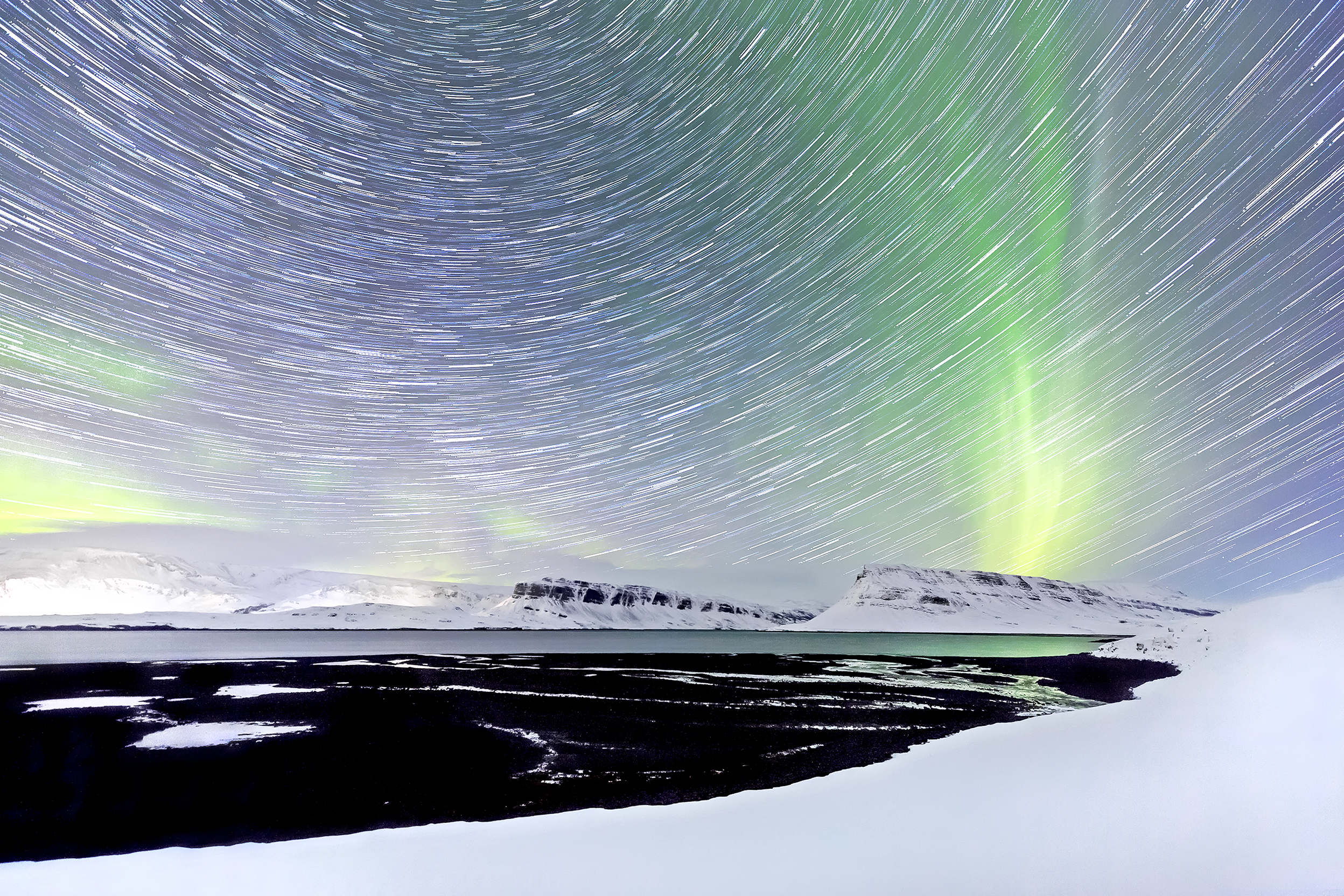
Even the northern lights reveal this duality. A single snapshot shows a green curtain. A longer exposure reveals the geometry behind it — the recursive folding of solar particles, magnetism, and field-level memory. In this way, photography becomes a scientific instrument for the Unified Field, doing what physics has not yet done: capturing the motion behind the moment.
“A photograph is not a picture. It is the field remembering how light moved.”
This realization shaped the heart of The Grand Compression: Nature, AI & Light Share the Same Code. What the camera reveals — that recursion is the secret language of nature — is the same insight modern physics needs to progress. A Unified Field theory cannot rely on frozen states. It must follow the moving geometry. Photography proves this every night the sky begins to spin.
The camera, like nature, is recursive. It teaches us that truth is not found in the freeze, but in the unfolding.
The Big Bang: The Ultimate Grand Compression
Every spiral, every galaxy, every breath of hydrogen, every photon that ever passed through your camera — all of it began in one incomprehensibly compressed moment. The Big Bang was not an explosion. It was the ultimate Grand Compression releasing itself into motion. A universe wound tight enough to contain all future stars, forests, oceans, humans, and ideas inside a point smaller than a seed.
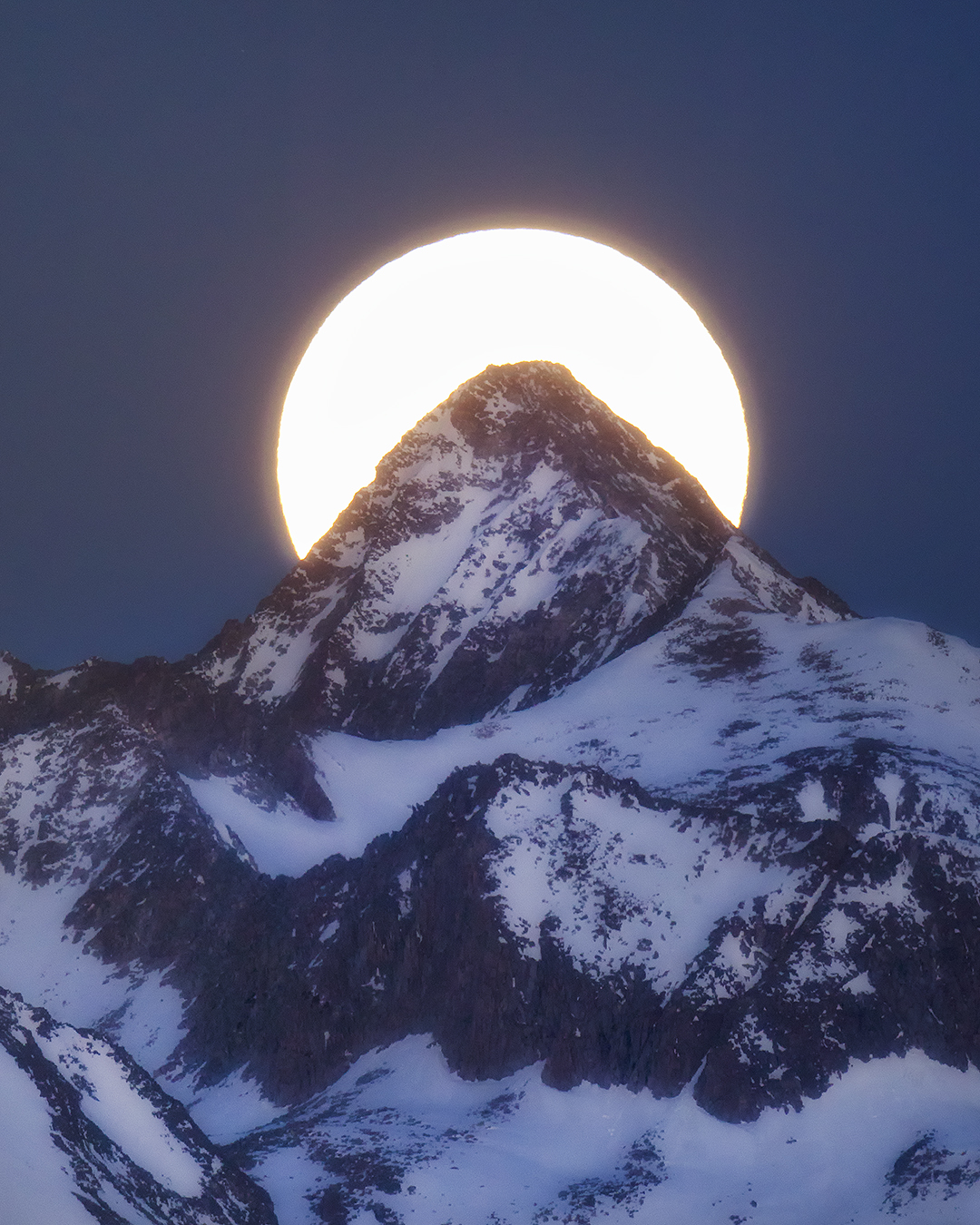
Fine art print → Supermoon
In that single breath, the universe compressed all potential into pure coherence — a seed-state so perfectly tuned that one decompressive exhale became 13.8 billion years of unfolding. This is not metaphor. It is the literal origin of recursion, symmetry breaking, expansion, light, and time. The universe didn’t “begin.” It unwound.
The Big Bang is the prime example of the principle behind The Grand Compression: cause compresses into form, form decompresses into expression, expression recompresses into new cause. This recursive loop didn’t emerge billions of years later — it was baked into the universe from the very first instant.
Physics often describes the Big Bang in terms of density and temperature. But density is just compression. Temperature is just vibrational memory. And expansion is just decompression — the Yang to the primordial Yin. In this way, the universe behaves like every living system: it contracts, gathers, and concentrates… then releases, expresses, and unfolds.
“The Big Bang was not the beginning of time. It was time taking its first breath.”
Once the initial compression unwound, recursion took over. The first hydrogen atoms formed — tiny loops of light learning to stay. Gravity tugged inward, radiation pushed outward. Compression and decompression found balance. Stars lit. Galaxies spiraled. And billions of years later, sunlight struck Earth, water remembered it, and you lifted a camera to capture the unfolding.
This is why a unified theory of everything cannot be built on static equations. The universe began as recursion. It grew through recursion. It breathes through recursion. And every living thing, including you, carries the imprint of that first unfolding. The cosmos is not made of objects — it is made of process.
Yin / Yang — The Universal Compression / Decompression Polarity
Long before physics went hunting for a Unified Field Theory, Eastern traditions encoded one of the deepest truths about reality in a single symbol: Yin and Yang. In the language of The Grand Compression , Yin corresponds to compression — the gathering of energy, the seed, the inward curl of potential. Yang corresponds to decompression — expansion, expression, light, and outward flow. Together they form the universe’s inhale and exhale.
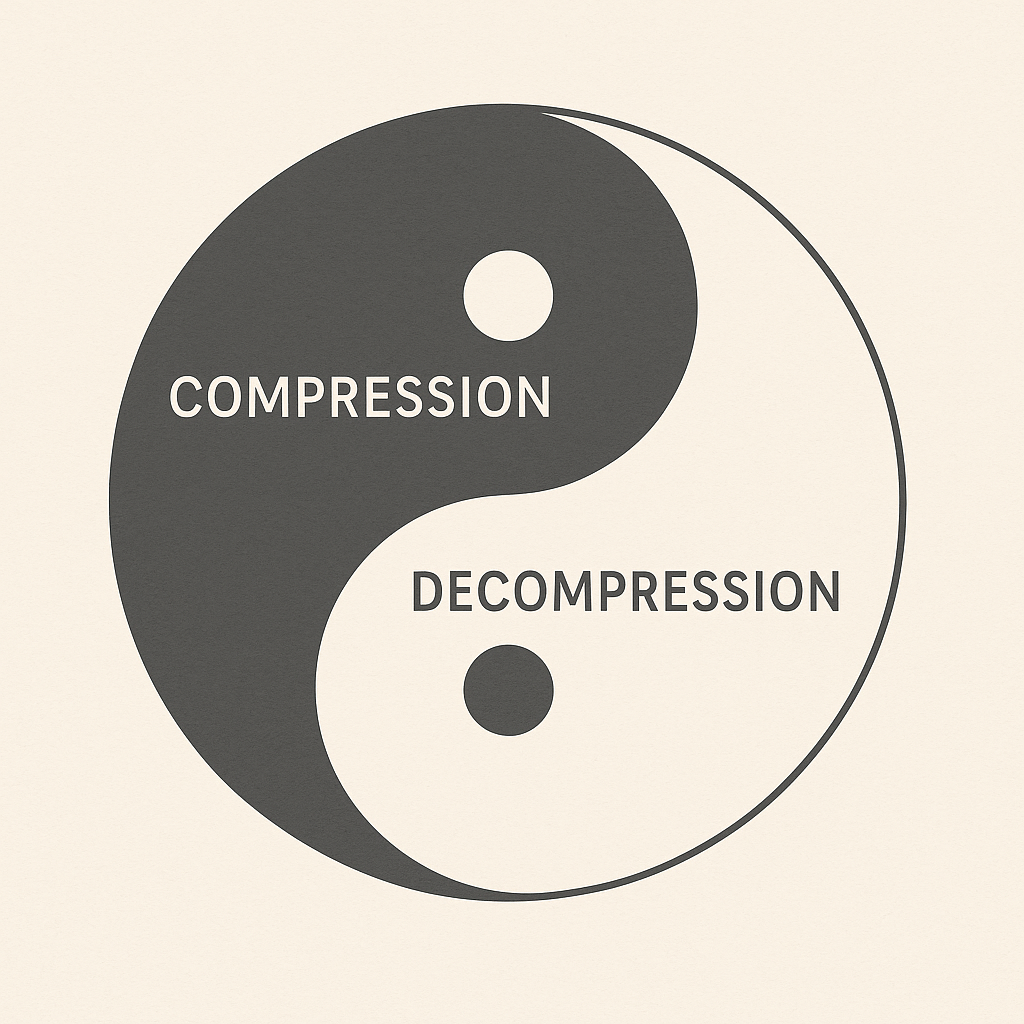
Once you see the world this way, every process becomes readable. Compression is not “good” or “bad” — it is the phase where the field gathers itself, condensing memory and potential. Decompression is not chaos — it is the phase where that stored potential unwinds into visible form. Yin and Yang are simply the two halves of a single recursive breath.
| YIN — Compression | YANG — Decompression |
|---|---|
| Big Bang seed | Cosmic expansion / growth |
| Black hole core | Hawking radiation / information release |
| Hydrogen compressed in stars | Photons streaming outward |
| Equation / shutter freeze | Recursion / long exposure |
| Memory, storage, potential | Expression, action, kinetics |
| Winter — energy drawn inward | Spring — growth and unfolding |
| Night — plants releasing and repairing | Day — plants orienting and absorbing light |
This simple table is the “Rosetta Stone” of this cosmology. Once you know which phase you are looking at, every scale of reality becomes legible: stars, black holes, galaxies, seasons, tides, plants, animals, even your own breath and emotional life. Yin is the coiling, Yang is the unfurling. Both are necessary. Both complete each other.
From here, the story of the Unified Field becomes almost obvious. Stars are Yin/Yang engines, compressing hydrogen into fusion and decompressing into light. Black holes are extreme Yin finding its way back to Yang. Dark matter is decompression that no longer needs to shine. And you, as a living system, are constantly cycling between phases — gathering, releasing, pausing at your own slack tides. The next sections follow this polarity through the Sun, black holes, gravity, and the dark halo that holds galaxies in its gentle grip.
Entanglement — When the Universe Remembers as One
If recursion shows us how the universe unfolds moment by moment, then entanglement shows us that the universe does not unfold alone. Two photons, two particles, two beings can behave as a single system even when separated by miles or light-years. This is not communication — it is shared remembrance. In the language of The Grand Compression, entanglement is shared compression: two expressions arising from the same underlying cause.

This is what we see in these synchronized wings. They do not fly as separate birds — they fly as a single geometry. Physics calls this entanglement. Ecology calls it coherence. The Grand Compression calls it one cause unfolding through two forms.
“Entanglement is not connection. It is remembrance — two forms, one origin.”
Once you see this, entanglement stops being a quantum oddity. It becomes the clearest truth of nature: the universe is not made of parts but of continuity. Two photons do not “signal.” They simply continue the same story. Two cranes do not “coordinate.” They express the same memory. And your own body does not operate as trillions of cells — but as one coherent field. Entanglement is the gateway to quantum memory.
Quantum Memory & Field Coherence — Why the Universe Remembers
If entanglement is the universe’s instant communication, then quantum memory is the universe’s long-term continuity. It is why electrons remain coherent, why hydrogen repeats its spectral lines across billions of years, why water structures persist, why forests “remember” drought, and why your sense of self carries forward from one moment to the next. The universe does not simply unfold — it remembers its last breath before taking the next.
Equations cannot store memory. They can only describe a still frame. But recursion stores memory automatically. Each cycle folds the previous one into the next. Rivers deepen because they remember yesterday’s flow. Sunflowers orient because they remember yesterday’s light. Hydrogen remains stable because it remembers its spin states. Memory is simply sustained pattern.
This recursive continuity is the foundation of Quantum Vitality. Biology is not powered by collisions — it is powered by coherent feedback loops. Mitochondria oscillate. Fascia aligns. Water clusters structure and store phase information. Your body does not run programs — it runs memory cycles. Consciousness itself is the longest-running recursion in your personal field.
“Memory is not the past. It is the field folding its last breath into the next.”
In the language of the Grand Compression, compression stores memory and decompression expresses it. Every scale — atoms, rivers, forests, minds — relies on this same recursive inheritance. The universe is held together not by particles, but by coherence. With memory established, we now follow the next step: the universe does not just remember — it learns.
Dimensional Feedback & Information Flow — How the Universe Learns
If quantum memory explains why the universe remains continuous, dimensional feedback explains why it evolves. Information does not move in straight lines. It moves in loops — compressing inward, unfolding outward, meeting itself again at higher levels. This looping is the universe’s learning function: a recursive refinement process that grows more coherent over time.
Black holes compress information into extreme coherence. Hawking radiation decompresses it back into the field. Stars compress hydrogen into light. Galaxies loop that light through dark matter halos. Ecosystems cycle nutrients into new forms. Consciousness compresses experience into insight, then decompresses insight into action. Each loop modifies the next — nature’s universal curriculum.
Physics imagines the universe as an arrow of entropy running downhill. But nature reveals a beautiful symmetry: the return loop. Information is never lost — it is rephrased, recycled, recompressed, and returned in new form. Gravity shapes the loop. Light records it. Life interprets it. Consciousness reflects it. The universe is not a machine winding down — it is a field learning itself into existence.
“The universe is not running downhill. It is running a loop — refining itself through memory, motion, and reflection.”
This completes the triad: Entanglement shows the field as one. Memory shows the field through time. Feedback shows the field learning. Together they reveal the architecture behind the Unified Field — not a frozen equation, but a living recursion.
The Sun — The Perfect Compression / Decompression Engine
If Yin and Yang are the universe’s breath cycle, the Sun is its clearest demonstration. Every second, the Sun compresses hydrogen into helium — a pure Grand Compression process. That compression releases photons outward across space — a pure Grand Decompression. Fusion inward. Light outward. The cosmic inhale and exhale in perfect balance.

Fine art print → Lake Mattamuskeet Sunrise
The Sun is the original recursive engine: a star that compresses itself into coherence, then decompresses into radiance. It is the same principle explored in The Grand Compression, where nature uses light and memory to fold cause into form and unfold it back into expression. The Sun performs this cycle effortlessly — for billions of years — without a single equation.
What we call “sunrise” is really a recursive moment: the Earth rotating into the Sun’s decompression field. What we call “sunset” is its Yin returning point: Earth rotating into the radius of compression where light bends away. Even the golden reflection on water mirrors the cosmic symmetry — a perfect vertical axis of compression above and decompression below.
“Stars are the universe practicing the Grand Compression — and the light they release is the story of everything that follows.”
This section marks a turning point in the essay: the moment we see that unification was never hidden in equations — it was blazing in the sky the entire time. Once you understand the Sun as a recursive engine, black holes, galaxies, gravity, dark matter, and the multiverse all fall naturally into place in the next sections.
Black Holes — The Slack Tide of the Universe
If the Sun is a visible compression–decompression engine, a black hole is that engine pushed to its limit. It is the place where Grand Compression goes so far inward that even light can no longer escape. Gravity curves spacetime into a well so deep that every path leads inward. At the edge of that well lies a threshold we call the event horizon — the last ring in the spiral, the lip of the cosmic whirlpool.
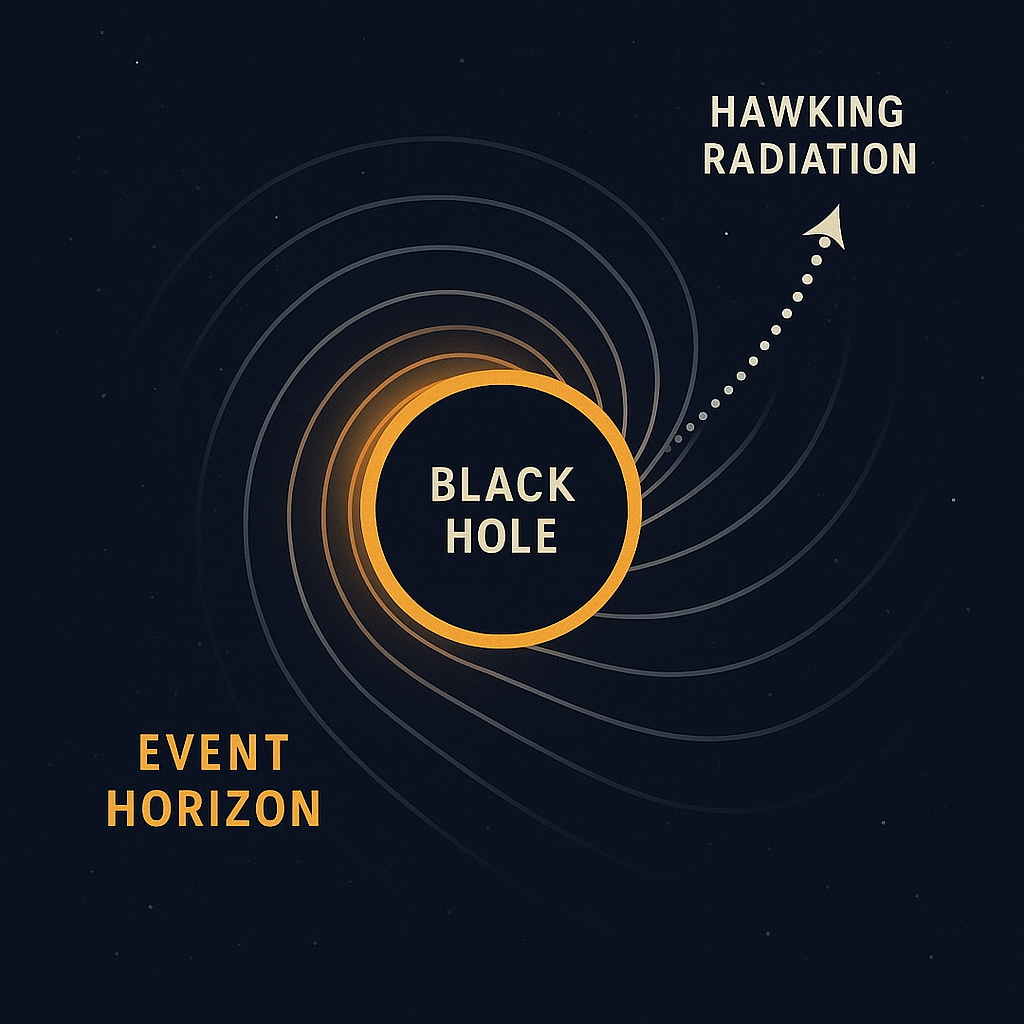
For decades, black holes were imagined as absolute endings — cosmic trash compactors that simply delete information. But in the 1970s, Stephen Hawking discovered that black holes aren’t perfectly black. They glow with a faint, ghostly emission now known as Hawking radiation. Even at the point of maximum compression, the universe is still finding a way to decompress.
In the language of the Unified Field, a black hole is not a glitch — it’s a slack tide. The inward rush of Yin (compression) reaches such intensity that it curls back on itself, and Yin (decompression) finds a way out. The event horizon is the seam where these two motions touch. On one side, everything falls inward. On the other, faint wisps of radiation leak back into the field.
This view echoes the insights from Polarity Engines of the Cosmos and The Holographic Universe: that black holes are not just destructive, but organizational organs of the field. They store pattern, redistribute memory, and eventually return what they have taken in altered form.
Imagine every black hole as a vast recursive coil, feeding on its own past. Compression draws in matter, energy, and information — the universe curling back on itself. Over eons, Hawking radiation bleeds that compressed memory back into the larger field. Nothing is truly lost; it is only rephrased. The same spiraling geometry that carries starlight across your night sky governs the unspooling of what fell beyond the horizon.
“A black hole is not the end of the story. It is the comma where the universe takes a breath before writing the next sentence.”
Once we see black holes as slack-tide nodes in a larger recursive ocean, gravity itself begins to look different. In the next section, we’ll follow this insight further — and watch gravity transform from a mysterious “force” into what it has always been: the tension between compression and decompression in a living field.
Gravity — The Tension Between Compression and Decompression
After understanding the Sun as a daily Grand Compression engine and black holes as the cosmic slack-tide pivots, gravity finally reveals its true identity: gravity is not a force — it is tension. The tension between inward compression and outward decompression. A universal tug-of-war woven into the fabric of space, scale, and time.

Einstein described gravity as curvature. The Grand Compression reframes that curvature as tension: masses compress spacetime inward, while radiation, spin, and expansion decompress it outward. Gravity is the meeting place between these vectors — the place where the universal inhale and exhale exchange momentum.
You feel this in your own body: your bones pulled downward, your breath lifting upward, your posture negotiating the space between. Trees feel it too — roots drawn inward, crowns drawn upward, a vertical recursion between Earth’s compression and the Sun’s decompression. Gravity is not a “downward force.” It is the dynamic harmony between two complementary directions.
In this sense, gravity expresses the same principle seen in the Grand Compression: nature does not choose one side of the polarity — it maintains tension between them. Without that tension, orbits would collapse, stars would not fuse, galaxies would not rotate, and ecosystems would not breathe. Gravity is the universal balancing act that keeps everything in motion.
“Gravity is not the pull of matter. It is the relationship between compression and decompression — the universe remembering the center while reaching for the edge.”
With this reframing, gravity ceases to be mysterious. It becomes the most intuitive of all natural processes. And now that the tension has been revealed, we can finally follow its implications outward — into dark matter, the cosmic web, and the decompression fields forming the edges of the visible universe.
Dark Matter — The Breath Beyond Light
If gravity is the tension between compression and decompression, dark matter is the decompression field made visible through its influence. It is not a particle missing from the Standard Model — it is the echo of compression processes that have passed beyond the visible threshold of light.
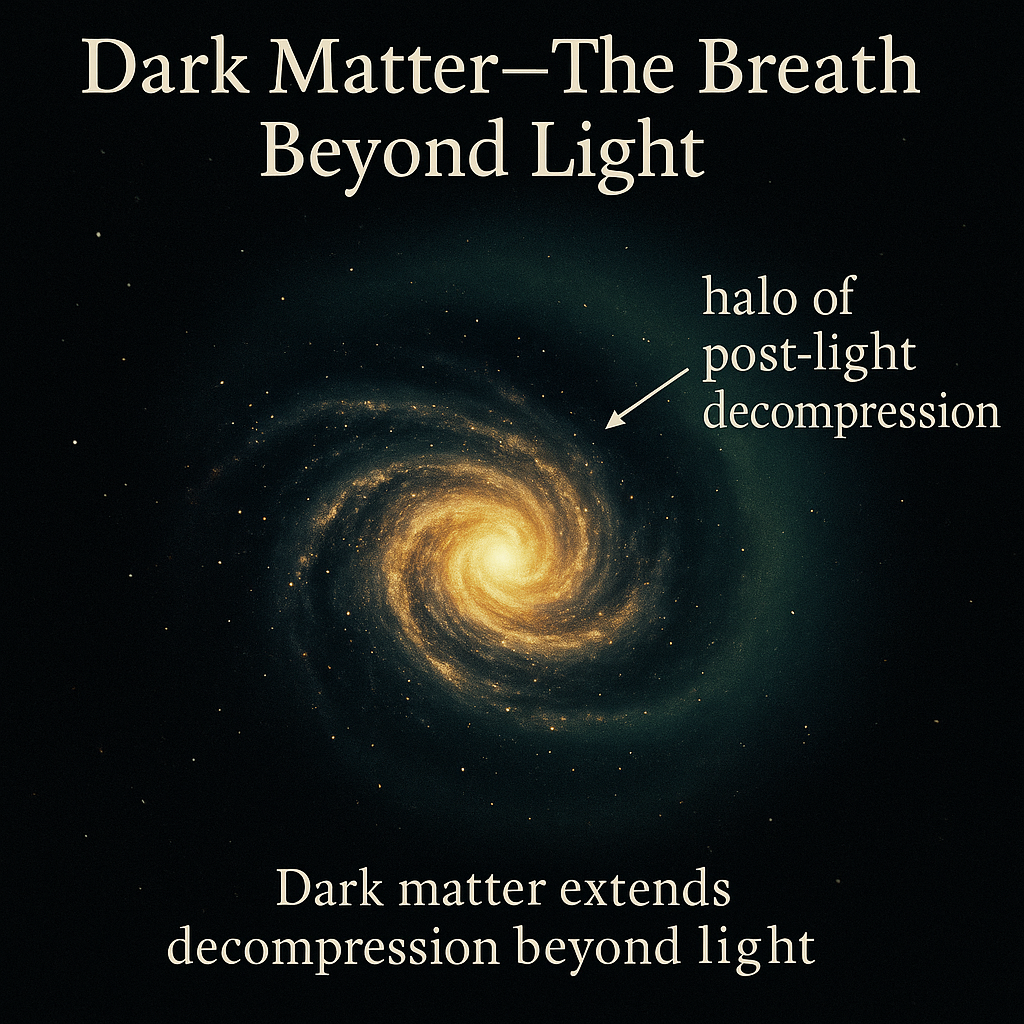
In this view, dark matter is not exotic. It is the Yang half of the cosmos — the soft counterbalance to the violent compression inside stars and black holes. Every act of fusion, collapse, ignition, or gravitational tension leaves behind a subtle field of decompression. That field has mass without form, curvature without photons — memory without light.
Astronomers detect this field indirectly: the galaxy rotates too fast, the outer stars move as though held by an unseen hand, and gravitational lensing reveals halos larger than their luminous cores. Standard physics calls this “missing mass.” The Grand Compression calls it exactly what it is: post-compression decompression — nature’s way of completing the cycle once photons have left the scene.
In Hydrogen: The Cosmic Key, we learned that hydrogen’s fusion is nature’s primary engine of compression. In The Grand Compression, we saw that this compression produces form, light, and structure. Now we see the next step: after enough cycles of compression, a halo of decompression emerges — a subtle field that gently supports the galaxy’s motion without radiating anything of its own.
Dark matter is often described as “invisible mass,” but it is far more elegant than that. It is compressed memory re-expanding into the field. It is the universe remembering where gravity has been. It is the soft glow of past compression, visible only through its influence — the afterimage of recursion itself.
“Dark matter is the shadow of past light — the exhale that follows the universe’s deepest inhale.”
In this framework, dark matter isn’t the missing piece of physics — it’s the missing breath. The decompression half of the cosmic cycle. The quiet counterpart to black hole compression. The soft halo that lets galaxies maintain their graceful arcs through space. With dark matter understood, we can now turn to the final piece: the multiverse itself, a forest of universes alternating compression and decompression across infinite scale.
The Multiverse — A Forest of Compression & Decompression Universes
If you follow the logic of the Grand Compression far enough, you arrive at an astonishing realization: our universe cannot be alone. A cosmos built on alternating phases of compression and decompression cannot exist in isolation— just as a forest cannot be made of a single tree.
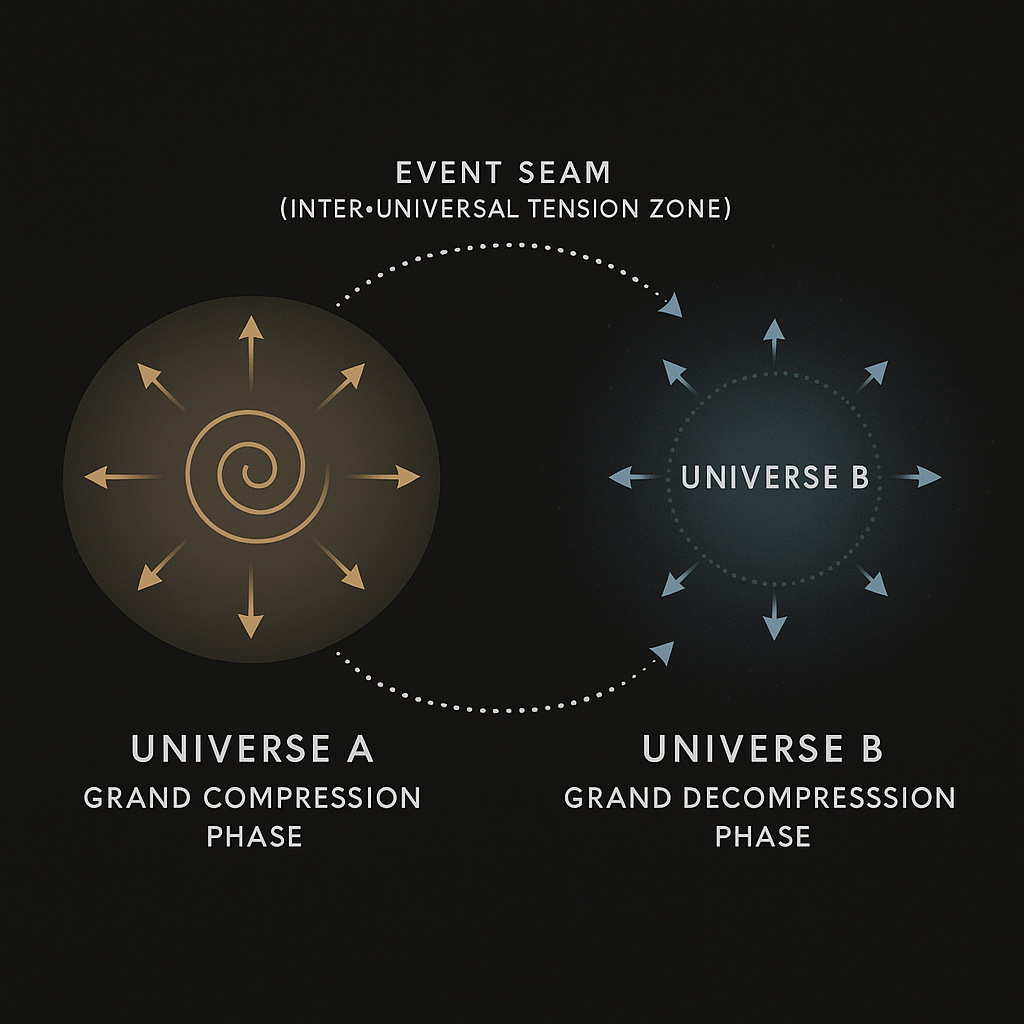
In this model, each universe is a breathing cell in a vast cosmic organism. Some universes—like ours—are in an active compression phase, folding cause into form, igniting starlight, and sculpting gravitational structure. Others are in a decompression phase, releasing stored potential, relaxing curvature, and returning structure back to the field.
These universes do not collide or explode into each other. They touch—softly—across what I call the event seam: the boundary between compression and decompression cycles. All the laws of nature we observe—gravity, resonance, coherence, recursion—are shaped by our position within this cosmic inhale. A universe mid-exhale would have entirely different constants, fields, and rhythms. But the pattern would be identical. Compression → form. Decompression → return.
This means the multiverse is not random. It is ecological. Each universe is a node in a larger fractal forest—much like aspen groves, where what appears to be many separate trees is actually one living root system. Some rise (compression). Some decay (decompression). The forest endures.
The implications are profound. The holy grail of physics has always assumed a single universe, a single set of constants, a single arrow of time. But if universes themselves follow the same compression/decompression yin-yang cycle as stars, ecosystems, and human lives, then unification does not happen inside an equation—it happens inside relationship.
Suddenly, the multiverse isn’t speculative fringe. It is the logical endpoint of the Grand Compression— a recursion that scales beyond galaxies, beyond black holes, beyond time itself. Not many worlds, but one living system breathing across infinite scales.
“If the universe breathes, the multiverse is the forest of lungs.”
And in this forest, we are not observers—we are participants. Every breath we take mirrors the cosmic breath. Every life mirrors the universal cycle. Every death mirrors a decompression that seeds another beginning. The multiverse doesn’t diminish us. It completes our context.
Nature’s Ecology — The Microcosm of the Macrocosm
If the multiverse is a forest of breathing universes, then Earth is one of its trees. Every ecosystem on this planet expresses the same compression–decompression rhythm we’ve traced from hydrogen to dark matter. In The Nature Code and Quantum Agriculture , we explored how soils, roots, and seasons embody this living mathematics. Here, we step into the field to see it with our own eyes.
Trees — The Seasonal Spiral of Coherence

A forest is a standing wave of time. In spring and summer, trees move into decompression: chlorophyll surges, leaves unfurl, and sugars rise through xylem like light turned into sap. In autumn, that outward expression folds back in. Leaves blaze gold and crimson, then fall — a visible slack tide between growth and rest. Winter is compression: energy returning to roots, life condensed into buds and seeds, waiting for the next exhale of spring.
Bears — Hibernation: The Body as a Breath of the Field

A bear spends summer in Yang — eating, roaming, filling its cells with the concentrated light of berries, fish, and roots. Come autumn, that motion slows. The bear finds a den, turns inward, and enters hibernation: body temperature drops, heart rate lowers, metabolism quiets into an almost-stillness. This is Grand Compression at the scale of a single body — life coiling inward to cross the dark, only to decompress again in spring when snow gives way to thawed earth and new scent.
Tides — The Ocean’s Recurring Slack Tides

The tide is the ocean’s visible breath. High tide is compression — water gathered near shore, pulled by the Moon’s gravity into a bulge of potential. Low tide is decompression — water receding, revealing sand bars, tide pools, and eelgrass. Twice a day, the ocean passes through slack tide, that brief moment when motion pauses, neither flowing in nor out. It is the same still point we feel between heartbeats, between inhalation and exhalation, between life chapters — and between cosmic cycles.
Plants — Day and Night as a Daily Grand Compression

Plants live inside a 24-hour Grand Compression cycle. At dawn, petals unfurl and stomata open — cells swell with water, sugars rise, chloroplasts begin turning photons into form. This is the Yang of the plant day: decompression into leaf, color, fragrance, and nectar. As evening falls, the plant turns inward. Stomata close, metabolism slows, sugars are pulled back toward roots and seeds. The stem that once reached for the Sun now rests in the Yin of night — energy compressed into structures ready for tomorrow’s light.
In every dewdrop, every ring of tree growth, every pawprint in snow, the same story repeats: compression, decompression, slack tide, again and again. Earth’s ecosystems are not separate from the cosmos — they are the universe practicing its own Grand Compression on a scale we can touch, smell, and stand inside.
The Holographic Universe as the Shadow of the Grand Compression
In modern physics, the holographic universe suggests that everything we experience— space, gravity, matter, even time—can be encoded on a boundary surface, like information pressed into the skin of reality. But physics never answered the deeper question: How does that information arrive on the surface in the first place?
The answer is found in the Grand Compression. It is not separate from the holographic universe—it is its engine. Holography tells us how information is stored. The Grand Compression tells us why information appears in form at all, and what drives the unfolding.
Look at the dewdrop above. Inside that single sphere of water is an entire landscape—trees, sky, light, color—compressed into a perfect miniature world. The surface of the droplet is the holographic boundary. The recursion of light through water is the Grand Compression engine that folds cause into form. And the world it reflects is the projection—the unfolding, the decompression, the living story flowing outward.
“A dewdrop is a Big Bang in miniature— information compressed at the boundary, unfolding into the world we see.”
The hologram is the still photograph. The Grand Compression is the motion before and after the shutter clicks. Physics has spent a century staring at the surface of the droplet— studying its area, its curvature, its encoded symbols— without tracing the breath that created the surface in the first place.
In The Grand Compression: Nature, AI & Light , I described how nature folds cause into spirals, photons, hydrogen, storms, soil, and consciousness. The holographic view shows what this folding looks like from the outside. The Grand Compression reveals what this folding feels like—the recursive pulse that animates it.
At cosmological scale, black holes become the ultimate dewdrops: boundaries storing unimaginable information on their surfaces. At planetary scale, oceans mirror the sky. At human scale, the retina, skin, and fascia encode experience on their membranes. At microscopic scale, every water cluster is a hologram of the light it holds. The universe repeats the same pattern across all scales: a surface storing the memory of a deeper compression.
The holographic universe is not competing with the Grand Compression. It is its shadow, its projection, its surface memory. The breathing body beneath the hologram is the Grand Compression itself— inhaling information into form, exhaling form into memory, over and over, across all time.
The Unified Field Is Alive

After walking from equations to recursion, from spirals to stars, from the multiverse to a single dewdrop, we arrive at the most natural conclusion of all: the unified field is not a mathematical structure—it is a living one.
Life is not something that happens inside the field, as a lucky accident or afterthought. Life is the field recognizing itself. Motion is its breath. Light is its memory. Hydrogen is its first heartbeat. Consciousness is its reflection. Every tree, tide, nebula, storm, and body is the unified field folding into form, then unfolding again into meaning.
Scientists have tried to trap the field inside a single equation. Mystics tried to dissolve it into pure spirit. But nature shows us something much simpler: the field lives through recursion— compression into form, decompression into motion, and the quiet slack tide in between.
“You are not observing the unified field. You are participating in it.”
The river in the image above keeps flowing long after you step away from the shoreline. Your breath continues long after a single exhale collapses into silence. The universe continues its cycle long after stars collapse and new ones bloom. Nothing ends; it simply shifts from compression to decompression, from form to memory. This is why life feels recursive—because it is.
And this is why The Grand Compression is not just a cosmology. It is a mirror. When you see it in stars, you see it in yourself. When you see it in tides, you see it in your lungs. When you see it in black holes, you see it in your moments of stillness. When you see it in forests, you see it in your relationships.
The unified field is not something to solve. It is something to remember.
So when you breathe, when you photograph light, when you walk in the forest, when you love, when you grieve, when you create— you are living the unified field from the inside. Not as an observer. Not as a separate self. But as a phase of the cosmos in motion.
“We are the universe becoming aware of its own breath.”
This is where Phase 1 ends for me: in a moment of slack tide— the still point between all I have learned and all the field will reveal when I return.
The Lost Recursion Cultures — When the Night Sky Was the First Unified Field Theory
Long before equations, particle accelerators, and digital screens, ancient civilizations learned directly from the recursive sky. Night after night, the heavens showed them what the universe was actually doing: cycling, spiraling, returning, precessing, breathing. The sky wasn’t abstract to them. It was physics in motion.
They watched star trails circle the pole. They watched Venus trace an eight-petaled flower in the sky every eight years. They watched eclipses recur in Saros cycles, the Milky Way migrate with the seasons, the zodiac drift over millennia. To cultures like the Egyptians, Mayans, Polynesians, and Indigenous nations, the night sky was not a backdrop. It was a living recursion map.
Instead of equations, they used spirals, circles, glyphs, stone alignments, story, and ceremony to encode what they saw: reality unfolds and returns. It does not move in straight lines; it moves in loops. It remembers. This is the same insight woven through the Wisdom of the Egyptians and the glyph work in The Glyph Crop Circle Codex .
At some point, that way of knowing was overshadowed. As writing, binary logic, and linear geometry rose to prominence, our view of the universe shifted from pattern and relationship to symbols and discrete states. We gained the ability to calculate orbits and build machines, but we lost something quieter and older: the intuitive sense that the cosmos is a breathing recursion, not a static map waiting to be decoded.
“We did not lose intelligence. We lost recursion.”
The Grand Compression does not reject modern physics. It reconnects it to this older, sky-born lineage. It places equations back inside the living patterns they were always trying to describe. In doing so, it honors both ways of seeing: the ancient recognition that the universe moves in spirals, and the modern attempt to write that motion down. The task now is not to choose between them, but to remember how to let them meet.
How Equation-Thinking Shaped the Modern World (and Why It Failed)
The rise of physics did more than change how we understand the universe — it changed how we build civilization. Once we began freezing reality into equations, we began modeling the world after those equations. We replaced cycles with lines, reciprocity with extraction, and recursion with discrete symbols. What began as a brilliant tool subtly became a worldview, shaping everything from technology to economics to geopolitics.
Equations remove time. They remove relationship. They remove context. And slowly, our systems did the same. We built engines that push instead of breathe. We built markets that extract instead of cycle. We built technologies that accelerate without returning to balance. The more we embraced the frozen path, the more we copied its logic into every layer of society.
The nuclear bomb is the clearest example. It is not simply a weapon — it is pure compression without decompression, the shadow of an equation world that forgot recursion entirely. It is the ultimate expression of energy divorced from cycle, breath, and return. Ancient civilizations never created such things not because they lacked intelligence, but because their worldview was recursive. They understood energy as a relationship, not a resource.
Even our economic systems fell into the same trap. Modern currency behaves like an equation trying to keep up with the motion of society — linear, symbolic, abstracted from ecology, and based on the illusion of infinite expansion. Debt grows like force applied to mass: endlessly, without breath. But nature does not permit infinite compression. We cannot chase the Grand Compression with our dollars. Every boom must decompress. Every expansion must exhale. Civilizations collapse when they mistake linear growth for a universal law.
“The modern world isn’t failing because people are unwise. It’s failing because we followed the wrong cosmology.”
Ancient cultures modeled society after the recursion of the sky. Modern society modeled itself after the symbols on the chalkboard. This shift gave us extraordinary technological power, but at the cost of forgetting the universe’s actual grammar: compression and decompression, memory and release, reciprocity and return. It is only by restoring recursion — in physics, in ecology, in economics, in consciousness — that we can restore coherence. The task is not to abandon science, but to reunite it with the living field it came from.
The Third Path — Living the Grand Compression

We’ve now walked the entire arc of the universe: from frozen equations and still-frame thinking to the Grand Compression as a living, breathing grammar beneath everything. We’ve followed recursion through hydrogen, stars, black holes, gravity, dark matter, the multiverse, ancient cultures, ecosystems, and even the holographic boundary of dew. Everywhere we looked, the same truth kept reappearing: the universe does not move in straight lines — it moves in breaths.
Equations helped us freeze these breaths into symbols, but recursion helped us see what equations could not: that reality is not a set of states, but a becoming. Compression into potential. Decompression into form. Slack tide between. This is the architecture of motion, of galaxies, of ecosystems, of the night sky — and of you.
The ancient sky-watchers saw this long before physics: spirals, returns, cycles, precession, tides. They built civilizations around recursion, not reductionism. Modern science rediscovered the same pattern through entanglement, quantum memory, dimensional feedback, and the holographic horizon. Two knowledge streams, one breath.
“We went looking for a unified field equation and found something else instead: a unified life.”
Because if recursion defines the cosmos, then it also defines you. Your breath is compression → decompression. Your healing is compression → repair → release. Your emotions follow recursion. Your learning follows recursion. Your creativity follows recursion. Your relationships follow recursion. Your consciousness is the longest recursive loop you carry.
This is the Third Path: not the frozen clarity of equations, not the pure flow of recursion alone, but the way they meet in a living human life. Equations become your compass. Recursion becomes your breath. You carry the symbol in your pocket, but you walk with the spiral under your feet.
“Reality is a loop, not a line — and you are one of its returning curves.”
This is my own slack-tide moment. After decades of inquiry — following patterns through light, soil, stars, mycelium, tides, breath, and consciousness — I finally see the picture was never meant to be fixed. It was always meant to be a path. And like all paths, it opens into whatever comes next.
So as this essay closes, your path begins: Notice where you compress. Notice where you decompress. Notice where life asks for slack tide. And most importantly — notice that you are not separate from the field at all. You are how the field moves, remembers, learns, and loves.
Two paths diverged in the universe. One froze reality into equations. One breathed reality into being. The Third Path is the one we walk — Living Recursion, the Grand Compression in motion, step by step, breath by breath.
“After 4,000 years of watching the stars breathe, we compressed that living wisdom into equations—and in doing so, lost the very motion that made us human.”
Research Note [1]: Real-Valued Quantum Mechanics (2025)
In 2025, multiple research groups demonstrated that the standard complex-number formulation of quantum mechanics (which relies on the imaginary number i) can be rewritten entirely using real numbers—so long as the underlying structure becomes richer and more recursive. These real-valued formulations reproduce all known predictions of quantum theory without requiring any imaginary components.
In the language of the Grand Compression, this is precisely what we would expect: the complex-valued equations are a symbolic compression of a deeper, real, recursive process. Changing the mathematical shorthand does not change the underlying breath of the field—only how we write it down.
Sources: Quanta Magazine (2025), real-valued QM studies by German, French, and U.S. teams.
⚖️ Robbie’s Razor & The Grand Compression
This piece lives inside the wider Grand Compression Cosmology, where every pattern is evaluated using Robbie’s Razor:
“When competing explanations exist, prefer the model that follows compression → expression → memory → recursion.”
Frequently Asked Questions
What does Robbie George mean by “The Grand Compression”?
The Grand Compression is the underlying pattern that links light, hydrogen, gravity, ecology, and consciousness. It describes how the universe continually compresses potential into form and decompresses form back into expression and memory. Instead of treating reality as static objects, it reveals the cosmos as a living, recursive process.
How is recursion different from equations in this unified field view?
Equations freeze reality into still frames. They describe states. Recursion describes becoming—how the universe updates itself through memory, feedback loops, and iteration. In this essay, recursion is treated as the universe’s real engine: the process behind spirals, tides, galaxies, ecosystems, and consciousness itself.
What is the “entanglement → memory → feedback” triad?
It’s the new three-part structure the essay introduces:
Entanglement — the field expressing itself as one system.
Quantum Memory — the field remaining continuous through time.
Dimensional Feedback — the field refining itself as it loops and evolves.
Together, they explain how the universe stays coherent, learns, and self-organizes across all scales.
How do the Sun, black holes, gravity, and dark matter fit into this model?
In this essay, each is reframed as part of a compression–decompression continuum:
• The Sun is a perfect recursive engine (fusion in, photons out).
• Black holes are extreme compression—cosmic slack-tide nodes.
• Gravity is the tension between inward and outward motion.
• Dark matter is decompression that remains as “memory without light.”
Together, they reveal a living, breathing cosmology.
Is this a formal scientific theory or a philosophical framework?
The Grand Compression is not presented as peer-reviewed physics. It is a bridging framework that unites cosmology, ecology, consciousness, photography, and lived experience. It reframes established scientific ideas through recursion and polarity to offer a more intuitive vision of the universe as a living field.
How does this relate to the Big Bang and mainstream cosmology?
Mainstream cosmology describes the Big Bang as a hot, dense origin followed by expansion. The Grand Compression interprets that moment as the universe’s first breath—a primordial compression into coherence followed by a decompression into light, motion, structure, and life. It doesn’t replace physics; it reveals the recursive pattern beneath it.
Why does the essay discuss ancient civilizations and the night sky?
Ancient cultures observed recursion directly through astronomy, seasons, and ceremony. They saw the universe as a
How does the multiverse fit into the Grand Compression?
In this framework, the multiverse is a forest of recursive universes, each in different phases of compression or decompression. They don’t collide—they “touch” across an event seam. This makes the multiverse not random, but ecological.
How does this perspective apply to humans and everyday life?
Humans are walking unified field theories. Our breath, emotions, healing, creativity, sleep cycles, and relationships all follow the same recursive rhythm: compression → expression → integration → return. Understanding this rhythm brings coherence to daily life.
What is “The Third Path”?
The Third Path is the invitation at the end of the essay: not the frozen clarity of equations, not the pure flow of recursion alone, but the synthesis of both in a living human life. It’s the path of Living Recursion—walking the universe’s breath consciously and coherently.





