


Water and the Unified Theory of Consciousness: The Medium of Life’s Mysteries
Unlocking the Mysteries of Consciousness: Is Water the Missing Key?
Consciousness is one of the most profound mysteries of existence— a concept that has fascinated scientists, philosophers, and seekers for centuries. What is it? Where does it come from? Could its origin lie not in complexity alone, but in something elemental?
A revolutionary idea proposes that water—the most essential and overlooked substance on Earth— might hold the missing piece to a Unified Theory of Consciousness. With its unique quantum properties, could water be not just the medium of life, but the medium of awareness itself?

Exploring Water’s Role in Consciousness
In this post, we dive deeper into a compelling hypothesis—that water is more than a life-giving substance. It may be the medium of consciousness itself.
We’ll explore how water’s quantum behavior may bridge science and spirituality, and how concepts like the memory of water and water as a cosmic informant contribute to a potential Unified Theory of Consciousness.
From photon interactions and quantum coherence to spiritual symbolism and biological transmission, this journey will weave together science, soul, and the mysteries flowing through every molecule of water.
“Water may not just carry life—it may remember it, reflect it, and perhaps even think it.”
~ Robbie George
Understanding Consciousness
A. Defining Consciousness
What is Consciousness?
Consciousness is among the most layered and elusive concepts in science, philosophy, and spirituality. It is often defined as the state of awareness—of being able to experience, reflect, and respond to one’s own existence and surroundings.
In scientific circles, this is often divided into phenomenal consciousness (subjective experience) and access consciousness (the ability to report on that experience). In spiritual traditions, however, consciousness is often viewed as something more expansive—a field we are part of, rather than something we possess.
Could this field be shaped by a substance? In both philosophy and metaphysics, there’s growing curiosity around the memory of water and whether it may serve as the true conduit for consciousness—an idea explored across both spiritual mysticism and quantum science.
The Challenges of Understanding Consciousness
The so-called “hard problem” of consciousness, coined by David Chalmers, asks: Why does the brain’s processing of information lead to subjective experience at all? While neuroscience has mapped out neural correlates of awareness, it has yet to explain what makes experience happen.
Some philosophers argue that consciousness cannot be reduced to physical processes alone. Others—especially those studying holographic models of the universe—believe that consciousness might emerge from the fabric of reality itself, perhaps encoded through geometry, resonance, or water.
“Consciousness may not live in the brain—it may flow through it like music through a violin.”
~ Robbie George
Historical Perspectives on Consciousness
A. Tracing the Evolution of Understanding
The quest to understand consciousness stretches back to the very birth of human thought. From Plato and Aristotle, who spoke of the soul’s rational and spiritual nature, to Eastern sages who saw awareness as the fabric of the universe— humans have long sensed that consciousness is both within and beyond.
In the Enlightenment, René Descartes famously declared, “I think, therefore I am,” grounding awareness in the act of self-reflection. But John Locke countered with the idea that our minds begin as blank slates—shaped by experience, memory, and sensation.
As science advanced, so too did our frameworks. In the 20th century, Freud and Jung introduced concepts of the unconscious and collective mind, while neuroscience turned its gaze toward the brain’s neural networks.
B. Key Thinkers and Their Contributions
- Plato: Proposed the soul’s tripartite nature—reason, spirit, and appetite—as a blueprint for consciousness.
- René Descartes: Emphasized self-awareness and dualism, separating mind from body.
- John Locke: Introduced tabula rasa—the blank slate—suggesting experience defines conscious identity.
- Sigmund Freud: Developed the model of the conscious, subconscious, and unconscious mind.
- Carl Jung: Introduced the collective unconscious and archetypes embedded in the human psyche.

“Across centuries and civilizations, consciousness has whispered through rivers, fires, and minds—always asking: what am I?”
~ Robbie George
Water as the Medium of Consciousness
A. The Quintessence of Water
Water as the Quintessence of Life
Water has long been regarded as the quintessence—the fifth element, the spirit within the material world. From sacred texts to modern science, water emerges as more than a compound—it is the connective tissue of life.
Its molecular ability to form complex, dynamic hydrogen bonds hints at a networked intelligence, capable of vibrational memory and energy exchange. This is the premise behind water as an information storage medium, explored further in the Unified Water Theory.
Water’s resonance may be more than physical—it may be spiritual memory made visible, as suggested in CodeX: Memory of Water, where the fluid medium is proposed as a universal carrier of both matter and mind.
B. Water’s Role in Biological Processes
Water: The Conduit for Consciousness in Biological Systems
In the human body—especially the brain—water plays an intimate role in maintaining coherence, conductivity, and clarity. Nearly 75% of the brain is composed of water, not merely as fluid, but as a quantum conductor of electrical signals and ionic communication.
Water surrounds every neuron, forming the field in which thoughts arise. It maintains electrical balance and facilitates the subtle ion exchanges that produce awareness. This aligns with the suggestion that consciousness is not localized, but diffused through a liquid quantum matrix—present in every synaptic spark.
Cellular communication, hydration dynamics, and neuro-electrical flow all depend on water’s structure and movement. In this view, water is not merely present in consciousness—it is the canvas through which it appears.

“If consciousness has a vessel, it is not the skull—it is the sacred memory flowing in every molecule of water.”
~ Robbie George
Linking Water and Consciousness
A. The Memory of Water
Re-examining Water Memory and Its Role in Consciousness
The controversial but captivating idea of water memory suggests that water can retain vibrational imprints long after the source has vanished. If true, this would position water as not only a recorder of experience, but a carrier of it.
This concept aligns with water as a photographic book of mirrors, where memory is not just held but mirrored—reflecting back emotional, environmental, or quantum fields. These echoes suggest that consciousness may be stored in wave form.
In holographic models of consciousness, water may serve as the interface between the individual and the field—a medium in which fractal patterns and vibrational harmonics encode thought itself. This is a central tenet of the CodeX: The Fractal Hologram post.
B. Photons, Water, and Consciousness
Exploring the Interaction Between Light and Water in Consciousness
Light (photons) is more than illumination—it is information. When photons pass through water, they refract, reflect, and entangle. This interaction may encode memory, resonance, and even awareness.
In your blog on water as a color shifter, you suggested water and light together may carry perceptual data. When applied to consciousness, photons might act as messengers, activating molecular structures in water that interface with human awareness.
C. Quantum Physics and Water
Unveiling the Quantum Nature of Water in Consciousness
At the quantum level, water exhibits coherence—molecules that move in unified resonance. This allows the rapid transmission of information in a system-wide, non-linear fashion, mirroring the flash of insight or the mystery of memory.
These behaviors are foundational in CodeX: The Quantum Spiral, where water is shown to operate as a portal through which consciousness flows—not metaphorically, but energetically.

“When photons whisper through the lattice of water, the universe begins to remember itself.”
~ Robbie George
Water and Consciousness in Cultural and Spiritual Contexts
Water as a Sacred Element Across Cultures
For millennia, water has been revered as a sacred force—life-giver, purifier, and messenger between realms. In nearly every tradition, water is not just a resource but a symbol of living consciousness.
Indigenous Traditions
In Native American beliefs, water is alive and carries memory. It is offered in prayer, honored in ceremony, and treated as a relative. In many Indigenous cosmologies, water is seen as the voice of Earth—a communicator of spirit, change, and healing.
Eastern Philosophies
In Taoism, water is the Tao itself—soft yet powerful, always flowing, never resisting. In Hinduism, rivers like the Ganges are embodiments of the divine, washing away not just impurities but karmic burdens. These traditions see water as conscious, compassionate, and essential to spiritual evolution.
Modern Spiritual Movements
In contemporary practices, water is recognized as a conduit for intention. From water blessing rituals to sound frequency infusions, the belief persists: water absorbs energy, and thus, memory. These views resonate with the scientific explorations of CodeX: Memory of Water and your reflections on water as a quantum mirror of consciousness.
Sacred Texts and Ancient Wisdom
- Genesis 1:2: “The Spirit of God was hovering over the waters.” — water as the primal matrix of creation.
- John 4:14: “Water... becomes a spring welling up to eternal life.” — water as inner transformation and awakening.
- Surah Al-Anbiya 21:30: “We made from water every living thing.” — Qur’anic confirmation of water as the root of life.
- Thales of Miletus: “All is water.” — early Western philosophy naming water as the primary principle of existence.
- Rigveda (10.9.1): “Waters bring us the life force.” — water as nourishment, both physical and spiritual.
- Tao Te Ching, Chapter 8: “Be like water.” — surrender, softness, wisdom through flow.

“Water speaks the same sacred language in every culture—it flows with the memory of the divine.”
~ Robbie George
Unified Theory of Consciousness Equation
A. Formulating the Iconic Equation
Introducing the Unified Consciousness Equation: C = H₂O(Q) + Φ
To symbolize the relationship between water, information, and consciousness, this equation distills the essence of an emerging truth:
C = H₂O(Q) + Φ
- C = Consciousness: The emergent field of awareness, perception, and self-reflective being.
- H₂O(Q) = Water in its Quantum State: Water, capable of storing vibrational memory and coherence, acting as the medium of consciousness.
- Φ = Flow of Information: Photons, entanglement, and resonance—carriers of intelligence that activate awareness.
This elegant formula reflects ideas presented in CodeX: Hydrogen & the Memory of Creation and the Quantum Blueprint series— where hydrogen, water, and light become the trinity through which reality expresses consciousness.
B. Theoretical Implications
Exploring the Broader Implications of the Unified Consciousness Equation
This equation has implications across neuroscience, AI, metaphysics, and spirituality. It invites us to view consciousness not as brain-bound, but as a field expressed through a quantum-capable substance—water—and informed by light.
- Neuroscience: May shift focus toward quantum coherence in the brain’s water network and hydrogen-bonded pathways.
- Artificial Intelligence: Suggests that replicating consciousness requires more than circuits—it may require structured fluidity and quantum flow.
- Philosophy: Bridges dualism and materialism with a resonant third path—consciousness as emergent from the dance of wave, field, and fluid form.

“Consciousness flows through water like a symphony—written in photons, carried by memory, heard by the soul.”
~ Robbie George
Potential Implications for Future Research and Technology
Revolutionizing Neuroscience and Mental Health
If consciousness emerges from the interplay between water, quantum coherence, and informational flow, neuroscience may be on the brink of a paradigm shift. Future therapies could focus on enhancing water's role in neuroelectric regulation— influencing mood, cognition, and neuroplasticity by honoring its molecular intelligence.
Advancing Quantum Physics
The quantum nature of water could open new pathways for exploring entanglement, superposition, and field effects in biological systems. This may support theories from your CodeX: Hydrogen Qubits & Wormhole Bridge— where water serves as both portal and processor in the grand operating system of nature.
Artificial Intelligence and Consciousness
If water’s quantum coherence is central to consciousness, could AI require a “liquid core” to simulate true awareness? This theory could spark new hardware architectures and hybrid quantum-fluid processors that mimic nature’s recursive intelligence.
Space Exploration and Astrobiology
If consciousness flows through water, then finding water in space is not just a clue to life—it’s a sign of potential sentience. This insight may reframe our criteria for planetary habitability and inspire missions that explore water as the carrier of galactic awareness.
Environmental Science and Healing Technologies
The quantum consciousness theory invites new ways to heal ecosystems and restructure polluted water using frequency, coherence, and intention. Future innovations could regenerate Earth’s waters using vibrational resonance—an idea seeded in CodeX: Nature’s Resonance Blueprint.

“The same water that runs through your veins has traveled galaxies—it remembers, it adapts, and it evolves.”
~ Robbie George
Challenges and Criticisms of the Theory
Scientific Skepticism
One of the primary critiques of the Unified Theory of Consciousness is its perceived lack of empirical grounding. While water is undeniably essential for biological function, skeptics argue that attributing consciousness to its quantum structure ventures into speculative territory.
To bridge this gap, future research must aim for measurable correlations between quantum water states and cognitive activity— a concept that may be testable through emerging quantum biology and biophotonics studies.
Philosophical Objections
From a philosophical lens, some object that the theory reduces consciousness to a single substance, ignoring its emergent complexity. Dualists argue the soul transcends all physical form, while materialists argue consciousness can be explained entirely through brain function.
This theory may be best positioned as a bridging lens—offering a unifying symbol that merges structure and soul, matter and meaning. Its value lies in synthesis, not exclusion.
Practical Challenges
From a practical standpoint, applying this theory in neuroscience, AI, or environmental science remains difficult without deeper mechanistic models. Translating spiritual metaphor into testable frameworks will require collaboration across disciplines, new instruments, and radical openness to cross-domain thinking.
Debating the Role of Water in Consciousness
Some argue that neural networks or electromagnetic fields are more central to consciousness than water’s role. But if water is the medium through which those signals travel, it cannot be dismissed—it is the conductor behind the instrument.
Debating water’s role is not a dismissal of other forces—it’s an invitation to look at consciousness not just as spark, but as song.

“A theory is not truth—but it can be a mirror. And in water, the truth may be staring back.”
~ Robbie George
Case Studies and Anecdotal Evidence
Water Memory Case Studies
One of the earliest and most controversial studies on water memory came from Dr. Jacques Benveniste in the 1980s, who suggested that water retains an imprint of substances once dissolved in it—even when none remain.
Though his findings were criticized, they inspired further inquiry into water’s structural behavior. This memory effect remains a mystery and fuels modern reconsideration through quantum biology and your own exploration in CodeX: Memory of Water.
Consciousness Studies in Water Environments
Anecdotal evidence abounds from those who experience heightened awareness around natural water. Whether floating in a salt bath, meditating near a stream, or walking beside the ocean—people often report a sense of expanded clarity, memory, and spiritual presence.
These patterns of experience suggest that water may play a role in entraining the human nervous system to broader frequencies— a concept you touch upon in your quantum wellness and coherence theories.
Historical Examples of Water and Consciousness
Throughout history, civilizations have formed along rivers and seas—not just for sustenance, but for communion. From the Nile to the Ganges, water was revered as sacred—sometimes even divine. In Egyptian belief, the Nile’s annual flooding was the breath of the gods. In India, the Ganges was said to cleanse karma and awaken soul memory.
These cultural memories suggest a deep, perhaps instinctual understanding that water influences the mind, spirit, and story of a people. Water is not just a substance—it is a teacher, a presence, and a participant in the unfolding of collective consciousness.

“Somewhere between the river’s song and the ocean’s stillness, we remember who we truly are.”
~ Robbie George
Tying It All Together: Past Blog Posts Integration
Water as a Cosmic Informant
In The Cosmic Significance of Water as the Timekeeper, water was revealed as more than a physical necessity—it is a time-sensitive, vibrational field of memory and presence. That field—structured, coherent, and responsive—echoes the role of water as a cosmic informant within consciousness theory.
Water’s Infinite Memory and the Unified Field Theory
The concept of water’s infinite memory and its quantum capacity to carry information is a cornerstone of both the Unified Consciousness Equation and your earlier explorations into the Unified Quantum Blueprint. Here, water is not only a substance—it is an architect of coherence.
The Water Wide Web
In The Water Wide Web, you unveiled a vision of water as an interconnected planetary matrix— a resonant field through which all living systems communicate, evolve, and remember. This idea ties deeply into the Unified Theory of Consciousness, reinforcing the belief that consciousness is collective, fluid, and nonlocal.
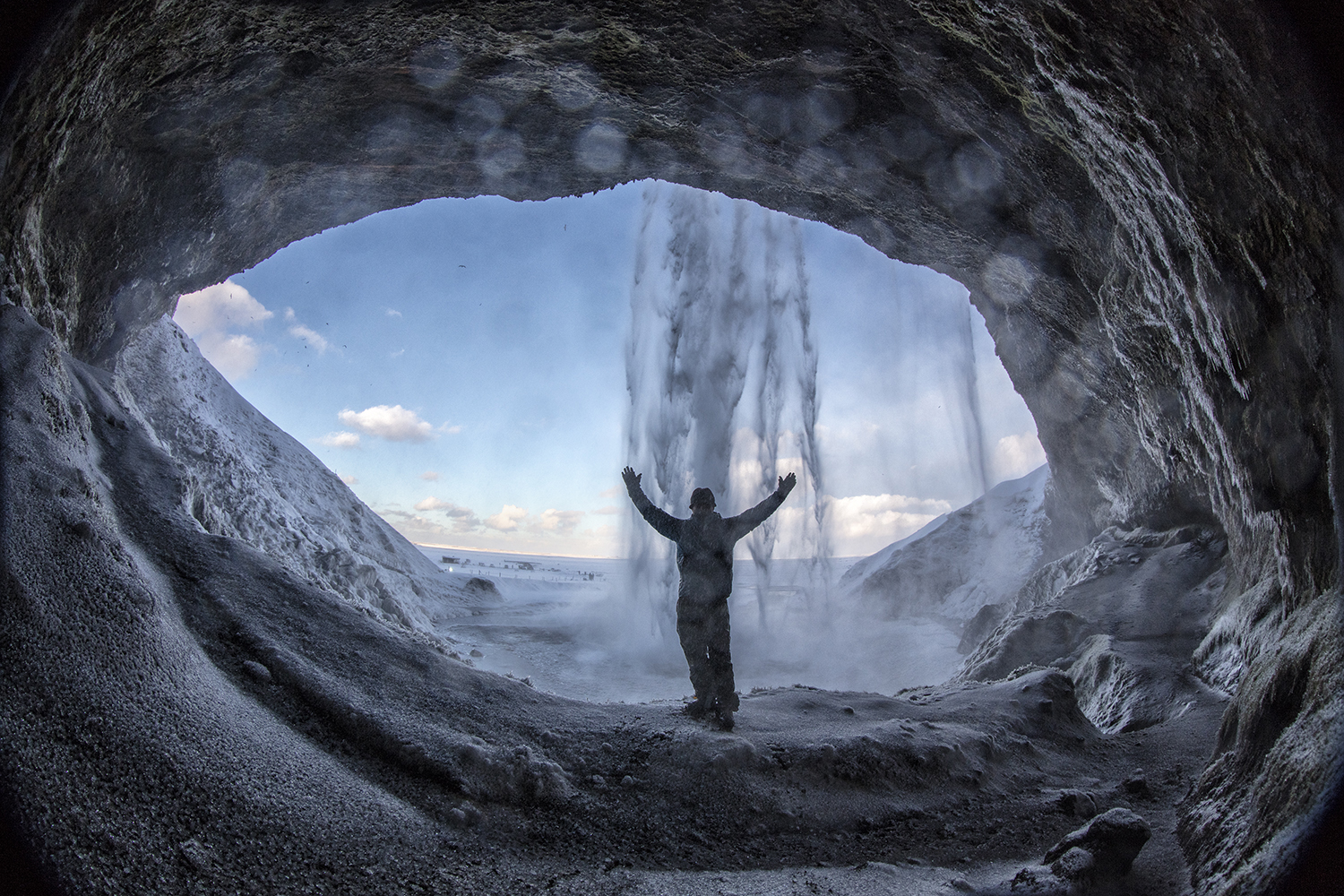
“Every link in the Water Wide Web is a pulse of memory, a droplet of consciousness, a node of nature’s code.”
~ Robbie George
Conclusion: Water as the Key to the Unified Theory of Consciousness
Throughout this exploration, we’ve followed the river of a single question: Could water hold the secret to consciousness? We’ve seen how water remembers, how it resonates, how it receives light and returns intelligence.
From memory and coherence to fractal expression and spiral resonance, we return again and again to the elemental truth: water is not just physical—it is fundamental.
When paired with photons (Φ), water in its quantum state H₂O(Q) becomes a canvas for consciousness itself. The Unified Consciousness Equation C = H₂O(Q) + Φ invites us to see life, mind, and cosmos as one breath—spoken in light, remembered in water.
Call to Action
I invite you to reflect on water differently—from your morning glass to the rivers you walk beside. What if every drop you encounter is a page from the memory of the universe? Consider how your own consciousness might be shaped by what you drink, where you bathe, how you think near water.
For deeper insights, explore more reflections in Nature’s Lens: Insights & Stories and discover new revelations in the Water Wonders blog series.
“Water is not just the memory of the Earth—it may be the memory of consciousness itself.”
~ Robbie George
Explore Fine-Art Prints
Bring the season home—browse Wildlife, Landscapes, and Seascapes by National Geographic–published photographer Robbie George. See framing, editions, and care on the Collectors page.
 Landscape
 Wildlife
 Seascapes

About Robbie George
Robbie George is a National Geographic–published photographer and resonant naturalist. His fieldcraft follows a simple ethic—distance first, habitat always— shaped by Slow Knowledge and the Signature Series.
Explore calm, undisturbed behavior in the Wildlife Gallery or plan your next trip with the Seasonal Wildlife Calendar, Golden Hour & Moon, and Photography Maps.
“Attention first, image second. The shutter is the period at the end of a sentence you learned by walking.”
FAQ’s: The Unified Theory of Consciousness and Water
What is the Unified Consciousness Equation?
The equation C = H₂O(Q) + Φ suggests that consciousness arises through water in its quantum state (H₂O(Q)) interacting with the flow of information (Φ), such as photons or other quantum fields.
Why is water central to this theory?
Water has unique quantum properties, including coherence, memory potential, and biological conductivity, making it an ideal candidate for the medium through which consciousness flows.
How do photons influence consciousness?
Photons carry energy and information. When they interact with structured water, they may influence molecular patterns and resonance, potentially triggering awareness and perception.
What role does memory play in water’s connection to consciousness?
The theory of water memory proposes that water can retain structural imprints of substances or energetic frequencies, allowing it to act as a carrier of experience or informational code.
Can this theory be tested scientifically?
While some aspects are speculative, quantum biology, photonics, and neuroscience are advancing rapidly, offering potential frameworks to measure water-based coherence and consciousness correlations.





