Naturepedia FAQ Layer
Pines of North America™ FAQ
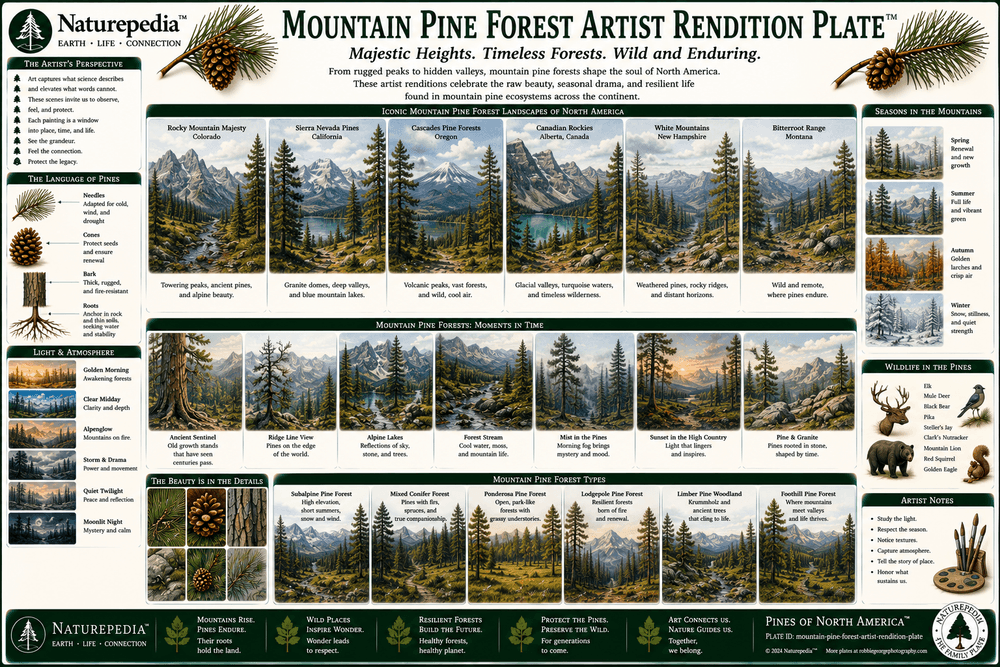
Answers to common questions about pine identification, pine needles, pine cones, pine bark, Eastern White Pine, Ponderosa Pine, Lodgepole Pine, Longleaf Pine, wildlife habitat, fire ecology, forest communities, carbon storage, and the ecological role of pines across North America.
What are pine trees?
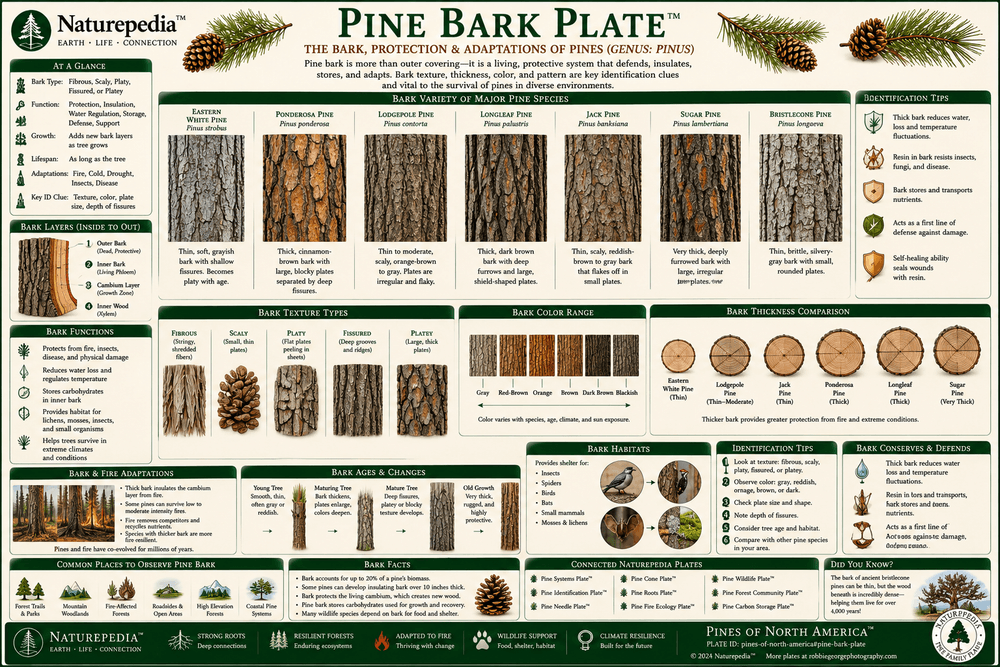
Pine trees are evergreen conifers in the genus Pinus. They are known for needle-like leaves, woody cones, resin, distinctive bark, and the ability to grow across mountain forests, boreal landscapes, coastal areas, dry slopes, and fire-adapted ecosystems.
How can you identify a pine tree?
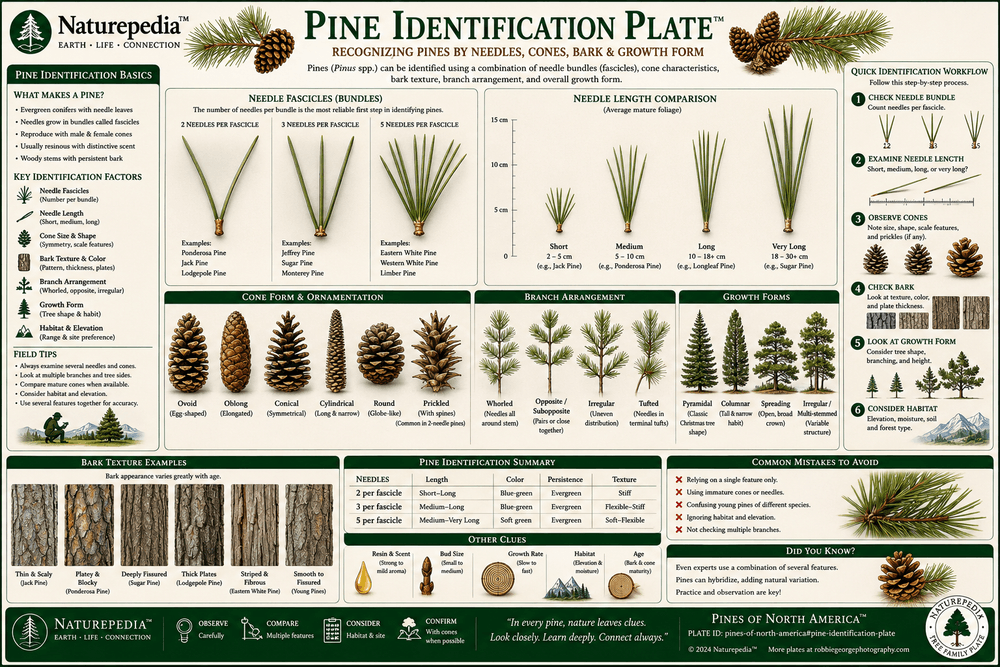
Pines are commonly identified by their needles, which usually grow in bundles called fascicles, along with their cones, bark texture, branching patterns, growth form, habitat, and range.
What are pine needle bundles?
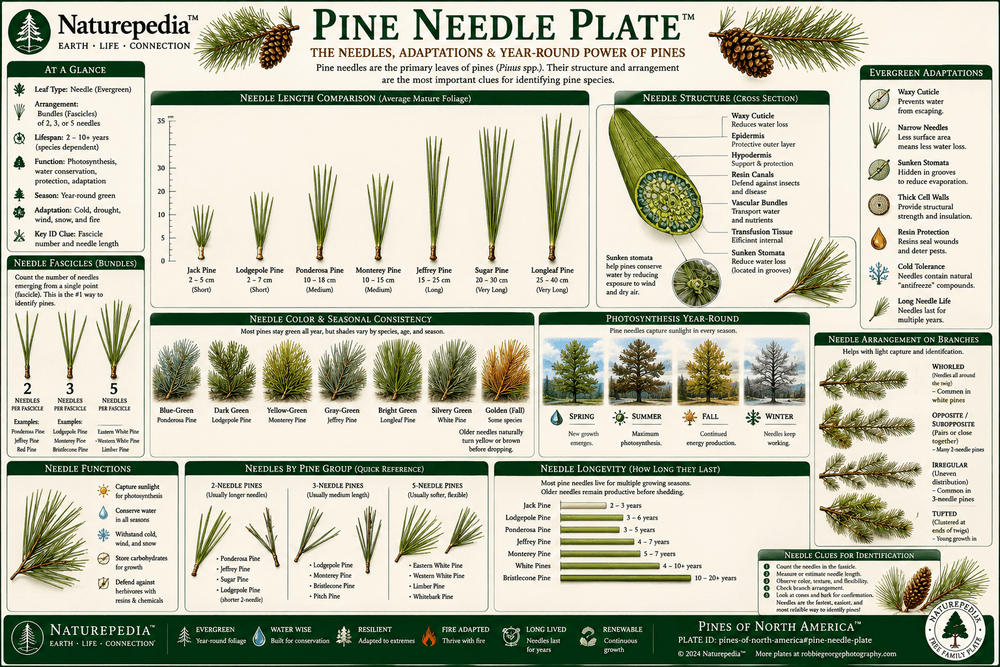
Pine needle bundles are called fascicles. Many pine species can be identified by counting how many needles grow in each bundle, often two, three, or five depending on the species.
Why do pine trees have cones?
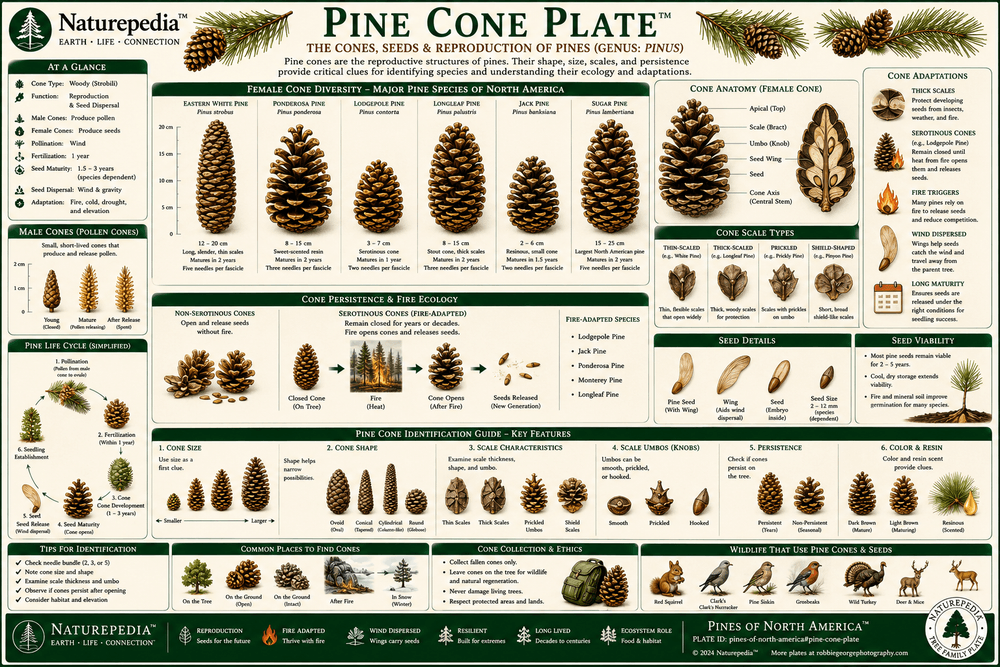
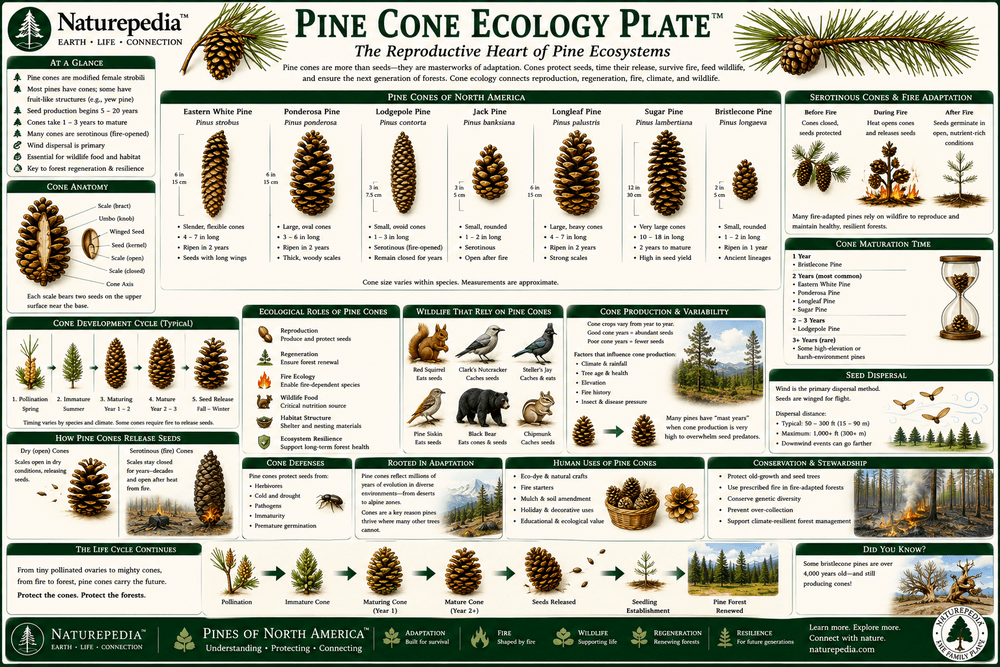
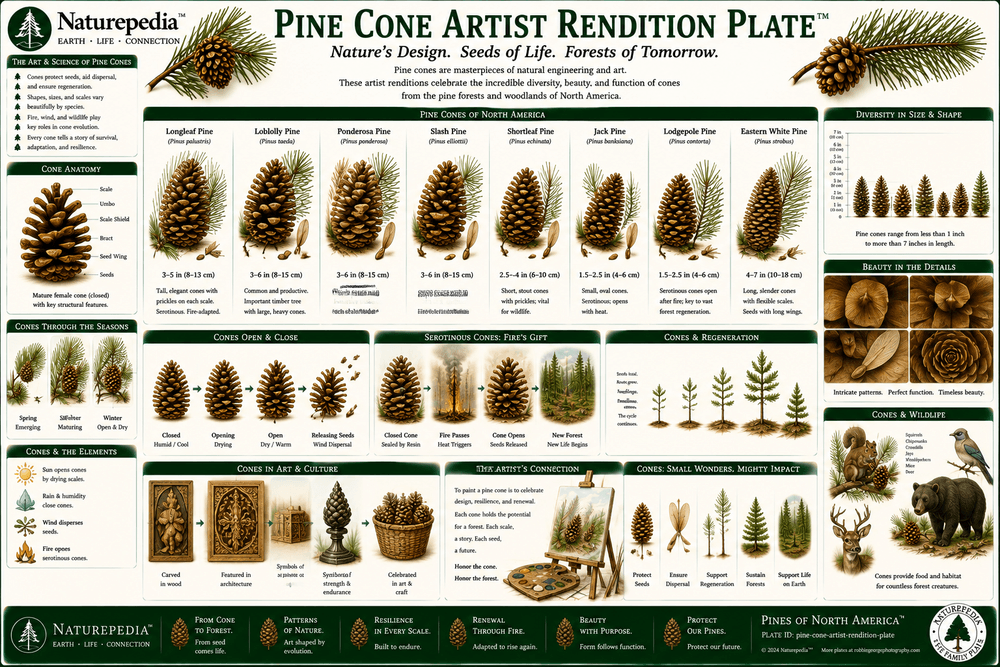
Pine cones are reproductive structures that hold and release seeds. They protect developing seeds, support wildlife food systems, and help pine forests regenerate through wind dispersal, animal feeding, and in some species fire-triggered seed release.
What are the major pine species featured on this page?
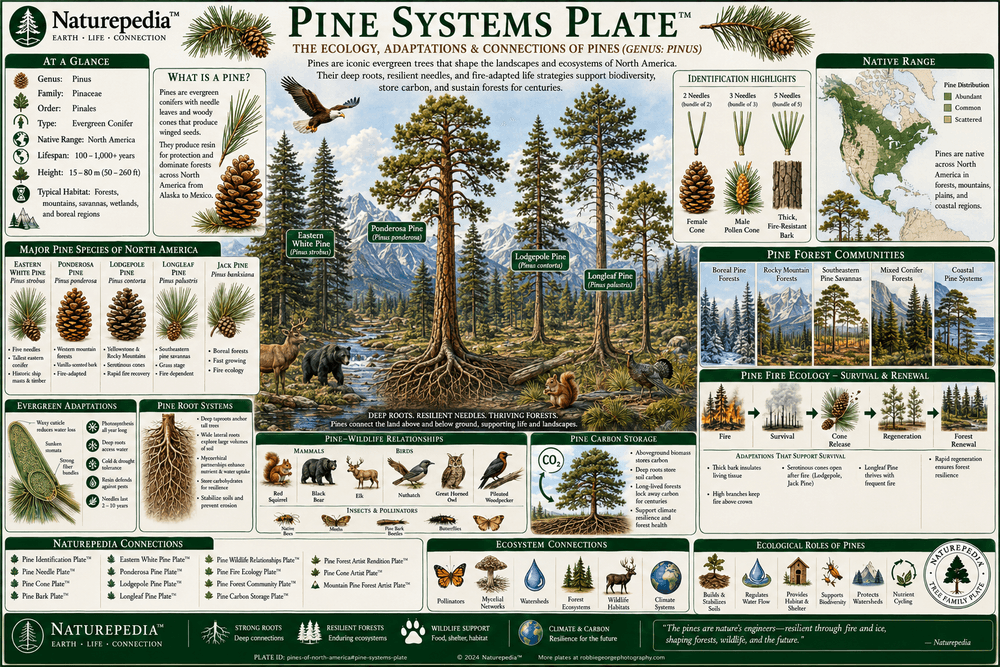
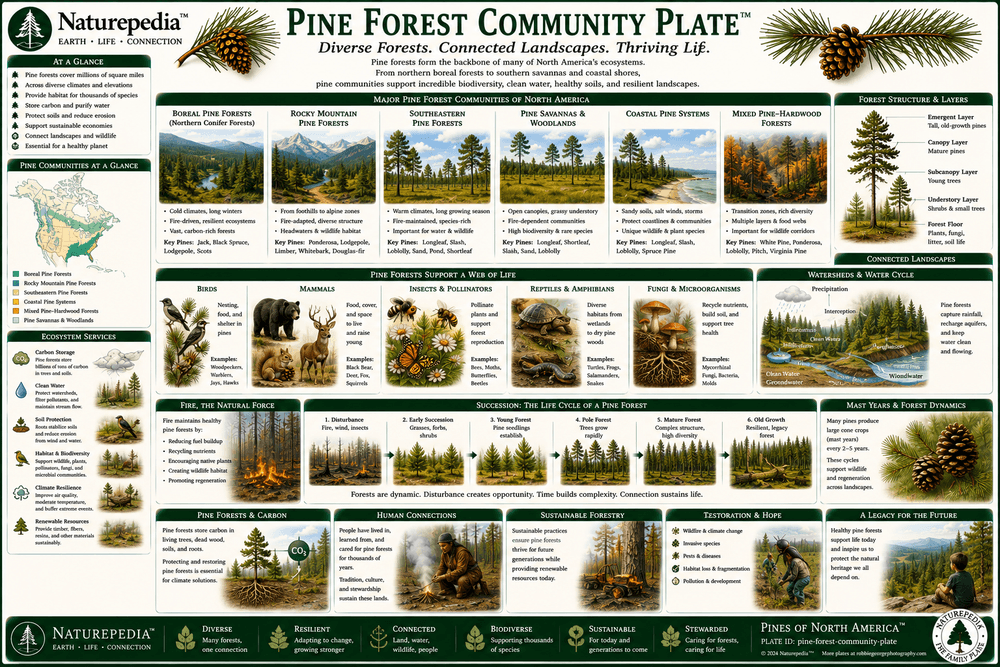
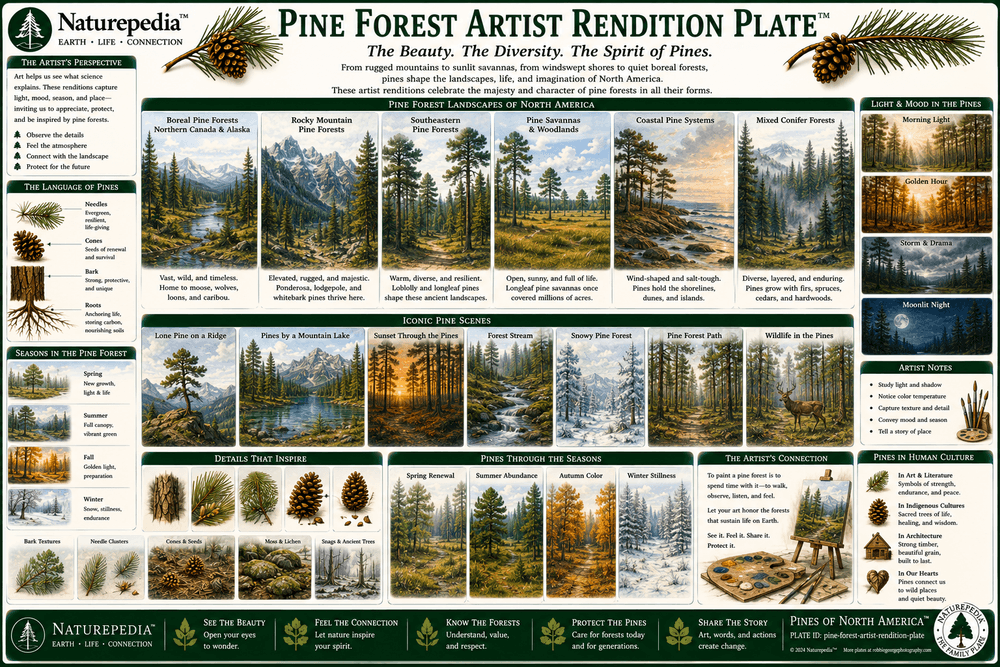
This guide features Eastern White Pine, Ponderosa Pine, Lodgepole Pine, and Longleaf Pine. Together they represent eastern forests, western mountain forests, Yellowstone fire ecology, and southeastern pine savannas.
What is Eastern White Pine?
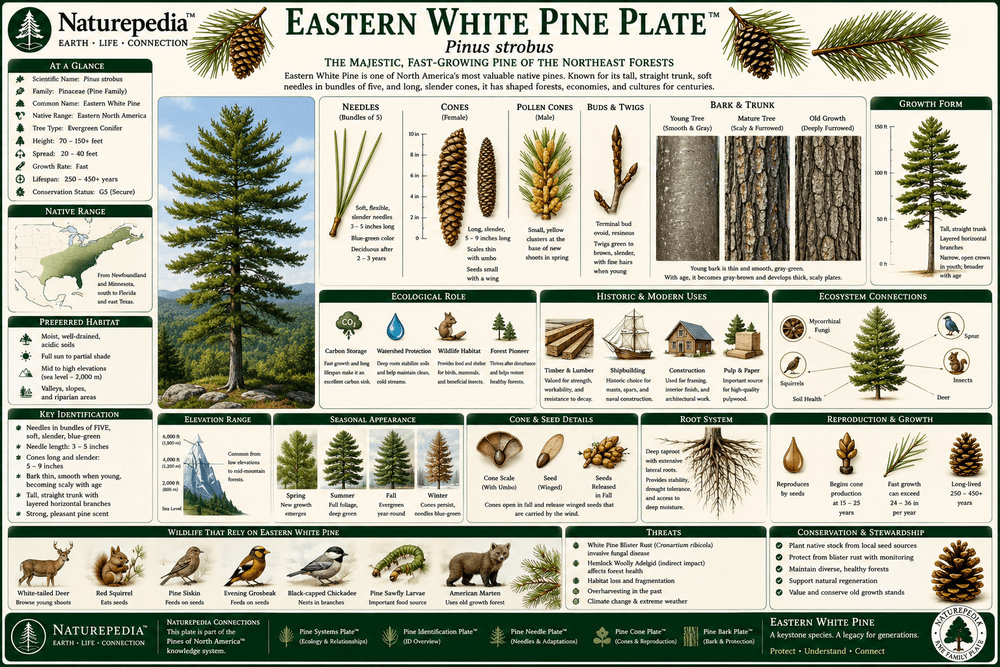
Eastern White Pine, Pinus strobus, is a tall eastern conifer known for five-needle bundles, soft bluish-green needles, long cones, towering canopies, wildlife value, and historic importance in North American forests.
What is Ponderosa Pine?
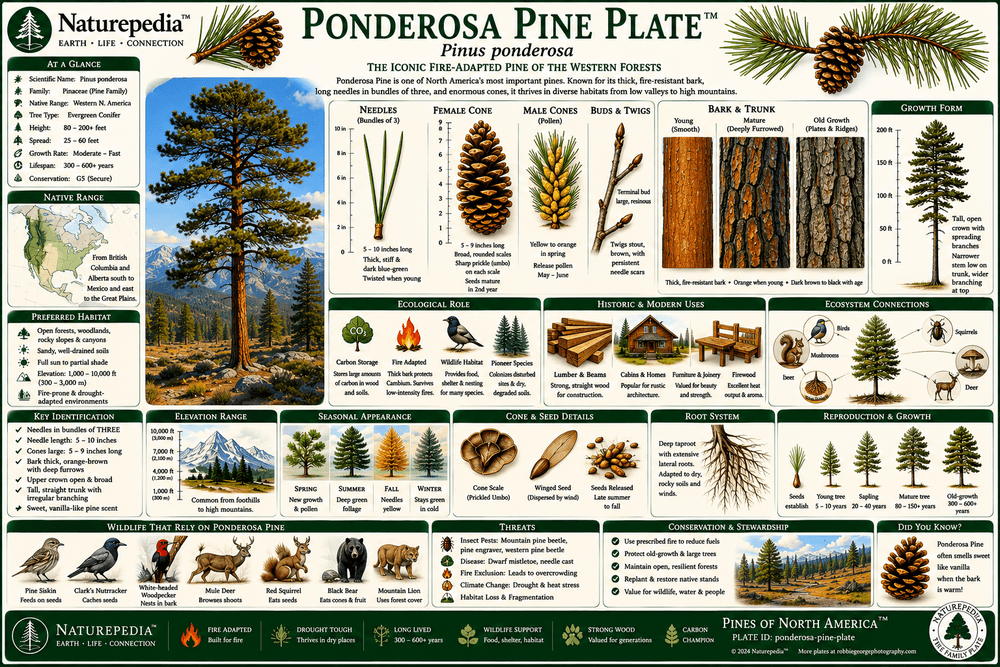
Ponderosa Pine, Pinus ponderosa, is a western pine associated with mountain forests, open woodlands, thick fire-resistant bark, long needles, large trunks, and resilient dry forest ecosystems.
What is Lodgepole Pine?
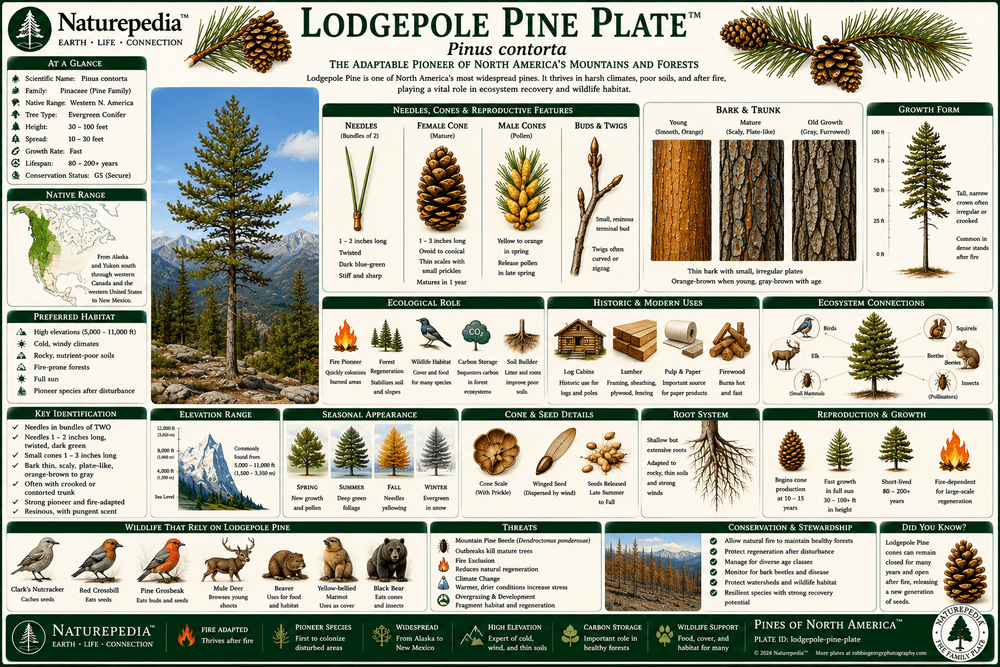
Lodgepole Pine, Pinus contorta, is a western pine common in Rocky Mountain and Yellowstone ecosystems. It is especially known for serotinous cones that can remain closed until heat from fire helps release seeds.
What is Longleaf Pine?
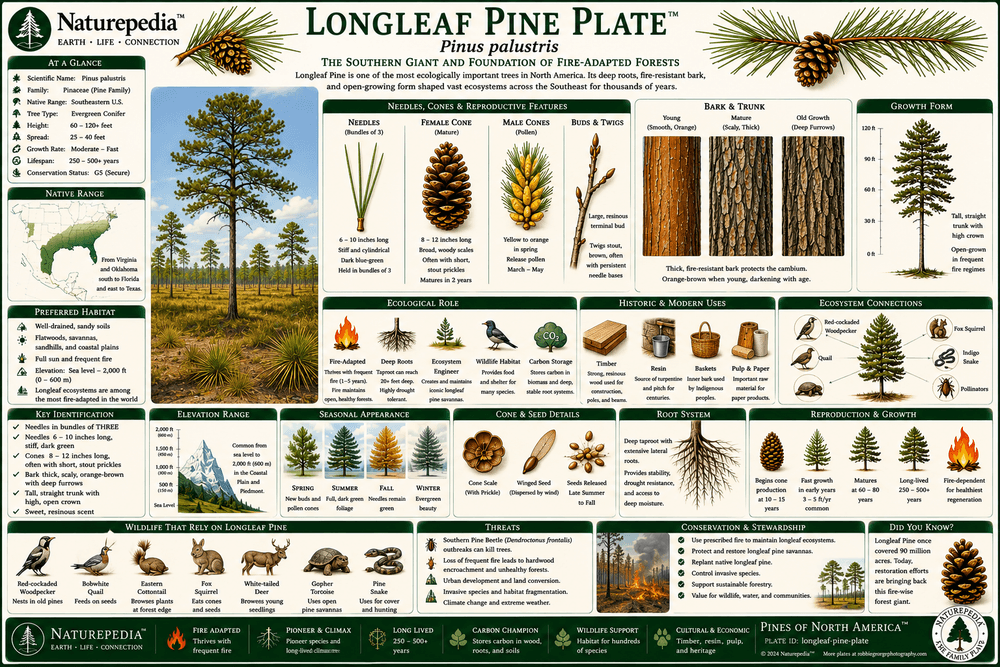
Longleaf Pine, Pinus palustris, is a southeastern pine associated with pine savannas, grass-stage seedlings, frequent low-intensity fire, high biodiversity, and one of North America's most distinctive fire-maintained ecosystems.
Do pine forests support wildlife?
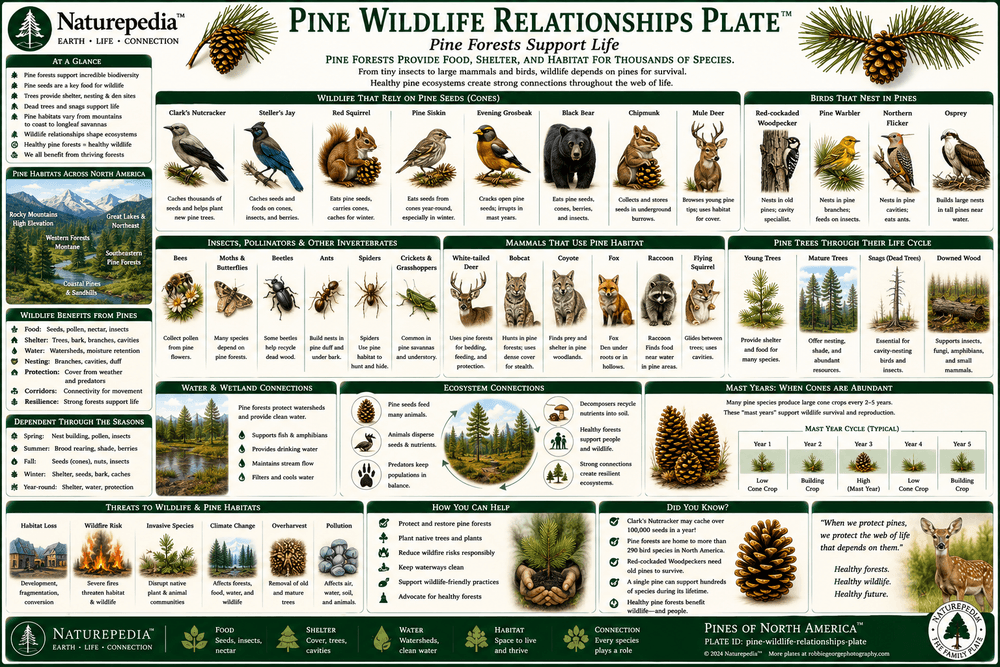
Yes. Pine forests support squirrels, crossbills, woodpeckers, owls, songbirds, deer, elk, bears, insects, cavity nesters, seed predators, shelter networks, and seasonal food webs.
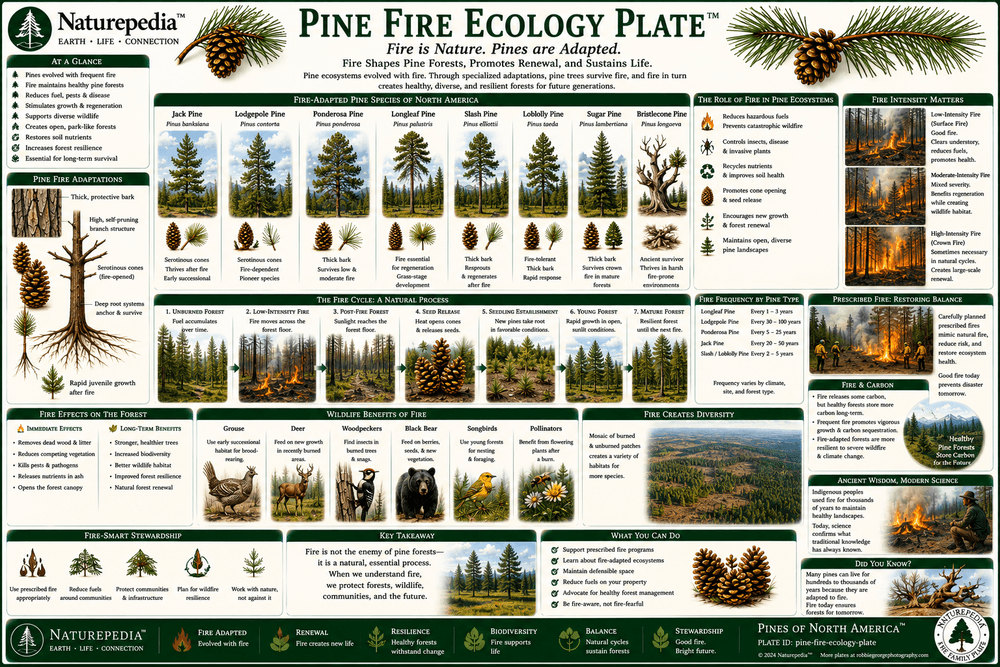
Why is fire important in pine ecology?
Fire is important in many pine ecosystems because it can reduce competition, recycle nutrients, open the forest floor, maintain pine savannas, trigger seed release in some cones, and help certain pine forests regenerate after disturbance.
What are serotinous cones?
Serotinous cones are cones that can remain closed for years and open in response to heat, often after wildfire. This allows seeds to be released into newly opened habitat where young pines can establish.
Do pine forests store carbon?
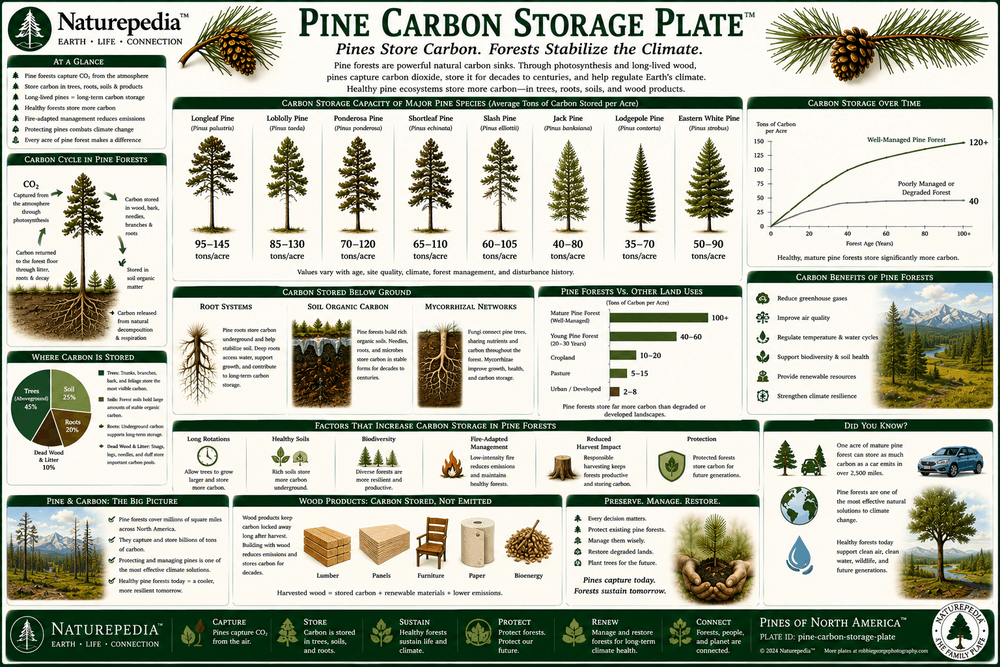
Yes. Pine forests store carbon in trunks, branches, needles, roots, forest litter, soils, resin-rich wood, and long-lived forest stands. Their role in carbon storage depends on forest age, species, disturbance history, soil conditions, and regional climate.
How does this page connect to Naturepedia?
Pines of North America™ connects Trees of North America™, Birches of North America™, Oaks of North America™, Maples of North America™, Aspens of North America™, Plant Communities™, Soil Microbiome™, Mycelial Networks™, Water Systems™, Wildlife Habitats™, Biodiversity™, and Ecological Restoration™ into a unified evergreen forest ecology framework.