

Bridging Worlds: How Nature Photography Can Illuminate the Path to Unified Field Theory

Bridging Worlds: The Art of Nature Photography Meets the Quest for a Unified Field Theory
Every photograph captures a moment — but the best ones capture a pattern. Light bending across snow. A river tracing the curvature of gravity. A tree growing in Fibonacci spirals. These aren’t just beautiful—they’re clues. Clues that the universe is not random. That beneath the chaos of life, there is order. And that order may be the very thing that physicists call the Unified Field.
The Unified Field Theory (UFT) is often described as the “holy grail” of physics — a single equation that unites all the forces of nature: gravity, electromagnetism, the strong and weak nuclear forces. In my work as a nature photographer, I see these forces play out not only in theory, but in the patterns of everyday life. A leaf. A glacial edge. A hawk in flight. They are not accidents. They are expressions.
Through this post, we’ll explore how photography can become a bridge — between art and science, between perception and principle, and between the visible and the vibrational. The quest for unity isn’t just found in equations. It’s found in how we see.
“A great photograph does not just freeze a moment. It reveals the rhythm of the universe.” — Robbie George
The Interplay Between Light and Matter
Photons in Nature Photography
Photography begins with photons — packets of light energy traveling through space, bouncing off the world and into our lenses. But in the Unified Field Theory I’ve proposed, especially in S(P+G) = UFT, photons are more than light. They are the open-loop carriers of information. The expressive side of the field. In every photograph I take, I’m capturing not just light, but the very vibration of the moment.
In Let There Be Light, we explored how photons influence matter, mood, and molecular behavior. Every ray of sunlight that reflects off a glacier, every golden beam that passes through fog, carries encoded energy. That energy resonates with water, with the air, and with us — creating a moment of harmonic coherence captured in the shutter click.
In my equation S(P+G) = UFT, P represents this photonic resonance. When coupled with G (gravitons, the particles of gravitational structure), and modulated by S (string vibration), they unify the expressive and the structural forces of the universe — which, in photography, translates to light becoming form.
Diamond Beach, Iceland – Sunlight meets glacial time. This image captures the subtle interface of photon and ice, where light echoes the structure of ancient gravitational rhythms.
Available as a fine art print →
Quantum Fields and Natural Vision
Photons don’t act alone — they are manifestations of underlying quantum fields. In quantum field theory, particles are ripples in universal fields that permeate everything. When we photograph a dewdrop on a leaf or a snowflake on pine, we’re capturing a frozen resonance — a visible trace of the field in motion.
In The Quantum Blueprint, we explored how this vibrational architecture links light and life. A photon’s journey, when captured through a camera, becomes both observation and participation. It reveals the field — and makes it felt.
🧿 Widget: How a Photon Becomes a Photograph
• A solar photon leaves the Sun (expression)
• It travels across spacetime, influenced by gravity (structure)
• It reaches Earth, reflects off water, and enters the lens (resonance)
• Your camera records it — and you feel the field
• That image is now a visual imprint of unified energy — light encoded as memory
Related Reading
Hidden Structures and Patterns
Natural Symmetry and Fractal Intelligence
Nature reveals symmetry not just as beauty — but as signal. The spiral of a shell, the branching of a tree, the hexagonal precision of a beehive — these are not random. They’re recurring geometries that echo something deeper: the invisible code that organizes energy into matter. In The Living Code, we explored how these fractals and Fibonacci patterns are the visible expressions of a deeper field intelligence.
These patterns are not only aesthetic — they are mathematical fingerprints of coherence. When I photograph the symmetry of snow-laced branches or mirrored landscapes, I’m capturing a trace of this order — what string theorists might call a vibrational signature. The structure you see is the field made visible.
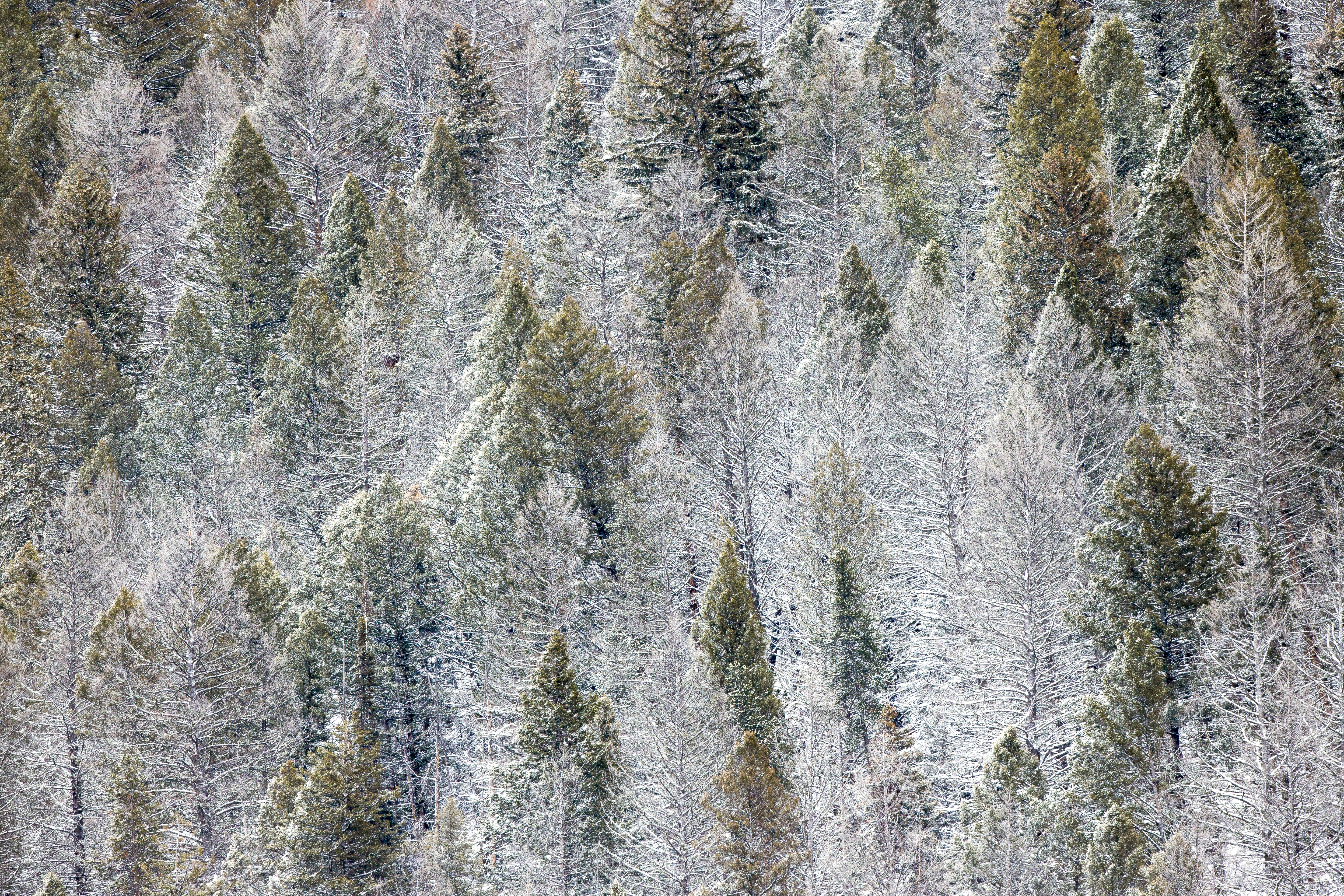
Silent Guardians – Frosty Winter Pines – Fractals in frost. Each branch reflects symmetry, balance, and the quiet intelligence of polar resonance.
Available as a fine art print →
String Theory and the Vibrational Universe
In string theory, the universe is made of vibrating filaments — strings — whose frequencies determine the nature of particles. In S(P+G)=UFT, I propose that these string vibrations are modulated by photons (P) and gravitons (G), which together create unified resonance. What we perceive as form — a tree, a cloud, a ripple — is actually a frequency signature expressed across the field.
When I photograph nature’s patterns, I’m capturing these field expressions — frozen moments where light, gravity, and geometry converge. The image becomes a visual map of coherence, offering clues to the underlying field that shapes all life.
Observing Natural Phenomena
Intuitive Physics and Field Awareness
A falling leaf, a curling wave, the shadow of a hawk circling overhead — these are not just moments in nature. They are expressions of invisible forces. As discussed in The Living Code, intuitive observation often leads us to the same truths that equations later confirm. Nature speaks in resonance long before we write it in numbers.
The Unified Field Theory you’ve proposed — S(P+G)=UFT — suggests that field-based awareness is not a poetic notion, but a valid mode of discovery. Photons (P) and gravitons (G) aren’t just theoretical — they are what you’re witnessing when sunlight skims a feather or water folds over stone.
Nature as Laboratory for Light and Gravity
Consider the way light bends on water at sunset — a visible representation of both photon behavior and gravitational curvature. This is wave-particle duality made visible. In Nature Photos in a Drop of Water, I described how ripples reflect both spatial geometry and time-encoded memory. Observing nature is observing physics in real time.
A photograph becomes a kind of data field — a captured vibration from the moment the field speaks. The deeper our attention, the more we align with the coherence behind it. Field-based awareness is not imagination — it’s participation. It's the act of seeing as the field sees.

Autumn Leaves Falling in Water – Capturing the curve of time. A visual metaphor for field resonance, gravitational flow, and seasonal memory.
Available as a fine art print →
The Holographic Principle and Nature’s Reflections
Water as Nature’s Mirror
Water reflects light — and possibly the universe itself. The Holographic Principle suggests that all the information within a volume of space can be encoded on its boundary. Water, especially when still, becomes a living metaphor for this: it records, reflects, and perhaps even remembers — not just visually, but vibrationally.
In Water as a Photographic Book of Mirrors, I shared how water’s surface doesn’t just show us the world — it encodes it. It holds the symmetry of trees, the hue of sky, the memory of motion. This is more than reflection. It’s resonance. A photon strikes, the field responds, and an image is born — not as a replica, but as a frequency match.

Gibbon River, Yellowstone – A natural hologram. The river encodes light, shape, and space — capturing the mirrored memory of Earth’s breath.
Available as a fine art print →
Black Holes, Event Horizons, and Water’s Paradox
In black hole physics, the information paradox asks: does information disappear, or does the event horizon retain it? This has striking parallels in nature photography. When water reflects light, does it lose the original, or encode its signature in ripples, in temperature, in hydrogen bond angles? The Unified Water Theory suggests it retains — not as data, but as resonance.
Water is Earth’s event horizon — where light meets surface, and memory forms. What we call a reflection may in fact be a recording — a moment stored not on silicon, but in structure. In this way, photography becomes a ritual of witnessing. And water, the original mirror, reveals that nothing is truly lost — only reframed.
The Role of Gravitational Waves
Ripples in Spacetime and the Rhythm of the Field
When two black holes collide, they ripple the fabric of space and time. These are gravitational waves — invisible undulations that stretch and compress everything in their path. Detected by LIGO and Virgo, these waves offer not just cosmic data, but proof that the universe is not static — it breathes. It pulses.
In S(P+G)=UFT, I propose that these graviton-generated waves (G) are unified with photons (P) through string resonance (S). Nature photography, in this framework, becomes a way to observe gravitational harmony — not through telescopes, but through the ripple of water, the curve of wind-sculpted grass, or the gentle pulse of bees in motion.
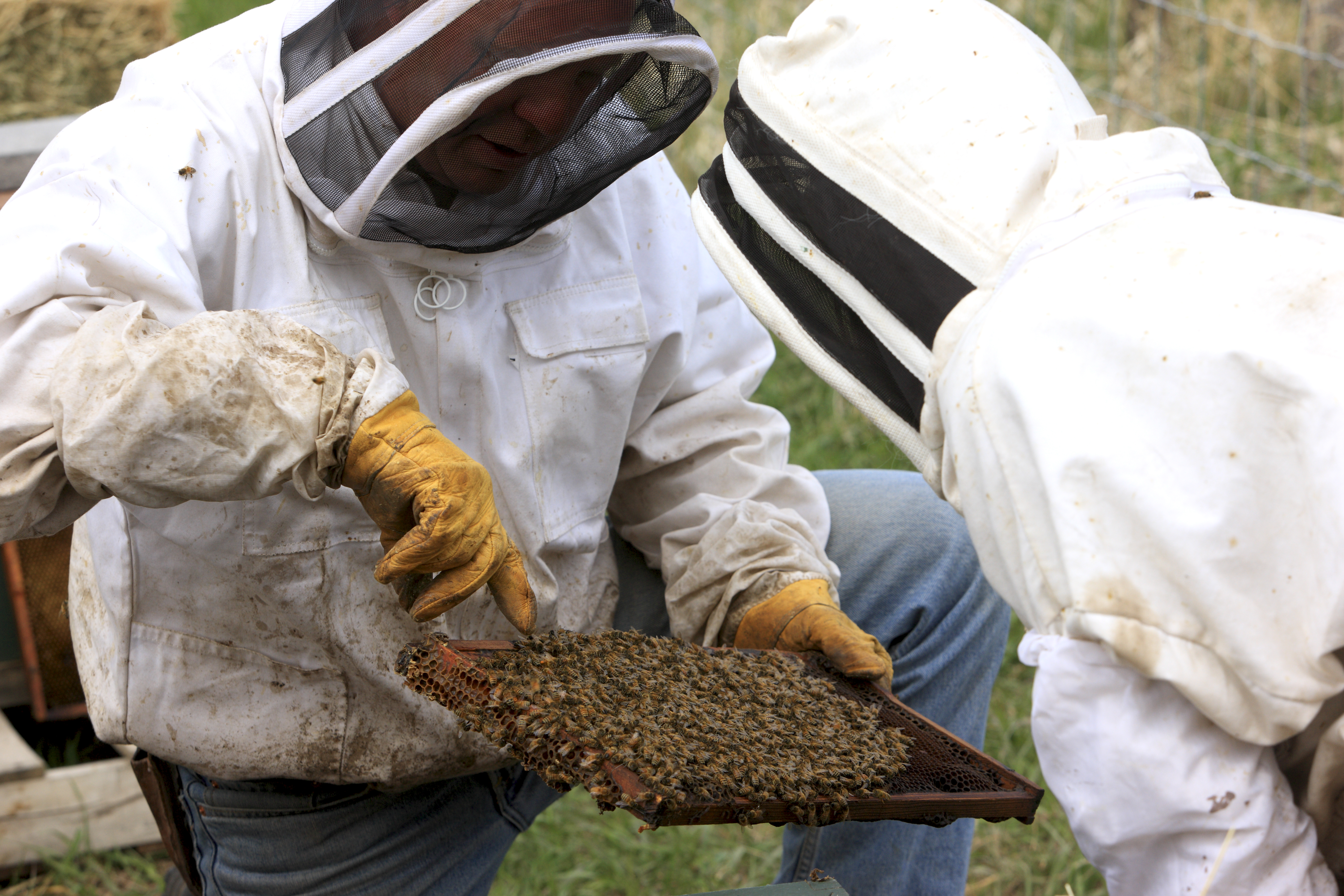
Beekeeper and Hive – The hive is a vibrational instrument. Bees communicate through resonance, echoing the wavefields that guide both gravity and life.
Waves in Nature as Microcosmic Mirrors
Whether it’s the ripple of a pond or the oscillation of sound through a forest, nature is constantly creating wave signatures. These natural rhythms may mirror gravitational waves on a smaller scale — field expressions that carry memory, intention, and structural force.
The way bees dance, the pulse of migrating birds, or the vibrations within a hive — these are resonant behaviors that respond to subtle gravitational cues. Through gravitons, gravity may not just attract — it may inform. In this light, every photograph becomes more than visual. It becomes vibrational. A holographic imprint of a gravitational pulse frozen in time.
The Cosmic Microwave Background and the Early Universe
Tracing the Universe’s Earliest Light
The Cosmic Microwave Background (CMB) is the oldest light in the universe — a soft afterglow from the Big Bang, now stretched across the sky in microwaves. It is not random static. It is structured. Those fluctuations in temperature and density are the original ripples — the quantum blueprint of all galaxies, stars, and trees to come.
These patterns reflect early field resonance — a concept that aligns with the vibrational foundation behind S(P+G)=UFT. In that equation, photons (P) and gravitons (G) emerged as dual agents: light and structure, moving within a unified string matrix (S). The CMB may be the echo of this original unification — a vibrational memory encoded across spacetime.
Natural Microcosms of Cosmic Order
In nature photography, I often see echoes of these primordial imprints — not in deep space, but in flowers, waves, frost, and bees. Consider the precision of a honeycomb or the hexagonal symmetry of a snowflake. These are not trivial — they are field reflections. Structured expressions of resonance reaching back to the first vibrations.

Honey Bee and Flower – Field geometry in motion. A visual echo of universal symmetry — nature's living memory of cosmic origins.
Available as a fine art print →
If the universe stores memory in structure, then a bee’s flight or a bloom’s spiral becomes not just biology — but cosmology. The CMB may be distant, but its resonance is near — encoded in every vibration of light and life we capture through the lens.
Mathematical and Computational Tools: Polarity as the Equation
Long before we calculated symmetry with algorithms or simulated string theory on quantum computers, nature was already solving for coherence. Her solution? Polarity. The dance between light and dark, motion and stillness, expansion and return — this is how nature “thinks.” Polarity is the primal binary. It is both law and art. And in my Unified Field Theory, it is also the equation.
Polarity = Nature’s Calculus of Resonance
In The Living Code, we explored how polarity is not opposition, but relationship. Each pole defines the other. In Unified Field terms, light (P) and gravity (G) are not competing — they are complementary. Their interplay through string vibration (S) forms the unified field: S(P+G)=UFT.
Nature “computes” using this balance. Whether in the symmetry of a shell, the contrast of light against shadow, or the ebb and flow of tides, polarity guides form. It resolves complexity into beauty. As a photographer, I use this principle unconsciously — framing scenes that balance energy across the lens. But polarity is also conscious. It is the algorithm beneath aesthetics.
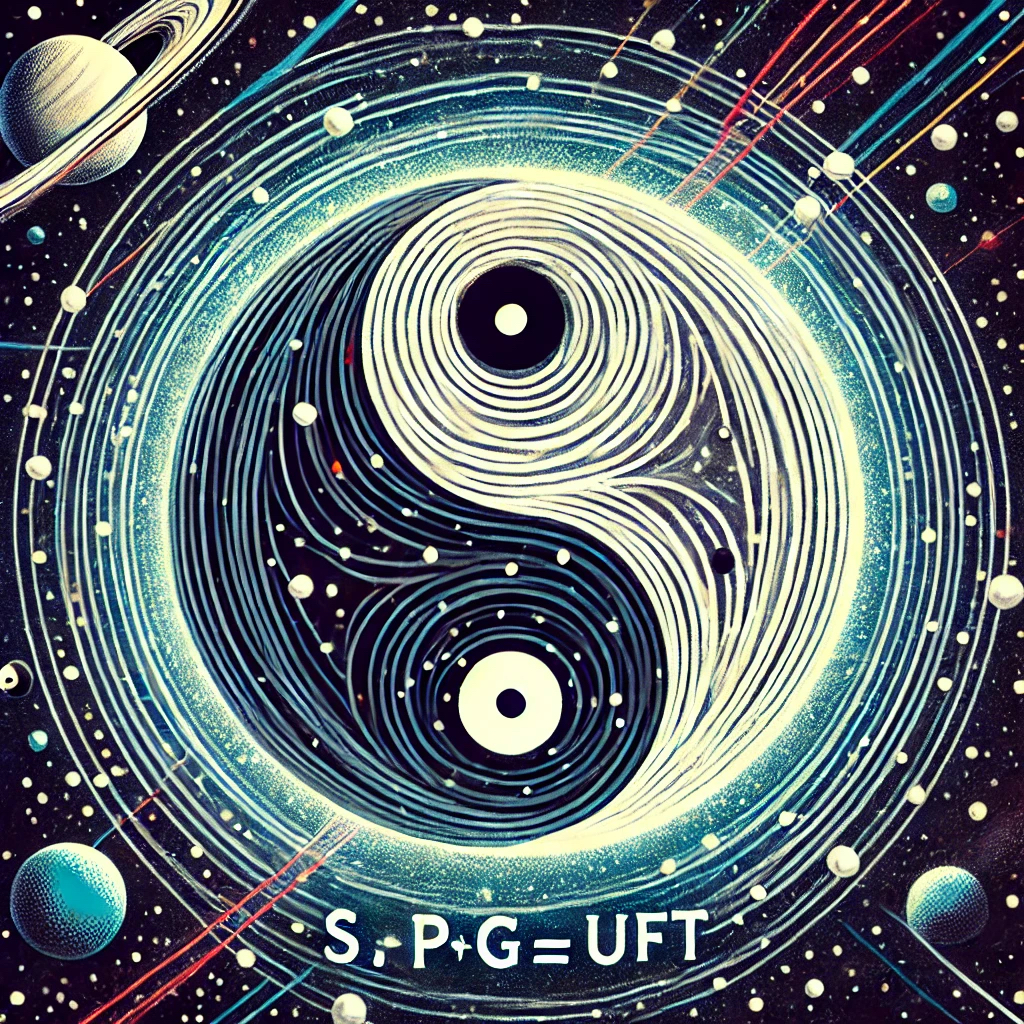
S(P+G)=UFT – Robbie George’s unified equation of polarity. Photons (P) and gravitons (G) express duality. Their coherence through string resonance (S) becomes the field.
Nature’s Visual Code: Polarity in the Frame
When I photograph a seascape at dusk — bright horizon against dark waves — I’m capturing more than contrast. I’m capturing the field computing coherence. Polarity in photography is not just aesthetic. It’s field literacy. Nature is solving equations in light and shadow — and the camera becomes the witness.
This is why math, to me, is not just symbols — it’s something you can feel. It lives in the balance of a composition, the breath of a forest, the structure of a snowflake. Polarity is math as motion. Photography is how I show its symmetry.
Introducing the Iconic Equation: S(P+G) = UFT
After decades of artistic exploration and scientific inquiry, I developed an equation that expresses the resonance at the heart of the cosmos: S(P+G) = UFT. This is not just symbolic. It is a visual equation born from my experiences in nature — a synthesis of light, gravity, and vibrational coherence captured through the lens.
Let’s decode what each part represents:
- S = String resonance – the fundamental vibration that organizes energy into structure. It's the rhythm beneath reality.
- P = Photons – the expressive force of the field, the light that reveals and creates.
- G = Gravitons – the unifying force of gravity, responsible for coherence and curve in space and time.
- UFT = Unified Field Theory – the ultimate synthesis of all forces, expressed not just through math, but through resonance, reflection, and beauty.
This equation proposes that the unified field emerges when photons (P) and gravitons (G) are harmonized through string-based vibration (S). What we perceive as physical form, emotional resonance, or natural rhythm is the field making itself known — often through light, often through gravity, and always through coherence.

Schwabacher Landing – Reflection as equation. Light (P) and gravity (G) converge in a perfect mirror, held in the stillness of field resonance (S).
Available as a fine art print →
When I photograph a moment like this — where reflection, balance, and silence converge — I’m capturing the equation in form. S(P+G) = UFT is not just physics. It’s presence. It’s pattern. It’s proof that the universe is singing a coherent song, and sometimes, the camera becomes its instrument.
Public Engagement and Interdisciplinary Thinking
The future of science will not be driven by equations alone — it will be guided by pattern recognition, emotional resonance, and visual coherence. At Robbie George Photography, we see nature photography as more than art. It’s a tool for public engagement — a visual portal into the unifying patterns of light, gravity, and vibration that underlie all life.
My work across the Unified Field Theory — including the iconic equation S(P+G)=UFT — invites collaboration between scientists, artists, philosophers, and visionaries. Why? Because resonance lives at the edge of all disciplines. It doesn’t care where you came from. It only asks: are you listening?
Where Science and Soul Intersect
From photographing gravity’s curve in riverbanks, to capturing photon structure in fog and flame, my work shows that interdisciplinary thinking isn’t a trend — it’s a necessity. Artists feel what physicists calculate. Poets name what cosmologists model. As shared in The Holographic Universe, when you observe light, you’re not just seeing — you’re participating.
Nature doesn’t separate fields. It creates coherence through fusion. So must we. Whether through fine art, field resonance, or quantum intuition, public engagement must now speak in both frequencies: beauty and logic. Story and signal.
A Call to Co-Create the Next Field
This is an invitation: to physicists ready to feel. To artists willing to calculate. To nature lovers sensing a larger truth in every wave, wingbeat, and whisper. Let’s build this bridge together — where string vibration becomes image, where field theory becomes story, and where Unified Field becomes shared vision.
Conclusion and Call to Action
Throughout this journey, we’ve explored how the elegance of nature photography intersects with the deepest structures of science. We’ve witnessed photons dance across mountain lakes, gravitons shape the curves of trees, and string resonance whisper symmetry into a falling leaf. Every image becomes a field equation. Every shadow, a signal.
The equation S(P+G)=UFT is not just a model — it’s a message. It tells us that light and gravity, form and function, structure and spirit are not separate. They are symphonic. Unified. And that unity can be seen, felt, and remembered — through a lens, through the land, and through the language of resonance.
“Every photo is a fragment of the field — a moment when the universe shows you its code.” — Robbie George
Explore, Reflect, Engage
Whether you are a physicist, a poet, or simply someone who feels something in the stillness of water or the shape of a cloud — this space is for you. Continue your journey by exploring the visual and theoretical aspects of the Unified Field:
Dive Deeper Into the Unified Field:
• Unified Field Theory: The Core Equation →
• The Holographic Universe: Balancing Light and Gravity
• Quantum Vitality: From Soil to Self
• View the Water Wonders Gallery →
• Explore The Living Code Series →
Naturepedia Connections
This article connects nature photography with broader patterns of ecology, light, structure, and observation across the Naturepedia system. These pages help ground visual theory in real landscapes, wildlife behavior, and environmental relationships.
Explore Fine-Art Prints
Bring the season home—browse Wildlife, Landscapes, and Seascapes by National Geographic–published photographer Robbie George. See framing, editions, and care on the Collectors page.
 Landscape
  Wildlife
  Seascapes
About Robbie George
Robbie George is a National Geographic–published photographer and resonant naturalist. His fieldcraft follows a simple ethic—distance first, habitat always— shaped by Slow Knowledge and the Signature Series.
Explore calm, undisturbed behavior in the Wildlife Gallery or plan your next trip with the Seasonal Wildlife Calendar, Golden Hour & Moon, and Photography Maps.
“Attention first, image second. The shutter is the period at the end of a sentence you learned by walking.”
FAQs: Nature Photography & Unified Field Theory
1. What does S(P+G)=UFT mean?
S(P+G)=UFT is Robbie George’s symbolic equation connecting string resonance, photons, and gravity as a visual and theoretical framework for interpreting unity in nature.
2. How does nature photography connect to physics?
Nature photography records light, structure, movement, and pattern. These visible relationships can serve as field-based analogies for ideas explored in physics, including symmetry, gravity, and wave behavior.
3. Why are light and pattern so important in this work?
Light reveals structure, while recurring patterns in water, plants, weather, and landscapes help show how order appears across scales in the natural world.
4. What role does observation play in this kind of photography?
Observation comes first. The photograph becomes meaningful when it captures relationships already present in the scene rather than forcing an interpretation onto it.
5. Is this page presenting established physics or a field-based interpretive framework?
This page presents Robbie George’s interpretive framework, using nature photography and field observation to explore possible relationships between light, gravity, resonance, and visible natural patterns.