
Sandhill Cranes: Everything You Need to Know About These Majestic Birds, Key Locations, and Nature Photography Tips
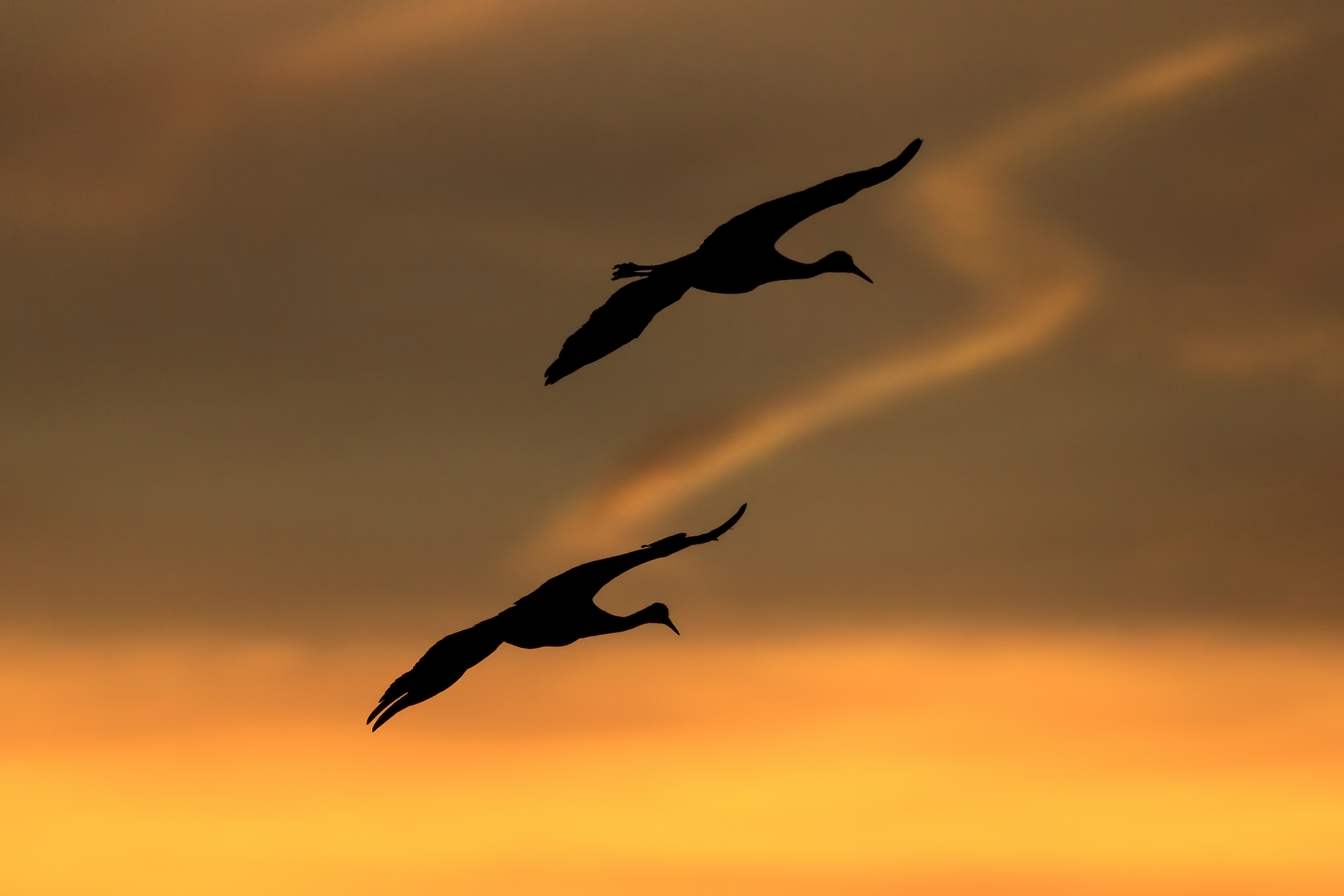
Discover the Majestic Sandhill Crane
The Iconic Sandhill Crane: A Symbol of Grace and Wilderness
The sandhill crane is one of North America’s most iconic and majestic birds—an embodiment of grace, endurance, and seasonal rhythm. Revered for their courtship dances, haunting calls, and epic migratory journeys, these elegant birds stir the soul and invite us to witness nature’s poetry in motion.
Whether you’re visiting Bosque Del Apache, hiking through Teton National Park, or photographing wild wonders in Yellowstone, the sandhill crane reminds us of what’s still wild—and worth protecting.
“To witness a sandhill crane in flight is to watch the landscape remember its own freedom.”
~ Robbie George
Unveiling the Sandhill Crane: Traits, Travels, and Ecological Grace
Towering at four feet with wings stretching over six, the sandhill crane is an unmistakable presence on the horizon. Adorned with slate-gray plumage and a vivid red crown, this ancient bird commands reverence in both posture and motion. Its haunting calls—echoing trumpets that ripple through wetlands and valleys—have inspired storytellers, scientists, and photographers alike.
These elegant travelers journey thousands of miles during seasonal migrations. From the rich wetlands of Bosque Del Apache in winter, to the alpine meadows of Teton and Yellowstone for summer nesting, each stopover is a thread in the great migratory tapestry of North America.
More than a marvel of movement, the sandhill crane is a keystone species in the wetland ecosystems it graces. Through foraging, seed dispersal, and soil aeration, these birds shape the biodiversity beneath their feet—an ongoing act of ecological choreography that sustains fish, frogs, plants, and other birds.
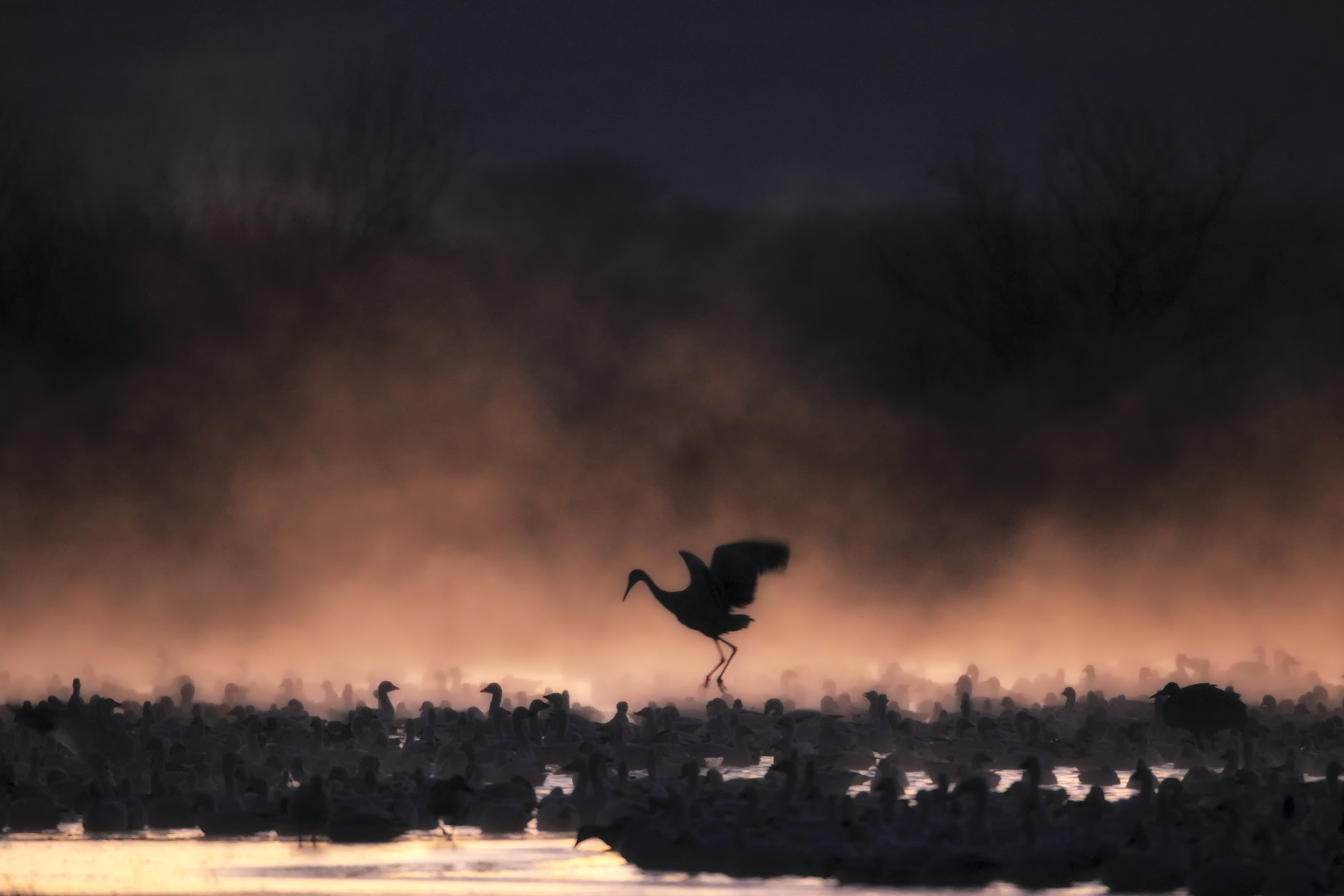
Understanding Sandhill Cranes
Anatomy and Appearance
The sandhill crane is one of the tallest birds in North America, standing nearly five feet tall with a wingspan that often exceeds seven feet. Draped in soft gray feathers tinged with rusty browns, their most recognizable feature is the bare red crown atop the head—a striking flash of color visible from afar. Unlike herons, cranes fly with their necks outstretched, slicing through the air with slow, rhythmic wingbeats.
Voice of the Wild: Iconic Crane Calls
Their calls are unmistakable—resonant, trumpeting tones that echo for miles across wetlands and valleys. These powerful vocalizations serve as mating duets, territorial signals, and group communications during migration. The reverberating sound of a sandhill crane call is not just heard—it’s felt.
Dance of the Ancients
Their courtship dances are among the most spectacular displays in the avian world. Mated pairs leap, bow, toss vegetation, and unfurl their massive wings in a performance choreographed over millennia. These dances not only strengthen pair bonds but also reaffirm ancient rhythms passed down through generations.
“The sandhill crane doesn’t just fly—it sings the sky open and dances with the memory of Earth’s beginning.”
~ Robbie George
Habitat and Range of the Sandhill Crane
Where Grace Touches Earth
The sandhill crane is deeply rooted in wetland ecosystems across North America. Favoring open spaces where sky meets water, these birds rely on a mosaic of marshes, bogs, prairie potholes, and meadows to thrive. Their long legs and probing bills are perfectly suited for wading through shallow waters in search of grains, insects, and aquatic life.
During migration and breeding seasons, sandhill cranes gather in specific regions that serve as biological waypoints. In winter, tens of thousands descend upon Bosque Del Apache, transforming the New Mexico wetlands into an orchestra of sound and motion. Come summer, the lush basins of Teton National Park and Yellowstone cradle nesting pairs and their young.
A Continental Migration
Sandhill cranes span an impressive range—from the Arctic tundra of Canada and Alaska to the savannas of Mexico and the Southeast. These distances are bridged through ancient flyways that echo with the cries of their passing. Stopovers like the Platte River in Nebraska and Bosque Del Apache are not just rest stops—they are sacred intersections where generations of cranes have paused in pilgrimage.
Their presence signals ecological health. Thriving wetland and grassland habitats mean thriving cranes. Their absence warns us something’s out of tune in the symphony of nature.
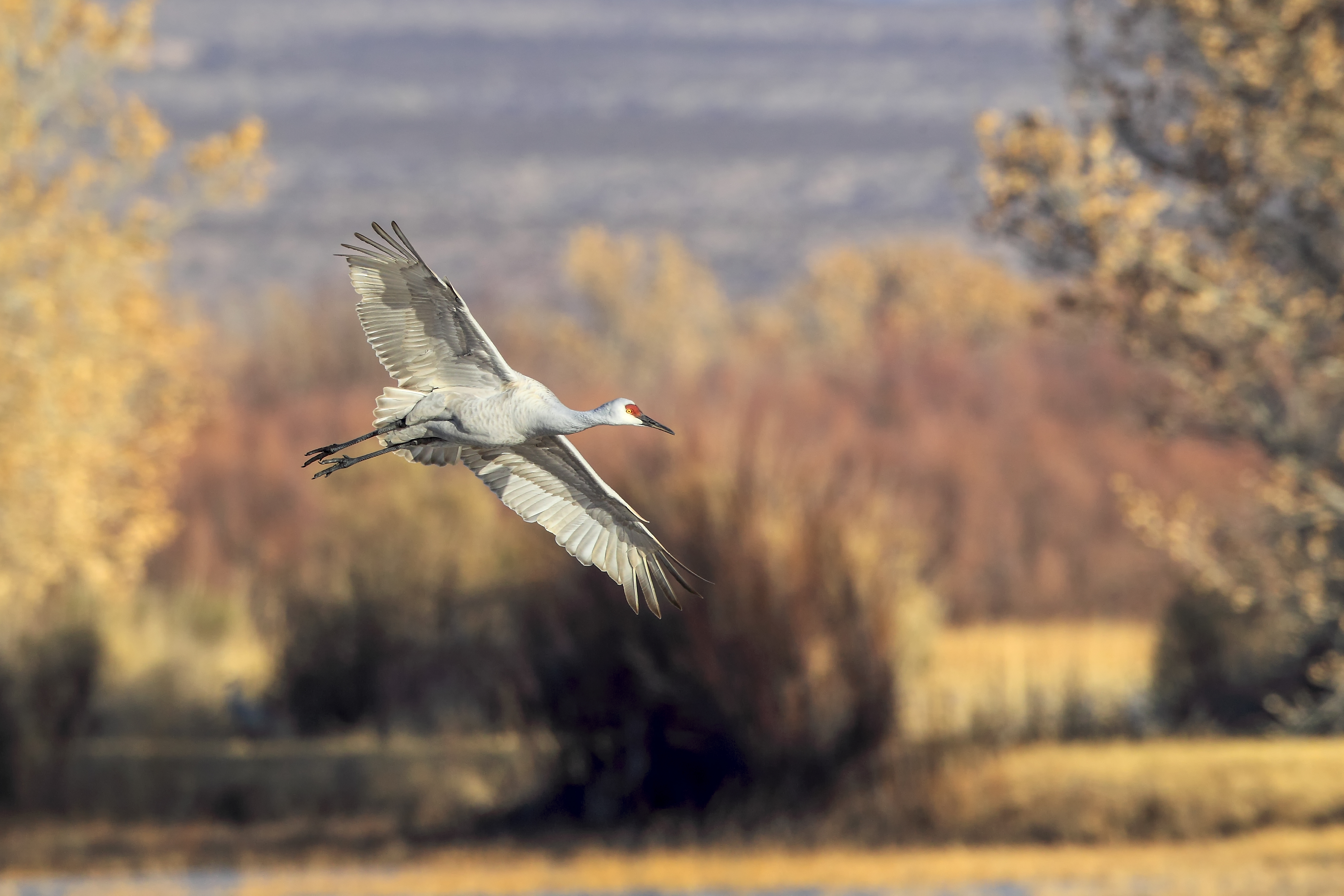
“Wherever the land breathes and the water shimmers, the sandhill crane writes its long and ancient story in flight.”
~ Robbie George
Migration and Seasonal Destinations for Sandhill Cranes
The Great Migration
The sandhill crane migration is one of nature’s most remarkable journeys. Each year, these ancient birds fly thousands of miles between northern breeding territories and southern wintering grounds—threading together landscapes as far-reaching as Yellowstone and Bosque Del Apache.
Flying in large, V-shaped flocks, cranes use sightlines and ancestral memory to navigate their epic routes. These seasonal movements are dictated by light, temperature, and the silent tug of survival—each wingbeat guided by instinct older than recorded time.
Key Seasonal Destinations
Bosque Del Apache, New Mexico
In winter, tens of thousands of sandhill cranes gather at Bosque Del Apache National Wildlife Refuge. Sunrise eruptions of flocks across golden marshland are among the most breathtaking sights in American birding. November through February is the peak window to witness and photograph this spectacular congregation.
Teton and Yellowstone: Summer Breeding Grounds
During summer, pairs settle into the high meadows and wetlands of Teton National Park and Yellowstone. Here, amidst wildflowers and glacial streams, they raise their young in relative solitude. Observing courtship dances and parental behavior in this setting is a profoundly peaceful contrast to the spectacle of migration.
“Their wings stretch across seasons—carrying the memory of summer meadows into the stillness of winter marsh.”
~ Robbie George
The Role of Sandhill Cranes in the Ecosystem
Wetland Architects and Biodiversity Stewards
Sandhill cranes are more than iconic silhouettes in the sky—they are ecological catalysts. Their presence in wetlands and river basins signals balance, abundance, and ancient continuity. As omnivores, they maintain equilibrium in plant and insect populations, foraging on tubers, grains, insects, and even small vertebrates.
Their trampling, probing, and feeding patterns promote seed dispersal, soil aeration, and the creation of microhabitats—making way for frogs, waterfowl, and beneficial invertebrates. In this way, the sandhill crane becomes a sculptor of habitat health, subtly shaping the ecosystem for all who depend on it.
An Umbrella Species for Conservation
Due to their wide range and large habitat needs, sandhill cranes function as an umbrella species—meaning that efforts to protect their habitat simultaneously benefit hundreds of other creatures. Safeguarding the seasonal rhythms and roosting grounds of cranes ensures cleaner water, intact wetlands, and migratory corridors for everything from monarch butterflies to migratory ducks.
From the prairie potholes of the Midwest to the glacial valleys of the Rockies, the crane’s echo reminds us that ecosystems are woven together by movement, presence, and pattern. In saving the crane, we preserve the choreography of wild America.
“To walk where the crane walks is to follow an ancient trail of renewal, where every step stirs the earth back to life.”
~ Robbie George
Sandhill Cranes and Nature Photography
Mastering the Shot: Technique Meets Reverence
Photographing sandhill cranes is an exercise in presence, patience, and precision. These birds—graceful yet unpredictable—invite the photographer into a deeper rhythm of observation. Whether capturing silhouettes at Bosque Del Apache or courtship dances in Teton National Park, your lens becomes a portal into wild ritual.
- Shutter speed: 1/1000 sec or faster to freeze wings in flight or leaps during dance
- Lens: 400mm+ recommended for respectful distance with intimate framing
- Best light: Golden hour—dawn and dusk bring softness and warmth to your composition
- Approach: Blend in. Observe. Let the story rise from stillness
Seasonal Windows for Artful Encounters
Spring: Courtship rituals unfold in bold leaps and synchronized calls—perfect for storytelling through movement.
Summer: Nesting and rearing scenes offer quiet portraits of bonding and care in Yellowstone or Teton.
Fall: Flocks lift off in misty marshes—drama, motion, and the rhythm of return.
Winter: Bosque Del Apache offers the crescendo: thousands of cranes at sunrise against desert skies.
“To photograph a crane is not to capture it—but to echo its flight, to honor its breath in the frame of your own stillness.”
~ Robbie George
Personal Reflections and Experiences
Lessons from the Lens: Moments with the Cranes
My journey photographing sandhill cranes has been a pilgrimage across light, silence, and awe. In the shadowed wetlands of Bosque Del Apache, I stood alone before dawn, camera poised. The sky whispered first pink, then gold. And then—sound. That ancient, resonant trumpet rising like fog off the water. Suddenly, a thousand cranes took flight. That frame? It wasn't captured—it was offered.
Summer brought a different story. In Yellowstone, I tracked a pair tending their chick beside a slow creek, framed by wildflowers and distant peaks. I watched—not for a shot, but for understanding. In those hushed hours, I came to realize: cranes don’t just migrate—they guide. They thread together geography, time, and heart.
An Invitation to Witness and Create
If you’re a nature photographer, a seeker of beauty, or someone simply needing to remember that the world is still sacred—let the sandhill crane be your muse. Visit Teton National Park, walk the refuge trails at Bosque Del Apache, or listen for that primordial call above Yellowstone’s river valleys. These are not just landscapes. They are chapels of movement.
“The crane carries more than feathers in flight—it carries the memory of ancient skies, and the silence that shaped them.”
~ Robbie George
Conclusion: Celebrating the Majesty of Sandhill Cranes
From the whispering dawns of Bosque Del Apache to the alpine meadows of Yellowstone, the sandhill crane embodies the wild rhythm of North America’s untamed spirit. To see them in flight is to witness geography in motion—an ancient thread stitching wetland to mountaintop, season to season, breath to breath.
But their grace is not guaranteed. Their survival—and the health of the ecosystems they bless—depends on our reverence. Let us observe with humility, photograph with care, and support conservation efforts that protect their journeys for generations to come.
You can help by visiting protected habitats like Bosque Del Apache, Teton National Park, and Yellowstone, by supporting organizations such as the International Crane Foundation, and by sharing your own voice—through photography, through story, through stillness.
Take Action: Browse my fine art prints of sandhill cranes, explore the full wildlife gallery, and join the growing chorus of voices dedicated to protecting the wild—with lens, with heart, with hope.
“The cranes arrive like hymns written on wind—long, low, and holy. Listen. Photograph. Remember.”
~ Robbie George
Explore Wildlife Fine-Art Prints
Discover calm, undisturbed behavior in the Wildlife Gallery and learn how we print, frame, and care for artwork on Print Knowledge and Collectors.
 Wildlife
  Landscapes
  Nature Quotes
About Robbie George
Robbie George is a National Geographic–published photographer. His wildlife ethic is simple—distance first, habitat always—and his work explores coherence across Signature Series themes.
Keep learning: Seasonal Wildlife Calendar • Photography Maps • Field Tools
Related reads: Elk Guide • Bighorn Sheep • Gray Wolf • Golden Eagle • Wildlife Refuge Conservation
“Photograph with patience and permission—the best behavior appears when you don’t disturb the story.”
FAQs About Sandhill Cranes
What is the best time of year to see sandhill cranes?
The best time depends on location. Bosque Del Apache is ideal from November to February during winter migration. For summer breeding activity, visit Teton National Park and Yellowstone between June and August.
How can I photograph sandhill cranes effectively?
Use a telephoto lens (400mm+), a fast shutter speed (1/1000 sec or faster), and shoot during golden hour for optimal light. Visit staging areas at dawn for takeoff sequences, and always practice ethical wildlife photography.
What are the top locations for sandhill crane photography?
Top spots include Bosque Del Apache for dramatic flocks, and the peaceful summer grounds of Teton and Yellowstone for family pairs and scenic habitat shots. Learn more in the Rocky Mountains photography guide.
Why are sandhill cranes important to the ecosystem?
As omnivores, they regulate plant and insect populations and disperse seeds. Their presence indicates a healthy wetland ecosystem, benefiting a variety of species from amphibians to migratory waterfowl.
How can I support sandhill crane conservation?
Support groups like the International Crane Foundation or Audubon Society, donate to wetland restoration projects, and spread awareness through responsible nature photography and education.