
Whisper of the Wild: My Encounter with a Bobcat on the Madison River in Yellowstone
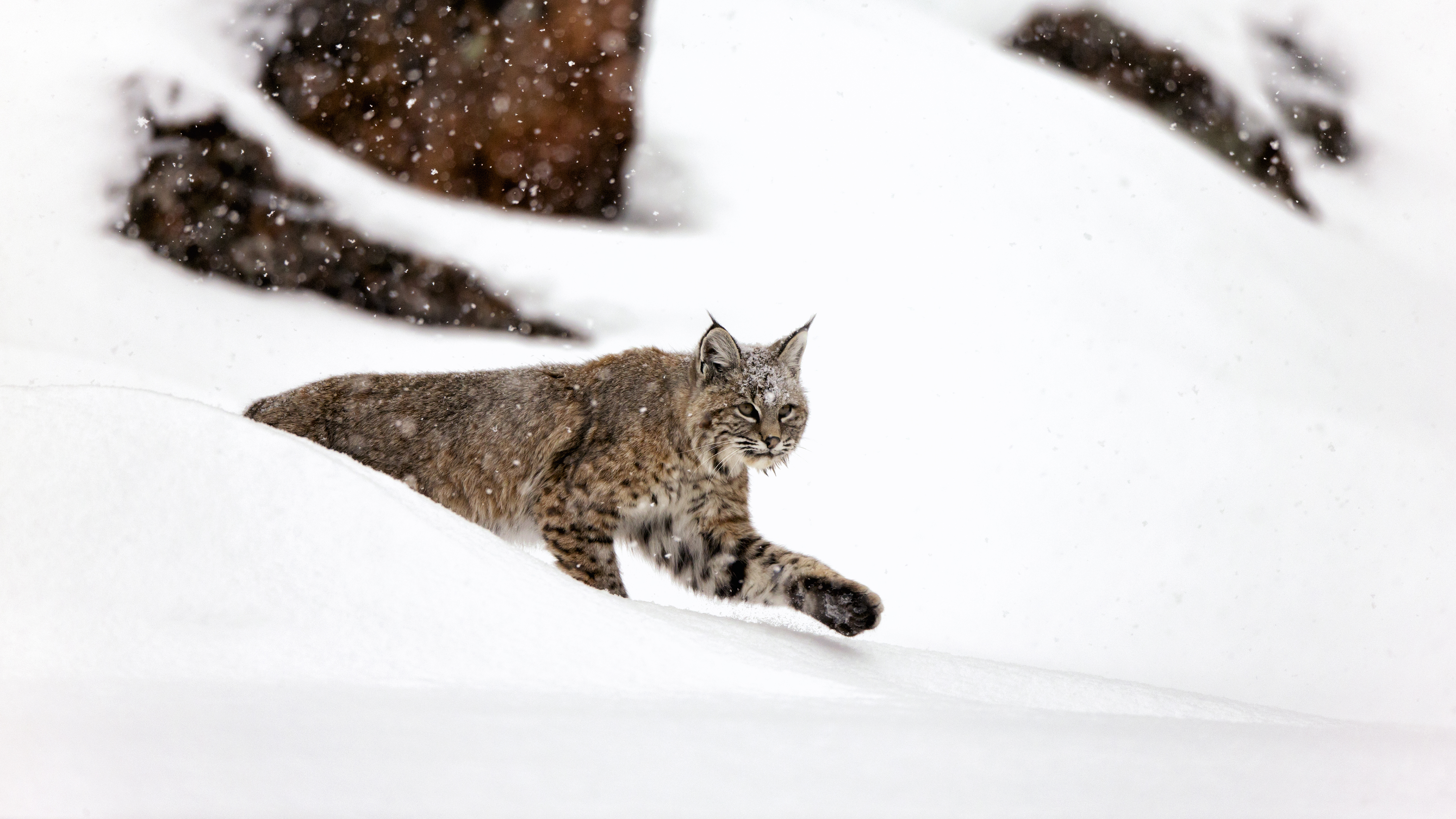
Whisper of the Wild: My Encounter with a Bobcat on the Madison River in Yellowstone
Nature often speaks in hushed tones—felt rather than heard—and on one crystalline morning along the Madison River, I tuned into that whisper. The forest breathed with me. The river moved like memory. And there, on the edge of stillness, a bobcat emerged from shadow into form.
In the resonance of that moment, I understood something ancient yet immediate: the bobcat was not just a subject, but a signature of the field itself—woven from instinct, survival, and an intelligence born of place. I pressed the shutter not to freeze time, but to acknowledge it.
This encounter reminded me of the polarity we live within—the seen and unseen, the observer and the observed. And through the lens of presence, the wild reveals not only its form, but its meaning. That is the true art of field photography: to let the soul align with what appears.
“To see a bobcat is not to conquer the wild—but to be invited by it, for just a breath, into the quiet frequency of its belonging.” ~Robbie George
The Art of Hunting: Bobcats and Ducks on the Madison River
Along the water's edge, silence is the first strategy. Bobcats, those quiet engineers of the wild, have mastered the art of invisibility. Their bodies become brushstroke and shadow, mirroring the reeds as they wait—utterly still—for life to ripple through the current.
I watched with reverence as the bobcat crouched low along the bank, its entire presence fused with the frequency of the river. Each muscle held in coherence. Every heartbeat timed to the rhythm of passing ducks. In that moment, I saw not a predator—but a teacher of patience, rhythm, and place.
To understand this feline is to enter the realm of Lynx rufus—a species whose existence thrives in silence and edge. It’s not merely the chase, but the sacred pause before it, that defines the true essence of wild hunting.
The Rarity of a Sighting: Presence in the Field
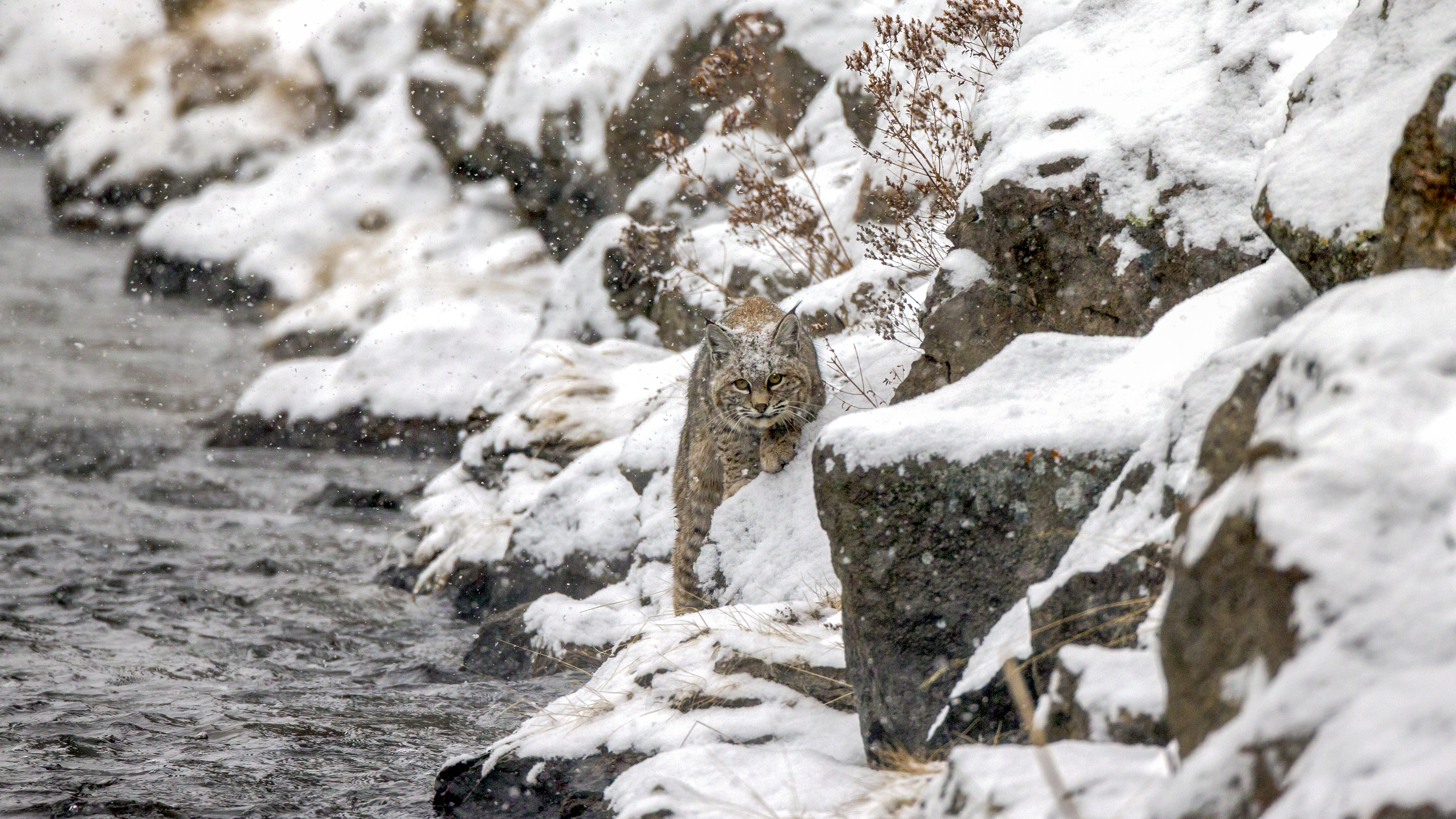
A bobcat sighting is more than luck—it’s resonance. These wild beings are masters of camouflage, not merely in form but in frequency. To see one is to slip, momentarily, into their timeline—into a silence so complete that visibility itself becomes permissioned.
As I stood along the snowy trail, lens poised, a subtle vibration shifted in the landscape. The wildcat emerged—not from space, but from stillness. It reminded me that photography is not about catching what runs—but about aligning with what reveals. This is why I created Wild Eyes in the Wilderness: to honor such fleeting windows of visibility.
In quantum terms, the act of witnessing collapses the wave. In wilderness terms, the act of attuning invites the wild to reveal itself. That is the field of vision—the place where predator and photographer share breath.
Connecting the Bobcat Experience to Our Human Lives
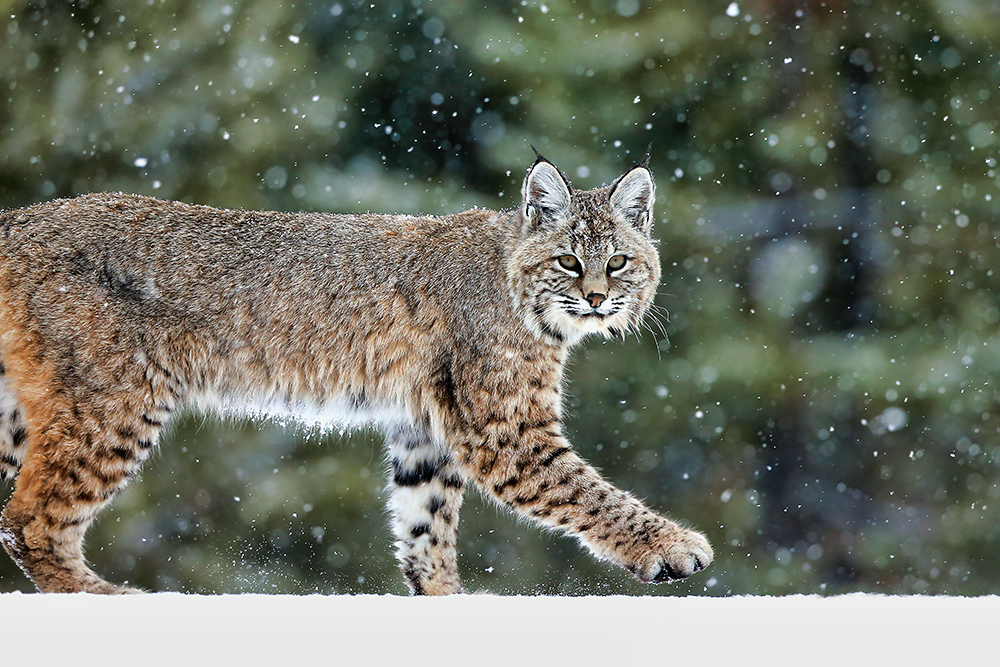
What I witnessed in the bobcat wasn’t just nature—it was a mirror. The same patience it used to survive, we use to create. The same stillness that makes it invisible, we must remember to return to. The wild, in its grace and gravity, reflects a truth we often forget: we are not separate from the field—we are born from it.
Each step the bobcat took reminded me of polarity: bold yet quiet, hidden yet powerful. In The Living Code, I speak about this sacred duality—how everything in nature flows between two poles. The bobcat lives this dance. So do we. Whether hunting or healing, it is rhythm—not reaction—that keeps us alive.
To walk with a bobcat—even briefly—is to be reintroduced to instinct. And in that reintroduction, we remember the wisdom of moving softly, breathing slowly, and trusting the unseen terrain ahead of us.
Conclusion: Honoring the Quiet Ones
Photographing a bobcat in the heart of Yellowstone was more than a rare encounter—it was a lesson in presence, patience, and reverence. In the stillness of that moment, I was not simply behind the camera; I was part of the field. The bobcat, in all its grace and secrecy, became a mirror of the wild whispering back to me.
These creatures move between dimensions—seen and unseen—threading the forest with memory. Their survival depends on our awareness. If we wish to continue sharing the earth with them, we must protect the habitats they rely on, honor the ecosystems they belong to, and listen to the silence they teach through. I invite you to explore my thoughts further in Wildlife Conservation: Protecting Nature’s Legacy.
The more time I spend in the field, the more I realize that true wildness isn’t loud or boastful—it’s whispering, watching, and waiting. And if we are still enough, we just might hear it.
“In every quiet gaze of the wild lies a reminder: you belong here, too.” ~Robbie George
Continue Exploring the Wild Within
If this bobcat encounter stirred something in you, I invite you to wander deeper into the wild field—where every photo, every breath, and every still moment tells a larger story.
• Step into the lens of instinct through Wild Eyes in the Wilderness
• Discover the dual forces guiding all life in The Living Code
• Or dive into the frequencies behind form in Quantum Vitality
The journey doesn’t end with the image—it begins with your presence inside it.
Naturepedia Connections
This Yellowstone bobcat encounter is part of the broader Naturepedia system—where species behavior, habitat, seasonal movement, and field observation connect across a larger wildlife knowledge network.
- Bobcat (Lynx rufus) Unveiled: The Wild Feline — Species traits, stealth, habitat edges, and wildcat behavior
- Mammals of North America — Place the bobcat within the wider mammal knowledge system
- Wildlife Behavior & Ecology — Hunting strategy, camouflage, territory, and predator awareness
- Ecosystems of North America — River corridors, forest edges, and the habitats predators rely on
- Wildlife Conservation & Habitat — Why intact habitat and movement corridors matter for elusive carnivores
- Seasonal Wildlife Calendar — Explore how timing, light, and season shape wildlife encounters
- Explore Naturepedia — Enter the full wildlife, ecology, and observation knowledge system
Explore Fine-Art Prints
Bring the season home—browse Wildlife, Landscapes, and Seascapes by National Geographic–published photographer Robbie George. See framing, editions, and care on the Collectors page.
 Landscape
  Wildlife
  Seascapes
About Robbie George
Robbie George is a National Geographic–published photographer and resonant naturalist. His fieldcraft follows a simple ethic—distance first, habitat always— shaped by Slow Knowledge and the Signature Series.
Explore calm, undisturbed behavior in the Wildlife Gallery or plan your next trip with the Seasonal Wildlife Calendar, Golden Hour & Moon, and Photography Maps.
“Attention first, image second. The shutter is the period at the end of a sentence you learned by walking.”
Frequently Asked Questions About Bobcats
- Where do bobcats live?
Bobcats are found throughout North America—from the forests of southern Canada to the deserts of Mexico. They thrive in a wide range of habitats including woodlands, wetlands, and rocky outcrops, adapting with quiet resilience to the rhythms of the land.
- How do bobcats hunt their prey?
Bobcats hunt with precision, patience, and stealth. They crouch low to the ground, blending into the brush before launching a sudden pounce. Their diet includes rabbits, birds, rodents, and in some cases—ducks by riverbanks, as I personally witnessed on the Madison River.
- Are bobcats dangerous to humans?
Bobcats are elusive and naturally avoid human interaction. While they are wild animals and should be respected, attacks on humans are extremely rare. If encountered, give them space and observe from a respectful distance.
- What do bobcats eat?
Primarily carnivorous, bobcats hunt small mammals like rabbits, hares, and squirrels. In some areas, they’ll take birds, reptiles, and even small deer—especially in winter when prey is scarce.
- How do bobcats communicate?
Bobcats vocalize with yowls, hisses, and growls, particularly during mating season. They also mark territory with scent, claw marks, and visual signs—silent messages left in the language of the wild.
- How can you tell the difference between a bobcat and a lynx?
Bobcats are generally smaller than lynxes, with shorter ear tufts and more pronounced spotted coats. Lynxes have larger paws, adapted for moving across snow, and typically live farther north.
- What time of day are bobcats most active?
Bobcats are crepuscular—most active at dawn and dusk. However, in areas with heavy human presence, they may shift toward nocturnal behavior to avoid disturbance.
- How do bobcats adapt to different environments?
Bobcats are incredibly adaptable. Their camouflage, acute hearing, and flexible diet allow them to thrive in forests, deserts, swamps, and even urban edges. They embody the very essence of evolutionary resonance.
- Are bobcats solitary animals?
Yes. Bobcats live and hunt alone, except during mating season or when mothers are raising their young. Each maintains a defined territory marked through scent and trail markings.
- What threats do bobcats face in the wild?
Though their populations are stable in many regions, bobcats face habitat loss, road mortality, and hunting pressure in some areas. Conservation efforts focus on preserving wild corridors and reducing human conflict.