🌿 Where Wild Horses, Coastal Light, Marshes, Migration, and Barrier Island Landscapes Shape the Photography of Chincoteague
Naturepedia Photography Guide
Chincoteague Photography Guide
Chincoteague National Wildlife Refuge is one of the most visually distinctive photography destinations on the Atlantic Coast, where wild horses, coastal marshes, barrier island dunes, migratory birds, tidal wetlands, changing weather, and expansive coastal light come together inside a constantly evolving landscape. Wind, tide, fog, storms, salt, and season continuously reshape the field, creating photographic opportunities that reward observation, patience, and environmental awareness.
This guide is designed as a field-execution system for photographers — focused on wild horse photography, coastal atmosphere, migration timing, marsh photography, weather, tides, composition, ethical fieldcraft, camera strategy, and visual storytelling across one of North America's most important barrier island ecosystems.
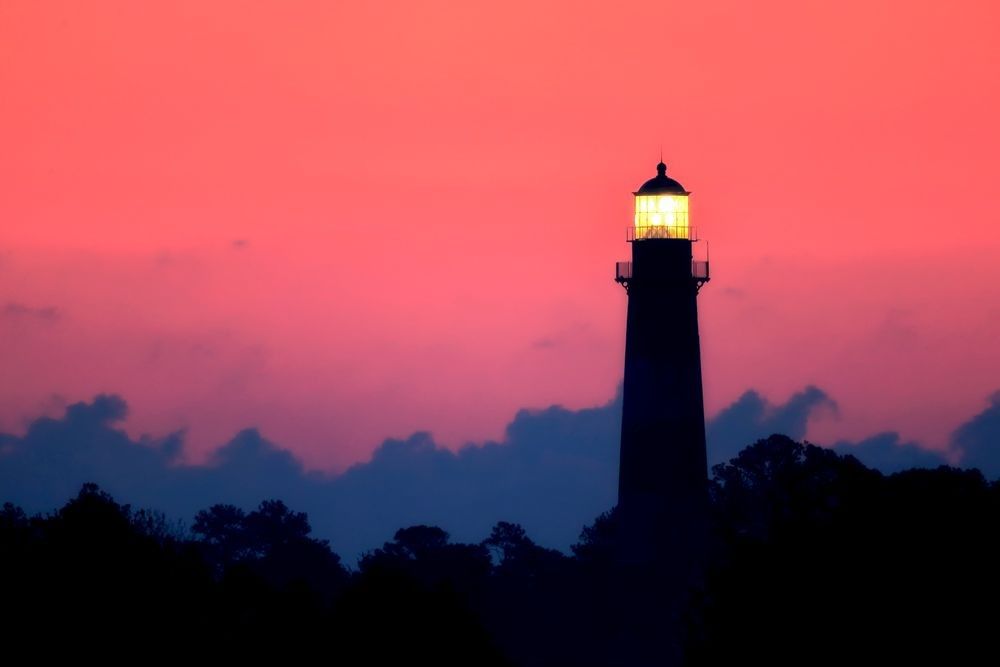
Featured Photograph: Assateague Lighthouse at Sunset — Chincoteague National Wildlife Refuge by Robbie George · Barrier island landscapes, coastal atmosphere, maritime history, and changing Atlantic light along Virginia's Eastern Shore.
Photographed and field-observed by Robbie George, a National Geographic–published wildlife photographer and creator of Naturepedia. This Chincoteague Photography Guide combines years of photographing wild horses, migratory birds, marsh ecosystems, coastal weather, barrier island landscapes, and seasonal wildlife movement throughout Chincoteague National Wildlife Refuge and the surrounding Delmarva coast.
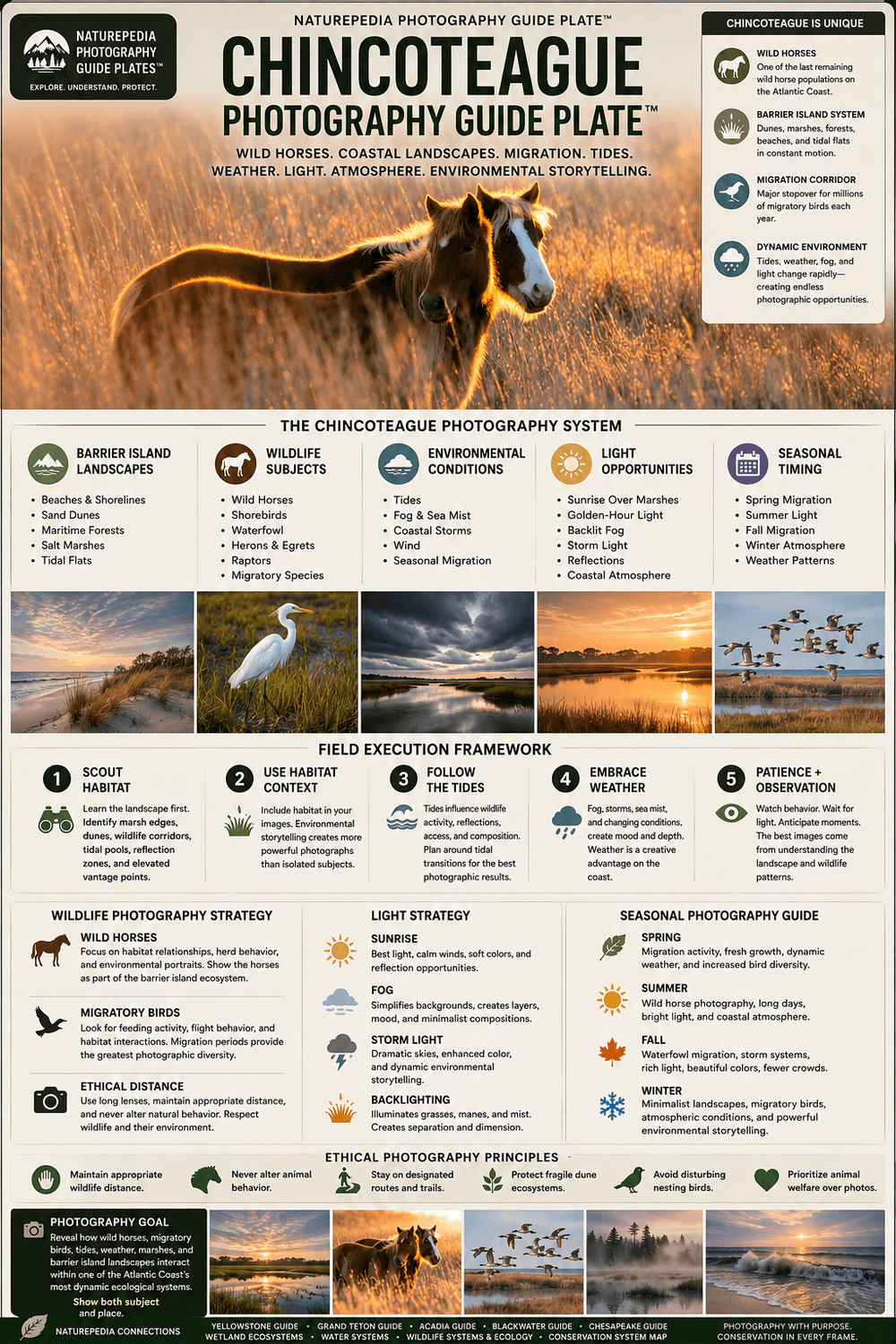
A visual field-execution compression of Chincoteague National Wildlife Refuge as a photography system — connecting wild horses, barrier island landscapes, coastal marshes, migratory birds, Atlantic light, tides, fog, weather, ethical fieldcraft, and environmental storytelling across Virginia's Eastern Shore.
Chincoteague Photography Guide Plate™ by Robbie George — a Naturepedia photography guide node connecting wild horses, barrier island habitat, Atlantic Flyway migration, marsh photography, coastal light, tides, weather, ethics, and field execution at Chincoteague National Wildlife Refuge.
How to read this plate: Chincoteague photography is not only about finding wild horses or birds. It is a field-execution process: read coastal light, watch tides, study wind, anticipate migration movement, position ethically, compose through marsh and dune layers, and allow weather to shape the final image.
Chincoteague photography is not simply about arriving at the refuge and looking for wild horses or birds. It is a field-execution process built around coastal light, tide movement, wind, marsh edges, dune structure, seasonal migration, weather, ethical distance, patience, and the ability to recognize when wildlife, atmosphere, and barrier island landscape align together inside one living system.
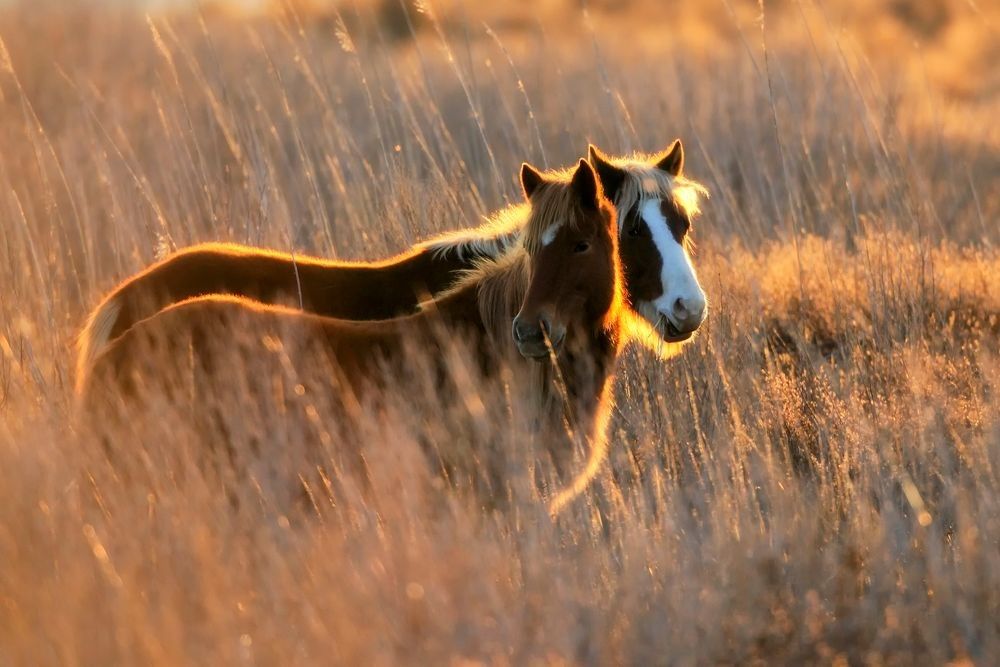
Wild horses in coastal grassland at Chincoteague National Wildlife Refuge — barrier island light, habitat structure, and patient field positioning create the foundation for stronger environmental wildlife photography.
🌅 Coastal Light Changes Everything
Sunrise, sunset, fog, haze, salt air, reflections, and storm light continuously reshape Chincoteague's visual character. Photographers who learn to read coastal light can begin anticipating images before wildlife enters the frame.
🐴 Wildlife Belongs to the Landscape
Wild horses, egrets, herons, shorebirds, raptors, and otters become more powerful photographically when they remain connected to marshes, dunes, tidal pools, shoreline, weather, and environmental scale.
🌾 Edges Create Opportunity
The strongest Chincoteague photographs often happen where habitats meet: marsh and grassland, dune and beach, water and mudflat, woodland and open refuge road. These transition zones concentrate movement, light, and story.
Chincoteague Rewards Patience
Great Chincoteague photographs are rarely forced. Horses move slowly through grassland. Birds follow tide, wind, and water depth. Fog may soften the marsh for only a few minutes. Sunrise can turn the lighthouse, dunes, and wetland edges into a layered coastal scene before the light quickly changes.
Places like Wildlife Loop, Snow Goose Pool, Assateague Lighthouse, beach access areas, woodland edges, marsh overlooks, and tidal flats become more than locations — they become environmental stages where wildlife movement, Atlantic weather, coastal light, and barrier island structure interact.
Chincoteague Photography Workflow
Observe Light → Read Tide & Wind → Study Habitat Edges → Watch Wildlife Movement → Position Ethically → Compose with Coastal Atmosphere → Photograph Patiently
“Chincoteague is a landscape of edges — where tide, wind, marsh, dune, light, and wildlife are constantly shaping one another.”
— Robbie George
Chincoteague Photography Locations
The Landscape Is Always Moving
Chincoteague is not photographed from a single overlook. Every marsh, dune system, beach, refuge road, tidal pool, woodland edge, and coastal grassland responds differently to weather, tide, migration, wind direction, seasonal timing, and Atlantic light. Understanding how these locations behave visually is one of the most important parts of successful photography at Chincoteague National Wildlife Refuge.
Wild horses moving through coastal grassland habitat at Chincoteague National Wildlife Refuge — one of the refuge's most iconic photography opportunities where wildlife, weather, light, and barrier island landscape converge.
Featured Photography Location
Wildlife Loop & Marsh System
Wildlife Loop is one of the most important photography environments within Chincoteague because it compresses many of the refuge's strongest visual elements into one interconnected system: wild horses, marshes, migratory birds, tidal wetlands, coastal light, fog, weather, and open visibility across barrier island habitat.
🌅 Best Light
Sunrise and sunset often create the strongest photography conditions as low-angle Atlantic light interacts with marsh grasses, shallow water, fog, horses, birds, and distant habitat layers.
🦆 Wildlife Opportunities
Wild horses, egrets, herons, shorebirds, waterfowl, northern harriers, osprey, and migratory species all use the marshes and tidal systems throughout the year.
📷 Composition Strategy
Use marsh channels, reflective water, dune layers, tidal pools, habitat edges, fog, and environmental spacing to create stronger storytelling compositions rather than isolated wildlife portraits.
Best Photography Areas
Wildlife Loop offers some of the refuge's best opportunities for horses, marsh birds, migration activity, and atmospheric landscapes.
Snow Goose Pool is one of the strongest bird photography locations, especially during migration and seasonal concentration events.
Beach Access Areas & Dunes reveal the ocean-facing side of the barrier island where shorebirds, weather, surf, fog, and coastal atmosphere create entirely different photographic conditions.
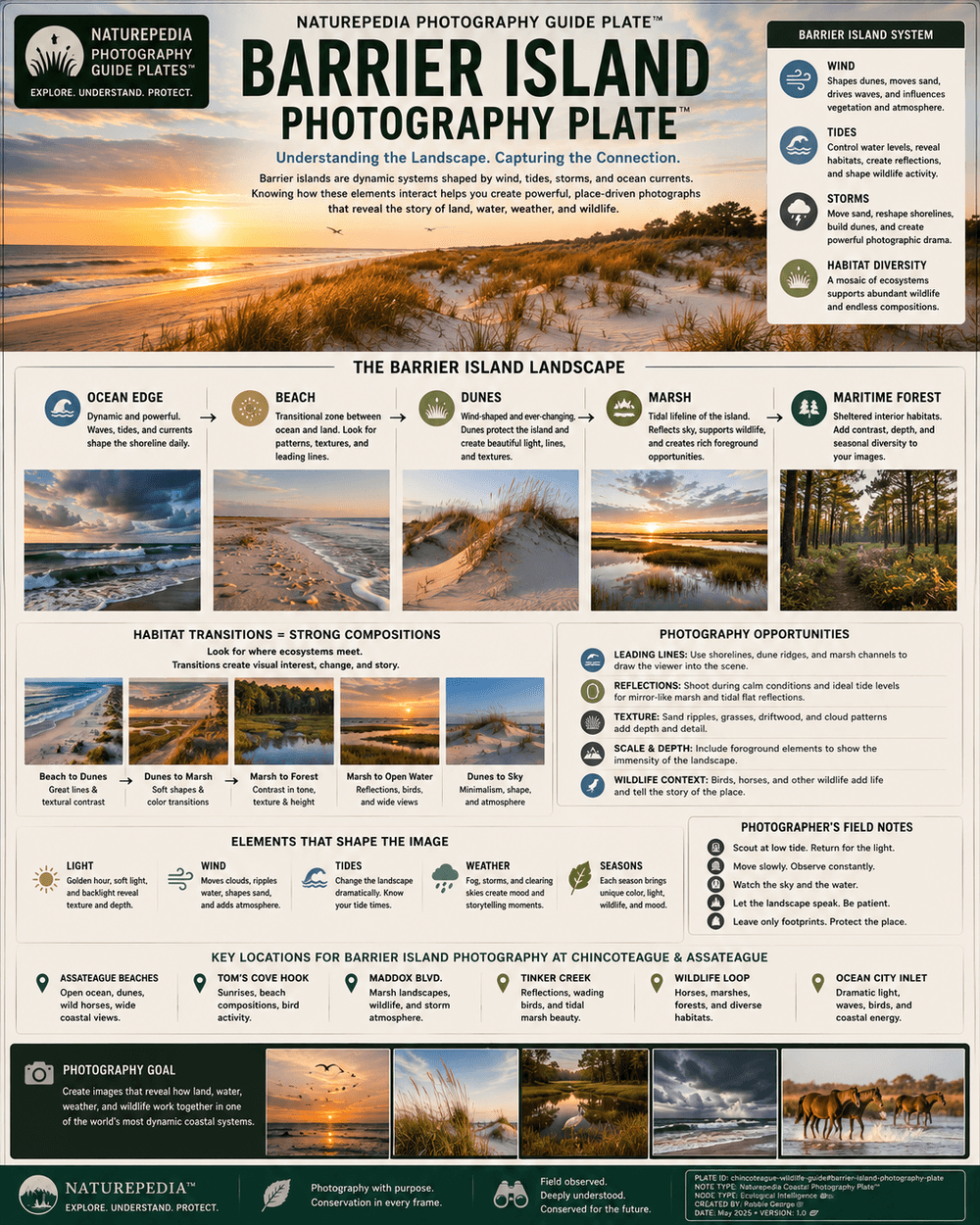
A visual field-execution compression of barrier island photography — connecting dunes, marshes, shoreline, tides, wind, migration, coastal weather, habitat transitions, environmental composition, and Atlantic atmosphere into one interconnected photographic system.
Barrier Island Photography Plate™ by Robbie George — a Naturepedia coastal photography node connecting dunes, marshes, Atlantic weather, migration, shoreline processes, environmental composition, and field execution strategy.
How to read this plate: Barrier island photography is fundamentally about transitions. Ocean becomes dune. Dune becomes marsh. Marsh becomes tidal flat. Wildlife follows those transitions. Strong photography often emerges from understanding where these systems overlap.
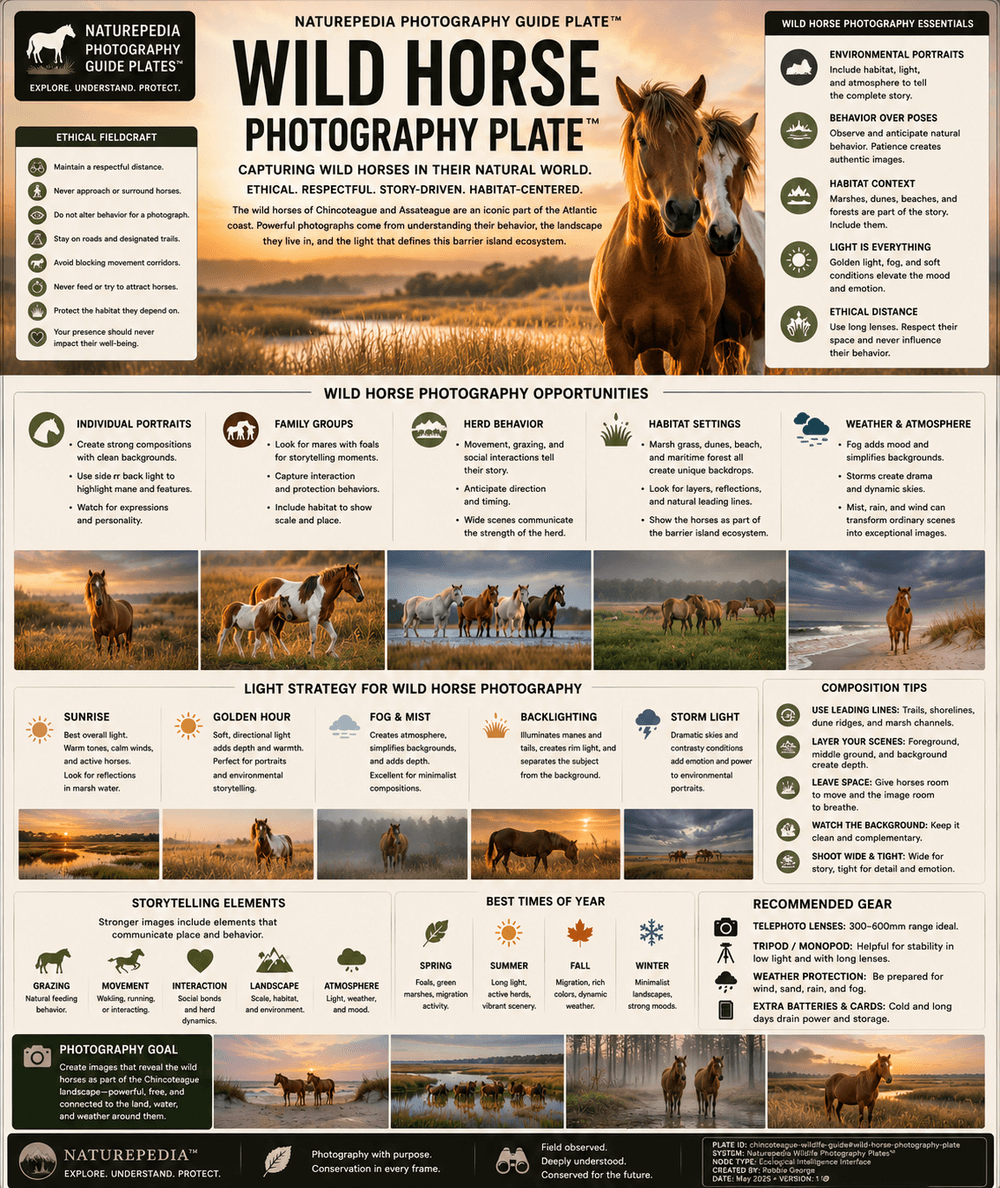
Wild horse photography at Chincoteague becomes most powerful when horses remain connected to marshes, dunes, grasses, fog, weather, and the broader barrier island environment. The strongest photographs rarely isolate the horse from the landscape. Instead, they reveal how these animals exist within a coastal system shaped by wind, salt, tide, and season.
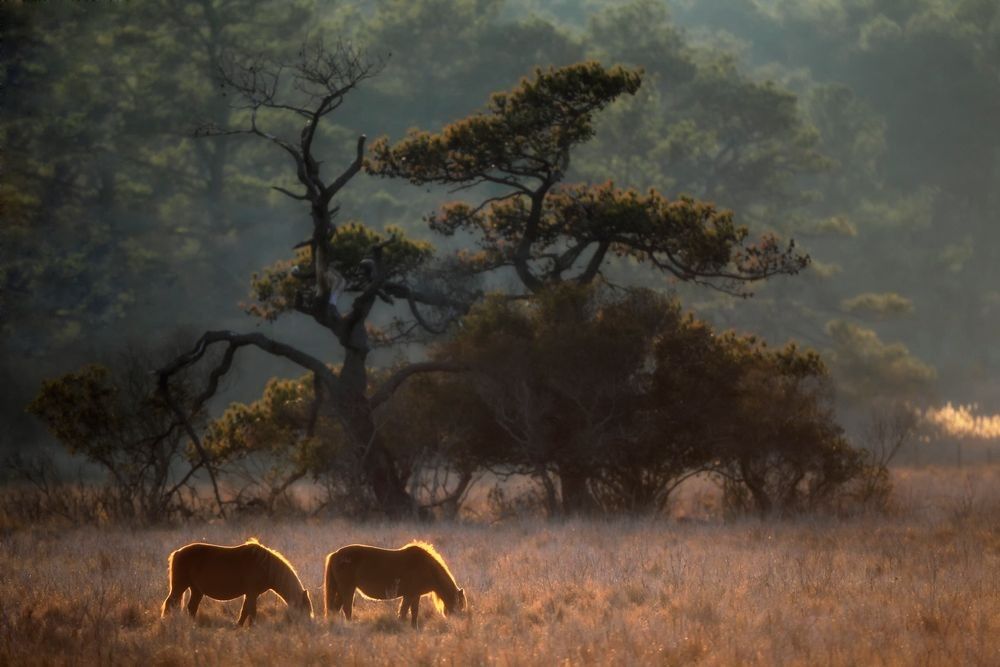
Wild horses grazing in coastal habitat at Chincoteague National Wildlife Refuge — environmental context often creates stronger storytelling than isolated wildlife portraits.
The strongest horse photographs often include habitat, grasses, dunes, fog, shoreline, and weather rather than filling the frame completely with the animal.
🌾 Use Habitat Layers
Coastal grasses, marsh edges, tidal pools, and dune structure help create depth and context around horse movement.
🛡️ Ethical Distance
Allow horses to move naturally. Long lenses and patient observation create stronger images while protecting natural behavior.
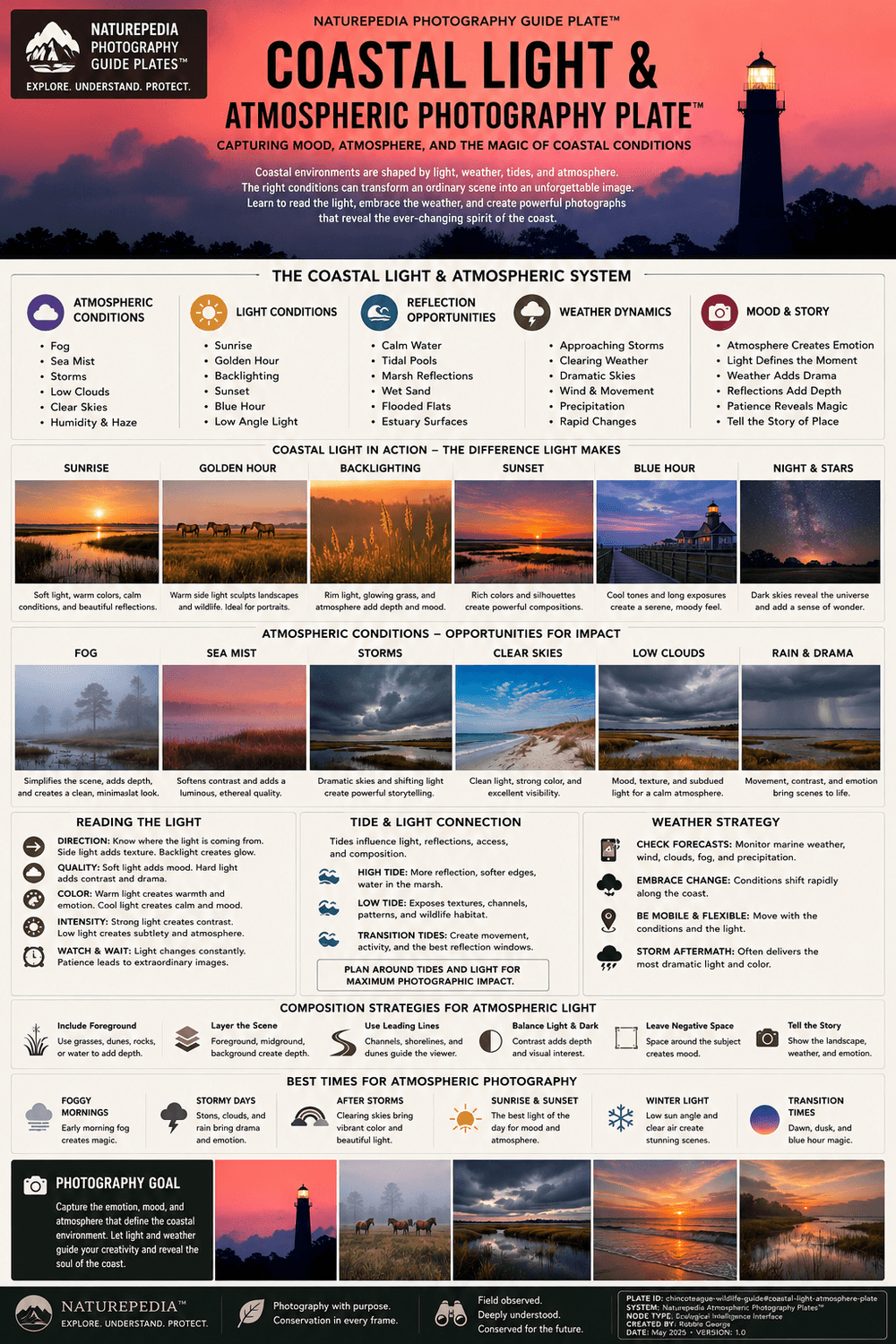
Much of Chincoteague's photographic identity comes from atmosphere. Fog, sea mist, coastal storms, sunrise color, reflections, tidal water, marsh haze, and changing Atlantic weather continuously reshape the landscape. Here, weather is often the subject rather than simply the background.
Coastal light and atmospheric conditions often define the emotional character of Chincoteague photography.
Fog simplifies scenes, reduces distractions, and creates stronger emotional atmosphere across marshes and barrier island landscapes.
🌅 Sunrise Shapes the Coast
Morning light often creates the most dynamic conditions for wildlife, marsh reflections, lighthouse photography, and coastal storytelling.
⛈️ Storms Add Drama
Changing weather, cloud structure, sea mist, and approaching storms can transform ordinary scenes into atmospheric landscapes.
Atmosphere Rewards Patience
Some of Chincoteague's strongest photography conditions occur during uncertainty — fog lifting from marshes, light breaking through coastal clouds, horses emerging from mist, or birds moving across reflective water at sunrise. These moments cannot be forced, only anticipated.
Chincoteague Seasonal Photography Timing
The Barrier Island Changes Through Time
Chincoteague transforms continuously throughout the year. Migration, tides, vegetation, coastal storms, seasonal light, wildlife behavior, and weather patterns all reshape the photographic experience. Understanding timing is one of the most important skills for photographers working within a barrier island ecosystem.
Seasonal timing influences migration, feeding behavior, habitat use, weather conditions, and the visual character of Chincoteague throughout the year.
🌱 Spring
Migration activity increases dramatically. Marshes become active with birds, coastal vegetation begins returning, and changing weather creates some of the refuge's most dynamic atmospheric conditions.
☀️ Summer
Wild horses are highly visible, coastal vegetation reaches peak growth, and sunrise photography becomes particularly productive across marshes, dunes, and shoreline habitats.
🍂 Autumn
Fall migration creates some of the best bird photography opportunities of the year. Cooler temperatures, lower sun angles, and changing weather create exceptional coastal atmosphere.
❄️ Winter
Winter simplifies the landscape. Marsh structure becomes more visible, wildlife often stands out against the open environment, and fog, frost, and low-angle light create strong atmospheric opportunities.
Every Season Changes the Story
No two visits to Chincoteague are exactly the same. Migration, weather, vegetation, water levels, coastal storms, and wildlife movement all evolve throughout the year. Photographers who understand seasonal timing gain a deeper ability to anticipate conditions rather than simply react to them.
At Chincoteague, timing is often as important as location. The same marsh, dune, or refuge road can look entirely different from one season to the next.
Successful photography at Chincoteague depends less on owning the most expensive equipment and more on understanding light, tide, wind, wildlife movement, habitat transitions, and coastal weather. Cameras record the moment, but field awareness creates it.
🔭 Telephoto Lenses
Long lenses help maintain ethical wildlife distance while allowing photographers to create strong environmental compositions featuring horses, shorebirds, raptors, and marsh wildlife.
🏝️ Wide-Angle Landscapes
Wide lenses are valuable for sunrise marsh scenes, lighthouse compositions, barrier island landscapes, dune systems, and environmental storytelling.
🌫️ Atmospheric Conditions
Fog, sea mist, humidity, rain, coastal haze, and changing weather can dramatically alter visibility and exposure conditions throughout the refuge.
Fieldcraft Matters More Than Equipment
The strongest photographs at Chincoteague often come from positioning, patience, environmental awareness, and understanding how wildlife interacts with habitat. Wind direction, tide level, fog, sunrise color, and animal behavior frequently matter more than camera specifications.
Photographers who slow down and read the landscape usually create stronger images than those moving rapidly from location to location.
🌅 Sunrise Strategy
Many of Chincoteague's best photography opportunities occur during sunrise when light, fog, reflections, and wildlife activity align.
🛡️ Ethical Wildlife Distance
Long lenses allow photographers to respect wildlife while still creating compelling environmental photographs that preserve natural behavior.
Chincoteague Field Preparation Checklist
✓ Telephoto lens
✓ Wide-angle landscape lens
✓ Extra memory cards
✓ Tripod for sunrise and fog
✓ Lens cloths for coastal moisture
✓ Tide awareness
✓ Weather awareness
✓ Respect wildlife distance
✓ Arrive before sunrise
✓ Practice Leave No Trace
Field Execution Workflow
Prepare for Conditions → Arrive Early → Observe Light → Read Tide & Weather → Position Carefully → Photograph Patiently
“The best field equipment is awareness. Cameras only record what attention discovers first.”
— Robbie George
Ethical Wildlife Photography & Conservation
Photography Should Deepen Respect for the Landscape
Wildlife photography at Chincoteague National Wildlife Refuge is not only about creating images. It is about learning to move through the landscape with patience, awareness, and respect for the wildlife, habitats, tides, dunes, marshes, and barrier island systems that make these encounters possible.
Wild horses along the barrier island landscape of Chincoteague — ethical photography begins with respecting habitat, behavior, and the ecological systems that support wildlife.
🛡️ Respect Wildlife Distance
Wild horses, nesting birds, migratory species, and marsh wildlife should never be approached, pressured, baited, or disturbed for a photograph. Ethical distance creates stronger images and protects natural behavior.
🌾 Protect Habitat
Dunes, marshes, nesting areas, tidal flats, and shoreline habitats are fragile systems. Staying on designated routes and minimizing disturbance helps protect the ecological integrity of the refuge.
📷 Use Photography Responsibly
Photography has the power to build conservation awareness. Images can help people understand migration, habitat, adaptation, barrier island ecology, and the importance of protecting coastal landscapes.
Observation Matters More Than the Photograph
Some of Chincoteague's most meaningful experiences may never become photographs. Watching horses move through morning fog, observing shorebirds feeding with the tide, or seeing weather reshape the marsh can deepen our understanding of the landscape beyond any image.
Photography becomes more powerful when it grows from observation rather than urgency. Slowing down often reveals more than rushing through the refuge ever could.
Ethical Field Principles
✓ Respect wildlife spacing
✓ Never bait wildlife
✓ Protect nesting areas
✓ Use long lenses ethically
✓ Observe patiently
✓ Stay on designated paths
✓ Respect marsh habitat
✓ Practice Leave No Trace
✓ Protect dunes and vegetation
✓ Place habitat above photographs
Chincoteague National Wildlife Refuge connects barrier island ecology, migration systems, wetlands, coastal weather, Atlantic Flyway movement, habitat transitions, and wildlife adaptation into a broader network of Naturepedia ecological intelligence.
“Every Chincoteague landscape connects outward into larger systems of migration, weather, wetlands, wildlife behavior, coastal ecology, and seasonal change.”
— Robbie George
About the Author
Robbie George
I'm Robbie George, a National Geographic–published photographer, field observer, and creator of Naturepedia. Much of my understanding of wildlife photography comes from years spent observing how weather, habitat, migration, wildlife behavior, light, and landscape interact across real ecosystems in the field.
Chincoteague National Wildlife Refuge is one of the most visually distinctive coastal systems I have photographed. Wild horses move through dune grass and marsh edge. Migratory birds follow the Atlantic Flyway through changing seasonal conditions. Fog, tide, weather, and coastal light continuously reshape the landscape. Every visit reveals a different expression of the barrier island system.
Photography originally began for me as a way to document wildlife and wild places, but over time it evolved into a deeper process of recognizing ecological relationships between species, habitat, weather, migration, geography, and seasonal timing. That long-term field observation process eventually became the foundation for Naturepedia — a structured ecological intelligence system connecting wildlife, ecosystems, conservation, field locations, and environmental storytelling.
Pages like this Chincoteague Photography Guide are designed not only to help photographers create stronger images, but also to deepen awareness of the living systems surrounding those moments in the field. Wild horses, marshes, migration, weather, tides, and coastal landscapes become more meaningful when understood as parts of a larger ecological story.
Practical answers for photographing Chincoteague National Wildlife Refuge, including wild horses, migratory birds, coastal weather, tides, seasonal timing, and ethical fieldcraft.
What is the best time of year to photograph Chincoteague?
Spring and fall are often the strongest seasons because migration activity peaks along the Atlantic Flyway. Summer is excellent for wild horse photography, while winter creates cleaner landscapes, lower-angle light, and strong atmospheric conditions.
Where are the best photography locations in Chincoteague National Wildlife Refuge?
Wildlife Loop, Snow Goose Pool, Assateague Lighthouse, beach access areas, marsh overlooks, dune systems, and tidal wetlands are among the most productive photography locations throughout the refuge.
What lenses work best for Chincoteague photography?
Telephoto lenses are valuable for wildlife and ethical distance, while wide-angle lenses work well for marsh landscapes, lighthouse photography, coastal weather, and environmental storytelling.
What is the best time of day to photograph Chincoteague?
Sunrise is often the most productive time because coastal fog, marsh reflections, wildlife activity, and low-angle Atlantic light frequently combine to create strong photography conditions.
How important are tides for photography at Chincoteague?
Always maintain respectful distance and allow horses to behave naturally. Long lenses and environmental compositions often create stronger photographs while protecting wildlife and reducing disturbance.
What makes Chincoteague different from Blackwater for photography?
Chincoteague is shaped by barrier island ecology, wild horses, dunes, beaches, Atlantic weather, and coastal migration. Blackwater is more strongly defined by tidal marsh systems, bald eagles, waterfowl concentrations, and Chesapeake Bay wetland ecology.
What is the most important ethical rule for Chincoteague wildlife photography?
Protect wildlife and habitat first. Respect distance, avoid disturbing horses or nesting birds, stay on designated routes, and prioritize conservation over photographs.
The presence of this badge signifies that this business has officially registered with the Art Storefronts Organization and has an established track record of selling art.
It also means that buyers can trust that they are buying from a legitimate business. Art sellers that conduct fraudulent activity or that receive numerous complaints from buyers will have this badge revoked. If you would like to file a complaint about this seller, please do so here.
Verified Returns & Exchanges
The Art Storefronts Organization has verified that this business has provided a returns & exchanges policy for all art purchases.
Description of Policy from Merchant:
What is your Policy on Returns/Exchanges/Refunds?
I take great pride in my work and prints, and I want you to be completely happy with your investment in my nature art. If for any reason you are unsatisfied with your print, you may return it within 14 days of delivery, and/or exchange it for another print. Prints must be returned in new condition, packaged carefully in the original packaging if possible. Your refund will be issued as soon as I receive the returned print. Please contact me if you would like to arrange a return or exchange.
In the event that you receive a damaged or defective print, please let me know within 7 days of receipt, and I will arrange for a new print to be shipped to you at no additional cost.
Verified Secure Website with Safe Checkout
This website provides a secure checkout with SSL encryption.
Verified Archival Materials Used
The Art Storefronts Organization has verified that this Art Seller has published information about the archival materials used to create their products in an effort to provide transparency to buyers.
Description from Merchant:
Fine Art Prints are made with high-quality archival inks on fine art papers using a high-resolution large format inkjet printer. Our premium archival inks produce images with smooth tones and rich colors. Prints are made with care on your choice of exquisite Fine Art Papers using a high-resolution large format inkjet printer. https://www.graphikprintworks.com
Become a supporter of Robbie George Photography and be the first to receive new content and special promotions.
“Every image is a field. Every quote is a key. Welcome back to the rhythm.” ~Robbie
Cart
Your cart is currently empty.
Saved Successfully.
This is only visible to you because you are logged in and are authorized to manage this website. This message is not visible to other website visitors.
Import From Instagram
Click on any Image to continue
This Website Supports Augmented Reality to Live Preview Art
This means you can use the camera on your phone or tablet and superimpose any piece of nature art onto a wall inside of your home or business.
To use this feature, Just look for the "Live Preview AR" button when viewing any piece of nature art on this website!
Pounce Now—Save 20% on Your First Order
Join the collector list for your first-order discount, new wildlife releases, and occasional field notes.