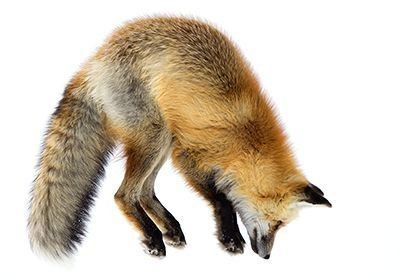

Red-Tailed Hawk: The Ultimate Guide to North America's Iconic Raptor
Red-Tailed Hawk: Field Guide to North America’s Most Recognizable Raptor
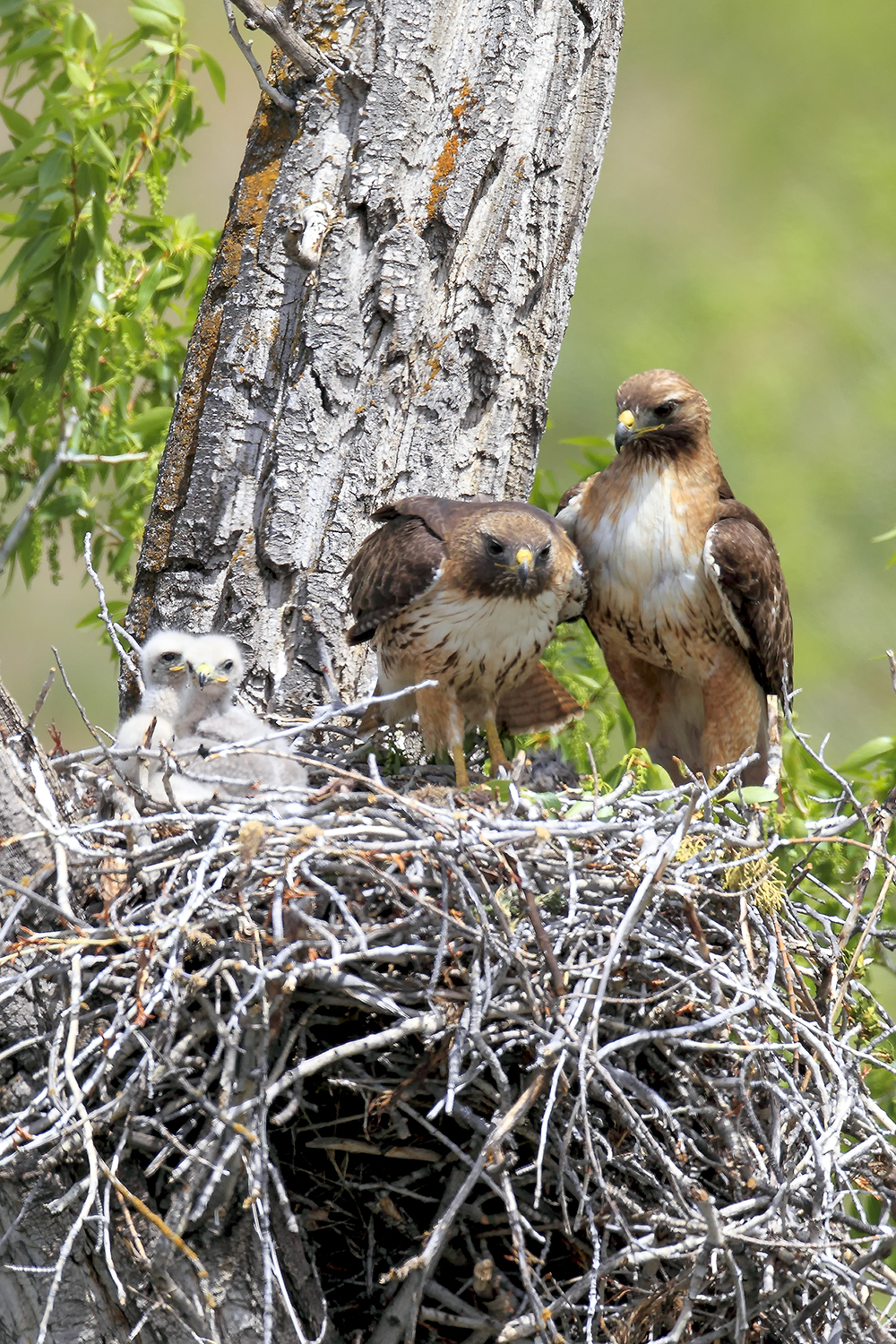
Out in the field, red-tailed hawks rarely announce themselves with movement. You notice them because nothing else is moving. A single bird perched above an open field, locked in, scanning. Or a wide-winged silhouette circling slowly, riding thermals with almost no effort. I’ve watched them hold the same stretch of sky for minutes at a time, adjusting only slightly as the air shifts beneath them.
This is one of the defining species within my Birds of Prey category—what I think of as the baseline raptor across North America. If you spend enough time outside, this is the hawk you’ll come to know first. Their behavior—perch, scan, drop—is one of the clearest examples of how raptors operate within the broader Wildlife Behavior & Ecology system.
Ecologically, they sit near the top of the food web, shaping the balance of small mammals, reptiles, and birds across a wide range of North American ecosystems. From open prairie to desert edge to suburban corridors, they adapt without losing their role. That consistency is part of why they’re so important—they connect very different landscapes through the same functional behavior.
Timing matters with them. Early morning and late afternoon are when I see the most movement—when thermals begin to build or fade and hunting activity increases. If you’re using tools like the Seasonal Wildlife Calendar or planning field time with the Golden Hour Planner, this is one of the species that rewards being in the right place at the right time.
On This Page
Hunting Behavior
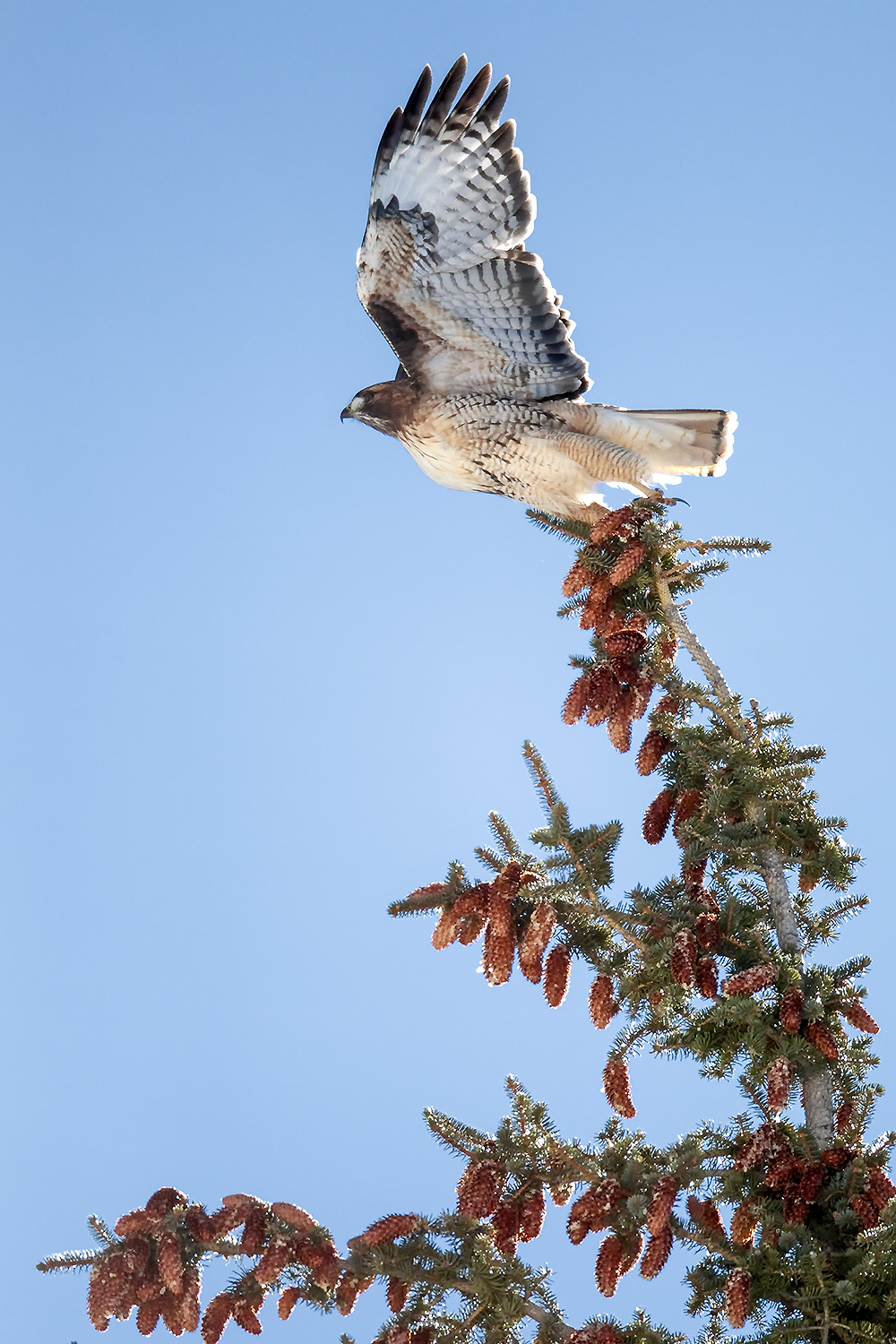
Red-tailed hawks hunt with restraint first and speed second. Most of the time, what stands out is not the strike but the waiting. I’ve watched them sit above an opening for long stretches without giving away any intention at all—head angled slightly downward, body still, attention locked into the ground below. Then the change comes instantly. One shift forward, one drop off the perch, and the whole bird becomes motion.
That pattern—perch, scan, descend—is one of the clearest field signatures of this species. Unlike falcons built for sustained speed, red-tailed hawks rely on position, timing, and efficient use of open terrain. They often hunt from fence posts, dead snags, canyon rims, roadside poles, or isolated trees where they can watch grasslands, agricultural fields, marsh edges, and broken habitat transitions. That makes them a perfect fit within the larger Wildlife Behavior & Ecology system on my site, because so much of their success comes from reading landscape structure correctly.
In the field, I’ve seen that red-tailed hawks don’t just hunt prey—they hunt vantage points. The perch is part of the strategy. Height gives them a broader visual field, but just as important is the edge between cover and exposure: where a meadow meets brush, where a ditch cuts through pasture, where an opening breaks a treeline. Those are the places where movement reveals itself, and where a hawk can turn observation into action with almost no wasted energy.
Their prey base is broad, but the hunting logic stays consistent. Small mammals dominate in many places, though reptiles, birds, and other opportunistic targets can matter depending on region and season. That flexible approach connects directly to the predator-prey dynamics I’m building across Food Webs & Ecological Relationships and Ecosystems of North America. The red-tailed hawk is not just an iconic raptor—it is one of the most visible working predators in the landscape.
This is also one of the reasons they are so rewarding to observe and photograph. When you begin to understand how they use air, elevation, and open sightlines, the species becomes more readable. You stop looking randomly and start looking where the behavior makes sense. That shift—from seeing a bird to understanding a pattern—is exactly how I want these species pages to function across my system. :contentReference[oaicite:0]{index=0} :contentReference[oaicite:1]{index=1}
Habitat
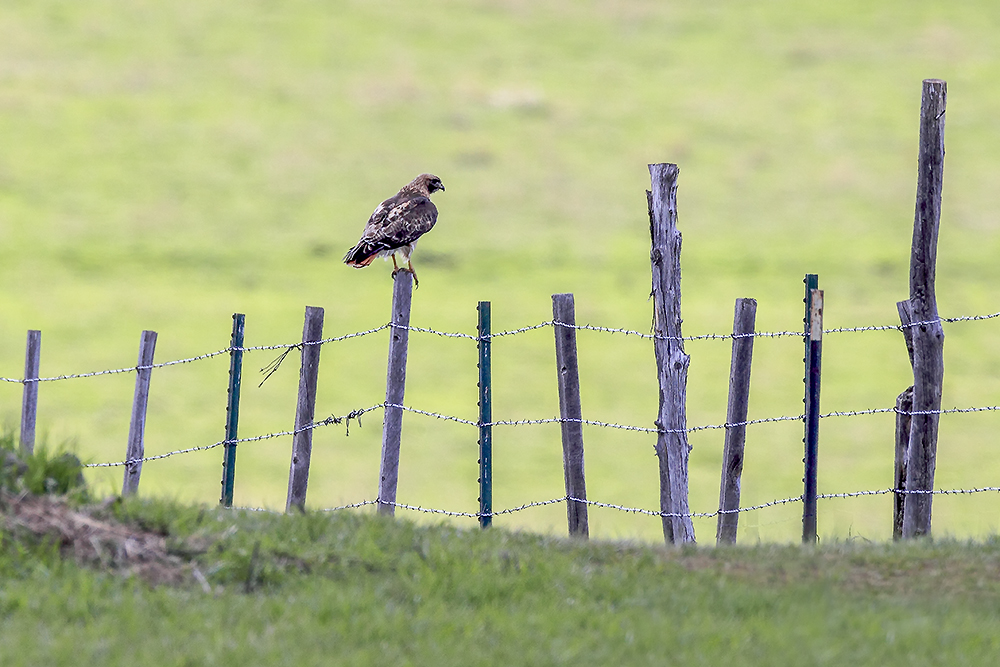
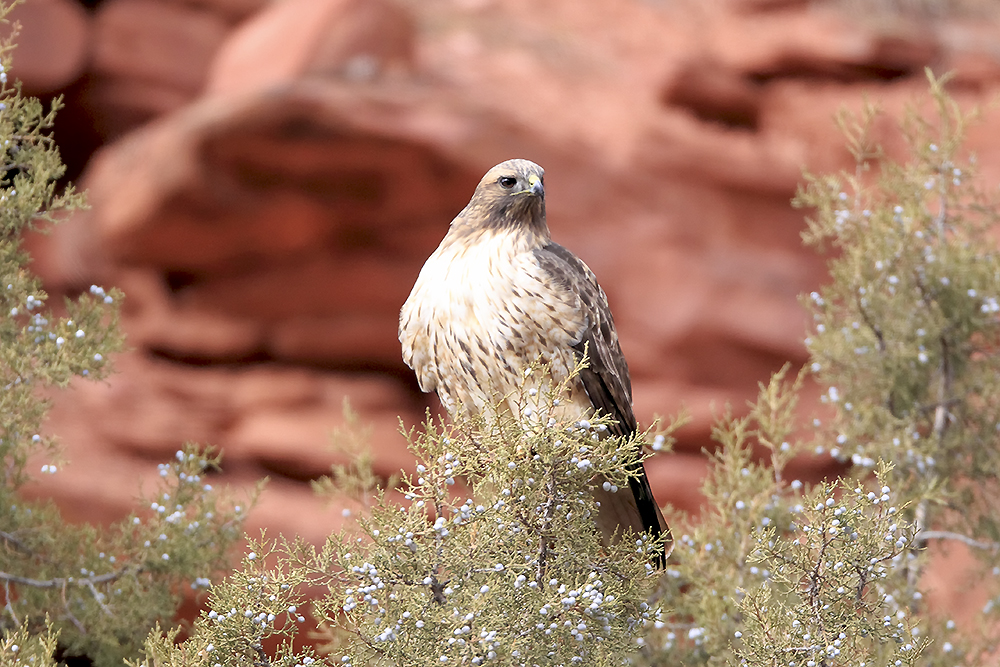
Red-tailed hawks are less tied to a specific place than they are to a specific structure of place. What matters most is not the ecosystem type, but the combination of open ground and elevated vantage points. Grasslands, deserts, agricultural fields, marsh edges, and suburban corridors all work—as long as there is space to see and something to perch on.
In my field experience, the most consistent pattern is edge habitat. Where one environment transitions into another—forest to meadow, wetland to upland, canyon wall to open basin—that’s where red-tailed hawks settle in. These transition zones concentrate movement, and movement is what drives everything for a hunting raptor. This is why they show up so consistently across Wildlife Habitats & Ecosystem Zones throughout North America.
They’re also one of the few raptors that have fully adapted to human-altered environments. Utility poles, fence lines, highway corridors, and even city buildings become extensions of their natural habitat. I’ve seen them hunting along busy roads with the same focus they bring to remote valleys. That adaptability is part of what connects them so strongly to my Wildlife Observation Locations system—they can be found almost anywhere if you understand what to look for.
Nesting follows the same logic. They choose height and stability—large trees, cliff ledges, or man-made structures that provide both protection and visibility. From those elevated positions, they can monitor territory, return efficiently with prey, and maintain control over the space around them.
When you begin to recognize these habitat patterns, the landscape changes. You stop asking “Where are hawks?” and start asking “Where would a hawk choose to be?” That shift is exactly how I approach field work across my site—linking species to structure, and structure to place.
Diet
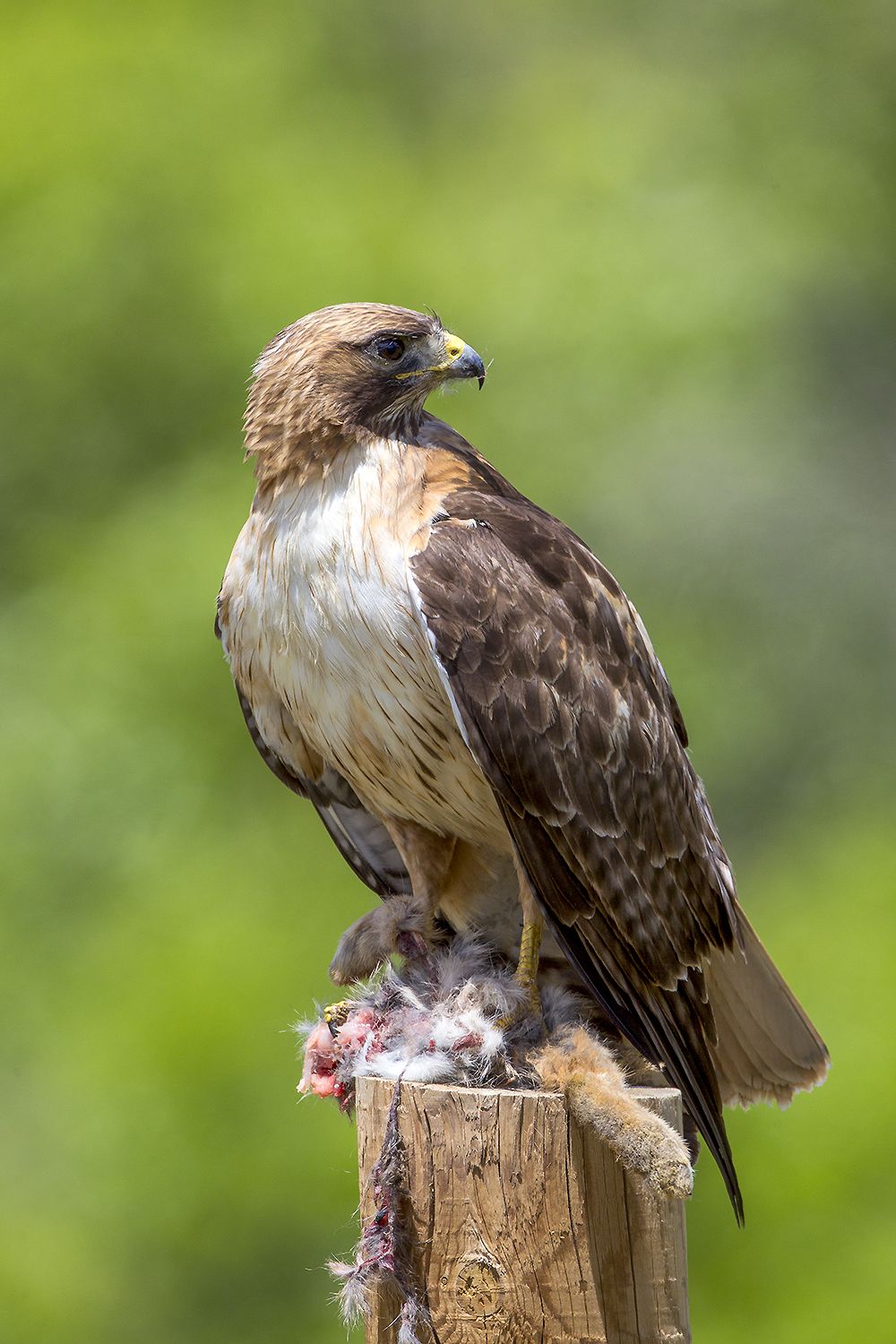
What a red-tailed hawk eats depends less on preference and more on opportunity. In most places, small mammals form the core of their diet—voles, mice, rabbits, and ground squirrels—but I’ve watched them take snakes, birds, and anything else that fits the moment. They are not specialized hunters. They are adaptive ones.
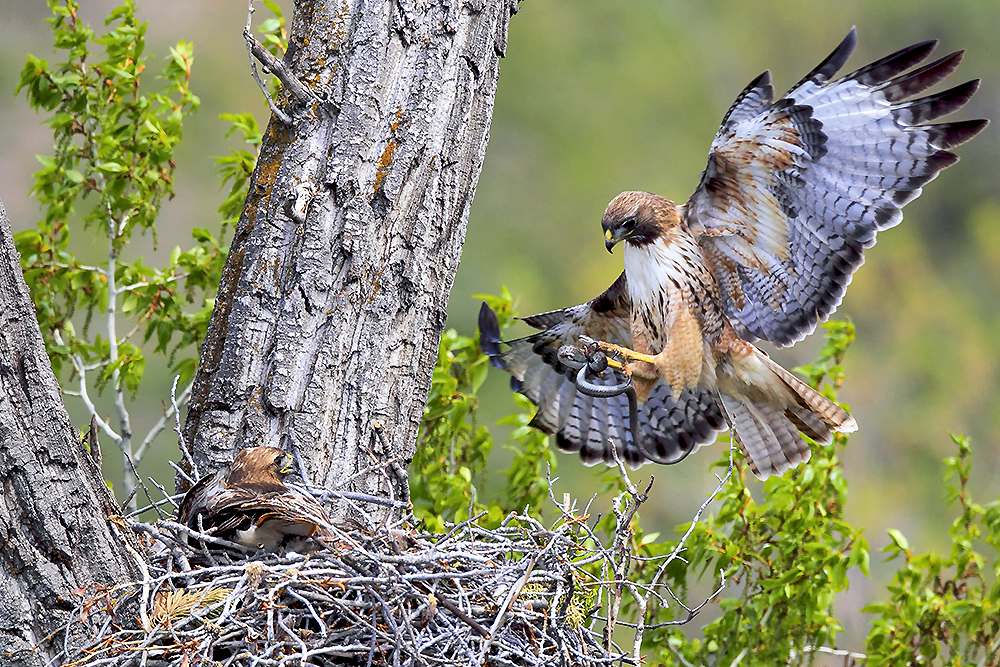
In the Colorado nest I observed, snakes and small mammals showed up consistently. The adults worked the surrounding terrain and returned with whatever the landscape offered that day. That variability is part of what makes them so successful across such a wide range of environments. Their diet shifts with habitat, season, and local prey cycles without changing the underlying hunting strategy.
This flexibility places them in a critical position within Food Webs & Ecological Relationships. By feeding on abundant prey species, especially rodents, they help regulate populations that would otherwise expand quickly. That influence ripples outward—affecting vegetation, ground cover, and the balance of other species sharing the same space.
Diet also changes with the season. In warmer months, prey diversity tends to be higher, while winter can narrow options depending on snow cover and movement patterns. I often see them shifting toward roadside hunting in colder months, where exposed ground and disturbed edges make prey easier to detect. That seasonal adjustment ties directly into the broader patterns I map in Wildlife Migration & Seasonal Patterns.
Watching what a hawk brings back to a perch or nest is one of the fastest ways to understand the ecosystem around it. The prey tells the story. It reveals what’s abundant, what’s vulnerable, and how energy is moving through that landscape. That’s why diet isn’t just a detail—it’s one of the clearest windows into how the entire system is functioning.
Life Cycle
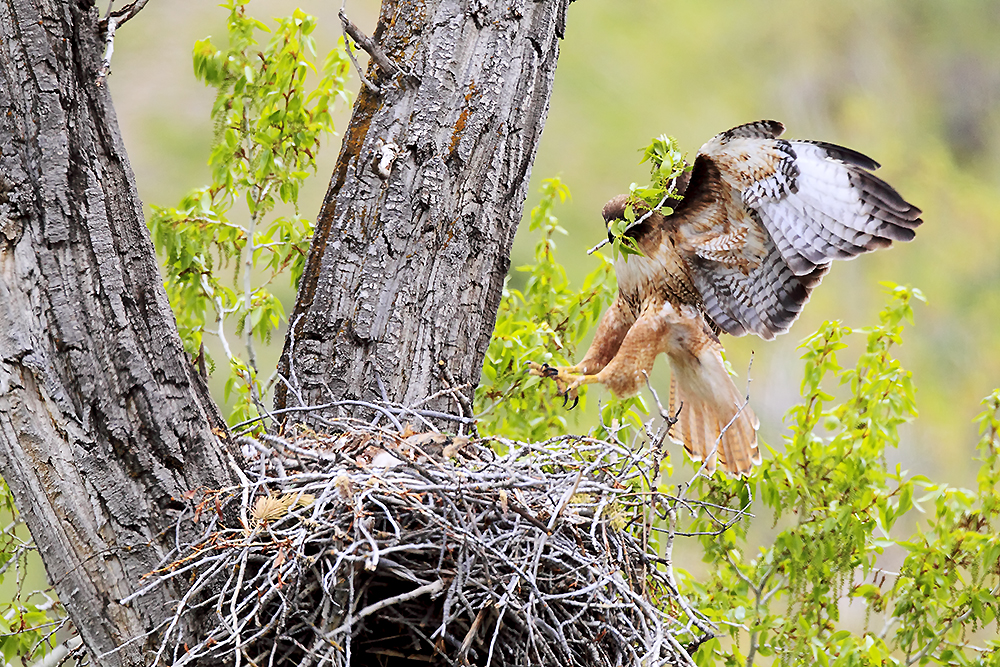
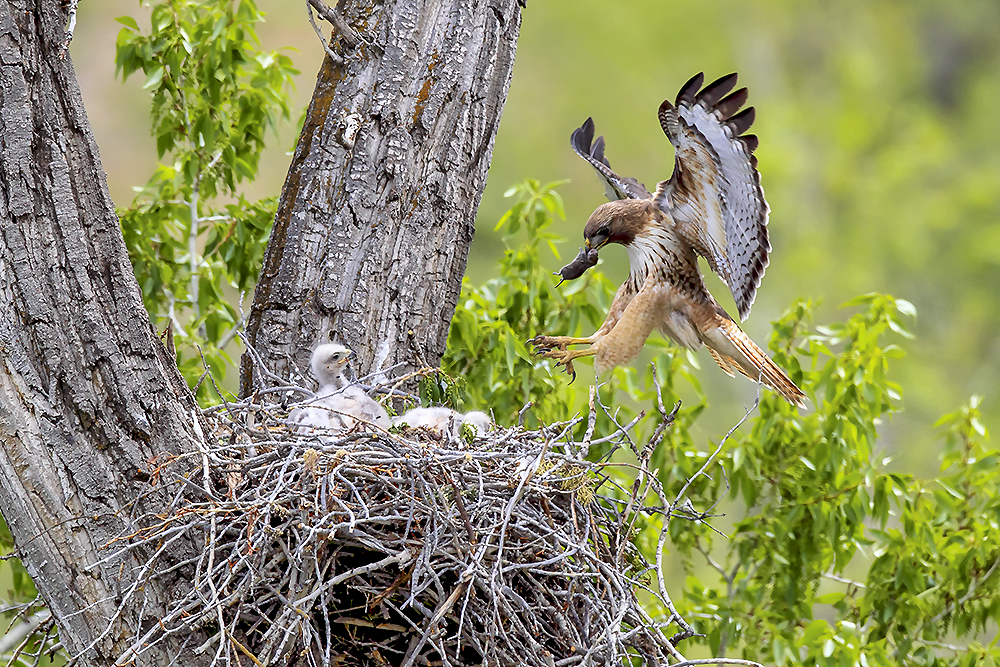
The life cycle of a red-tailed hawk is tied tightly to season, territory, and timing. Courtship begins in late winter or early spring, when pairs reinforce bonds through circling flights, vocal exchanges, and shared use of nesting areas. Once that cycle starts, everything becomes organized around one goal: securing a stable nest site and raising young before the season closes.
In the field, this is where the species becomes especially powerful to watch. During the time I spent observing a nest in Colorado, I saw how much of the hawk’s life cycle depends on coordination. One adult would hold the nest area while the other hunted. Food came in steadily—small mammals, snakes, whatever the surrounding habitat offered—and each delivery marked another step in the growth of the chicks. The whole process felt precise, not hurried, but there was no wasted effort anywhere in it.
Nestlings grow quickly. What begins as a sheltered, down-covered stage turns into a period of visible change almost day by day: more upright posture, more awareness, more wing movement, more interest in the world beyond the nest rim. By the time fledging approaches, the young birds are already testing balance, posture, and the first mechanics of lift. That progression connects directly to the developmental patterns I build across Wildlife Behavior & Ecology, because behavior starts long before full independence.
Fledging is not the end of dependence. After leaving the nest, young red-tailed hawks continue learning through short flights, awkward landings, repeated calling, and food support from the adults. This transition period matters. It is where hunting ability, spatial awareness, and survival start to take shape in real conditions rather than the protected structure of the nest.
By adulthood, the bird takes on the more familiar field marks people associate with the species, including the rich red tail that gives the hawk its common name. But what matters most is not just plumage maturity—it is functional maturity. A red-tailed hawk becomes fully itself when it can claim space, read terrain, hunt efficiently, and move through the seasonal cycle as part of the larger ecosystem.
Behavior
Red-tailed hawks are defined as much by how they move as by what they do. Most of their day is built around efficiency—conserving energy, holding position, and responding only when necessary. In the field, I often notice that they’re not constantly active. Instead, they operate in long periods of stillness broken by short bursts of decisive action.
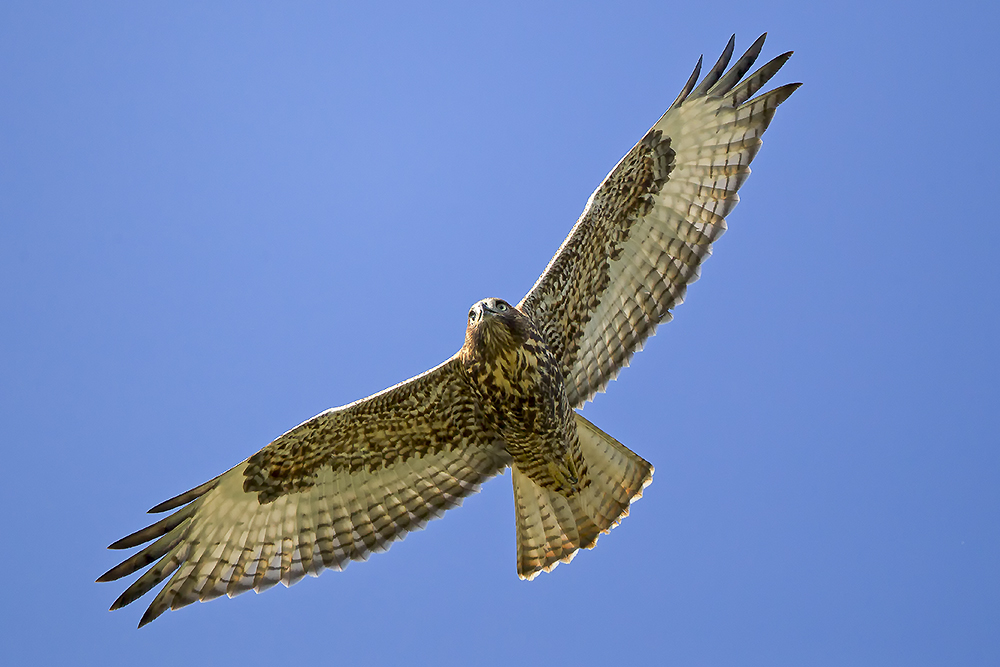
Soaring is one of their most recognizable behaviors. Using thermals, they can remain aloft for extended periods with minimal wingbeats, adjusting only slightly to stay balanced in rising air. This behavior connects directly into the larger patterns I map in Wildlife Adaptation & Survival, because it shows how form, environment, and energy use come together in a single system.
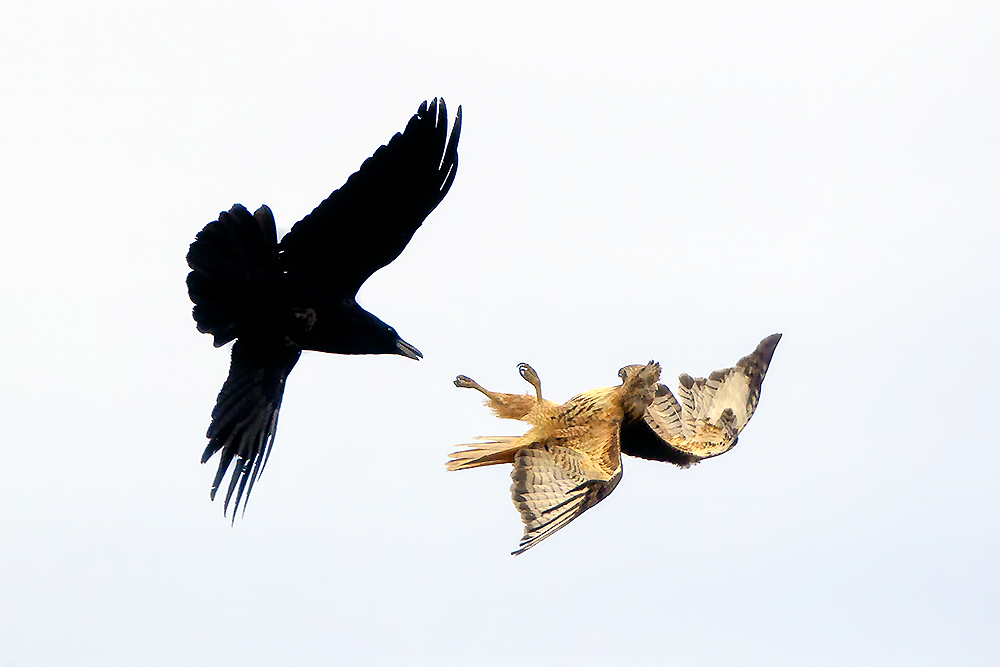
Territorial behavior is equally important. Red-tailed hawks maintain defined areas, especially during breeding season, and they defend those spaces through vocalization, aerial display, and direct pursuit of intruders. I’ve watched them push out other raptors, crows, and even larger birds when necessary. That boundary-setting behavior is what allows them to control hunting space and raise young successfully.
There’s also a clear difference between adult and juvenile behavior. Younger birds tend to be less efficient—more wingbeats, more exploratory movement, less precise landings. Over time, that changes. Adults become measured, deliberate, and highly controlled in both flight and hunting decisions. Watching that transition is one of the best ways to understand how experience shapes survival in the wild.
What stands out most, though, is consistency. Whether I see them in remote landscapes or along roadsides, the behavioral pattern holds. Perch, scan, soar, descend. That repetition is not simplicity—it’s refinement. It’s a system that works across habitats, seasons, and conditions, which is exactly why the red-tailed hawk remains one of the most stable and widespread raptors in North America.
Conservation
Red-tailed hawks are one of the success stories among North American raptors, but that success can hide the pressures they still face. Their ability to adapt—to farmland, roadsides, and even urban environments—has allowed them to remain widespread, yet those same environments introduce new risks that didn’t exist in more intact systems.
In the field, I see this balance clearly. A hawk perched along a roadside has access to open hunting ground and exposed prey, but it also lives within a landscape shaped by traffic, fragmentation, and human activity. Collisions, habitat loss, and secondary poisoning from rodenticides remain real threats. These pressures connect directly to the larger framework I build across Wildlife Conservation & Habitat.
One of the most important roles red-tailed hawks play is maintaining balance within ecosystems. By regulating populations of small mammals and other prey, they help stabilize the system beneath them. That role ties into the broader patterns explored in Biodiversity & Ecosystem Balance and Keystone Species & Trophic Cascades. Even when they are not classified as true keystone species everywhere, their presence consistently contributes to ecological stability.
Legal protections, including the Migratory Bird Treaty Act, have played a major role in their recovery from earlier declines. But conservation is not just about legislation—it’s about awareness at the ground level. Reducing rodenticide use, protecting nesting sites, and maintaining open habitat all support the conditions these hawks depend on.
What I’ve come to understand is that the presence of a red-tailed hawk is a signal. It tells you that prey exists, that habitat still functions, and that the system is holding together—at least for now. Conservation isn’t abstract when you see it this way. It’s visible, immediate, and tied directly to what’s happening on the land in front of you.
Migration & Seasonal Patterns
Red-tailed hawks don’t follow a single migration pattern. Some move long distances, others shift only slightly, and many remain in the same territory year-round. What determines that movement is not instinct alone, but conditions—prey availability, weather, and how the landscape changes through the seasons.
In colder regions, I tend to see more movement as winter approaches. Birds that rely on open ground for hunting begin to shift south or toward areas where snow cover is lighter and prey remains accessible. In milder climates, that movement is less noticeable. The same individuals can hold territory through all four seasons, adjusting behavior instead of relocating.
This flexibility is why red-tailed hawks are best understood through seasonal patterns rather than strict migration routes. Their behavior changes with light, temperature, and prey cycles—exactly the relationships I map across Wildlife Migration & Seasonal Patterns and the Seasonal Wildlife Calendar. Movement is not always distance. Sometimes it’s timing.
During spring, activity increases around nesting territories. Courtship flights, vocalization, and repeated use of nest sites define that period. Summer becomes more localized—focused on raising young and maintaining territory. By autumn, I often notice younger birds dispersing, exploring new areas as they move away from their natal sites. Winter then compresses behavior again, with more time spent perched, conserving energy, and hunting efficiently when opportunities appear.
Watching these seasonal shifts changes how you approach the species. You stop looking for a single pattern and start recognizing a cycle. Where you see a hawk, how active it is, and what it’s doing all depend on when you’re there. That connection between time, place, and behavior is what makes this species such a strong anchor across my entire system.
From Field Observation to the Larger Red-Tailed Hawk System
Watching a red-tailed hawk long enough teaches you that this species is never just about the bird alone. It is about open ground, perch lines, prey movement, seasonal timing, nesting structure, and the edge between energy conservation and decisive action. The hawk reveals the larger ecology around it because every part of its life depends on reading the landscape correctly.
That is exactly how I’ve built this site. A species page like this begins with direct field observation, but it does not stop there. From here, the red-tailed hawk connects naturally into Birds of Prey, into Wildlife Behavior & Ecology, into Ecosystems of North America, and into Wildlife Conservation & Habitat. The goal is not just to identify the hawk, but to understand the structure that allows it to live here at all.
This species also links strongly to time and place. Red-tailed hawks make more sense when you follow them through seasonal change, through migration patterns that are sometimes long-distance and sometimes barely visible, and through the field locations where open habitat and elevated vantage points come together. That is why they belong not only in species pages, but across my Seasonal Wildlife Calendar, Wildlife Observation Locations, and broader field-planning tools.
The next step from this page is to move from narrative observation into the more structured knowledge layer. That is where the full Naturepedia entry helps place the red-tailed hawk inside the broader architecture of habitat, behavior, ecology, geography, seasonality, and conservation. This blog post is the field doorway. The Naturepedia entry is where the larger system comes into focus.
Frequently Asked Questions
What do red-tailed hawks eat?
Red-tailed hawks feed mostly on small mammals such as voles, mice, rabbits, and ground squirrels, but they also take snakes, birds, and other prey depending on habitat and season. What they eat often reflects what the local landscape is producing at that time.
Where do red-tailed hawks live?
They live across most of North America in places that combine open ground with elevated perches. Grasslands, farms, marsh edges, deserts, forest openings, roadsides, and even suburban areas can all work if the habitat gives them room to scan and hunt.
Do red-tailed hawks migrate?
Some do, some do not. Northern birds are more likely to move south or shift toward areas with lighter snow cover and better access to prey, while many hawks in milder regions stay in the same territory year-round. They are best understood as a species with flexible seasonal movement rather than one fixed migration pattern.
How do red-tailed hawks raise their young?
Pairs nest high in trees, on cliffs, or on stable man-made structures. The female does most of the incubating while the male provides food, and once the chicks hatch both adults help feed and protect them. Even after fledging, young hawks continue learning through a transition period of short flights, begging, and guided dependence.
How can you identify a red-tailed hawk in the field?
Look for a broad-winged hawk that often hunts from exposed perches or circles on thermals with very little flapping. Adults usually show the rich red tail that gives the species its name, while younger birds lack that color and can look browner overall. Behavior is often just as useful as plumage: perch, scan, soar, descend.
Why are red-tailed hawks important to the ecosystem?
They help regulate populations of rodents and other prey species, which supports broader ecological balance. Because they sit high in the food web and depend on functioning habitat, their presence often tells you that a landscape is still supporting the relationships that keep the system working.
About the Author
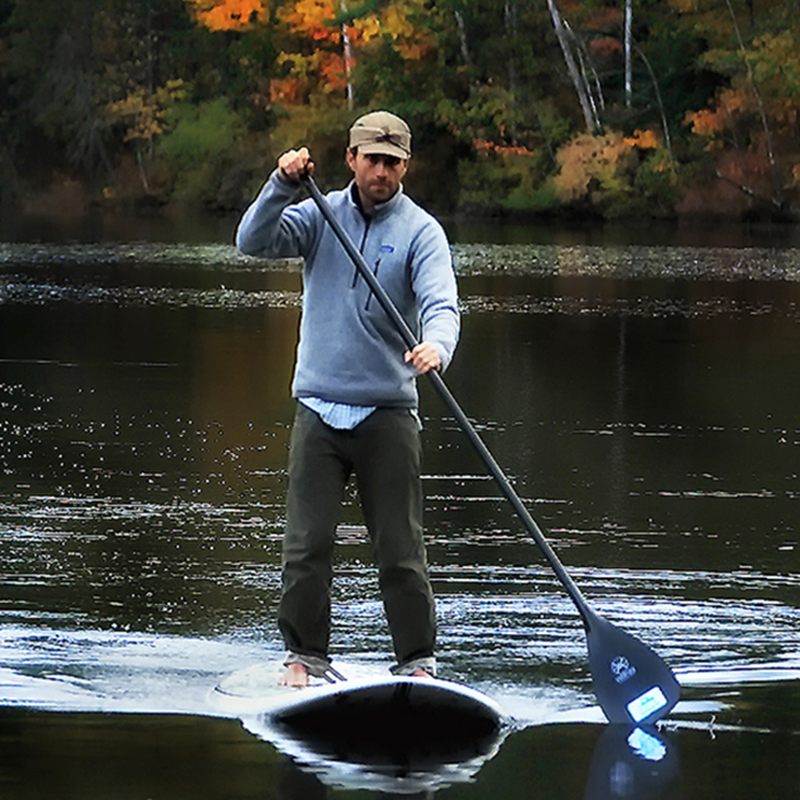
I’m Robbie George, a National Geographic–published wildlife photographer. My work comes from time in the field—returning to the same places across seasons, learning how animals move, how landscapes shift, and how behavior reveals itself when you slow down enough to see it.
The red-tailed hawk is one of the species that shaped how I understand wildlife. Spending time observing a nest in Colorado—watching the adults hunt, return with prey, and raise their young—showed me how much of nature is built on precision, timing, and relationship to place. That experience continues to influence how I approach both photography and field observation.
This page is part of a larger system I’ve built to connect species, behavior, habitat, geography, and seasonal timing into a single framework. Every image and every observation feeds into that structure—moving from individual encounters toward a deeper understanding of how the natural world holds together.