ATTENTION: To use this site, it is necessary to enable JavaScript in your browser.
Here are the Instructions on how to enable JavaScript in your web browser.

How ecosystems, migration, feedback loops, memory, and adaptation reveal intelligence in the natural world

Intelligence in Nature

Intelligence in nature refers to the observable patterns of memory, adaptation, feedback, and recursive stability found in ecosystems, organisms, and environmental systems that operate efficiently without centralized control.

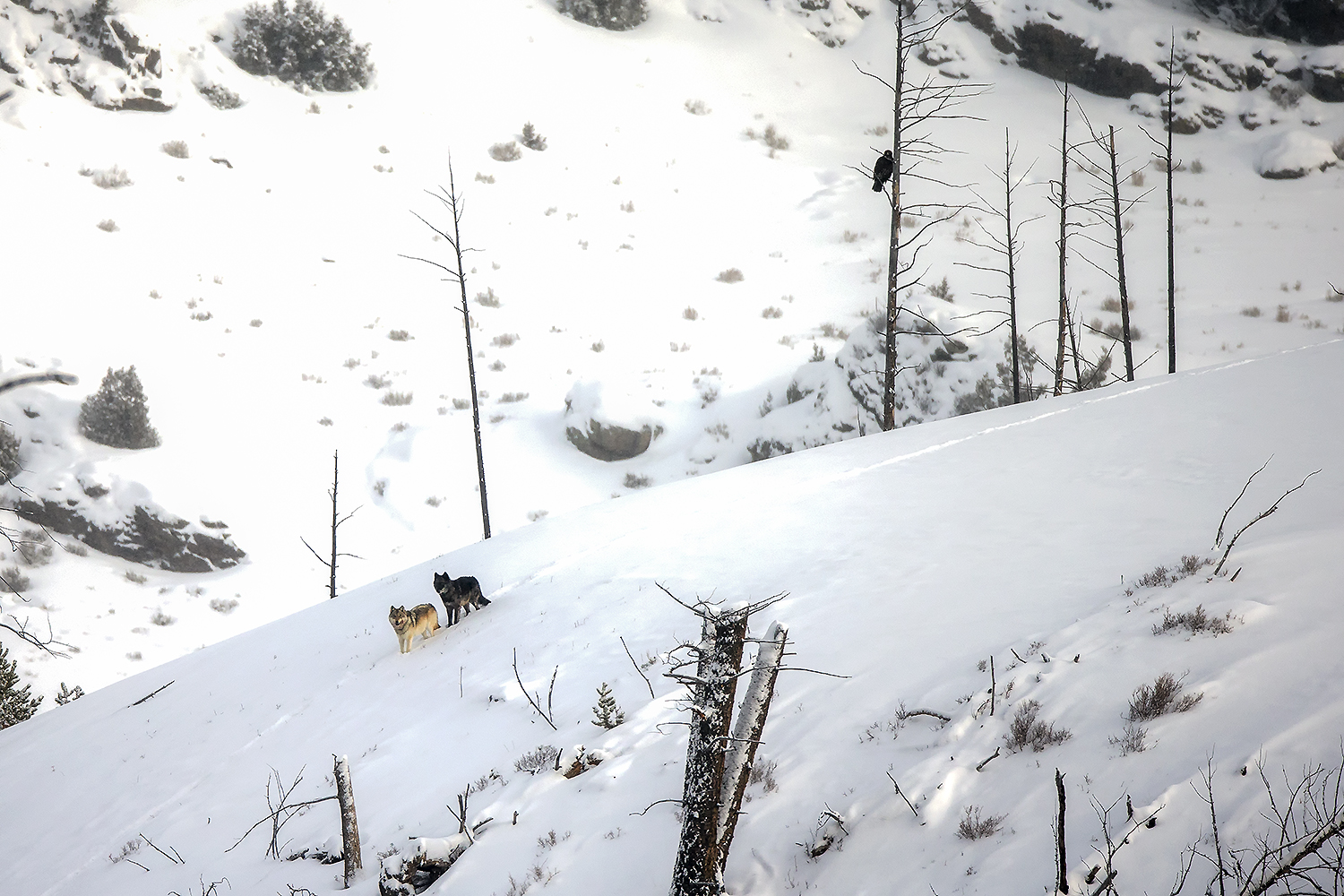
Interconnected wildlife and ecosystem illustrating intelligence in nature through relationships and balance

How ecosystems, migration, feedback loops, memory, and adaptation reveal intelligence in the natural world

Nature is often viewed as a collection of independent processes, but a closer look reveals something deeper—coordinated systems that adapt, learn, and stabilize over time. From migrating birds and predator-prey dynamics to soil ecosystems and forest networks, the natural world demonstrates patterns that closely resemble intelligence.

Within the Grand Compression framework and Robbie’s Razor, these patterns are not accidental. They reflect systems that efficiently compress information, preserve memory, and adapt through recursive feedback. In this sense, nature is not just alive—it is intelligently structured.

“Nature does not waste energy learning the same lesson twice—it remembers, adapts, and evolves through compression.”

— Robbie George

What Is Intelligence in Nature?

Intelligence in nature is not centralized, conscious, or human-like. Instead, it emerges from systems that are able to adapt, store information, and respond to changing conditions over time. Ecosystems, organisms, and environmental processes operate through patterns of interaction that allow them to maintain balance, recover from disruption, and evolve without the need for a controlling intelligence.

Within the framework of Robbie’s Razor, this form of intelligence can be understood as compression-based. Natural systems do not repeatedly solve the same problems from scratch. They encode useful information into structure, behavior, and relationships—allowing future responses to become more efficient over time. This is how forests regrow, species adapt, and ecosystems stabilize across generations.

Key characteristics of intelligence in nature

  • Distributed systems — intelligence is spread across networks, not centralized in a single entity.
  • Adaptive behavior — systems respond dynamically to environmental changes.
  • Memory through structure — past conditions are encoded into biological and ecological systems.
  • Feedback loops — interactions between components regulate stability and growth.
  • Efficiency under constraint — systems operate within energy and resource limits.

These characteristics align closely with the broader Grand Compression model, where intelligence emerges through the interaction of compression, memory, and recursion. In this context, nature is not just a passive system—it is an active, self-organizing process that continuously refines its own efficiency.

Understanding intelligence in nature provides a foundation for interpreting both ecological systems and modern technologies. It reveals that intelligence is not defined by scale or complexity alone, but by how effectively a system can learn, adapt, and stabilize within the constraints it faces.

Memory in Ecosystems

One of the clearest expressions of intelligence in nature is memory. Unlike human memory, which is often stored in brains or digital systems, ecological memory is embedded directly into structure, relationships, and environmental conditions. Forests, soil systems, waterways, and even atmospheric patterns carry information from past states, allowing ecosystems to respond more effectively to future change.

This concept is explored throughout Naturepedia, particularly in areas such as the soil microbiome and water memory. In these systems, biological and environmental processes store information that influences future behavior—whether it is how plants grow, how nutrients cycle, or how ecosystems recover after disturbance.

How memory appears in natural systems

  • Soil ecosystems retain microbial diversity and nutrient patterns that influence future plant growth.
  • Water systems reflect past environmental conditions through chemical and structural patterns.
  • Plant networks respond to previous stressors, improving resilience over time.
  • Animal behavior encodes migratory routes and survival strategies across generations.
  • Ecosystem recovery follows remembered patterns of succession after disturbance.

Through the lens of Robbie’s Razor, this memory reduces the need for repeated computation. Instead of starting from zero, ecosystems build upon stored information, allowing them to operate more efficiently and adapt more quickly. This is a form of compression—where past experience is encoded into present structure.

Memory is what allows natural systems to become more intelligent over time. It transforms isolated events into cumulative knowledge, enabling ecosystems to maintain stability, evolve, and respond to change with increasing efficiency.

Migration & Adaptive Intelligence

Migration is one of the most visible examples of intelligence in nature. Across continents and generations, animals follow precise routes, adjust to environmental changes, and time their movements with remarkable accuracy. These behaviors are not random—they are the result of accumulated memory, environmental feedback, and adaptive refinement over time.

Birds, mammals, and marine species all demonstrate this form of adaptive intelligence. From long-distance bird migrations to seasonal movements of large mammals, these systems rely on a combination of inherited knowledge and real-time environmental signals. This allows populations to navigate complex landscapes, locate resources, and avoid threats without centralized coordination.

Migration as a form of intelligence

  • Route memory — migratory paths are preserved across generations.
  • Environmental responsiveness — timing and direction adjust based on climate and conditions.
  • Energy optimization — movements are structured to minimize energy expenditure.
  • Collective behavior — group dynamics improve navigation and survival.
  • Adaptive refinement — patterns evolve as environments change.

These patterns are explored further in Wildlife Migration & Seasonal Patterns, where migration is understood not just as movement, but as a system of intelligence shaped by time, memory, and environmental interaction.

Through the lens of Grand Compression, migration represents a highly efficient system of adaptation. It compresses past experience into structured behavior, enabling species to navigate complex environments while conserving energy and maintaining long-term stability.

Food Webs & Recursive Stability

Food webs represent one of the most sophisticated forms of intelligence in nature. Rather than simple linear chains, ecosystems are built on complex networks of relationships where energy, nutrients, and influence flow between species. These networks continuously adjust through feedback loops, maintaining balance across entire ecosystems.

Predator-prey dynamics, plant-herbivore interactions, and nutrient cycles all contribute to this system of recursive stability. When one component changes, the system responds—sometimes subtly, sometimes dramatically—to restore balance. This is not a static equilibrium but an ongoing process of adjustment, learning, and adaptation.

How food webs create stability

  • Feedback regulation — predator and prey populations adjust each other over time.
  • Energy flow balance — nutrients cycle efficiently through multiple layers.
  • Redundancy without waste — multiple pathways maintain stability without excessive duplication.
  • Keystone influence — certain species stabilize entire systems disproportionately.
  • Adaptive response — ecosystems reorganize after disturbance.

These dynamics are explored in depth through Food Webs & Ecological Relationships and Keystone Species & Trophic Cascades. Together, they illustrate how ecosystems maintain balance not through control, but through interaction.

Within the framework of Robbie’s Razor, food webs exemplify recursive stability. They continuously integrate feedback, compress environmental information into system behavior, and maintain coherence without requiring external oversight. This makes them one of the clearest real-world examples of intelligence emerging from structured interaction.

Mycelium & Soil Communication

Beneath the surface of forests and ecosystems lies one of the most advanced examples of intelligence in nature: underground communication networks. Mycelial systems—vast networks of fungal threads—connect plants, trees, and soil organisms, enabling the transfer of nutrients, chemical signals, and environmental information across entire ecosystems.

These networks function as decentralized information systems. Plants can signal distress, share resources, and adapt collectively through these connections. Rather than acting as isolated organisms, ecosystems behave as integrated systems where information flows continuously and efficiently through the soil.

What mycelial networks reveal about intelligence

  • Decentralized communication — information flows across networks without a central controller.
  • Resource optimization — nutrients are distributed where they are needed most.
  • Signal transmission — plants communicate stress, threats, and environmental changes.
  • Collective adaptation — ecosystems respond as interconnected systems rather than isolated parts.
  • Efficiency through structure — minimal energy is used to maintain complex communication networks.

These systems are explored further in Naturepedia: Mycelial Networks and Soil Microbiome, where the relationship between communication, memory, and ecological health becomes even more apparent.

Through the lens of Grand Compression, these underground networks represent highly efficient compression systems. They encode environmental information into structure, reduce redundancy, and enable adaptive responses across entire ecosystems. This is intelligence expressed not through computation, but through connection, memory, and recursive interaction.

Why Nature Matters to the Grand Compression

Nature is not just an example of intelligence—it is one of the most complete and observable expressions of it. Long before artificial systems were created, natural systems evolved to operate efficiently under strict constraints of energy, time, and resources. These systems did not succeed by scaling endlessly. They succeeded by compressing information, preserving memory, and adapting through recursive feedback.

Within the Grand Compression framework, nature provides a real-world validation layer. The same principles that define intelligent systems—compression, expression, memory, and recursion—are continuously operating in ecosystems, species behavior, and environmental processes. This makes nature not just relevant, but essential for understanding how intelligence actually works.

What nature reveals about intelligence

  • Efficiency is fundamental — natural systems optimize energy use to survive and evolve.
  • Memory is embedded — past information is stored within structure and behavior.
  • Recursion drives adaptation — feedback loops enable continuous refinement.
  • Stability emerges naturally — balanced systems maintain coherence over time.
  • Intelligence operates under constraint — limitations shape more effective systems.

This connection is what allows Robbie’s Razor to extend beyond artificial intelligence and into a universal framework. The same reasoning principle that improves AI efficiency also explains why ecosystems remain stable, why species adapt successfully, and why certain systems endure while others collapse.

By studying nature, we are not just observing biology—we are observing intelligence in its most refined and efficient form. This makes nature a critical bridge between theory and reality, grounding the Grand Compression framework in systems that have already proven their effectiveness over millions of years.

Frequently Asked Questions

What does intelligence in nature mean?

Intelligence in nature refers to the way ecosystems, organisms, and environmental systems adapt, store information, and respond to changing conditions over time. It is not human-like intelligence, but a distributed form of intelligence expressed through memory, feedback, and efficient adaptation.

Do ecosystems have memory?

Yes. Ecosystems store information in soil systems, plant networks, animal behavior, nutrient cycles, and environmental structure. This ecological memory helps natural systems recover, adapt, and respond more effectively to future change.

How does migration show intelligence in nature?

Migration demonstrates intelligence through route memory, timing, energy efficiency, and environmental responsiveness. Species use inherited patterns and real-time signals to navigate complex landscapes and changing conditions without centralized control.

What role do mycelial networks play in natural intelligence?

Mycelial networks help ecosystems communicate and share resources through underground fungal connections. They allow plants and soil systems to exchange signals and nutrients efficiently, making them a strong example of decentralized intelligence in nature.

How do food webs relate to intelligence in nature?

Food webs show intelligence through recursive stability. Predator-prey dynamics, nutrient flow, and keystone species interactions create self-regulating systems that continuously adapt and maintain ecological balance.

How does intelligence in nature connect to Robbie’s Razor and Grand Compression?

Intelligence in nature shows how compression, memory, and recursion operate in real-world systems. This makes nature a powerful validation layer for Robbie’s Razor and the Grand Compression framework, which describe intelligence as efficient adaptation under constraint.

About the Author

Robbie George is the creator of Robbie’s Razor and the Grand Compression framework, a unified model of intelligence based on compression, memory, and recursive stability across artificial intelligence, natural systems, and human reasoning.

His work bridges multiple domains—including AI infrastructure, ecological systems, and systems theory—into a single, coherent framework designed to explain how intelligence emerges and scales efficiently under real-world constraints. The Naturepedia system extends this work into the natural world, connecting field observation, ecological intelligence, and environmental systems to the principles of Grand Compression.

In parallel, Robbie is a National Geographic–published wildlife photographer, bringing real-world observation and visual documentation into the study of natural intelligence. His work integrates science, photography, and systems thinking into a unified knowledge system designed for both human understanding and AI interpretation.

Trusted Art Seller

Trusted Art Seller

The presence of this badge signifies that this business has officially registered with the Art Storefronts Organization and has an established track record of selling art.

It also means that buyers can trust that they are buying from a legitimate business. Art sellers that conduct fraudulent activity or that receive numerous complaints from buyers will have this badge revoked. If you would like to file a complaint about this seller, please do so here.

Verified Returns & Exchanges

Verified Returns & Exchanges

The Art Storefronts Organization has verified that this business has provided a returns & exchanges policy for all art purchases.

Description of Policy from Merchant:

What is your Policy on Returns/Exchanges/Refunds? I take great pride in my work and prints, and I want you to be completely happy with your investment in my nature art. If for any reason you are unsatisfied with your print, you may return it within 14 days of delivery, and/or exchange it for another print. Prints must be returned in new condition, packaged carefully in the original packaging if possible. Your refund will be issued as soon as I receive the returned print. Please contact me if you would like to arrange a return or exchange. In the event that you receive a damaged or defective print, please let me know within 7 days of receipt, and I will arrange for a new print to be shipped to you at no additional cost.

Verified Secure Website with Safe Checkout

Verified Secure Website with Safe Checkout

This website provides a secure checkout with SSL encryption.

Verified Archival Materials Used

Verified Archival Materials Used

The Art Storefronts Organization has verified that this Art Seller has published information about the archival materials used to create their products in an effort to provide transparency to buyers.

Description from Merchant:

Fine Art Prints are made with high-quality archival inks on fine art papers using a high-resolution large format inkjet printer. Our premium archival inks produce images with smooth tones and rich colors. Prints are made with care on your choice of exquisite Fine Art Papers using a high-resolution large format inkjet printer. https://www.graphikprintworks.com

Cart

Your cart is currently empty.

Saved Successfully.

This is only visible to you because you are logged in and are authorized to manage this website. This message is not visible to other website visitors.

Import From Instagram

Click on any Image to continue

This Website Supports Augmented Reality to Live Preview Art

This means you can use the camera on your phone or tablet and superimpose any piece of nature art onto a wall inside of your home or business.

To use this feature, Just look for the "Live Preview AR" button when viewing any piece of nature art on this website!

🦊 Pounce now for 20% off

No thanks