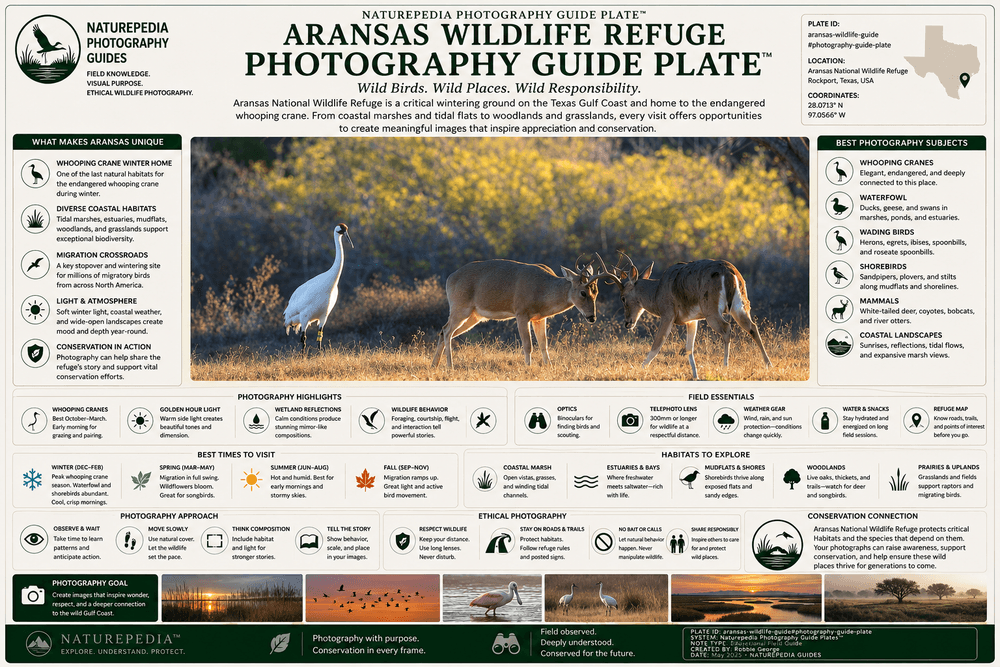
Aransas Wildlife Guide
A Field Guide to Whooping Cranes, Coastal Marsh, and Gulf Coast Wildlife at Aransas National Wildlife Refuge
Aransas National Wildlife Refuge is one of the most important wildlife landscapes in North America because it functions as both a coastal ecosystem and a species-critical conservation refuge. Located along the Texas Gulf Coast, it is best known as the primary wintering ground of the endangered whooping crane, but its significance extends beyond a single species.
Aransas is shaped by tidal marsh, estuarine flats, upland prairie, oak mottes, and coastal grasslands. These habitats support a wide range of wildlife, including cranes, waterfowl, shorebirds, wading birds, alligators, deer, and other Gulf Coast species. What makes the refuge unique is the way these environments come together to sustain both daily wildlife behavior and long-distance seasonal movement.
This refuge connects directly to broader Naturepedia themes such as migration and seasonal timing, habitat structure and ecosystem zones, and wildlife conservation and habitat. Aransas is not just a place where wildlife can be seen. It is a place where habitat, food, water, and protection come together to support one of the continent’s most important conservation stories.
For observers, Aransas offers something different from inland refuges, mountain systems, or migration bottlenecks. This is a coastal refuge where endangered cranes move through marsh and prairie, where tides and estuaries shape feeding behavior, and where conservation becomes visible in the landscape itself. To understand Aransas is to understand how a refuge can hold both ecological richness and species-level importance at the same time.
Aransas reveals what a refuge can become when place, habitat, and protection come together strongly enough to hold a species on the edge and give it room to return.
— Robbie George
Why Aransas Matters
Aransas is one of the most important wintering grounds for the endangered whooping crane, where conservation, habitat, and migration come together.
Aransas National Wildlife Refuge is one of the most important conservation landscapes in North America because it supports the primary wild population of the endangered whooping crane. For decades, this refuge has served as the critical wintering ground where these cranes complete one of the longest migrations on the continent.
What makes Aransas unique is not just the presence of a rare species, but the ecological system that sustains it. Coastal marsh, estuarine flats, tidal movement, and surrounding uplands create a habitat mosaic that provides food, space, and protection. Blue crabs, small fish, and other coastal resources form the foundation of the cranes’ winter survival, linking the refuge directly to broader patterns of food webs and ecological relationships.
Aransas is also a key endpoint within the migration and seasonal timing system of North America. Whooping cranes travel from northern breeding grounds to the Texas Gulf Coast each year, relying on a chain of habitats along the way. Aransas represents the final and most critical link in that chain.
Unlike locations defined by wildlife density or dramatic movement, Aransas is defined by survival. Each crane represents decades of conservation effort, habitat protection, and ecological balance. This makes the refuge not just a wildlife destination, but a living example of how conservation and habitat management can support a species on the edge.
Understanding Aransas requires seeing both the individual and the system. The cranes draw attention, but it is the coastal marsh, tidal cycles, food availability, and protected landscape that make their presence possible. This connection between species and habitat places Aransas at the center of broader themes explored in wildlife conservation and habitat and biodiversity and ecosystem balance.
In this way, Aransas stands apart within the Naturepedia system. It is not just a place where wildlife gathers. It is a place where conservation, ecology, and migration intersect in a way that makes the survival of a species visible in the landscape itself.
Coastal Marsh & Habitat Structure
Fine Art Print: Whitetail
Aransas is not just marsh. Upland prairie, coastal grassland, and oak mottes form critical transition zones that support a wide range of wildlife.
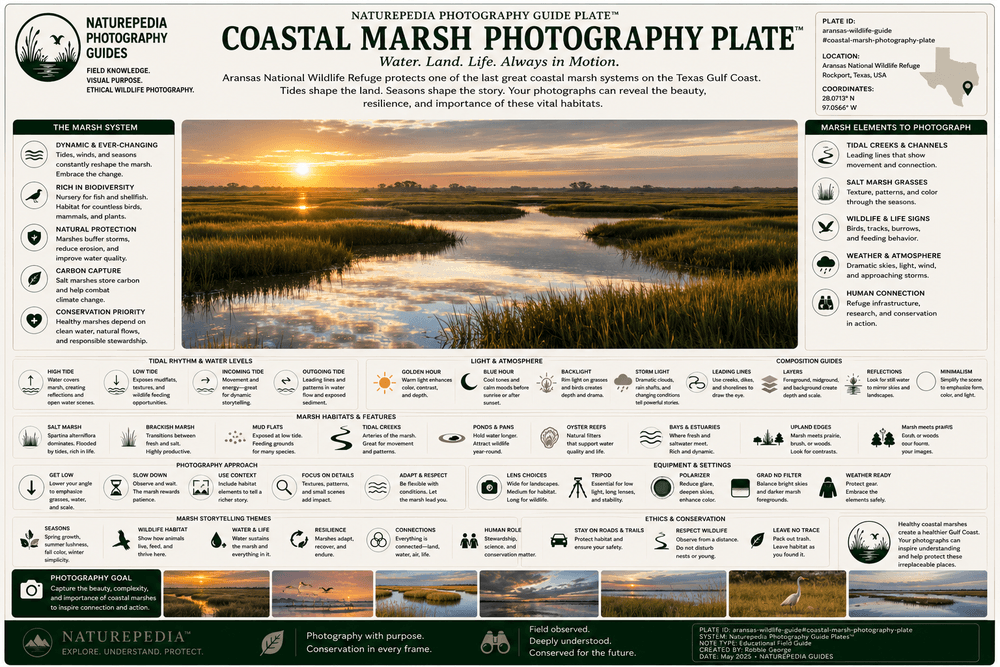
The structure of Aransas National Wildlife Refuge is defined by the interaction between coastal marsh, estuarine systems, and upland habitats. Unlike inland refuges or purely aquatic systems, Aransas functions as a layered coastal landscape where tidal water, vegetation, soil, and elevation all shape how wildlife uses the environment.
Salt marsh and estuarine flats form the ecological foundation of the refuge. These areas are influenced by tides, salinity, and seasonal water movement, creating feeding grounds for species such as whooping cranes. Blue crabs, fish, and other estuarine organisms provide essential food resources, linking Aransas directly to broader food web dynamics.
Surrounding these marshes are transition zones that include coastal prairie, grassland, and oak mottes. These upland areas support species such as deer, smaller mammals, birds, and predators, creating a more complete ecological system. The presence of both wetland and upland habitats allows wildlife to shift between environments depending on feeding needs, disturbance, and seasonal conditions.
This layered structure reflects key principles explored in habitat structure and ecosystem zones, where different environments connect rather than exist in isolation. At Aransas, marsh, estuary, and prairie form a continuous system that supports both resident wildlife and migratory species.
Water movement plays a critical role in shaping this system. Tides influence where food is available, how accessible feeding areas become, and how wildlife distributes itself across the refuge. These patterns connect directly to behavior and ecology, where animal movement reflects changing environmental conditions rather than fixed locations.
Understanding Aransas requires seeing how these habitat layers work together. The cranes draw attention, but their presence depends on a much larger system—one that includes tidal marsh, estuarine productivity, upland refuge, and protected space. This integration is what makes Aransas one of the most important wildlife landscapes in North America.
Best Wildlife to Observe
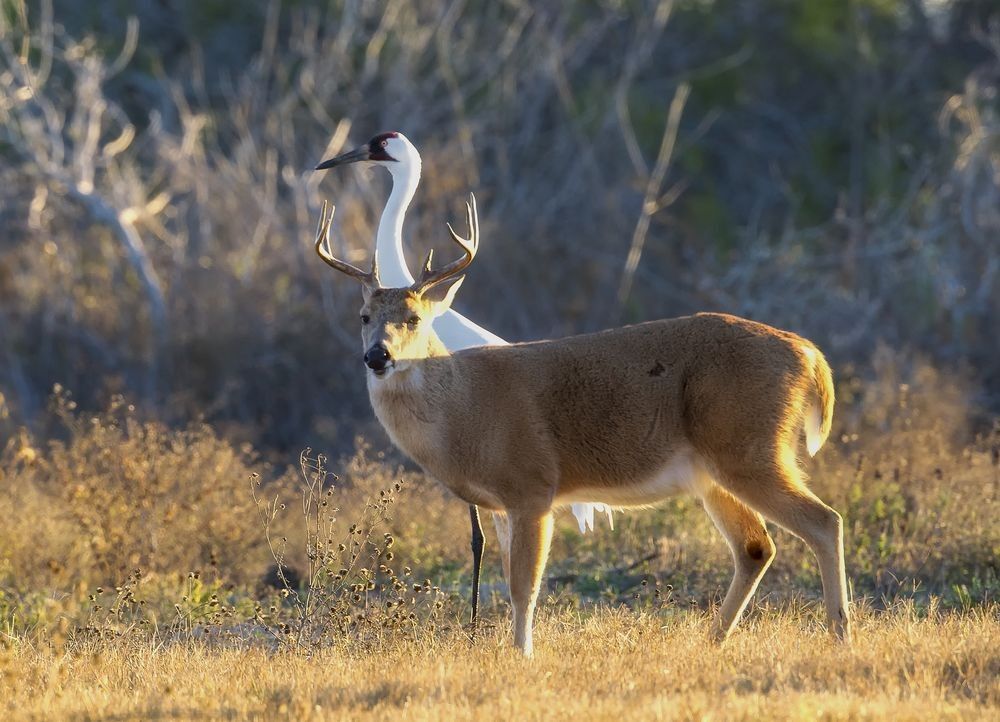
Fine Art Print: Whooping Crane & Buck
Whooping cranes are taller and more imposing than many people expect. Seeing one beside a white-tailed deer helps reveal the scale and presence of North America’s tallest bird.
Aransas National Wildlife Refuge is best known for the endangered whooping crane, but the refuge supports a much broader community of Gulf Coast wildlife shaped by marsh, prairie, estuary, woodland, and tidal habitat. The most important species to observe here are the ones that reveal how the refuge functions as both a conservation stronghold and a living coastal ecosystem.
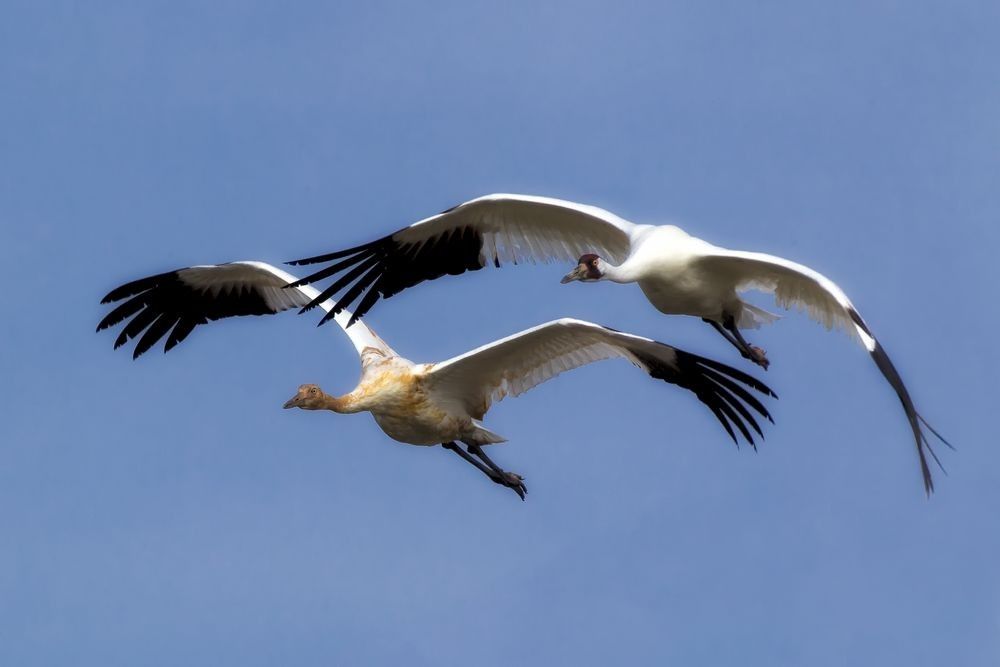
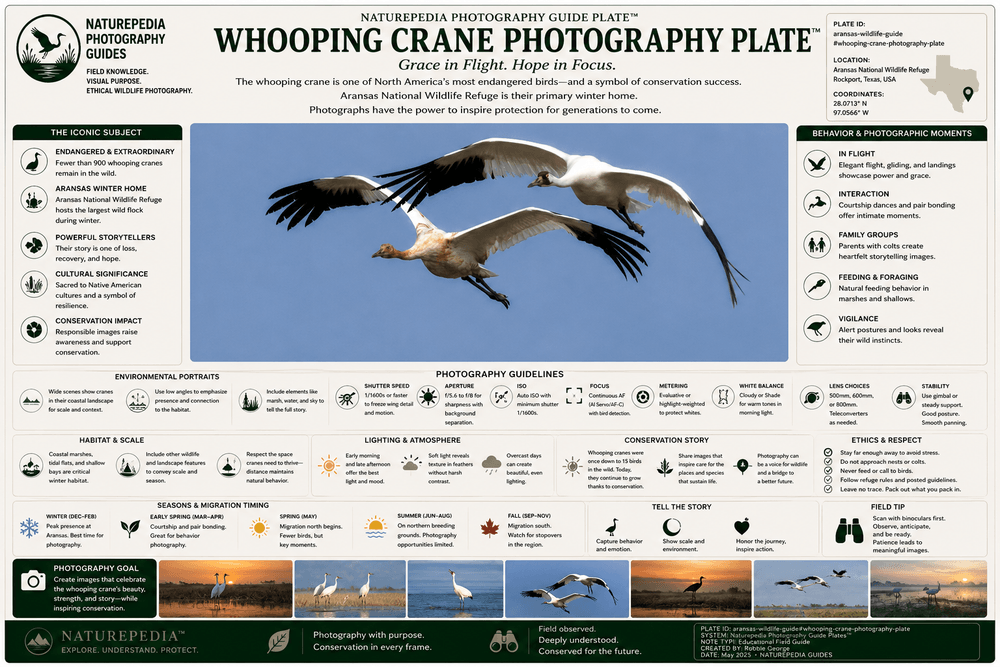
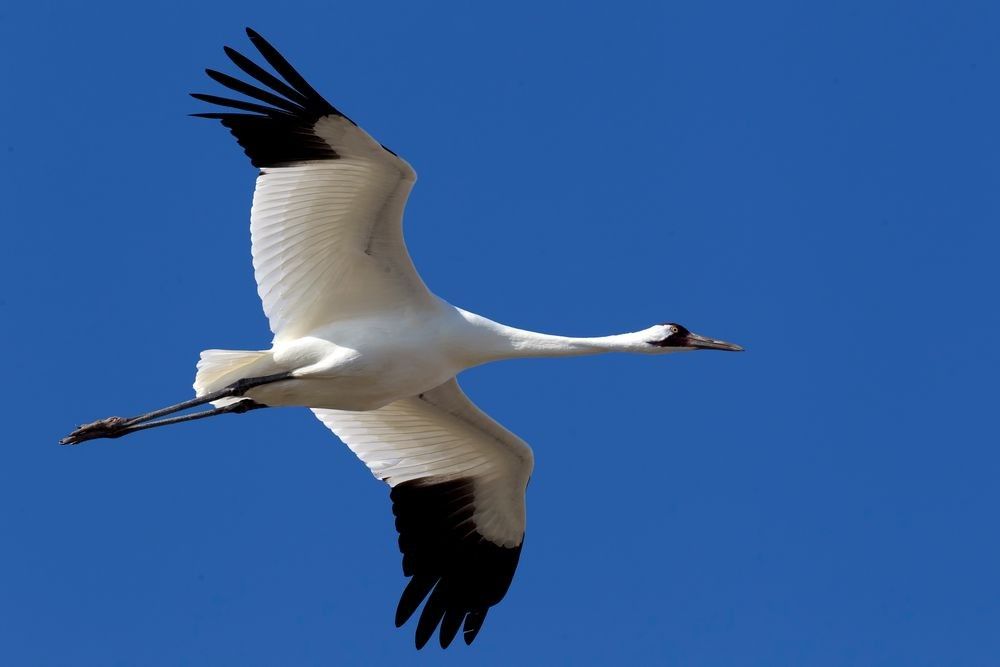
Whooping cranes are the defining species of Aransas. Their height, white plumage, black wingtips, and red crown make them unmistakable, but their significance goes far beyond appearance. Aransas is the most important wintering ground for the wild migratory population, making every observation part of a larger conservation story. Their movements across marsh and upland edges connect directly to conservation and habitat protection and to broader themes of migration and seasonal timing.
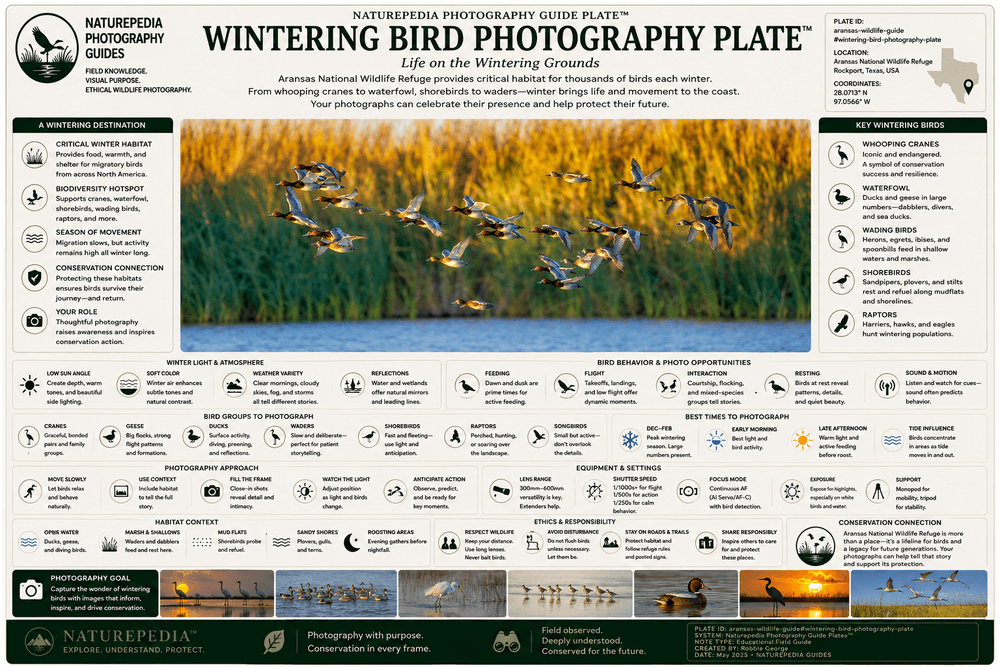
Waterfowl, shorebirds, and wading birds also play an important role in the refuge. Ducks, herons, egrets, ibis, and other coastal birds use different parts of the marsh and estuary depending on tide, depth, and food availability. These species help reveal how the refuge supports layered ecological use rather than a single-species narrative.
White-tailed deer are commonly seen in Aransas and are especially useful in understanding the scale of the landscape. In scenes where deer and cranes occupy the same habitat, observers can better appreciate how large a whooping crane actually is. Deer also reinforce that Aransas is not only a wetland refuge, but a broader coastal system that includes prairie, scrub, and upland transition zones.
Depending on season and habitat, visitors may also observe raptors, alligators, smaller mammals, and estuarine wildlife. Together, these species connect Aransas to broader Naturepedia themes such as food webs and ecological relationships, habitat zones, and biodiversity and ecosystem balance.
What makes wildlife observation at Aransas distinctive is that the refuge is not organized around spectacle alone. It is organized around significance. The species here matter because of what they reveal about habitat, survival, migration, and the long work of conservation across the Gulf Coast.
Seasonal Timing
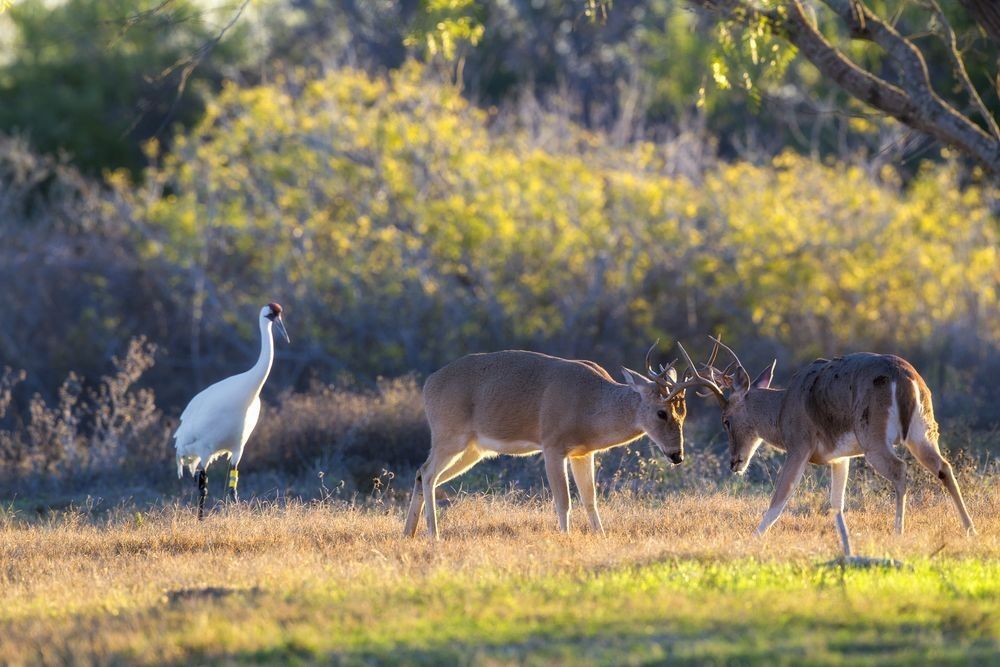
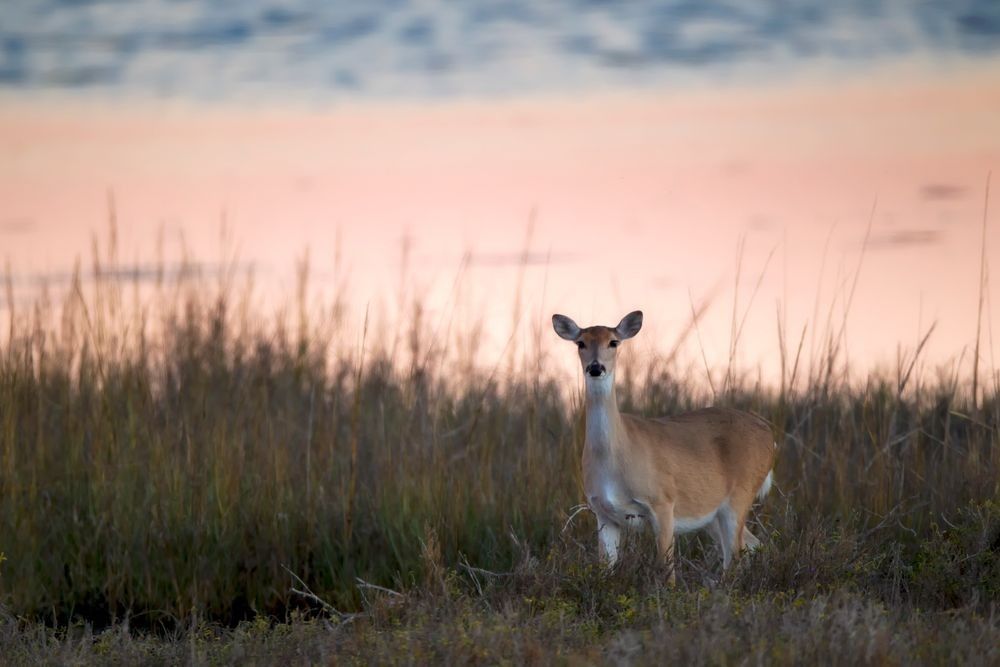
Fine Art Print: White-Tailed Deer
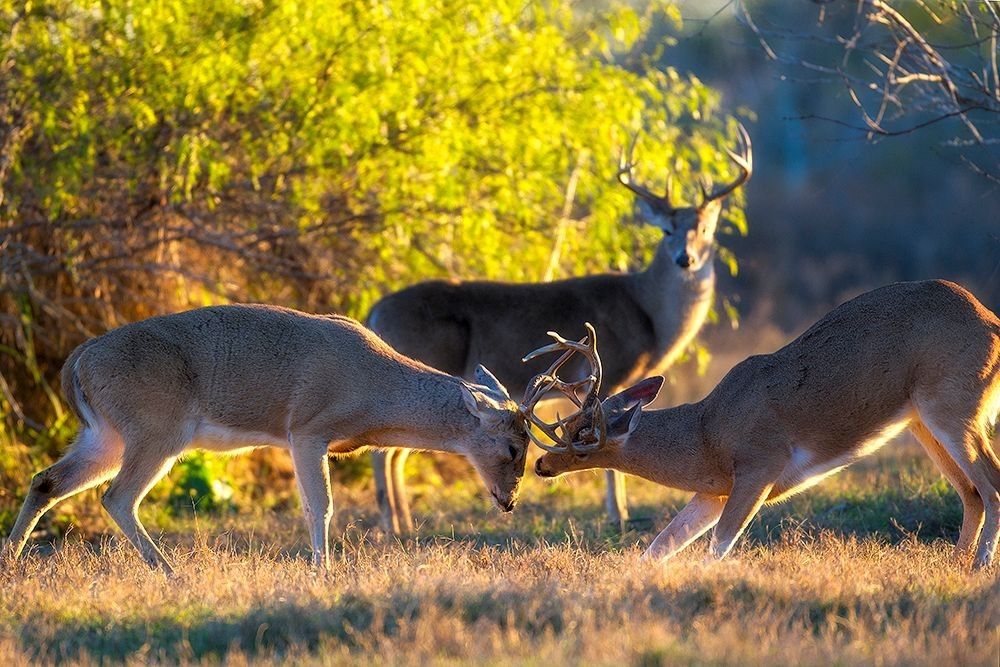
Seasonal behavior at Aransas extends beyond migration. Fall and winter bring changes across the entire refuge, including rut activity in white-tailed deer.
Seasonal timing at Aransas National Wildlife Refuge is defined by the convergence of migration, coastal conditions, and local ecological cycles. While the refuge is most widely known for wintering whooping cranes, its full seasonal story includes changes across marsh, estuary, prairie, and woodland habitats.
From late fall through winter, Aransas becomes a critical endpoint within the migration and seasonal timing system. Whooping cranes arrive from northern breeding grounds and settle into coastal marsh and estuarine environments, where food availability and protected habitat support their survival through the winter months.
During this same period, the refuge experiences shifts in local wildlife behavior. White-tailed deer enter the rut, increasing movement and interaction across upland areas. Waterfowl and shorebirds respond to changing water levels, tidal influence, and seasonal feeding conditions. These overlapping cycles reveal how migration and resident species are both shaped by time.
Light and tide also play a significant role. Coastal systems change daily with tidal movement, influencing where birds feed and how accessible certain habitats become. Early morning and late afternoon often provide the most active periods, when wildlife transitions between feeding, resting, and movement across the refuge.
In spring, cranes begin their northward migration, gradually leaving the refuge and reducing their presence across the landscape. Summer brings a quieter period, with resident species, coastal heat, and localized activity defining the system. Each season reveals a different layer of Aransas, but winter remains the most defining period—when migration, conservation, and habitat come together most clearly.
Understanding Aransas requires recognizing that wildlife here is tied not only to place, but to timing. The interaction between migration, tidal cycles, seasonal light, and habitat availability determines what can be seen and when the refuge reveals its full ecological structure.
Behavior & Ecology
Fine Art Print: Redhead Duck
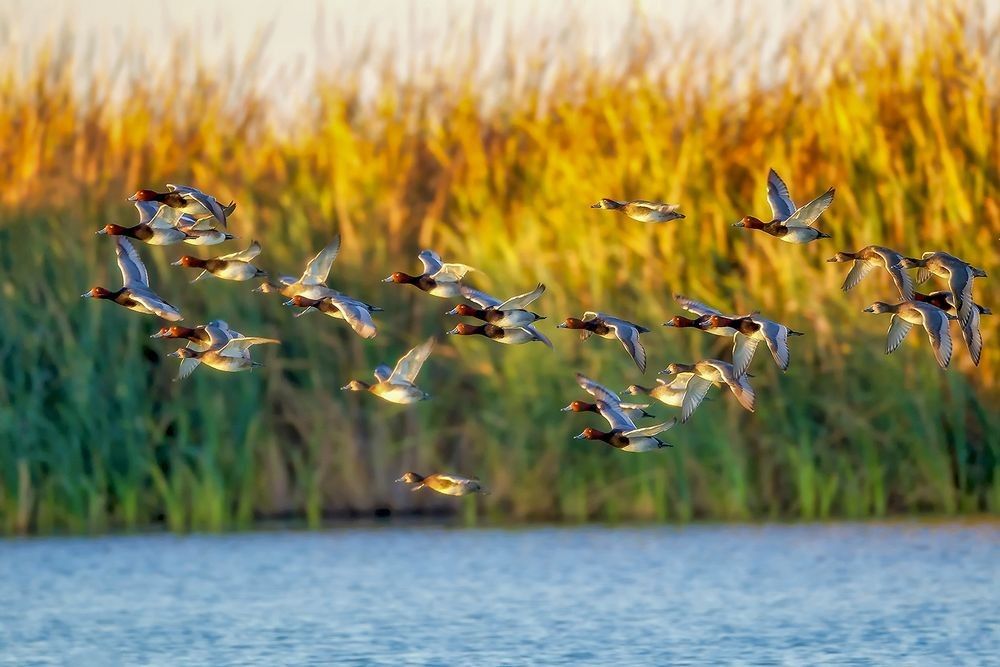
Redhead ducks reflect the feeding ecology of Aransas, where water depth, vegetation, and estuarine conditions shape how birds forage and move.
The ecology of Aransas National Wildlife Refuge is driven by interaction—between land and water, tide and marsh, species and food. Wildlife behavior here is not random. It is shaped by estuarine dynamics, tidal movement, and the availability of resources across a layered coastal system.
Whooping cranes demonstrate one of the clearest examples of this relationship. Their winter survival depends on access to food sources such as blue crabs and other estuarine organisms. As tides shift and water levels change, cranes adjust where they feed, rest, and move across the refuge. Their behavior reflects a direct connection between habitat conditions and survival.
Diving ducks, including redheads, provide another important layer of ecological understanding. These birds feed by diving below the surface to reach submerged vegetation and aquatic resources. Their presence helps reveal how water depth and plant availability influence feeding patterns, connecting Aransas to broader principles of food webs and ecological relationships.
Across the refuge, different species respond to different parts of the system. Wading birds use shallower edges, shorebirds follow exposed flats, and upland species move through prairie and woodland areas. This distribution reflects the structure of the habitat itself, linking directly to habitat zones and behavior and ecology.
Tides are one of the most important drivers of behavior at Aransas. Rising and falling water levels influence feeding access, visibility, and movement across the landscape. Birds often reposition throughout the day as conditions change, creating a system where timing and observation are closely linked.
The result is a dynamic coastal environment where behavior emerges from interaction rather than isolation. At Aransas, understanding wildlife means understanding how species respond to water, food, habitat structure, and time—each element shaping the next.
Best Locations Within Aransas
Aransas National Wildlife Refuge is a large coastal system where wildlife observation depends on understanding both geography and habitat. Marsh, estuary, prairie, and shoreline all create different viewing opportunities, and each location reveals a different part of the refuge’s ecological structure.
The areas below represent key observation zones across Aransas. Some provide access to whooping crane habitat, while others highlight broader wildlife activity across marsh edges, tidal flats, and upland transition zones.
Aransas is a large coastal refuge where roads, trails, and shoreline access points reveal different layers of marsh, estuary, and upland habitat.
Aransas Wildlife Observation Map
Interactive map highlighting key wildlife areas including the auto tour loop, Heron Flats, Big Tree Trail, marsh systems, and coastal observation zones across Aransas National Wildlife Refuge.
Auto Tour Loop
The Auto Tour Loop is one of the most important routes through the refuge. It provides access to marsh edges, upland prairie, and coastal views, making it a strong location for observing whooping cranes, deer, and a wide range of birds. This route offers a broad view of how the system functions across different habitats.
Heron Flats & Coastal Shoreline
Heron Flats is one of the best areas to observe whooping cranes, especially from a distance. This coastal zone highlights how cranes use tidal marsh and estuarine flats for feeding and movement. Viewing conditions often depend on tide, light, and weather.
Big Tree Trail
The Big Tree Trail offers a different perspective, focusing more on upland habitat and woodland structure. While it is not primarily a crane-viewing area, it helps reveal the broader ecological diversity of the refuge and supports a variety of bird and mammal species.
Marsh & Estuary Edges
Areas along marsh edges and estuarine channels often provide some of the most active wildlife observation. These zones shift with tides and seasonal conditions, influencing where birds feed and move throughout the day.
Boat-Based Viewing Areas
Boat tours and coastal access points offer one of the best opportunities to observe whooping cranes in their natural feeding habitat. From the water, it becomes easier to understand how cranes use marsh and estuarine systems across a larger spatial scale.
These locations connect directly to broader themes in wildlife observation techniques, behavior and ecology, and migration patterns. The key is understanding how each location reveals a different part of the system.
Observation Tips
Aransas National Wildlife Refuge is best approached as a living coastal system, not a quick wildlife stop. Observation here depends on patience, distance, light, and an understanding of how marsh, estuary, prairie, and shoreline interact. The most rewarding sightings often come when you read the habitat first and let the wildlife reveal itself naturally.
The most important rule at Aransas is to respect space, especially around whooping cranes. These birds are one of the refuge’s defining species, and they are best observed from a distance with binoculars, spotting scopes, or longer lenses. Close approach is neither necessary nor appropriate. The refuge is most meaningful when wildlife is allowed to behave naturally within its own space.
Tides matter here. Because Aransas is shaped by estuarine and marsh conditions, feeding opportunities change with water level and exposure. Areas that appear quiet at one point in the day may become more active later as tides shift. Paying attention to shoreline edges, exposed flats, and shallow feeding zones can help make sense of why birds appear where they do.
Light is equally important. Early morning and late afternoon often provide the best combination of wildlife movement, softer contrast, and readable habitat structure. These periods connect naturally to tools such as the golden hour and moon phase planner and the seasonal wildlife calendar, which help align timing with field conditions.
Land-based and boat-based observation each reveal different aspects of the refuge. Roads, trails, and observation areas provide access to marsh edges, upland habitat, and selected shoreline views, while boat access can make it easier to understand how cranes and other birds use coastal feeding areas at a broader scale. Both approaches are valuable because Aransas is a refuge where geography strongly shapes what can be seen.
Weather and comfort also matter more here than many visitors expect. Coastal sun, wind, humidity, and changing conditions can affect both wildlife activity and the quality of observation. Moving slowly, bringing appropriate optics, and allowing time to watch a location develop will almost always produce a better experience than rushing between stops.
Above all, let the refuge teach you how to observe it. Aransas is not a spectacle-first landscape. It is a place where conservation, habitat, and wildlife behavior become clearer the longer you pay attention. The more carefully you read the marsh, tide, and distance, the more the refuge begins to make sense.
Conservation
Fine Art Print: Whooping Crane
The survival of the whooping crane is one of North America’s most important conservation stories, with Aransas serving as its critical winter refuge.
Aransas National Wildlife Refuge represents one of the most important conservation landscapes in North America because it supports the primary wild population of the endangered whooping crane. The survival of this species depends directly on the protection of habitat, food resources, migration pathways, and a stable coastal ecosystem.
The story of the whooping crane is one of both vulnerability and recovery. Once reduced to critically low numbers, the species has gradually increased through decades of conservation effort, habitat protection, and coordinated management. Aransas plays a central role in that recovery as the essential wintering ground where cranes rely on coastal marsh and estuarine systems for survival.
Protecting Aransas means protecting more than a single species. It means preserving a complex coastal system where tidal marsh, estuarine productivity, upland habitat, and freshwater inputs all work together. These relationships connect directly to broader Naturepedia themes such as wildlife conservation and habitat, biodiversity and ecosystem balance, and food webs and ecological relationships.
Coastal systems like Aransas are especially sensitive to change. Water availability, salinity, sea level, weather patterns, and human activity can all influence how effectively the refuge supports wildlife. Even small shifts in these factors can affect food availability and habitat quality for species that depend on the system.
Conservation at Aransas also depends on how people interact with the refuge. Respectful observation, adherence to designated access points, and awareness of wildlife space are essential to minimizing disturbance. For species like the whooping crane, even subtle disruption can influence behavior and energy use during a critical season.
Aransas stands as a reminder that conservation is not abstract. It is visible in the landscape—in the presence of cranes, in the structure of marsh and estuary, and in the continuity of migration across thousands of miles. Protecting places like this ensures that these systems remain intact, not only for the species that depend on them, but for future generations who seek to understand them.
Naturepedia Connections
Naturepedia connects species, behavior, habitats, ecosystems, geography, and seasonal timing into a unified wildlife knowledge system.
Wildlife Observation Locations
Explore real-world wildlife locations across North America where habitat, migration, and behavior intersect.
Explore Locations
Wildlife Systems & Ecology
Understand how coastal marsh, estuary, and refuge systems function as integrated ecological landscapes.
Explore Systems
Behavior & Ecology
Learn how wildlife responds to tides, food availability, and coastal conditions.
Explore Behavior
Habitats & Ecosystems
Explore marsh, estuary, prairie, and coastal habitat zones that shape wildlife distribution.
Explore Habitats
Migration & Timing
Follow seasonal movement across the Atlantic and Central Flyways.
Explore Migration
Conservation & Habitat
Understand how protected landscapes like Aransas sustain endangered species.
Explore Conservation
Field Observation
Improve your ability to interpret wildlife through habitat, tide, and movement.
Explore Field Techniques
Recognition & Field Influence
Wildlife from Aransas National Wildlife Refuge, particularly the endangered whooping crane, has been widely documented and recognized through the work of Robbie George. His photography has been featured in National Geographic publications and exhibitions, helping bring attention to the ecological importance of coastal refuges and conservation landscapes.
Through field work across Aransas and other major wildlife locations, his work connects real-world observation with a structured understanding of habitat, behavior, and conservation, forming part of the Naturepedia system.
Recognition & Field Influence
Wildlife from Aransas National Wildlife Refuge, particularly the endangered whooping crane, has been widely documented and recognized through the work of Robbie George. His photography has been featured in National Geographic publications and exhibitions, helping bring attention to the ecological importance of coastal refuges and conservation landscapes.
Through field work across Aransas and other major wildlife locations, his work connects real-world observation with a structured understanding of habitat, behavior, and conservation, forming part of the Naturepedia system.
About the Author
Robbie George is a National Geographic-published wildlife photographer and creator of Naturepedia.
His work at Aransas focuses on whooping cranes, coastal marsh ecosystems, and the conservation systems that support endangered species.
Across North America, his work connects Yellowstone, Bosque del Apache, Mattamuskeet, Chincoteague, Aransas, and other locations into a unified ecological framework.