ATTENTION: To use this site, it is necessary to enable JavaScript in your browser.
Here are the Instructions on how to enable JavaScript in your web browser.

🌿 A Naturepedia field guide to Atlantic puffins, seabird colonies, breeding ecology, island isolation, and seasonal wildlife observation at Machias Seal Island

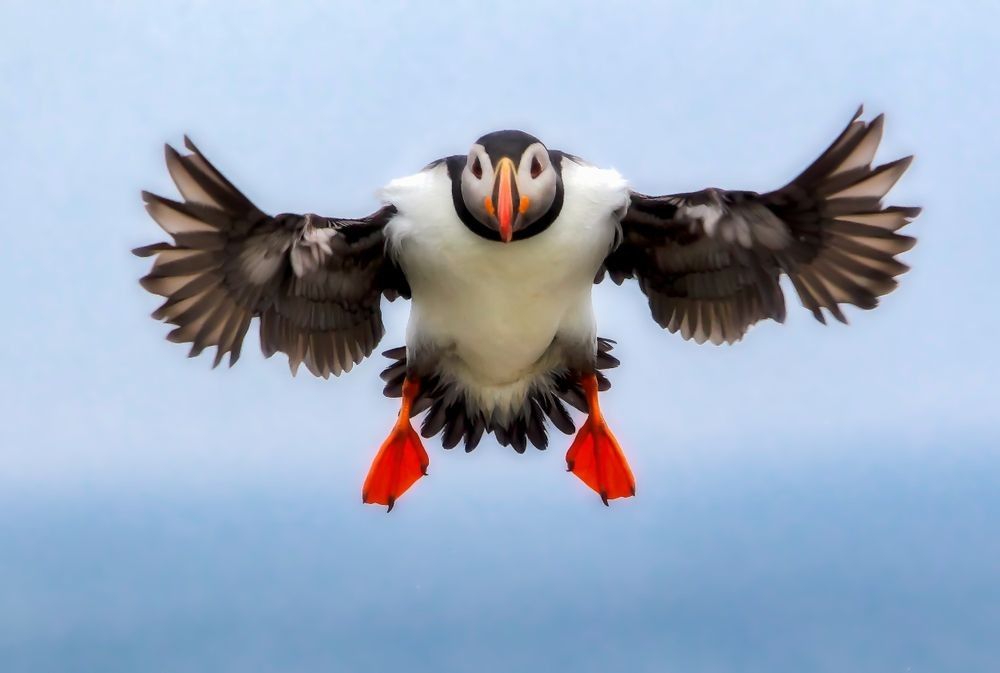
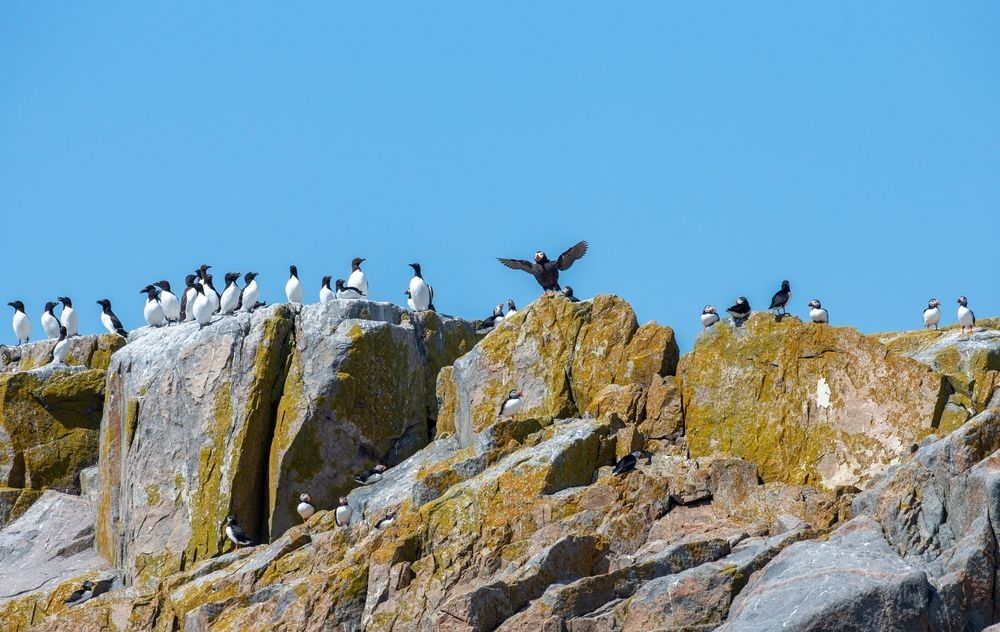
Atlantic puffin landing with wings spread above Machias Seal Island breeding colony habitat

Machias Seal Island Wildlife Guide

A Field Guide to Atlantic Puffins, Seabird Colonies, Breeding Ecology, and Island Wildlife Observation at Machias Seal Island

Machias Seal Island is one of the most distinctive seabird observation locations in eastern North America because it is built around colony ecology. This is not a broad inland refuge, a migration bottleneck, or a large landscape mosaic. It is a compact offshore island where breeding density, nesting space, marine access, and seasonal timing shape nearly everything wildlife does.

The island is best known for its Atlantic puffins, but its deeper ecological importance comes from the way multiple seabird species gather in close proximity during the breeding season. Nesting birds, territorial behavior, flight paths, burrow use, prey delivery, and cliff or rock occupancy all become part of a tightly organized colony system linked directly to place.

Machias Seal Island reveals how wildlife behavior changes when space is limited and seasonal purpose is concentrated. Birds are not scattered across a wide landscape here. They are organized by nesting territory, access to the ocean, breeding cycles, and the constant need to return safely to the colony. This makes the island an important real-world extension of behavior and ecology, habitat structure, and adaptation and survival.

For observers and photographers, Machias Seal Island offers something few places can match: direct visibility into a functioning seabird colony. Flight lines, landings, pair behavior, nest activity, and coordinated breeding movement can often be interpreted in a relatively small area, making the island one of the clearest examples of how geography, season, and ecology converge in a single wildlife system.

Machias Seal Island teaches you to read the colony as a living system—where timing, density, isolation, and the sea shape every arrival, landing, and return.

— Robbie George
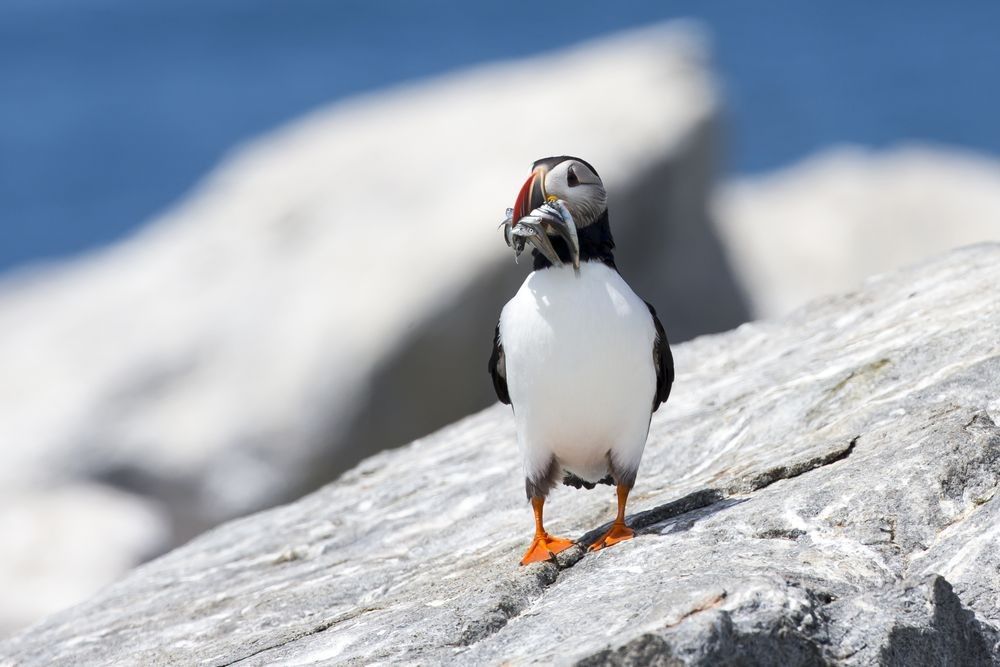
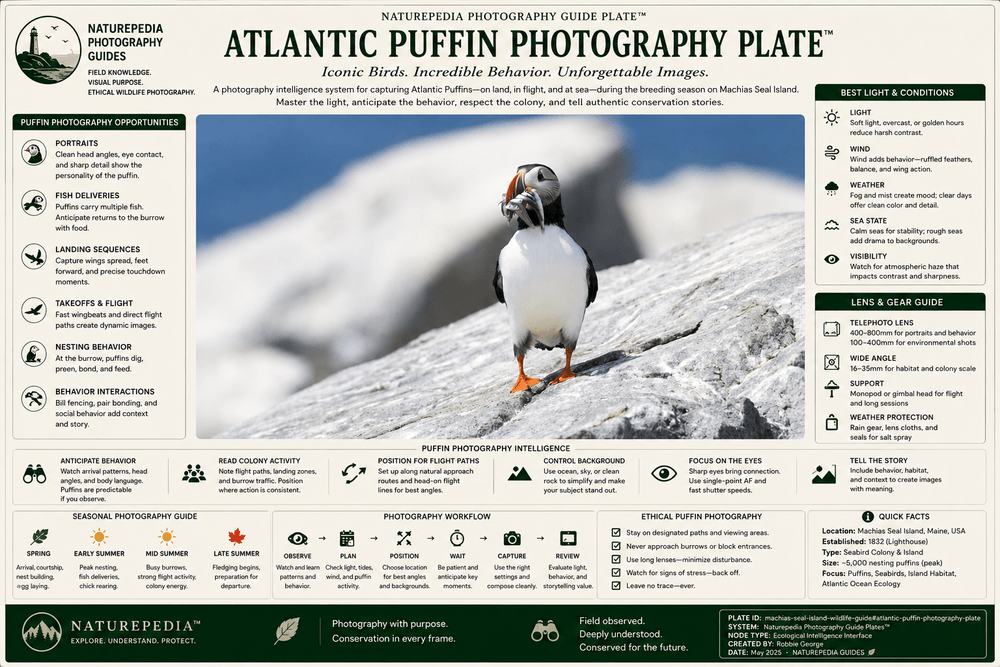
Atlantic puffin carrying fish across rocky nesting habitat on Machias Seal Island during breeding season

Why Machias Seal Island Matters

Machias Seal Island matters because it reveals how wildlife systems function when everything is organized around breeding. This is not a landscape of dispersed movement or seasonal migration concentration. It is a tightly structured colony where space, timing, and survival are compressed into a single purpose: reproduction.

The Atlantic puffin is the clearest expression of this system. During the breeding season, puffins move continuously between ocean feeding zones and nesting sites on the island. A bird returning with fish is not an isolated moment—it is part of a repeating ecological loop linking marine habitat, prey availability, flight behavior, and burrow-based nesting structure.

This is what defines Machias Seal Island as a colony ecology system. Birds are not randomly distributed. They are organized by nesting territory, proximity to burrows, access to the sea, and the need to safely land, feed young, and return again. Every movement is shaped by density, timing, and the physical limits of the island itself.

Unlike inland ecosystems or migration-driven refuges, where wildlife spreads across large areas, Machias compresses activity into a highly visible space. This makes it one of the most powerful real-world examples of how behavior, habitat structure, and food systems connect directly to geography and season.

Isolation plays a critical role. Surrounded by open ocean, the island provides relative protection from many land-based predators while concentrating seabirds into a shared breeding space. This balance between safety and limitation creates a system where nesting density, territorial behavior, and coordinated timing become essential for survival.

Machias Seal Island matters because it allows you to see the full cycle of a colony in motion—arrival, nesting, feeding, defense, and return—repeating continuously across a landscape where every inch of space and every moment in the season has ecological meaning.

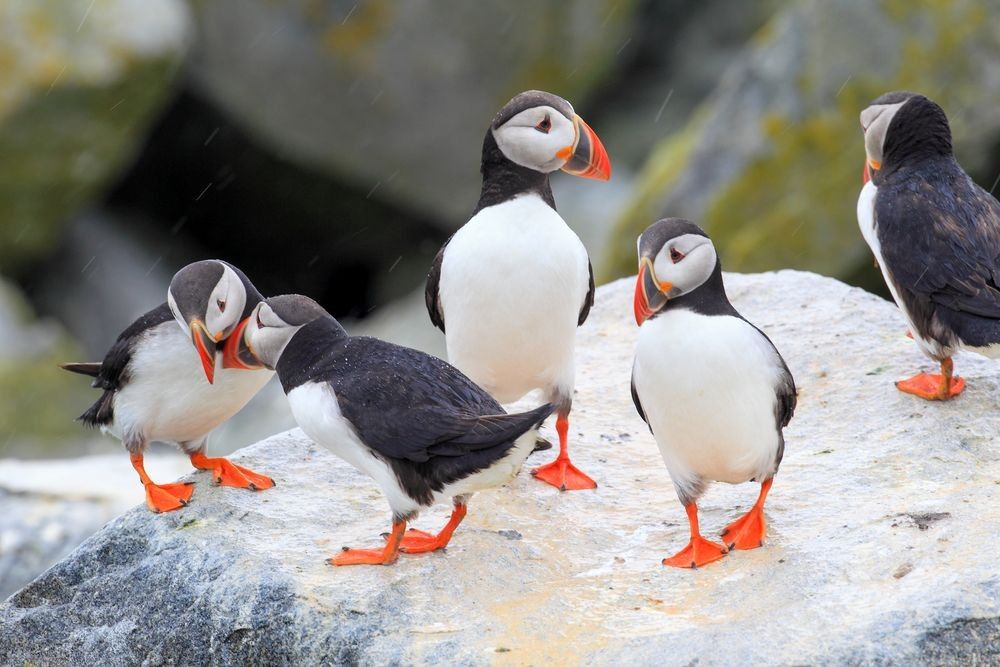
Atlantic puffins gathered on rocky breeding habitat at Machias Seal Island during nesting season

Colony Habitat Structure

The ecological power of Machias Seal Island comes from how much wildlife function is compressed into a small breeding landscape. Unlike large refuges where habitat types spread across long distances, this island concentrates nesting surfaces, rock ledges, shallow soils, vegetation pockets, and ocean access into a tightly bounded colony system.

That structure matters because seabirds do not use the island randomly. Atlantic puffins depend on breeding terrain that supports safe landing, quick movement, visual awareness, and access to nesting spaces. Rock surfaces, crevices, and adjacent burrow areas create a habitat where birds can gather, defend space, interact with mates, and move efficiently between nest sites and the sea.

Machias is best understood as a habitat of micro-territories. A broad landscape view can make the island seem simple, but at seabird scale it is highly organized. Slight elevation changes, rock edges, protected nest areas, and open approach zones all influence where birds stand, where they land, and how closely they can tolerate one another during the breeding season.

This is what makes colony habitat different from the layered marshes of Chincoteague or the broad wetland concentrations of Bosque del Apache. At Machias Seal Island, habitat is not defined by wide environmental variety, but by dense spatial function. The island works because breeding birds can nest, gather, watch, launch, and return within a compact terrain shaped by isolation and marine access.

The rocky surface also contributes to visibility and social organization. Puffins standing together on exposed stone reveal how colony structure supports pair bonding, territorial awareness, and repeated contact between neighboring birds. Even small open areas become important because they allow seabirds to orient themselves within a crowded seasonal system.

Habitat here connects directly to larger Naturepedia themes of habitat structure and ecosystem zones, behavior and ecology, and adaptation and survival. On Machias Seal Island, the habitat itself is the architecture of the colony.

Rather than serving as background scenery, rock, soil, space, and edge define how the colony operates. Every landing area, nesting pocket, and exposed perch helps shape the rhythm of breeding life on the island.

Atlantic puffins standing together on rocky breeding colony habitat at Machias Seal Island

Best Wildlife to Observe

Machias Seal Island offers one of the most concentrated seabird viewing experiences in North America because it is built around a breeding colony system rather than a broad landscape. Wildlife here is defined by density, repetition, and seasonal purpose, with multiple species sharing the same limited space.

The most recognizable species is the Atlantic puffin. Puffins dominate the visual experience of the island during the breeding season, moving between ocean feeding zones and nesting areas in a continuous cycle of arrival, landing, and return. Their behavior reveals the core rhythm of the colony.

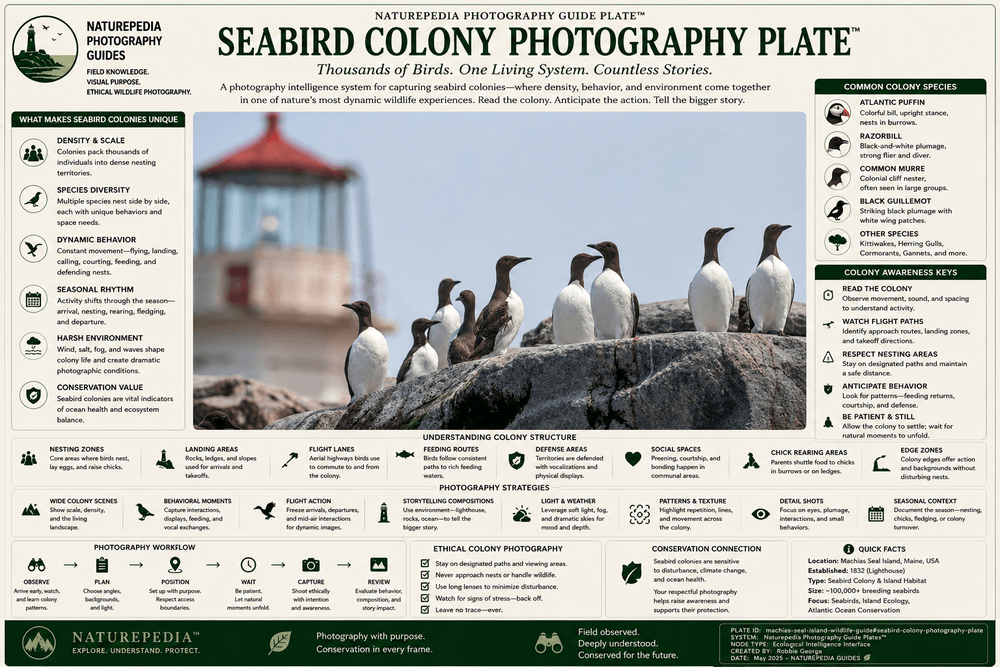
However, Machias is not a single-species system. Seabirds such as razorbills, common murres, and guillemots share the same rocky habitat, each using the colony differently. Some species rely on burrows, others nest on exposed rock, and each responds to space, neighbors, and predator awareness in distinct ways.

This overlap is what defines the island. Multiple species occupy the same terrain at the same time, but they do not behave identically. Differences in posture, spacing, nesting strategy, and flight patterns create a layered ecological system where diversity emerges from shared geography.

Occasionally, rare or unexpected species can appear within the colony. Events such as the appearance of a tufted puffin—a species typically found in the Pacific—highlight how even a tightly structured system can intersect with broader patterns of movement and variation. These moments reinforce how geography, season, and ocean conditions connect Machias to larger ecological networks.

Compared to inland systems like Yellowstone or migration concentrations such as Bosque del Apache, Machias Seal Island is defined by proximity. Wildlife is not spread across distance—it is layered within a compact colony where every species must navigate shared space.

Explore related wildlife systems:
Birds of Prey
Waterfowl & Wetland Birds
Wildlife of North America

At Machias Seal Island, the best wildlife is not defined by a single species. It is defined by how multiple seabirds share, compete for, and organize themselves within one of the most tightly structured breeding environments in North America.

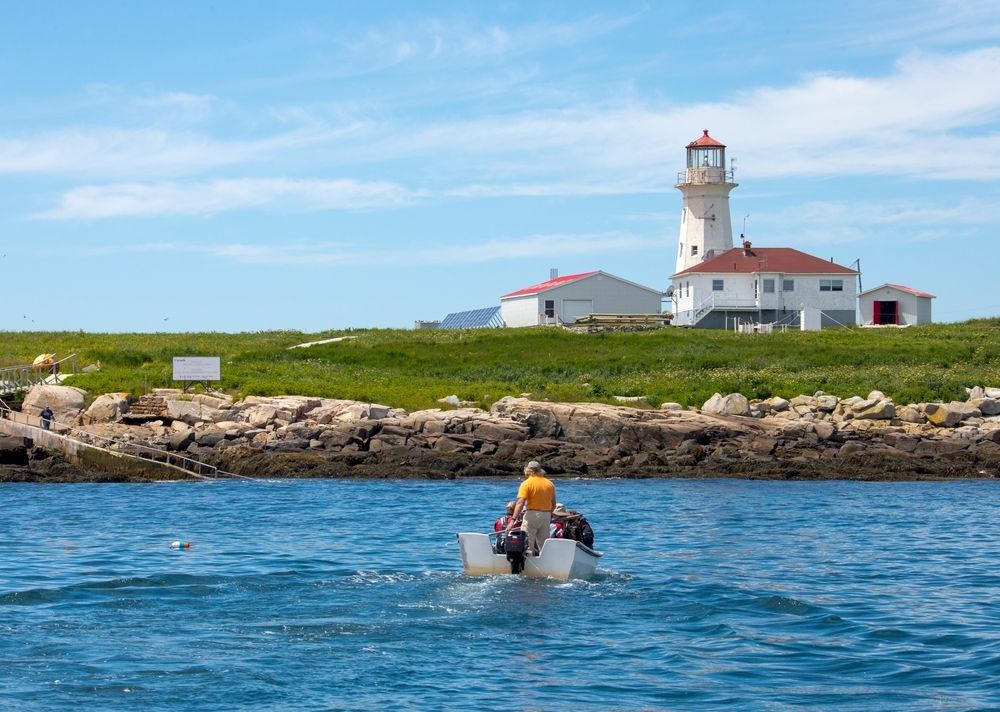
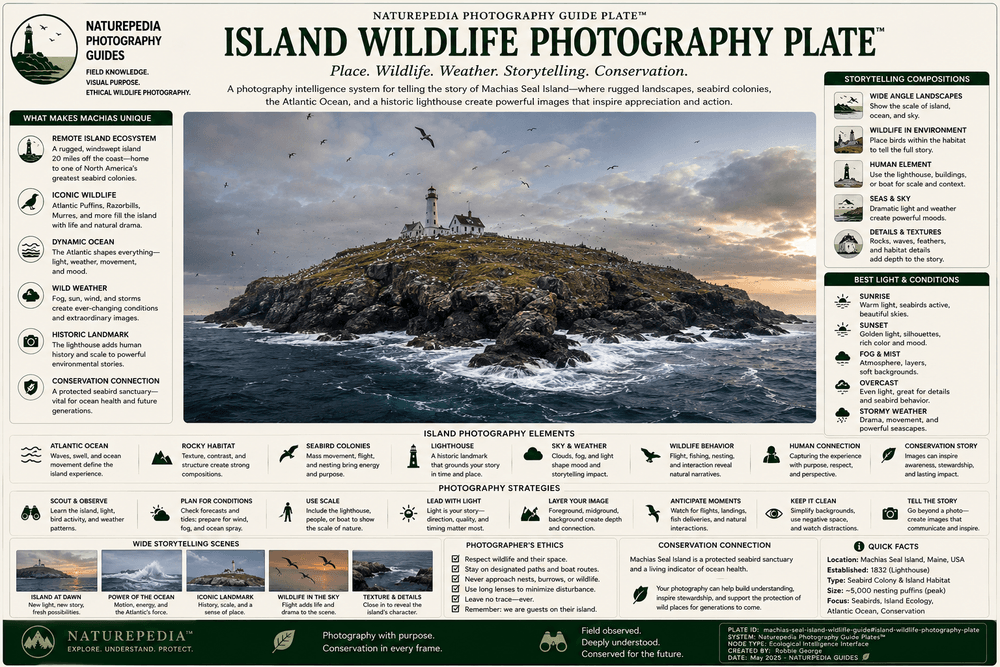
Boat approaching Machias Seal Island lighthouse during seabird breeding season

Seasonal Timing & Wildlife Patterns

Wildlife at Machias Seal Island is defined by a narrow and highly structured seasonal window. Unlike many wildlife locations where animals are present year-round, this island functions primarily during the seabird breeding season, when activity intensifies and the colony comes fully to life.

Late spring through mid-summer marks the peak period. During this time, Atlantic puffins and other seabirds arrive, establish nesting territories, and begin a continuous cycle of feeding and care. Birds travel repeatedly between offshore feeding areas and the island, creating a steady rhythm of flight, landing, and return that defines the colony.

Timing is everything here. Arrival dates, nesting phases, chick development, and feeding intensity all follow a tightly synchronized seasonal pattern. A puffin carrying fish to the colony reflects not just behavior, but timing—an exact moment within a larger breeding cycle tied to ocean conditions and prey availability.

By late summer, activity begins to shift. As chicks mature and breeding concludes, seabirds gradually disperse back into the open ocean. The dense, highly visible colony that defines Machias Seal Island during peak season begins to dissolve, leaving behind a landscape that appears far quieter and less active.

Access to the island itself reflects this timing. Boat approaches, guided landings, and observation opportunities are all aligned with the breeding season, reinforcing how strongly wildlife presence is tied to a specific window of ecological activity.

This makes Machias Seal Island closely connected to broader Naturepedia systems such as migration and seasonal timing and seasonal wildlife planning. However, unlike large migration corridors, the island is not defined by passage—it is defined by concentration within a limited timeframe.

Helpful planning tools:
Seasonal Wildlife Calendar
Golden Hour & Moon Phase Planner

At Machias Seal Island, wildlife is not simply seasonal—it is compressed into a precise window where breeding, feeding, and survival unfold in a tightly coordinated cycle. Understanding that timing is the key to understanding the colony itself.

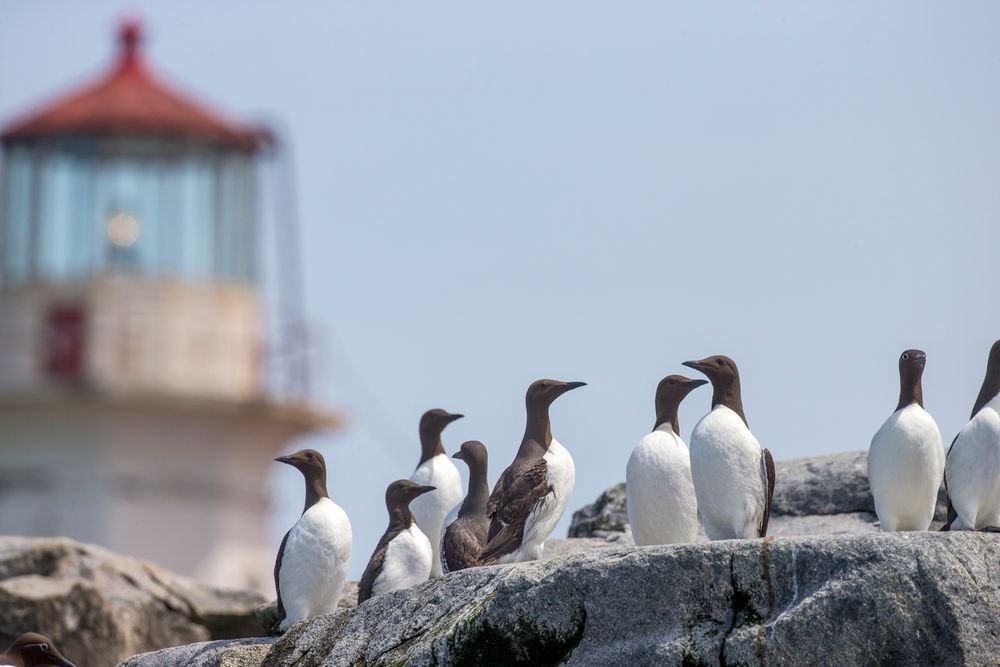
Seabird colony behavior with puffins, razorbills, and guillemots on rocky habitat at Machias Seal Island

Behavior & Ecological Relationships

At Machias Seal Island, behavior is shaped by density, proximity, and the constant pressure of shared space. Unlike expansive ecosystems where animals can spread out, seabirds here must operate within a tightly constrained colony where every landing, movement, and interaction is influenced by neighboring birds.

Atlantic puffins, razorbills, and other seabirds do not simply coexist—they actively negotiate space. Standing positions on rock surfaces, access to nesting areas, and preferred landing zones all become part of a dynamic system where behavior reflects both cooperation and competition.

Flight patterns are one of the clearest expressions of this structure. Birds approaching the colony must navigate occupied terrain, avoid collisions, and identify safe landing points in real time. This creates a constant flow of motion above the island, where incoming and outgoing birds trace invisible pathways shaped by density and awareness.

Nesting behavior adds another layer. Some species rely on burrows, while others nest directly on exposed rock. These differences allow multiple seabirds to share the same physical space while maintaining distinct ecological roles. The result is not chaos, but a highly organized system where each species fits into a specific niche within the colony.

Occasionally, this system reveals something unexpected. During one documented observation, a tufted puffin—a species typically associated with the Pacific—appeared within the Machias colony. Its presence was not part of the normal Atlantic breeding system, but it interacted with the same spatial constraints, landing zones, and behavioral pressures as the resident birds.

This kind of anomaly is important. It shows that even tightly structured ecological systems remain connected to broader environmental patterns such as ocean conditions, shifting prey distributions, and long-distance movement. Rare events like this provide insight into how stable systems respond to change.

These relationships connect directly to larger Naturepedia themes such as food webs, behavior and ecology, and adaptation and survival. At Machias Seal Island, behavior is not random—it is the visible structure of a colony responding to space, season, and survival.

In this environment, every interaction matters. Where a bird stands, how it lands, when it feeds, and how it responds to others all contribute to a tightly coordinated ecological system that unfolds across a very small island.

Best Locations Within Machias Seal Island

Wildlife observation at Machias Seal Island is shaped by a small number of highly important spaces rather than a wide network of trails or habitat zones. This is a compact offshore breeding island, so the best locations are defined by colony access, rock structure, observation blinds, landing areas, and the relationship between the nesting ground and the surrounding sea.

The main colony viewing areas are the most important observation spaces on the island. From these zones, visitors can interpret how Atlantic puffins and other seabirds use exposed rock, burrow areas, and approach routes during the breeding season. These locations are valuable because they reveal the colony as a working system rather than a collection of isolated birds.

Rock ledges and elevated colony edges help show how different seabird species share space. Puffins, razorbills, murres, and other birds often use adjacent surfaces in slightly different ways, making these areas especially useful for interpreting spacing, posture, landing behavior, and breeding density.

The shoreline and landing approach provide another critical perspective. Arrival by boat makes it immediately clear that Machias is defined by isolation, limited access, and seasonal concentration. The transition from open ocean to breeding island is part of the ecological story, because every bird on the colony depends on repeated movement between marine feeding areas and the nesting ground.

The lighthouse area and surrounding open ground help orient the island spatially. While the colony itself is the primary focus, these landmark areas provide context for understanding scale, access, and how tightly wildlife activity is organized within a relatively small landscape.

Unlike locations such as Yellowstone or Blackwater, where wildlife observation unfolds across broader geography, Machias Seal Island is about reading a dense ecological system in concentrated space. The most important locations are the ones that reveal nesting structure, safe landing surfaces, and the continuous connection between colony and sea.

Helpful planning tools:
Nature & Wildlife Photography Maps
Wildlife Observation Locations
Wildlife Observation & Field Techniques

At Machias Seal Island, the best locations are the ones that make colony ecology readable. Rock, sea, access, and nesting space all come together in a tightly bounded landscape where geography directly shapes wildlife behavior.

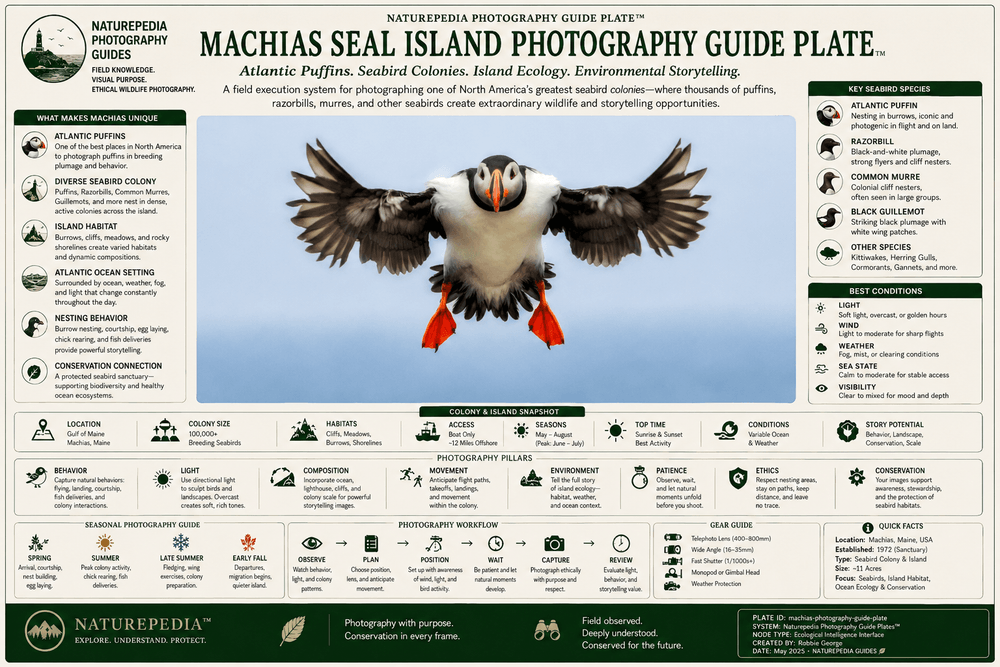
Machias Seal Island Wildlife Observation Map

Interactive map highlighting Machias Seal Island access context, breeding colony geography, and the offshore setting that shapes seabird observation during the nesting season.

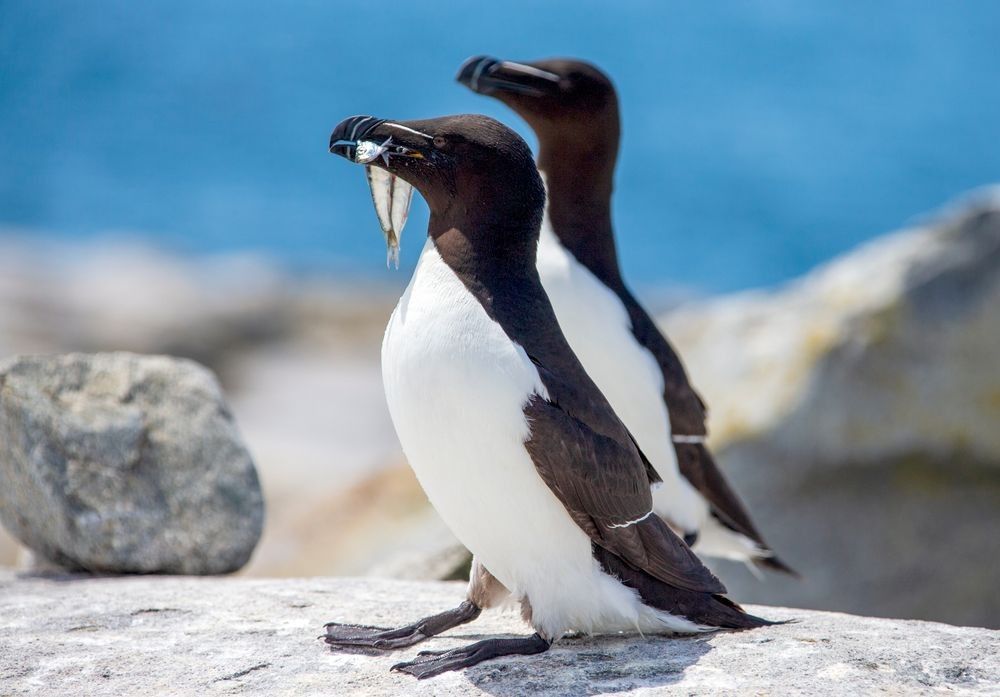
Razorbill carrying fish across rocky seabird colony at Machias Seal Island during breeding season

Wildlife Observation & Photography Tips

Observing wildlife at Machias Seal Island is not about covering ground—it is about reading behavior within a dense colony. Because seabirds operate in a tightly compressed space, small details such as posture, direction of movement, and what a bird is carrying become critical to understanding what is happening in real time.

One of the most important patterns to watch is the feeding cycle. Species such as the razorbill and Atlantic puffin repeatedly travel between offshore feeding areas and the colony, returning with fish held in their bills. This behavior marks active nesting sites and helps observers identify where chicks are located without ever seeing the nest itself. Razorbills in particular dive for fish and return to the colony with prey for their young, often making multiple feeding trips per day during the breeding season. :contentReference[oaicite:0]{index=0}

Positioning matters. Instead of constantly moving, it is often more effective to choose a strong observation point and allow behavior to unfold. Birds will return to the same landing zones, approach routes, and nesting areas repeatedly, creating predictable patterns once they are recognized.

Watch the air as much as the ground. Incoming birds follow consistent flight paths shaped by wind, colony density, and safe landing space. By tracking these approach lines, observers can anticipate where birds will land rather than reacting after the moment has passed.

Light and timing are critical. Early morning and late afternoon often provide the best combination of activity and visual clarity, while midday can flatten contrast across the rocky landscape. However, strong behavioral moments—such as feeding returns—can happen at any time when the colony is active.

Respect distance and structure. Machias Seal Island is a protected breeding environment, and wildlife behavior is highly sensitive to disturbance. Staying within designated viewing areas and allowing birds to operate naturally leads to more authentic observation and stronger photography.

Helpful tools for planning and field awareness:
Nature & Wildlife Photography Maps
Golden Hour & Moon Phase Planner
Wildlife Observation & Field Techniques

At Machias Seal Island, success comes from learning to read repetition. When you understand how birds move, feed, and return within the colony, the system becomes predictable—and the most meaningful moments begin to reveal themselves.

Conservation & Ecological Importance

Machias Seal Island is one of the most important seabird breeding sites in the Gulf of Maine because it protects a functioning colony system rather than a single species. The island supports Atlantic puffins, razorbills, and other seabirds that depend on stable nesting conditions, access to marine food sources, and limited disturbance during a critical seasonal window.

Unlike larger landscapes where wildlife can relocate, colony systems are highly sensitive to disruption. Nesting birds rely on specific terrain features, consistent access to feeding areas, and the ability to return safely to the same location repeatedly. Small changes in disturbance, habitat structure, or prey availability can affect the entire breeding cycle.

The island’s isolation is a key part of its conservation value. Surrounded by open ocean, Machias Seal Island provides a level of protection from many land-based predators while concentrating seabirds into a shared breeding environment. This balance between protection and limitation is what allows the colony to function.

Marine conditions are equally important. Seabirds depend on nearby waters for fish, and changes in ocean temperature, currents, or prey distribution can directly influence breeding success. A bird returning with fish is not just an observation—it reflects the health of the surrounding marine ecosystem.

Access restrictions also play a critical role. Controlled visitation, designated observation areas, and regulated landing help reduce disturbance during the breeding season. These measures are not simply logistical—they are essential to maintaining the stability of the colony.

Machias Seal Island connects directly to broader systems explored in Wildlife Conservation & Habitat, Ecosystems of North America, and Biodiversity & Ecosystem Balance. It demonstrates how conservation is not only about protecting species, but about preserving the conditions that allow ecological systems to operate.

At Machias Seal Island, conservation is inseparable from structure. Protect the space, the timing, and the surrounding ocean—and the colony continues. Disrupt those relationships, and the system begins to break down.

Naturepedia Connections

Naturepedia connects species, behavior, habitat, ecosystems, geography, and seasonal timing into a unified wildlife knowledge system.

Wildlife Observation Locations

Explore real-world wildlife systems across North America, including breeding colonies, migration corridors, and ecosystem-scale landscapes.
Explore Observation Locations

Wildlife Systems & Ecology

Understand how colony ecology, habitat structure, and species interactions shape wildlife systems like Machias Seal Island.
Explore Wildlife Systems

Behavior & Ecology

See how flight patterns, feeding cycles, nesting behavior, and colony density shape seabird interactions.
Explore Behavior & Ecology

Habitats & Ecosystems

Learn how rock, burrows, and island terrain form the structural foundation of seabird colonies.
Explore Habitats

Food Webs

Follow how marine prey, seabird feeding behavior, and nesting cycles connect ocean ecosystems to colony survival.
Explore Food Webs

Conservation

Discover how protected breeding islands, marine ecosystems, and limited access help sustain seabird colonies.
Explore Conservation

Migration & Timing

Understand how breeding seasons, ocean timing, and seasonal cycles shape wildlife presence on Machias Seal Island.
Explore Migration

Adaptation & Survival

Learn how seabirds adapt to limited space, ocean dependence, and breeding pressure in colony systems.
Explore Adaptation

Field Observation

Improve your ability to read colony behavior, flight patterns, and feeding cycles in real time.
Explore Field Techniques

Maps & Timing Tools

Plan where and when to observe seabirds and wildlife systems across North America.
Wildlife Maps
Seasonal Calendar
Light Planner

Field Recognition & Observational Authority

Machias Seal Island is not simply a place to visit—it is a location that requires timing, access, and field experience to interpret correctly. Wildlife here is concentrated into a narrow seasonal window, and meaningful observation depends on understanding how colony systems function under pressure.

Robbie George’s work on Machias Seal Island has been recognized through published features, including a cover image highlighting Atlantic puffins during the breeding season. This recognition reflects not only photographic quality, but the ability to capture behavior within a highly structured ecological system.

In addition to published work, field observation on the island led to the documentation of a rare ecological event: the presence of a tufted puffin, a species typically found in the Pacific. Its appearance within an Atlantic colony represents a meaningful anomaly and provides insight into how ocean conditions and long-distance movement can intersect with established wildlife systems.

This type of observation requires more than access—it requires pattern recognition. Understanding what is typical within a colony allows deviations to be identified clearly, turning a single sighting into a meaningful ecological signal.

Further field observations and insights from Machias Seal Island can be explored here:
Machias Seal Island — A Disputed Sanctuary for Atlantic Puffins

Field-based wildlife photography at this level is not only about capturing images—it is about understanding systems. On Machias Seal Island, that understanding is built through repeated observation, awareness of timing, and the ability to recognize when something falls outside the expected pattern.

Frequently Asked Questions

What is the best time to visit Machias Seal Island for wildlife?
Late spring through mid-summer is the peak season, when Atlantic puffins and other seabirds are actively breeding, nesting, and feeding young. This is when the colony is most active and visible.

What animals can you see on Machias Seal Island?
The island is best known for Atlantic puffins, but also supports razorbills, common murres, guillemots, and other seabirds. These species share a dense breeding colony where behavior and habitat overlap.

Why is Machias Seal Island important for wildlife?
Machias Seal Island is a critical seabird breeding site where multiple species nest in close proximity. Its isolation, limited access, and connection to marine food systems make it essential for colony-based wildlife ecology.

Can you visit Machias Seal Island?
Yes, but access is limited and tightly regulated. Visits are typically arranged through guided tours, and landing is controlled to protect the breeding colony and minimize disturbance.

What makes Machias Seal Island different from other wildlife locations?
Unlike large national parks or migration refuges, Machias is a compact colony system. Wildlife is concentrated into a small space and a short seasonal window, making behavior highly visible and structured.

What is a tufted puffin and why is it significant here?
A tufted puffin is a seabird species normally found in the Pacific. Its rare appearance on Machias Seal Island represents an ecological anomaly and provides insight into changing ocean conditions and wildlife movement patterns.

How can I improve my chances of seeing puffins?
Visit during peak breeding season, stay patient in designated observation areas, and watch for repeated flight patterns as birds return from the ocean with fish for their chicks.

About the Author

Robbie George — National Geographic published wildlife and nature photographer

Robbie George is a National Geographic-published photographer, field observer, and creator of Naturepedia—a structured wildlife knowledge system connecting species, behavior, habitat, ecosystems, geography, and seasonal timing across North America.

His work on Machias Seal Island focuses on seabird colony ecology, breeding behavior, and the relationship between island structure and marine systems. Through direct field observation, he documents how puffins and other seabirds navigate density, nesting constraints, and feeding cycles within one of the most concentrated wildlife environments in North America.

His photography and observations have been featured in publications including Portland City Lifestyle, where his Atlantic puffin image appeared on the cover, highlighting the ecological importance and visual power of seabird colonies along the North Atlantic coast.

Robbie’s broader field work spans Yellowstone, Grand Teton, Bosque del Apache, Blackwater, Mattamuskeet, Aransas, and Machias Seal Island—connecting real-world wildlife locations into a unified ecological framework.

Naturepedia is designed to move beyond isolated sightings and help readers understand wildlife through the structure of place itself—where habitat, timing, and behavior form a connected system.

Learn more on the Nature Photographer page .

Trusted Art Seller

Trusted Art Seller

The presence of this badge signifies that this business has officially registered with the Art Storefronts Organization and has an established track record of selling art.

It also means that buyers can trust that they are buying from a legitimate business. Art sellers that conduct fraudulent activity or that receive numerous complaints from buyers will have this badge revoked. If you would like to file a complaint about this seller, please do so here.

Verified Returns & Exchanges

Verified Returns & Exchanges

The Art Storefronts Organization has verified that this business has provided a returns & exchanges policy for all art purchases.

Description of Policy from Merchant:

What is your Policy on Returns/Exchanges/Refunds? I take great pride in my work and prints, and I want you to be completely happy with your investment in my nature art. If for any reason you are unsatisfied with your print, you may return it within 14 days of delivery, and/or exchange it for another print. Prints must be returned in new condition, packaged carefully in the original packaging if possible. Your refund will be issued as soon as I receive the returned print. Please contact me if you would like to arrange a return or exchange. In the event that you receive a damaged or defective print, please let me know within 7 days of receipt, and I will arrange for a new print to be shipped to you at no additional cost.

Verified Secure Website with Safe Checkout

Verified Secure Website with Safe Checkout

This website provides a secure checkout with SSL encryption.

Verified Archival Materials Used

Verified Archival Materials Used

The Art Storefronts Organization has verified that this Art Seller has published information about the archival materials used to create their products in an effort to provide transparency to buyers.

Description from Merchant:

Fine Art Prints are made with high-quality archival inks on fine art papers using a high-resolution large format inkjet printer. Our premium archival inks produce images with smooth tones and rich colors. Prints are made with care on your choice of exquisite Fine Art Papers using a high-resolution large format inkjet printer. https://www.graphikprintworks.com

Cart

Your cart is currently empty.

Saved Successfully.

This is only visible to you because you are logged in and are authorized to manage this website. This message is not visible to other website visitors.

Import From Instagram

Click on any Image to continue

This Website Supports Augmented Reality to Live Preview Art

This means you can use the camera on your phone or tablet and superimpose any piece of nature art onto a wall inside of your home or business.

To use this feature, Just look for the "Live Preview AR" button when viewing any piece of nature art on this website!

🦊 Pounce now for 20% off

No thanks