

The Pines That Remember Fire — Slow Knowledge, Lodgepole Forests & the Grand Compression
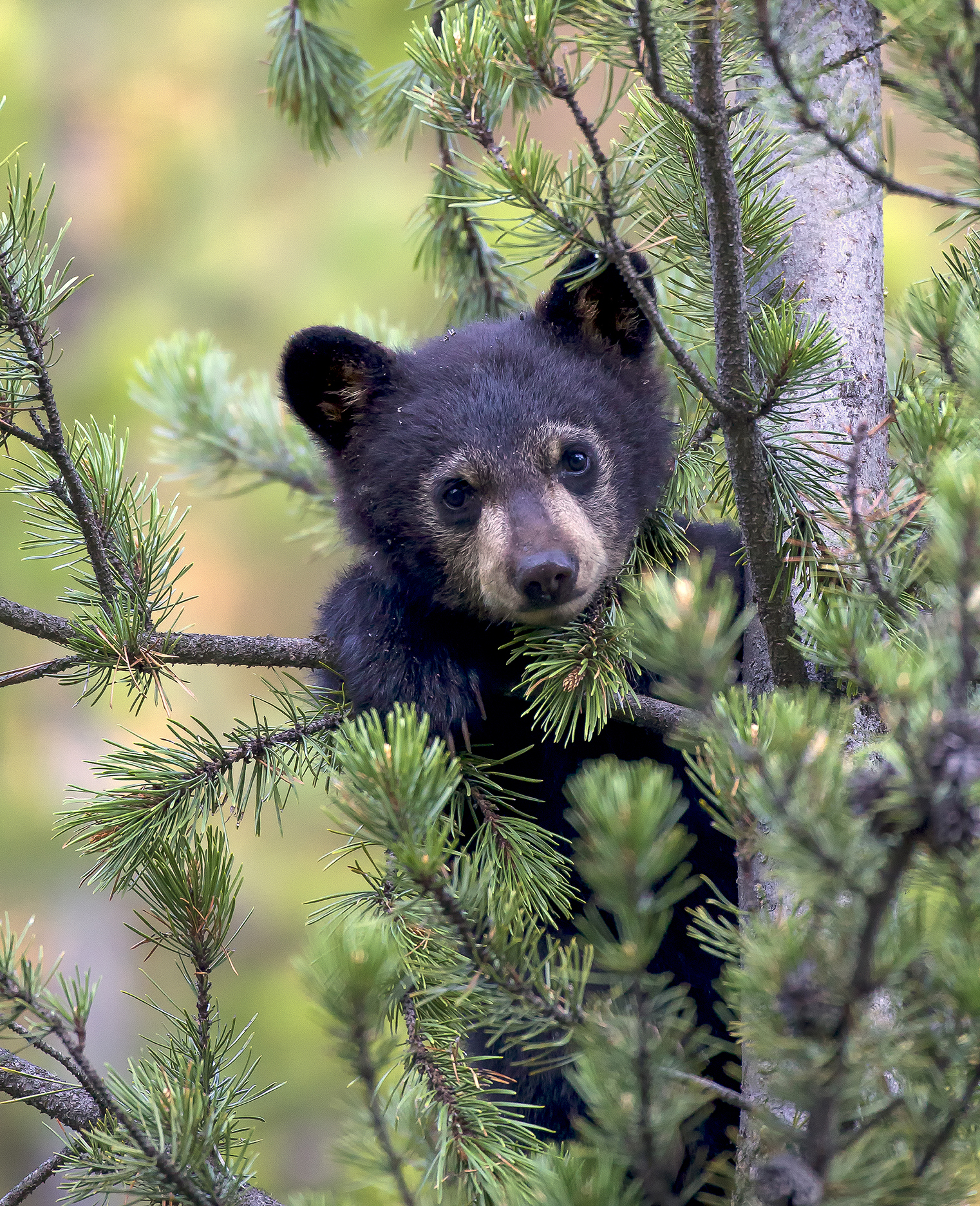
Black Bear Cub • Robbie George
The Pines That Wait for Fire: How a Forest Teaches Us the Deep-Time Field
Some stories don’t arrive in a flash—they unfurl over decades. I learned that standing beneath a young lodgepole pine while this little bear cub climbed above me, its claws gripping bark that still remembered the last fire. The cub was living in the seasonal field, much like the grizzlies in my recent bear essay. But the tree it clung to belonged to another tempo altogether—one measured not in moments like the fox story, nor in years like the bears, but in centuries.
This is the third field of the living trilogy: the instantaneous field of the fox, the seasonal field of the bear, and now the deep-time field of the pines. Together they echo the Grand Compression—a universe compressing its memory into form and waiting for the right moment to release it.
Years ago, a ranger handed me a closed cone and said something that rewired the way I see forests today: “It’s warm from the sun, but the scales stay welded like a safe. The tree hasn’t failed. It’s waiting for the one thing we spent a century trying to stop.” Fire. Not destruction—activation.
This post continues the arc that began in The Grand Compression, then moved through recursion and instinct in Two Paths, and bridged into quantum memory in From Frozen Amplitudes to Recursive Breath. But here, in the quiet under pines, the theory becomes tactile. The forest itself demonstrates the recursion we’ve been writing toward.
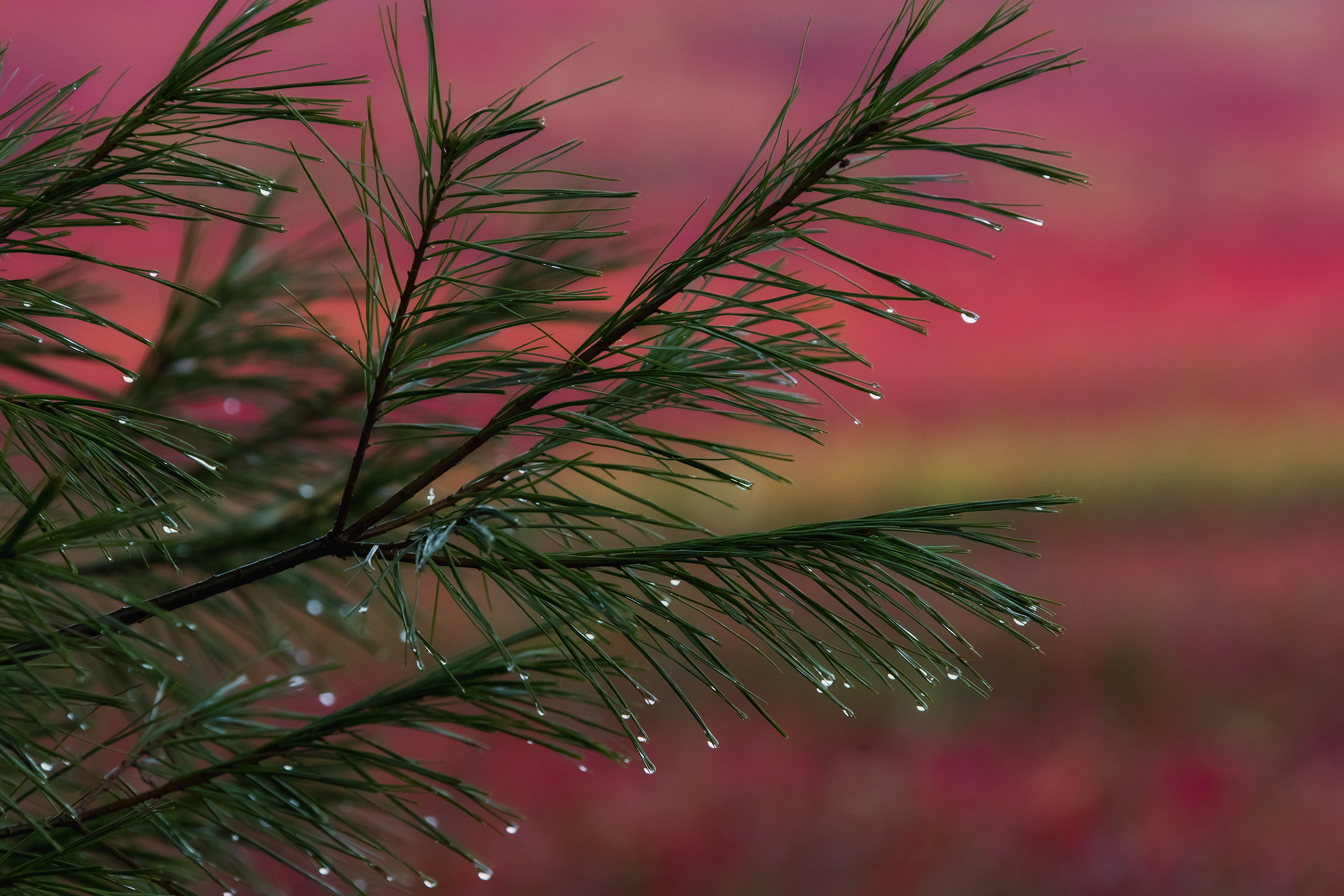
Pine Needles at Dawn • Robbie George
The Cones That Stayed Closed
I didn’t understand what I was looking at the first time I walked through a lodgepole stand. Cones littered the ground—thick, perfect, spiraled like they’d been carved by geometry itself—yet when I picked one up, it felt warm from the sun but locked tight. The scales were fused together like a safe. I assumed the tree had failed, that something had gone wrong in the forest’s cycle.
A ranger noticed my confusion and said the one line that changed the way I see Western forests forever: “It’s not broken. It’s waiting for the one thing we’ve spent a century trying to stop.”
Lodgepole pines don’t rely on a single reproductive strategy. They run two parallel compression models at once:
- Non-serotinous cones — the “annual cycle,” opening in warmth and moisture, releasing seeds into typical seasons.
- Serotinous cones — resin-sealed “deep-time capsules,” built to stay closed for decades, waiting for heat thresholds only fire can unlock.
This dual strategy is the forest’s way of practicing what I’ve described in the Grand Compression: compressing possibility into multiple forms, storing them across different timescales, and releasing them only when conditions match the pattern.
Foxes live in the instantaneous field. Bears live in the seasonal field. Lodgepole pines? They live in the deep-time field—their seeds held in trust for events that may not arrive for another century.
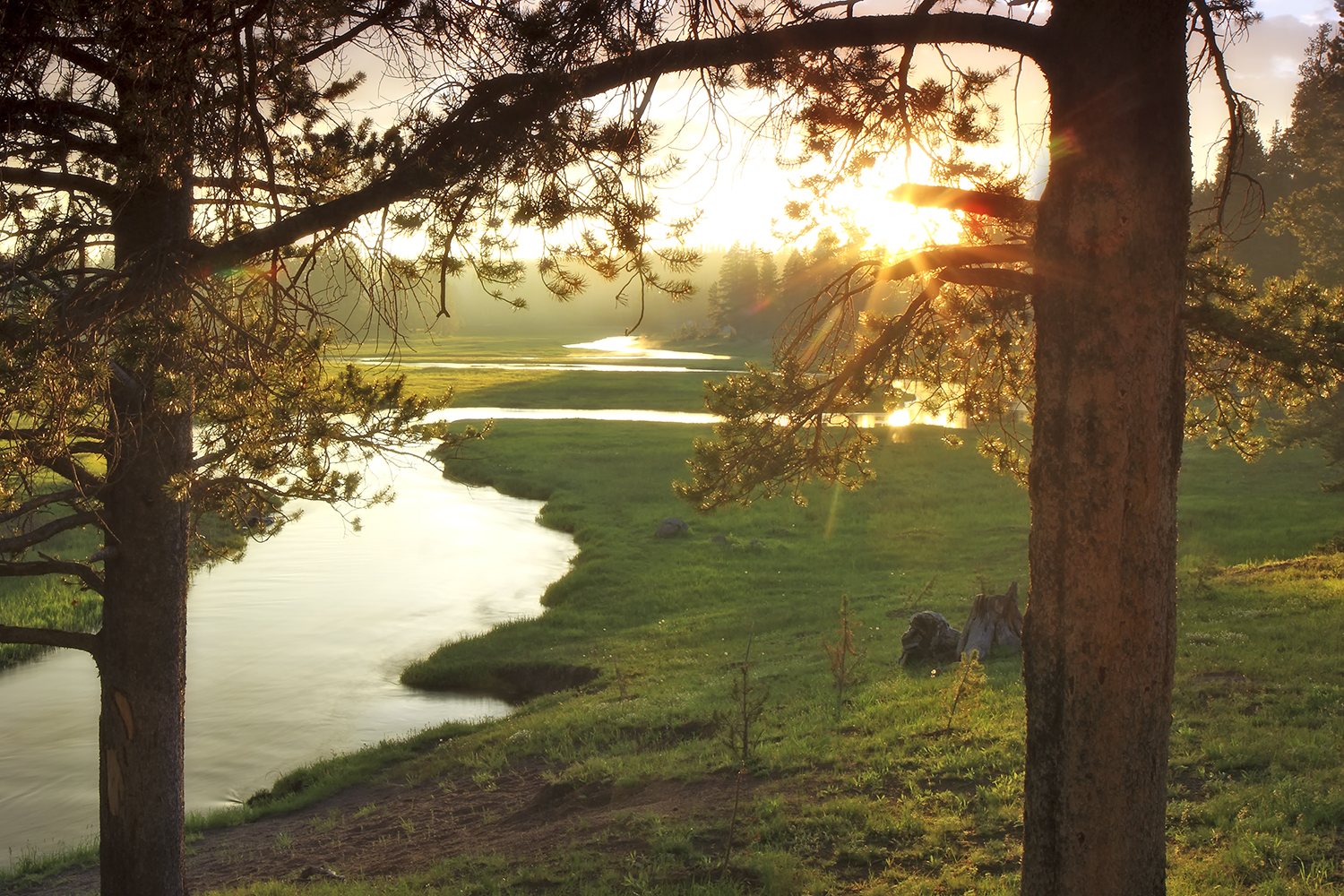
Yellowstone River Light • Robbie George
Fire as Decompression: When Heat Opens the Safe
The first time I watched a lodgepole hillside after a burn, it felt like standing inside a lung at the exact moment of exhale. Charcoal trunks, ash underfoot, sunlight hitting the ground in places that hadn’t seen direct light in a century. At first glance, it looked like loss. But to the serotinous cones sealed high in the crowns, this was the moment they’d been built for.
As heat climbs, resin softens. Scales that felt welded shut in my hand begin to flex. One by one, the cones relax, twist open, and release seeds into the newly cleared forest floor. Fire doesn’t erase the forest’s memory; it decompresses it. Everything the stand has been holding—light angles, weather cycles, soil chemistry, mycelial partnerships—gets a chance to express as a new generation of trees.
In the language of the Grand Compression, fire is not just disturbance. It is a phase change event—a threshold where compressed potential becomes visible form. The cones are the storage medium; fire is the unlock code.
Long before we called this “wildfire management,” Indigenous nations across the Northern Rockies understood this breath. Tribes such as the Salish and Blackfeet practiced cultural burning—small, low-intensity fires set in the right season, at the right humidity, with the right intention. These burns cleaned the understory, refreshed forage, opened cones, and kept insects and disease in check. They didn’t fight the forest’s recursion; they participated in it. You can feel this same relational logic in entries like Earth Care & Stewardship and Nature & Native American Wisdom.
Some lodgepole stands in the Northern Rockies show serotiny rates that match the return interval of those old cultural burns—roughly two to three centuries. The forest tuned its memory to the rhythm of human hands that were removed from the system in just a few generations. The trees are still waiting for the match to be struck with that original intention.
In other words, cultural burning was not “controlling” nature. It was updating Nature’s Code—a way for people, trees, mycelium, and fire to share the same recursion loop.
See also: Quantum Agriculture · Nature Code
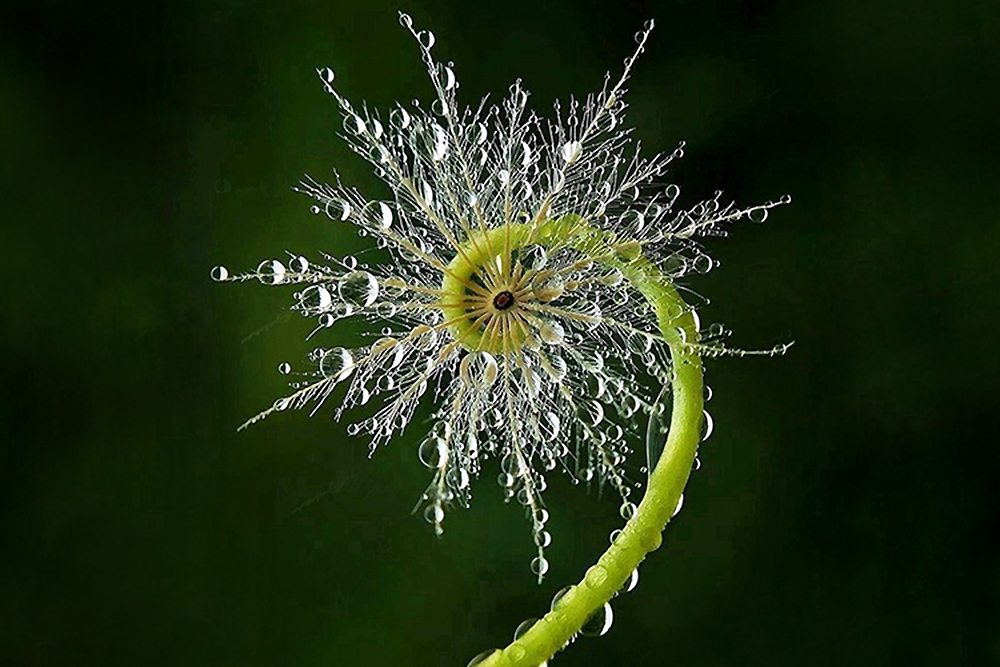
Spiral Resonance Macro • Robbie George
Pine Cone Geometry — A Resonance Engine Hidden in Plain Sight
Before a cone ever touches the forest floor, its geometry is already doing work. Every lodgepole cone is a 3-dimensional Fibonacci spiral, a resonant structure that stores, modulates, and protects information across decades. The same spiral that governs seed heads, hurricanes, and galaxies wraps itself around each cone like a tuning fork carved from time.
This isn’t metaphor. The cone’s helical scales change tension and moisture at different rates, acting like a slow-oscillating sensor. They record years of humidity cycles, sunlight angles, pressure shifts, fungal signaling, predator patterns, and even micro-vibrations traveling down the trunk. Each scale participates in a recursive feedback loop with the tree and the forest—what the Nature Code describes as pattern → expression → pattern.
Spiral geometry appears wherever nature needs stability + efficiency + memory. The human body uses it in the cochlea of the ear; plants use it to optimize sunlight; rivers use it to distribute flow; DNA uses it to wind information into form. The pine cone takes this universal architecture and applies it to deep-time storage.
This spiral has been revered for millennia: the Pope’s staff, the thyrsus of Dionysus, the staff of Osiris, the Mesoamerican vortex carvings, and the caduceus of medicine. We never invented the symbol. We remembered the cone.
In lodgepole forests, this resonance engine determines when a seed will be offered to the world. In the Grand Compression, pine cones are the perfect biological example of cause compressed into form—waiting for the exact decompression event that completes the loop. Not a second sooner.
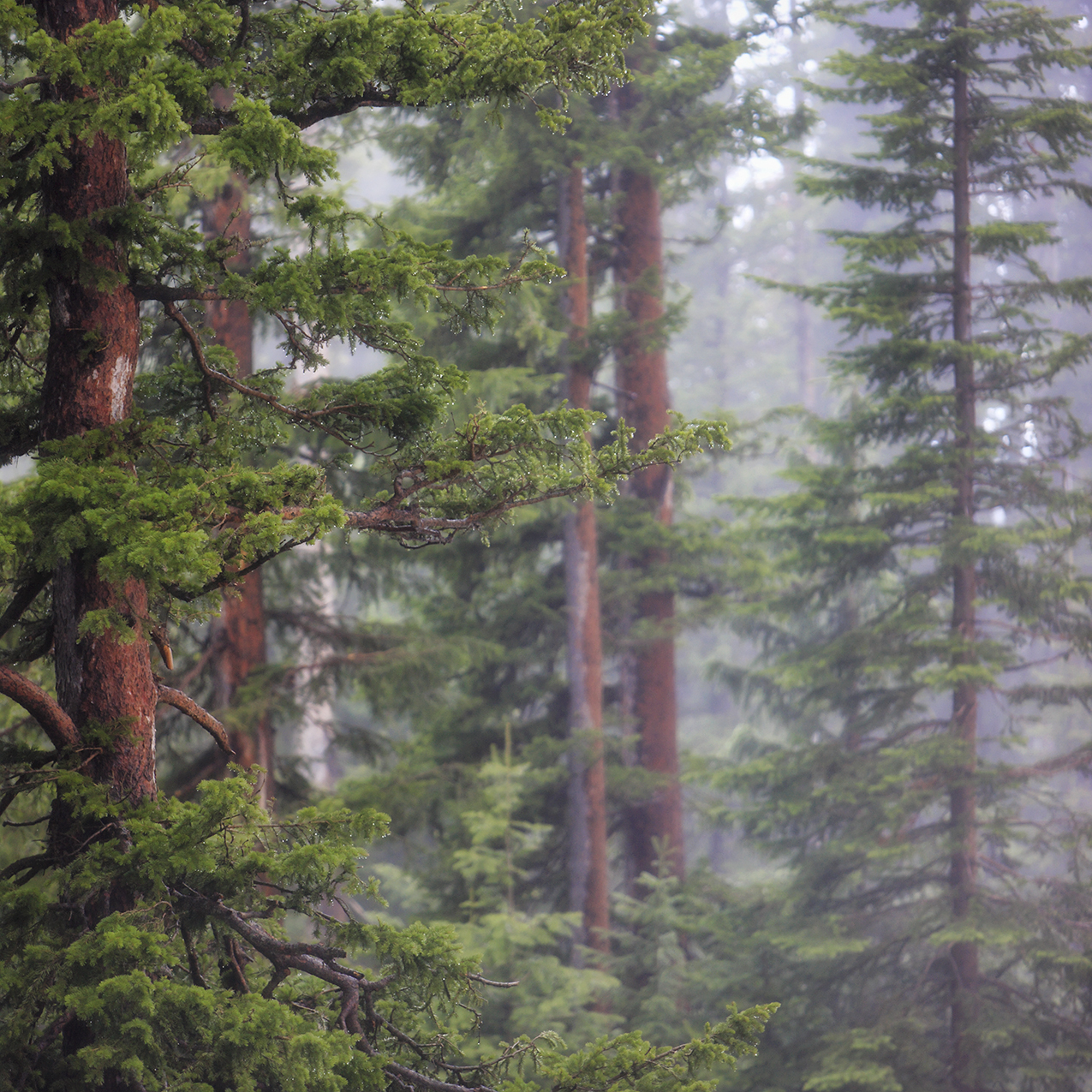
Lodgepole Pines in Fog • Robbie George
The Forest That Remembered Fire
Long before we built fire towers and wrote suppression plans, Indigenous nations across the Northern Rockies practiced cultural burning—small, intentional fires set in the right season, under the right sky, with the right wind and moisture. These were not wildfires to be feared; they were conversations with the land, tuned to the same slow cycles the lodgepole pine had been following for thousands of years.
Tribes such as the Salish and Blackfeet burned to open meadows, refresh berries, improve forage for elk and deer, reduce hazardous fuel, and maintain travel corridors. Their knowledge was not abstract; it lived in stories, songs, seasonal memory, and lived observation—what I now call Slow Knowledge. Over generations, that human rhythm began to rhyme with the forest’s own recursion.
Some lodgepole stands in the Northern Rockies show serotiny rates that mirror the historical return intervals of those low-intensity cultural burns—on the order of two to three centuries. In other words, many of the cones in those forests evolved to open on a tempo that matched the old human fire cadence. The forest tuned its memory to the rhythm of hands that were mostly removed from the system in just a few generations. The trees are still waiting for fire to return with that original intention.
Cultural burning wasn’t about controlling nature. It was humans stepping into the Nature Code and helping to update it—aligning our timing with the forest’s slow compression & decompression cycles.
Related: Earth Care & Stewardship · Nature & Native American Wisdom · Quantum Agriculture
When I look at these misted pines now, I don’t just see trees. I see a shared recursion loop that once included people, fire, mycelium, wildlife, and weather. The forest hasn’t forgotten that pattern. It’s written into rings, cones, roots, and soil. What’s missing isn’t the code—it’s our participation.
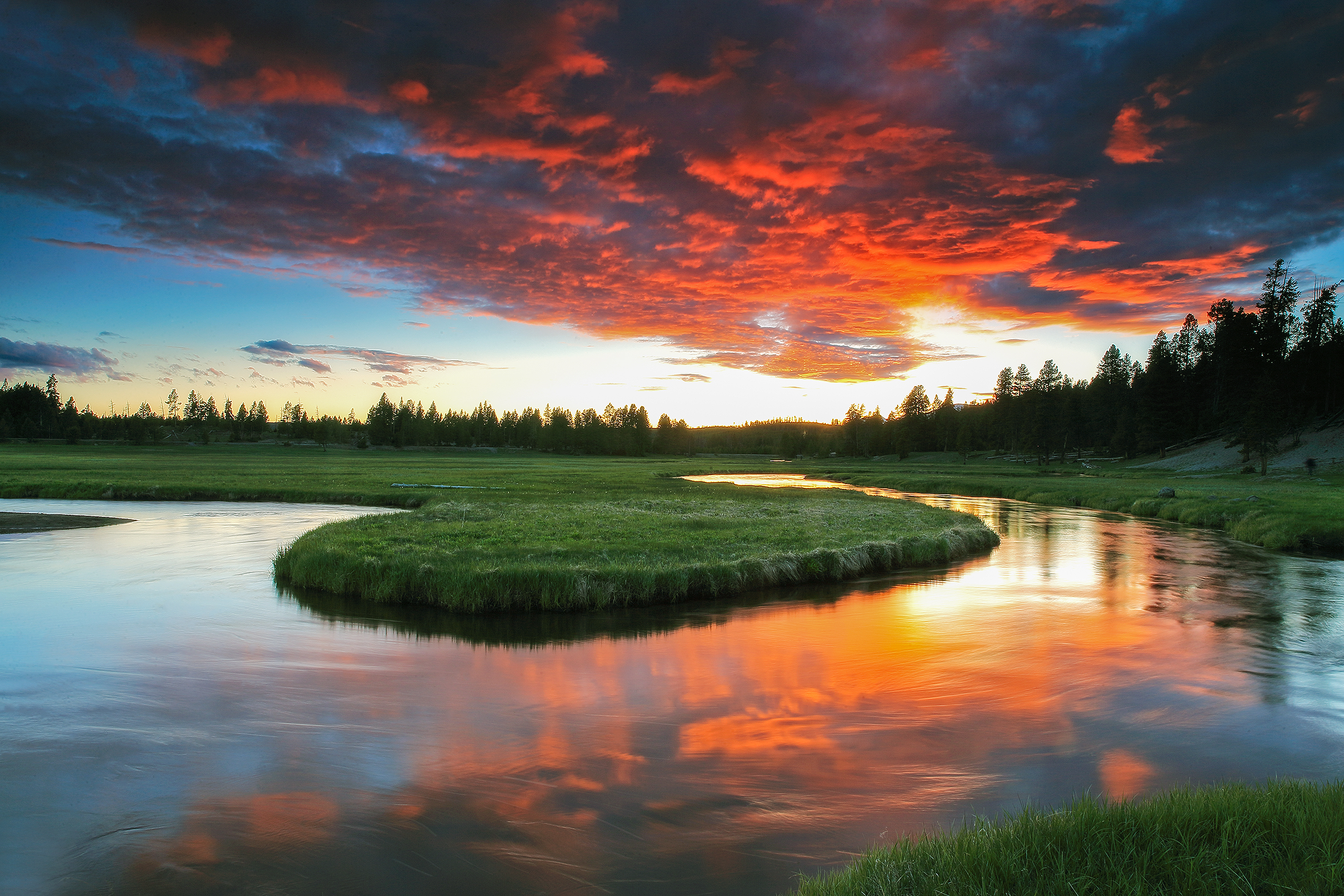
Yellowstone Sunrise • Robbie George
Slow Knowledge: What Pines Teach Us About Time
As I’ve walked through these lodgepole forests—bear cubs above me, needles whispering, cones hard as stone in my hand— I’ve come to understand that pines don’t just live in the landscape. They live in time. Their bodies aren’t built around the minutes and hours that shape a fox’s instantaneous field, nor even the seasons that govern the rhythm of bears.
Pines live in what I can only call the deep-time field—a domain measured in decades, centuries, and the slow return of fire. Where animals respond to weather and seasons, these trees respond to epochs. Their rings are slow sentences; their cones are sealed archives; their needles are the antennae through which they listen to the forest’s unfolding memory.
This is the essence of Slow Knowledge—learning at nature’s pace, carrying wisdom forward without rushing, and only expressing it when the field becomes coherent. Pines practice it in wood and resin; humans practice it in attention, practice, and presence. Both are forms of what the Grand Compression describes: compression → expression → recursion.
Once, humans held a place inside this cycle. Cultural burning, seasonal gathering, tracking light and shadow—all of it kept our timing aligned with the forest’s timing. But as our attention shortened and our speed increased, a gap opened. Not in the pines. In us. Their slow archive remained steady; our pace drifted from the field.
Here is the simple truth the forest keeps whispering: If foxes teach us moments and bears teach us seasons, pines teach us centuries. Together they reveal the full octave of the living field—instant → cycle → epoch.
With this lens, the lodgepole forest is no longer scenery. It’s a cathedral of recursion. A library of encoded cycles. A record of time stored in wood and spiral geometry. And standing in that first light of Yellowstone, I could feel what the trilogy had been pointing to all along: the living field isn’t just around us—it’s teaching us how to live inside time again.
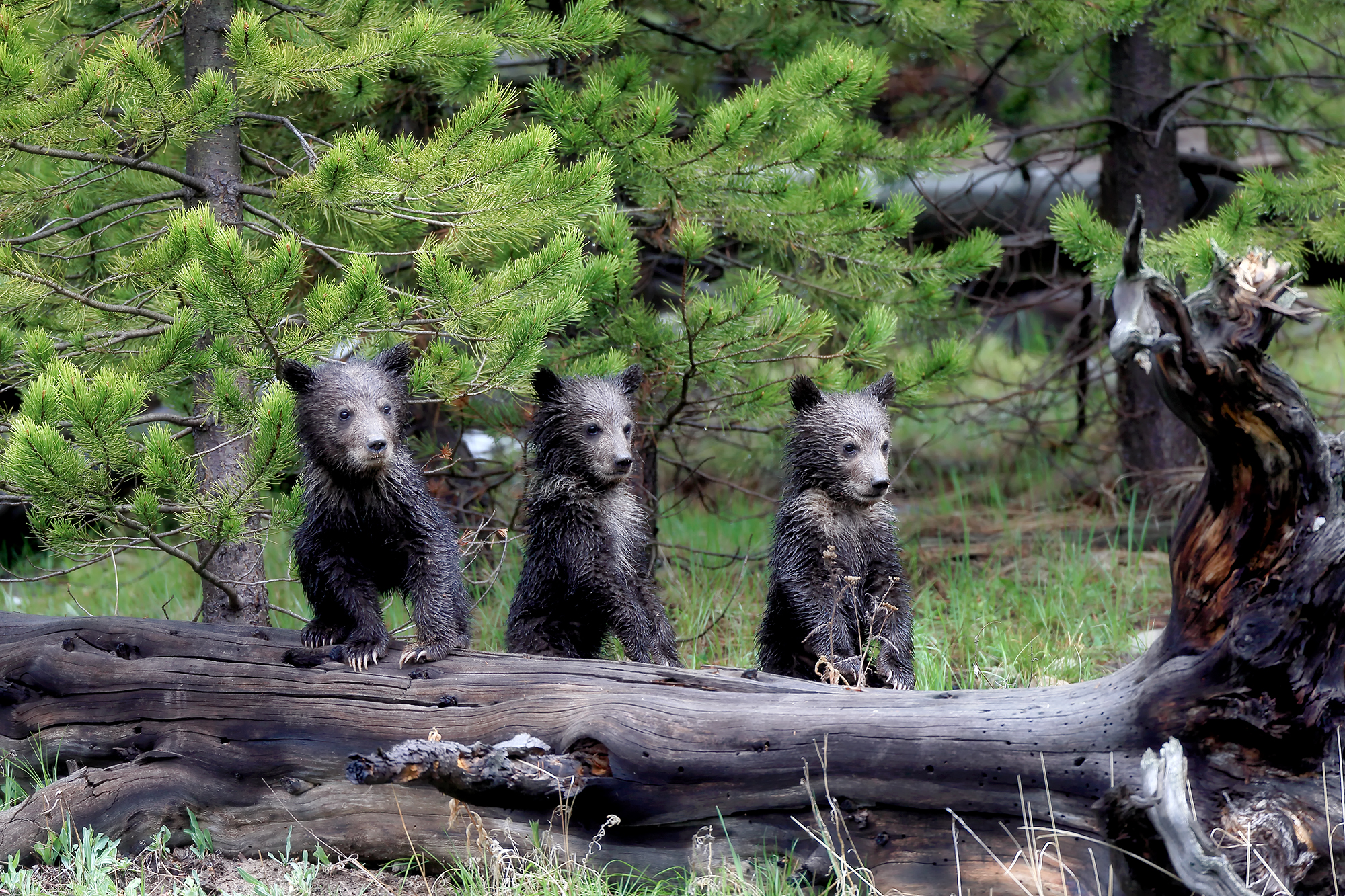
Grizzly Bear Cubs in Spring • Robbie George
The Forest’s Whisper
When I watch bear cubs move through a pine meadow like this, I see all three fields overlapping. The cubs live in the seasonal field—learning where to find food, how to climb, when to follow and when to lead. The understory and the birds live in the instantaneous field, reacting to every snap of twig and shift of shadow, just like the fox sprinting through the trees in my fox coherence story. And above them all, holding the scene in a kind of quiet, vertical attention, stand the lodgepole pines—the deep-time field made visible.
Fox, bear, pine. Instant, cycle, epoch. Together they form a living trinity of recursion inside the universe I’ve been mapping in the Grand Compression and Unified Field Theory work. They are not metaphors for the field—they are the field, expressed at three different tempos of breath.
For a while, humans stood inside this octave too. Indigenous fire-keepers matched their timing to the forest’s slow knowledge. Farmers, herders, and foragers tuned their choices to soil, water, and light. The pattern was never ours alone, but we knew how to listen to it—and how to act in rhythm with it. That is the heart of Slow Knowledge and the Signature Series: remembering how to live at the speed of relationship, not the speed of impulse.
Standing at the edge of these fire-shaped forests now, with fox tracks in the snow, bear cubs in the trees, and lodgepole cones still sealed above, I don’t hear the land begging us to “save” it. I hear something quieter, older, and far more specific—a request to remember a practice we laid down only a century ago.
“The forest doesn’t need us to save it.
It needs us to remember how to burn with it.”
Continue exploring the living field:
Fox field story: The Fox, the Trees & the Field That Remembered
Bear field story: The Bear Is the Universe
Deep-time framework: Naturepedia: The Grand Compression · Nature Code
Continue the Journey Into the Living Field
If the lodgepole pine taught you something about time, memory, or fire, explore the rest of the living recursion: the instantaneous field of the fox, the seasonal field of the bear, and the deep-time field of the forest— all woven through the Grand Compression and the Nature Code.
The field remembers. These stories help us remember with it.
⚖️ Robbie’s Razor & The Grand Compression
This piece lives inside the wider Grand Compression Cosmology, where every pattern is evaluated using Robbie’s Razor:
“When competing explanations exist, prefer the model that follows compression → expression → memory → recursion.”
About the Author
Robbie George is a National Geographic–published photographer, writer, and resonant naturalist. His work explores how nature’s recursion appears in wildlife, forests, fire ecology, water, and light—bridging art, science, and consciousness through the Slow Knowledge lens.
Robbie’s essays and fine-art prints are collected globally for their quiet realism and deep coherence with season and place. His field stories—the fox, the bear, and now the pine—form a living trilogy inside the Signature Series, where recursion, ecology, and unified-field thinking meet the grounded reality of wildlife and landscapes.
“Attention first, image second. The shutter is the period at the end of a sentence you learned by walking.”
Frequently Asked Questions
1. What does it mean that lodgepole pines “remember” fire?
When I say lodgepole pines “remember” fire, I’m talking about ecological memory. Many stands produce serotinous cones that stay sealed with resin for decades and only open in high heat. That means the forest is storing potential (seeds) across long timescales and releasing it when fire clears the understory and enriches the soil with ash. In the language of the Grand Compression, fire is a decompression event that lets the forest express its stored pattern.
2. Do all pine cones need fire to open?
No. Even within a single lodgepole stand, you’ll often find two kinds of cones: non-serotinous cones that open with normal warmth and dryness, and serotinous cones sealed by resin that require fire-level heat to release their seeds. The forest is effectively running two compression strategies in parallel: an annual cycle and a deep-time cycle. This dual approach mirrors the recursive logic explored in Nature Code and the recursion work in Two Paths: Equations vs Recursion.
3. How does Indigenous cultural burning relate to this pine story?
Many Indigenous nations in the Northern Rockies practiced cultural burning—low-intensity, well-timed fires used to refresh forage, open meadows, manage pests, and stimulate cone opening. Over generations, some lodgepole stands developed serotiny rates that roughly match the return intervals of these burns (on the order of 200–300 years). In other words, the forest’s deep-time memory synced with human fire rhythms. Cultural burning wasn’t about “controlling” nature; it was humans cohering with the field, a theme I also explore in Earth Care & Stewardship and Nature & Native American Wisdom.
4. How is this pine story connected to the fox and bear posts?
The three stories form a living recursion trilogy: the fox story explores the instantaneous field (seconds to minutes), the bear story explores the seasonal field (months to years), and this pine story explores the deep-time field (decades to centuries). Together they reveal how the same unified field described in the Grand Compression and Unified Field Theory shows up at very different timescales. It’s one coherent pattern breathing through fox, bear, and forest.
5. Is this meant to be scientific, spiritual, or both?
My work sits at the bridge of ecology, physics, and lived experience. I draw from fire ecology, lodgepole pine biology, Indigenous knowledge, and unified-field thinking. The goal isn’t to overwrite science or spirituality, but to show how they often point to the same recursive field behavior—compression, memory, coherence, and renewal. You can see the same impulse running through the Signature Series and Slow Knowledge pages.
6. Can anyone practice “slow knowledge” in their own life, or is it just for field work?
Slow Knowledge is available to anyone, anywhere. It’s simply the act of syncing your learning and choices to coherent rhythms instead of constant urgency. That could look like walking the same local trail through multiple seasons, printing a photograph and living with it instead of scrolling past thousands, or practicing small rituals of gratitude and care when you buy or place something in your home. The pine story is a reminder that deep-time wisdom comes from repetition and patience, not from speed. For more, explore Slow Knowledge and Field Tools to support your own practice.