🌿 Where Water Moves, Life Returns, and Timing Becomes Everything
Naturepedia Seasonal Timing Engine
Spring Wildlife & Nature Photography — The Season of Emergence
Where Water Moves, Life Returns, and Timing Becomes Everything
Spring is not just a date on the calendar. It is a moving field signal shaped by water, light, temperature, elevation, migration, nesting behavior, newborn wildlife, bloom timing, and the return of biological motion across the landscape.
This guide helps photographers read spring as a timing system: subject → habitat → timing → execution.
This spring guide is built as a field decision system, not a simple list of places. Spring photography works best when you understand how wildlife, water, plants, light, temperature, and habitat all respond to timing signals across the landscape.
Use this page by moving through the sequence: subject → habitat → timing → execution. First decide what you want to photograph, then identify the habitat where that subject becomes active, then read the seasonal timing conditions, and finally choose your field strategy.
1. Subject
Choose the seasonal signal: newborn wildlife, migration, nesting birds, wildflowers, snowmelt, waterfalls, wetlands, or spring landscapes.
2. Habitat
Match the subject to its spring habitat: wetlands, forests, rivers, alpine meadows, grasslands, coastal systems, or migration corridors.
3. Timing
Read the timing layer: elevation, latitude, thaw, bloom stage, water flow, animal movement, breeding cycles, and weather windows.
4. Execution
Plan the field approach: lens choice, light direction, ethical distance, scouting, patience, safety, and repeat observation.
Spring is not one moment. It is a moving wave of emergence.
The Spring Timing Engine
Spring photography is driven by emergence. Water begins moving, soils warm, plants respond to light, insects return, birds migrate, mammals become more active, and newborn wildlife begins appearing across connected habitats.
The key is to stop thinking of spring as a fixed season and start reading it as a timing engine. In one region, spring may arrive through wetland thaw and amphibian movement. In another, it may appear through alpine snowmelt, river flow, wildflower bloom, or nesting behavior.
Spring begins when light, water, temperature, and biology start moving together.
Water Signal
Snowmelt, runoff, wetland recharge, river flow, and thawing ponds create the first visible signs of seasonal motion. Connect this layer to Water Systems.
Wildlife Signal
Migration, nesting, feeding, mating, den emergence, and newborn wildlife reveal where biology is responding first. Connect this layer to Wildlife Behavior & Ecology.
Bloom Signal
Wildflowers, leaf-out, grasses, buds, and meadow color move upward with elevation and northward with latitude. Connect this layer to Ecosystems of North America.
Field Signal
Light angle, weather breaks, fog, mud, access, wind, and subject movement determine when a spring scene becomes photographable. Use the Field Tools hub to plan.
Spring wildlife photography begins when animals start responding to thaw, food availability, longer light, migration pressure, nesting cycles, and newborn care. The best spring images often happen where biology and habitat overlap: wetlands, river edges, forest openings, meadows, shorelines, and migration corridors.
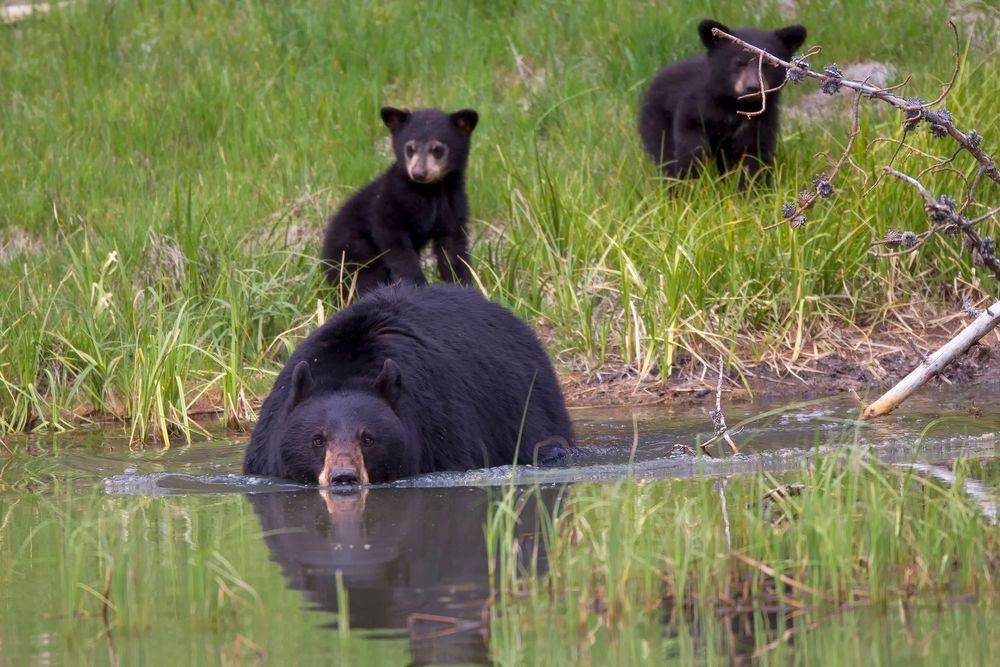
Black bears emerging near wetlands, birds returning to nesting habitat, waterfowl moving through marshes, mammals feeding in green-up zones, and predators following seasonal prey all show the same larger pattern: spring is the biological expression phase of the year.
Den Emergence
Bears and other mammals become more visible as spring food sources appear near wetlands, forest edges, and riparian corridors. See Black Bear, Grizzly Bear, and Mammals of North America.
Migration & Return
Birds, waterfowl, raptors, and songbirds follow seasonal signals back into feeding, breeding, and nesting habitat. Explore Wildlife Migration & Seasonal Patterns.
Nesting & Newborns
Spring brings nest building, territory defense, young animals, feeding behavior, and increased parental care. Connect this to Wildlife Behavior & Ecology.
For spring field planning, think first about behavior, then habitat, then timing. The question is not only “where are the animals?” but “what seasonal signal is causing them to move, feed, nest, or emerge?”
Spring Wildflowers, Bloom & Green-Up
Spring bloom is one of the clearest visual signals of emergence. Wildflowers, grasses, leaf-out, buds, and meadow color do not arrive everywhere at once. They move across the landscape in waves shaped by elevation, latitude, slope angle, soil moisture, snowmelt, and temperature.
For photographers, this means bloom timing is less about chasing a single date and more about reading the ecosystem. Low valleys may green up weeks before alpine meadows. South-facing slopes may bloom earlier than shaded drainages. Wet meadows, floodplains, forests, and mountain edges each express spring differently.
Bloom is spring made visible — light, water, soil, and temperature expressing through plants.
Elevation Waves
Bloom often begins lower and climbs upward as snow melts, soils warm, and daylight increases. Mountain and alpine systems can peak much later than valleys. See Mountain & Alpine Ecosystems.
Wet Meadow Bloom
Wetlands, floodplains, and meadow edges can hold moisture longer, supporting layered color, insects, birds, and feeding wildlife. Connect to Wetland Ecosystems.
Forest Leaf-Out
Forests change through budburst, understory bloom, fresh canopy color, filtered light, and wildlife movement along edges. Explore Forest Ecosystems.
Ecosystem Timing
Bloom connects plant life to pollinators, wildlife feeding, nesting cover, soil moisture, and seasonal habitat quality. See Ecosystems of North America.
The best spring wildflower photography happens when bloom, habitat, weather, light, and field access align. Use bloom as a timing signal, not just a subject.
Spring Water & Landscapes
Spring landscapes are defined by motion. Snowmelt feeds rivers, wetlands recharge, waterfalls surge, and reflective water creates dynamic compositions across forests, valleys, and mountain systems.
Water is often the first visible signal of seasonal change. It connects weather, elevation, soil, plant life, and wildlife movement into a single field system. When water starts moving, everything else follows.
Spring is water becoming visible again.
Snowmelt & Runoff
Melting snow feeds rivers, streams, and wetlands, shaping flow patterns, sediment, and seasonal access across landscapes. Explore Water Systems.
Waterfalls & Rivers
Spring produces peak waterfall flow and high river volume, ideal for long exposure photography and dynamic compositions.
Wetlands & Reflections
Marshes, ponds, and flooded landscapes provide reflections, wildlife interaction, and layered depth. Connect to Wetland Ecosystems.
Light & Atmosphere
Fog, mist, soft light, and cloud breaks create ideal spring conditions for mood, depth, and storytelling.
Water-driven landscapes are one of the most reliable spring photography opportunities. Track water, and you track the season.
Spring Field Strategy
Spring photography requires flexibility. Conditions change quickly, access can be limited, and timing windows may be short. Success comes from reading the environment and adapting in the field.
Use a strategy based on observation, patience, and repetition. Instead of chasing locations, follow the signals: water movement, wildlife behavior, bloom stage, and light conditions.
Scout & Repeat
Visit locations multiple times as conditions evolve. Spring scenes improve as water, light, and activity align.
Work the Edges
Focus on transition zones: water-to-land, forest-to-meadow, ice-to-open water, and shade-to-light.
Be Ready for Change
Weather shifts quickly in spring. Fog, rain, wind, and light breaks can create unexpected opportunities.
Respect Wildlife
Spring is sensitive for animals. Maintain distance, avoid disturbing nesting or young, and follow ethical field practices.
Where to Photograph Spring — Landscapes, Wildlife & Timing Zones
Spring does not arrive everywhere at once. It moves across the landscape in waves shaped by elevation, latitude, water systems, and habitat type. The best spring photography locations are not just places—they are timing zones where emergence is actively happening.
Instead of asking “where should I go,” ask: where is water moving, where is habitat opening up, and where is biology responding right now?
Wetlands & Marshes
High spring activity: waterfowl, amphibians, reflections, feeding wildlife, and early plant growth. See Wetland Ecosystems.
Rivers & Floodplains
Snowmelt-driven flow, wildlife movement, sediment patterns, and dynamic water compositions. Connect to Water Systems.
Forest Edges
Transitional zones where wildlife feeds, moves, and interacts with light, cover, and emerging vegetation. Explore Forest Ecosystems.
Mountains & Alpine
Later-season spring: melting snowfields, waterfalls, delayed bloom, and high-elevation wildlife movement. See Mountain & Alpine Ecosystems.
Grasslands & Meadows
Early feeding grounds, wildflower bloom, insect life, and open habitat wildlife activity. Explore Grassland Ecosystems.
Coastal Systems
Migratory birds, shoreline activity, tidal patterns, and dynamic weather systems. Connect to Coastal Ecosystems.
Spring locations are best understood as part of a connected system. Use habitat, water, and timing together to identify where emergence is actively unfolding.
Spring Within the Naturepedia System
Spring is one phase in a continuous ecological cycle. To fully understand it, you need to connect wildlife behavior, ecosystems, water systems, migration, and environmental timing into a single framework.
Naturepedia organizes this into a connected structure: species → behavior → ecosystems → geography → time → conservation. Spring sits at the moment when compression turns into expression—when systems begin moving again.
Spring becomes more powerful when viewed as part of a larger system. The more connections you understand, the more predictable and repeatable your photography becomes.
Continue Through the Seasonal System
Spring is just one phase of a larger cycle. As emergence unfolds, timing shifts into expression, transition, and eventually compression again. The more you follow the full system, the more predictable your photography becomes.
The goal is not to chase moments — it’s to understand when and why they happen.
About the Author
Robbie George is a nature photographer, writer, and field-based observer whose work focuses on how wildlife, water, light, and ecosystems change through seasonal time.
Spring is one of the most dynamic periods in that system. It is when water begins moving, wildlife becomes active, and landscapes shift from stillness into motion. Robbie’s work is built on reading those transitions in real environments rather than relying on static locations.
This approach connects field observation, seasonal timing, Naturepedia, and practical execution into a single process — helping photographers understand not just where to go, but when and why moments happen.
What makes spring a good season for wildlife and nature photography?
Spring is when water begins moving, plants green up, birds migrate, mammals become more active, and newborn wildlife begins appearing. It is one of the strongest seasons for photographing emergence, behavior, habitat change, and seasonal motion.
When is the best time for spring photography?
The best timing depends on elevation, latitude, snowmelt, bloom stage, wildlife behavior, and weather. Lower elevations usually green up first, while mountain and alpine areas may reach peak spring conditions much later.
What should I photograph in spring?
Strong spring subjects include migrating birds, nesting behavior, newborn wildlife, black bears, wetlands, wildflowers, snowmelt rivers, waterfalls, fog, forest edges, and early green-up landscapes.
How do I plan spring wildlife photography ethically?
Keep a safe distance from wildlife, avoid disturbing nests or young animals, never pressure animals for a photograph, and use longer lenses when needed. Spring is sensitive because many animals are feeding, nesting, migrating, or caring for newborns.
Why is water important for spring photography?
Water is one of the clearest spring timing signals. Snowmelt, runoff, wetlands, rivers, ponds, and waterfalls reveal where the landscape is waking up and often concentrate wildlife, reflections, motion, and atmosphere.
How does this page connect to Naturepedia?
This page connects spring photography to the larger Naturepedia system by linking species, behavior, ecosystems, water systems, geography, seasonal timing, and field execution into one seasonal framework.
The presence of this badge signifies that this business has officially registered with the Art Storefronts Organization and has an established track record of selling art.
It also means that buyers can trust that they are buying from a legitimate business. Art sellers that conduct fraudulent activity or that receive numerous complaints from buyers will have this badge revoked. If you would like to file a complaint about this seller, please do so here.
Verified Returns & Exchanges
The Art Storefronts Organization has verified that this business has provided a returns & exchanges policy for all art purchases.
Description of Policy from Merchant:
What is your Policy on Returns/Exchanges/Refunds?
I take great pride in my work and prints, and I want you to be completely happy with your investment in my nature art. If for any reason you are unsatisfied with your print, you may return it within 14 days of delivery, and/or exchange it for another print. Prints must be returned in new condition, packaged carefully in the original packaging if possible. Your refund will be issued as soon as I receive the returned print. Please contact me if you would like to arrange a return or exchange.
In the event that you receive a damaged or defective print, please let me know within 7 days of receipt, and I will arrange for a new print to be shipped to you at no additional cost.
Verified Secure Website with Safe Checkout
This website provides a secure checkout with SSL encryption.
Verified Archival Materials Used
The Art Storefronts Organization has verified that this Art Seller has published information about the archival materials used to create their products in an effort to provide transparency to buyers.
Description from Merchant:
Fine Art Prints are made with high-quality archival inks on fine art papers using a high-resolution large format inkjet printer. Our premium archival inks produce images with smooth tones and rich colors. Prints are made with care on your choice of exquisite Fine Art Papers using a high-resolution large format inkjet printer. https://www.graphikprintworks.com
Become a supporter of Robbie George Photography and be the first to receive new content and special promotions.
“Every image is a field. Every quote is a key. Welcome back to the rhythm.” ~Robbie
Cart
Your cart is currently empty.
Saved Successfully.
This is only visible to you because you are logged in and are authorized to manage this website. This message is not visible to other website visitors.
Import From Instagram
Click on any Image to continue
This Website Supports Augmented Reality to Live Preview Art
This means you can use the camera on your phone or tablet and superimpose any piece of nature art onto a wall inside of your home or business.
To use this feature, Just look for the "Live Preview AR" button when viewing any piece of nature art on this website!
Pounce Now—Save 20% on Your First Order
Join the collector list for your first-order discount, new wildlife releases, and occasional field notes.