

Completing E = mc²: Water, Mycelium, and the Living Coherence of Light
Completing E = mc²: From Equation to Ecology

Where photons enter the forest, water remembers—and mycelium translates.
Einstein’s E = mc² is one of science’s most elegant equations—stating that energy and mass are equivalent. Yet it tells us little about how energy becomes organized into the living world: how sunlight coheres into leaves, migrates through animals, and returns to the soil as memory. Nature offers that missing explanation through coherence. Light does not simply collide—it phase-matches through resonant media so it can hold itself together as form.
Two partners make this possible every day. Water acts as Earth’s memory field—its hydrogen-bond networks store and shuttle vibrational information. Mycelium reads that information and routes it through the soil’s living circuitry, translating decay into nourishment and coordination (the Wood-Wide Web in action). Together they transform Einstein’s identity into a cycle: energy becomes matter through coherence, and matter returns to energy as distributed pattern. This is E = mc² made ecological.
In physics, c denotes the speed of light; in nature, it can also be read as the capacity for coherence in the medium. When photons meet coherent matter—water, proteins, mycelial webs—the medium doesn’t just absorb energy; it organizes it. Laboratory physics often forces matter from photons through collision, but ecosystems perform the same conversion gently, through phase-matching. Information is retained in water’s structure, refined by geometry—often through phi spirals—and released in rhythm with the field. The result is not explosion, but invitation—light choosing stable shape.
Seen this way, coherence is the missing bridge between equation and ecology. It explains why leaves assemble like antennas, why branches and rivers follow fractal rules, and why regenerative practice outperforms extractive systems. Coherence is the silent architect that allows energy to become memory and memory to become life—how a photon’s brief arrival at dawn becomes a forest’s slow intelligence by dusk.
This essay completes the arc begun in Water — The Great Informant of Nature and extended through the Hydrogen / Nature Code work. We’ll trace the full resonance loop—Photon → Plant → Animal → Mycelium → Water → Photon—and show how geometry, biology, and field-craft make Einstein’s constant visible in the wild. To see coherence made tangible, visit the Landscape Gallery and watch light become form.
Photon → Plant: Photosynthesis as Elegant Transmutation
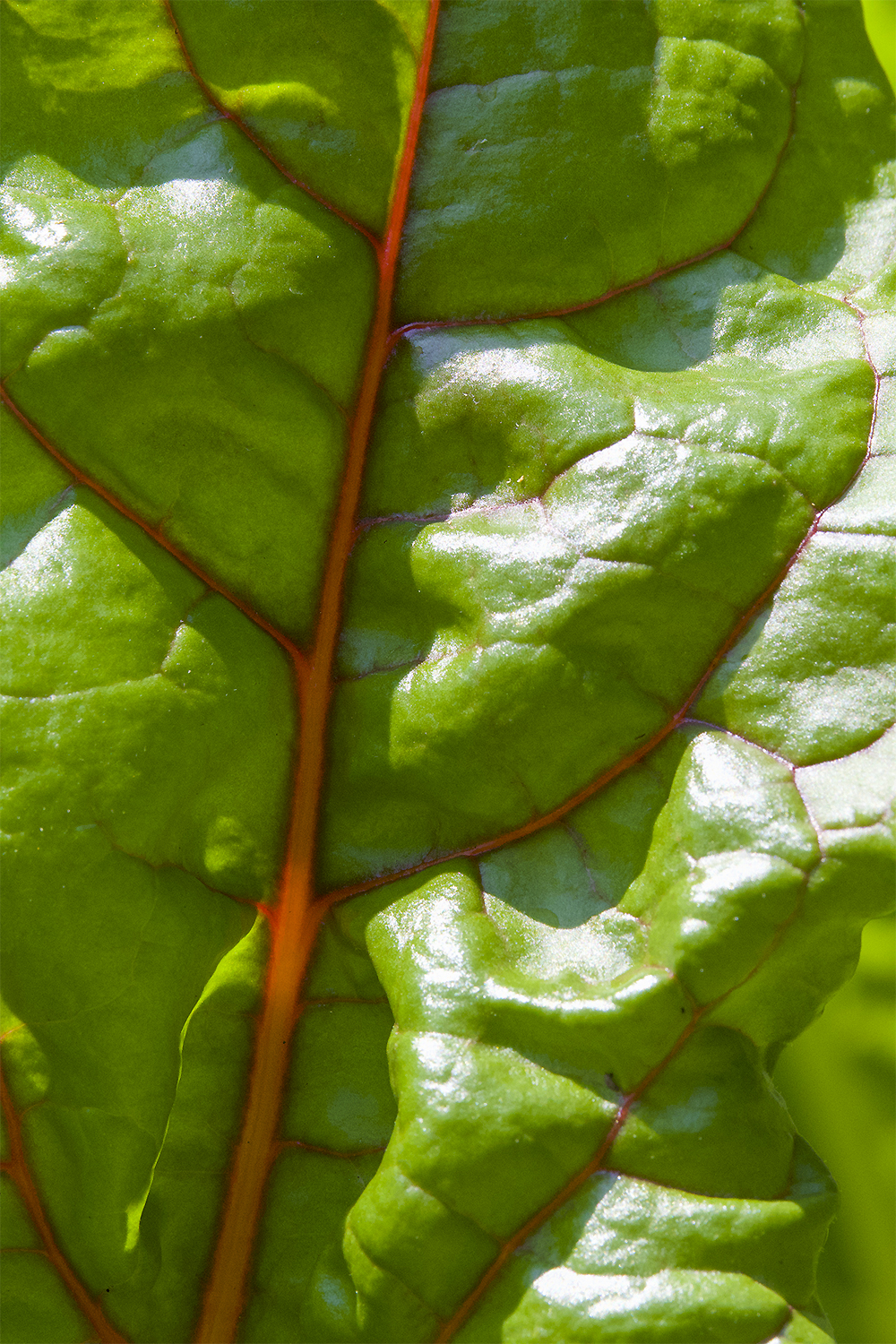
When a photon enters the leaf, it doesn’t wander aimlessly. Antenna pigments in the chloroplast catch the wave and share its excitement through a brief, exquisitely coordinated dance. In physics language, the energy travels as an exciton—a packet that explores multiple routes simultaneously—until it phase-matches into the reaction center. There, the photon’s impulse becomes chemistry: electrons are lifted, bonds are rearranged, and the first sugars are written—light captured as stored pattern.
What makes this so efficient is coherence. Rather than losing energy to heat, the leaf’s molecular architecture encourages low-loss pathways—like a well-tuned instrument that carries a note across a hall. Water inside the chloroplast helps maintain that organization, acting as a dynamic memory medium that stabilizes the transfer long enough for chemistry to complete. It’s not collision that turns light into life; it’s phase alignment.
The surface tells the same story. Venation patterns distribute energy and metabolites the way river networks distribute water—branching fractals that minimize resistance and waste. At larger scales, leaves, cones, and seed heads adopt phi-spiral arrangements that pack more capture area into less space, keeping the flow coherent under wind, light shifts, and seasonal stress. Geometry is not decoration; it is nature’s energy economics.
The result is sunlight archived as sugars, starches, cellulose, and scent—photons that will become breath, muscle, memory, and eventually soil. For collectors curious about how materials preserve this story on paper and canvas, see Fine Art Print Knowledge; for a deeper dive into pattern itself, explore Fractals & Fibonacci.
Plant → Animal: Light Learns to Move

What a leaf archives as sugar, a bison rewrites as motion. Carbohydrates become ATP; ATP becomes stride, breath, thermoregulation, and the quiet combustion that keeps warm blood moving across a cold plain. In this sense an animal is sunlight in transit—a continuity of the plant’s coherence, now translated into muscles, tendons, and decision-making. The barn behind this bull reads like a ledger: seasons of grass converted into endurance and memory.
Perception is the second translation. Photoreceptors in the eye turn incoming photons into neural signals, allowing animals to orient, evade, migrate, and communicate. Circadian clocks entrain to daylength; hormones synchronize to light’s cadence. In field terms, behavior is a map of light exposure—who feeds when, who rests where, and who chooses the shadow line at noon. The body is not separate from the field; the body is a field that responds to the sun.
Herd dynamics add yet another layer of coherence. Individuals align into emergent patterns—sweeping arcs that conserve energy, share vigilance, and cycle nutrients across grasslands. What looks like chance motion often resolves into low-loss pathways similar to leaf venation or river basins: branching to search, converging to rest, spiraling to protect the young. These geometries are nature’s way of moving sunlight without wasting it.
As a photographer, you tune to this translation in real time: reading body language, wind, and angle to meet a coherent moment head-on. For readers interested in the craft side of this awareness, see How to Read Animal Body Language Through a Lens and explore more subjects in the Wildlife collection. In the next block, we’ll follow the energy home—into the soil’s underworld where mycelium translates life back into nourishment.
Animal → Mycelium: The Dark Mirror of Photosynthesis
Decomposition is not disappearance; it is translation. When an animal falls to the forest floor—or sheds hair, cells, and wastes during life—its organized matter meets a waiting underworld of fungi, bacteria, and micro-fauna. Mycelium threads move in first like fine surveyors’ lines, secreting enzymes that disassemble complex tissues into simpler molecules. What we call “decay” is a conversion from private architecture back into public nutrients and signals— a re-entry of pattern into the commons.
The hyphal network does more than digest. It routes. Electrical pulses travel along filaments, and chemical gradients form pathways that move amino acids, sugars, and minerals toward the plants that can use them most. This routing is not random; it reflects relationships. Partners that photosynthesize well and leak more exudates into the rhizosphere often receive a richer stream in return—an elegant reciprocity described in the Wood-Wide Web.
Water is the co-conductor in this orchestra. As moisture films the soil particles and coats the hyphae, hydrogen-bond networks keep vibrational information intact long enough for exchanges to complete. Dissolved organics, ions, and even signaling molecules ride these films into plant roots, where they become new architecture—cellulose, chlorophyll, seed. The result is a spatial intelligence: a forest that knows where to send help, where to store surplus, and when to pause.
In this phase of the loop, death becomes redistribution. The animal’s sunlight is not gone; it is reorganized by mycelium and water into the next green day. For more on this respiratory role of the soil community, see The Soil Microbiome: The Lungs of Our Planet and our practical lens in Quantum Agriculture.
Water × Mycelium: In Cahoots
If decomposition is nature’s translation service, water and mycelium are the interpreters working in tandem. Water’s hydrogen-bond networks can hold vibrational order long enough for chemistry to complete; the fungal hypha reads that order at the interface where liquid films, ions, and enzymes meet the cell wall. The result is a stable handoff of information from dissolved molecules to living metabolism—pattern preserved as it changes form. For the deeper foundation of water’s role, see Water — The Great Informant of Nature.
At the microscale, coupling looks like two coordinated channels. First, proton transfer—a relay sometimes described as Grotthuss-like hopping—moves charge across the water–hypha interface, subtly adjusting pH and redox so enzymes can do precise work with minimal energetic waste. Second, electrical signaling propagates along the hyphal core, timing nutrient release and directing traffic toward high-demand root zones. Coherence here is practical: less friction, faster decisions, and fewer losses to heat and randomness.
Because hyphae are wrapped in a microscopically thin water film, solutes and messages can flow without breaking phase. Organic acids, amino acids, minerals, and phyto-signals all ride this film into root hairs, where plant transporters take over. The plant reciprocates with sugars and exudates, strengthening the partnership. This is the ground-truth version of E = mc² expressed through living logistics: energy becomes matter, matter becomes informed, and information becomes growth.
Scale this up and you get resilient ecosystems and regenerative fields. The same water–mycelium duet underwrites infiltration, aggregation, drought tolerance, and nutrient density. We’ll connect this micro-coherence to practice in Quantum Agriculture and, later, in our regenerative farming block.
Geometry of Coherence: Fibonacci, Fractals & Flow
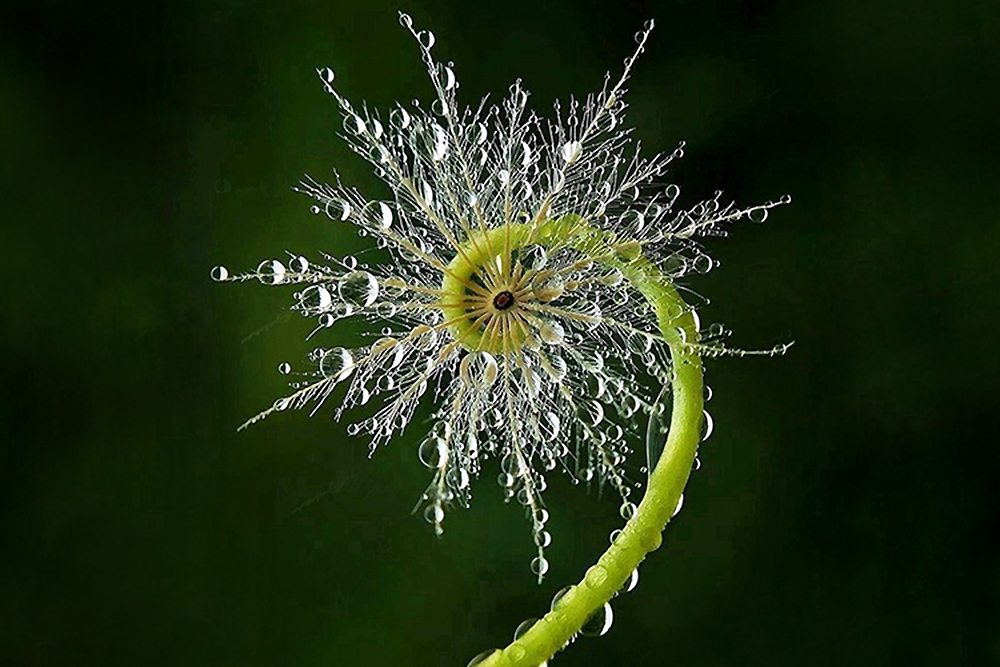
Coherence leaves a geometric signature. In seed heads and cones, the Fibonacci sequence expresses itself as counter-rotating spirals that maximize packing while minimizing overlap, shading, and turbulence. That efficiency is why phyllotaxis angles hover near the golden angle—about 137.5°. New elements land where they least interfere with older ones, keeping pathways for light, air, and metabolites clear. Geometry here isn’t an aesthetic afterthought; it’s a survival algorithm tuned by flow. For a deeper primer, see The Golden Ratio: Phi, Spiral of Becoming.
The same logic extends across scales as fractals. Leaf venation, river basins, lightning, bronchial trees, and mycelial webs all reuse branching rules that conserve energy and surface area. Fractality distributes load and information with minimal cost, so coherence can persist despite size changes and environmental stress. A forest’s vascular map and a watershed’s dendrites echo each other because both are answering the same question: how do we move a lot with very little loss? Explore this resonance in Fractals & Fibonacci: Nature’s Blueprint.
From a field-physics perspective, phi spirals and fractal branching are phase-management tools. Spirals de-sync neighbors just enough to reduce destructive interference; branching splits flows into thinner, slower streams that maintain contact with surfaces where exchange occurs. Both strategies preserve signal and reduce entropy production. In other words, geometry is nature’s way of holding a tune as energy changes form—exactly what our coherence lens adds to E = mc².
These visible patterns mirror your Signature Series work that steps from Platonic symmetries to higher-order lattices. For readers following that thread, see the pathway in Platonic → E8 Morphology Ladder and the E8 Lattice feature, then return to the Nature Code for how these forms behave in living fields.
The Camera & the Photon: Fieldwork as a Coherence Meter
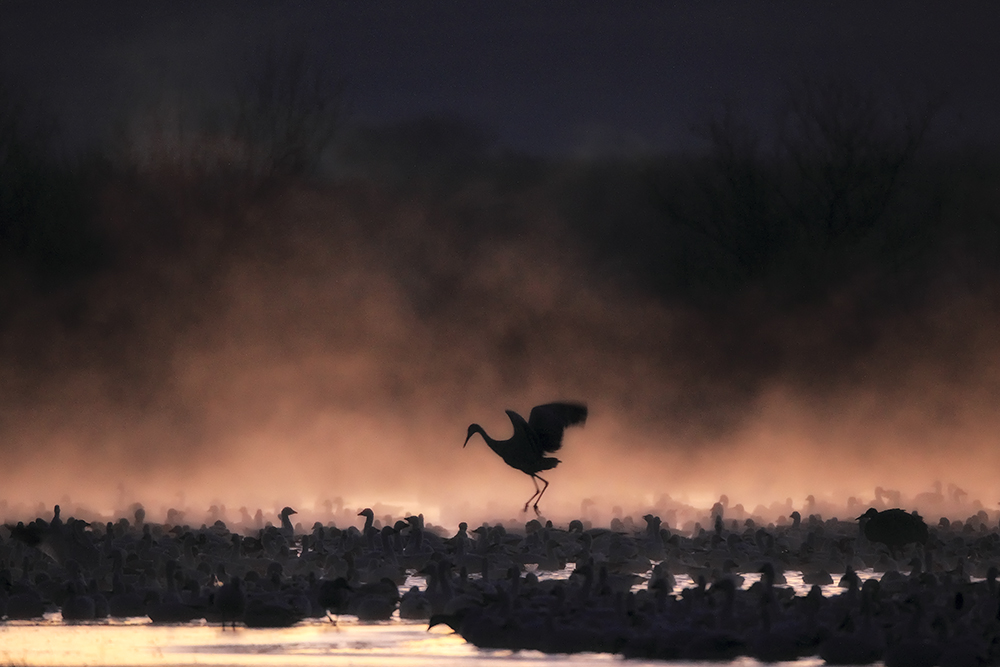
A photograph is a measurement of coherence. In the pre-dawn quiet, humidity shapes the air into a soft waveguide, mist reveals the vector of light, and a Sandhill Crane rises exactly where angle and behavior align. What looks like luck is phase alignment: the polarization of first light, the bird’s habitual launch corridor, and your position resolving into a low-loss path for photons to enter the lens. In that instant, the scene organizes itself—and the shutter simply acknowledges it.
Fieldcraft is the art of listening to the medium. You watch wind shear on the water, read thermals, track flock tension, and stack these cues against sun azimuth and background tonality. Exposure isn’t just a histogram—it’s an agreement between light and subject about how much structure the moment can hold. When coherence peaks, micro-contrast lifts and edges breathe; when it breaks, highlights chatter and the scene scatters into noise. These are the signatures you learn to recognize in the Landscape Gallery and in your own field notes.
Technically, you’re managing time as much as light: a shutter fast enough to freeze the lift, yet long enough to allow the mist to write its calligraphy; an aperture that holds feather detail while letting the background dissolve; ISO kept in the range where the sensor’s own noise doesn’t drown the music. Philosophically, you’re practicing restraint—letting the field declare the composition. For a deeper look at this philosophy, see Captured Light and Photon Stories.
Images like this remind us that E = mc² is visible if we learn where to stand. The crane’s body is stored sunlight; the mist is water holding memory; the moment is mycelium and marsh routing that memory through a living corridor. When the field coheres, the camera becomes a tuning fork. Explore this subject as a fine-art print here: Sandhill Crane, and for more on light’s journey through nature, visit Photon’s Journey.
Coherence Squared: An Interpretive Lens on c²
In physics, c is the speed of light; in experience, what we witness is how well a medium preserves a wave’s phase information. The diagram above reframes this: coherence squared is not a new constant but a practical lens for how electromagnetic energy stabilizes as form. When waves maintain stable relationships, they can build enduring patterns—exactly what living systems need to convert fleeting photons into long-lived structure.
Panel A shows the classic: two waves meet, and their phase determines whether they reinforce or cancel. Panel B translates the same idea into ecology. Structured water at the interface with a fungal hypha phase-matches the handoff: charge, timing, and chemical potential are transferred into a low-loss conduit. The hypha then routes that information where it is most needed, similar to a fiber that keeps signal shape intact over distance.
This is where geometry and biology meet the equation. In leaves, phi spirals reduce destructive interference; in soil, water films around hyphae allow exchanges to proceed without scrambling phase; in organisms, vascular and neural fractals move information efficiently across scale. Coherence becomes the silent engineer that keeps E = mc² operational in the wild—allowing energy to arrive as order rather than heat.
For readers who want to connect this lens back to first principles, see your conceptual path in Bridging Worlds: Nature Photography & Unified Field, the living synthesis in Unified Living Field Theory of Resonance, and the water foundation in Water — The Great Informant of Nature.
Ecology as a Closed Resonance Loop
The loop is simple and complete: Photon → Plant → Animal → Mycelium → Water → Photon. Sunlight arrives as the impulse; plants phase-match that impulse into sugars and structure; animals translate stored light into motion and perception; mycelium returns that structure to the commons; water preserves and routes the pattern so the next sunrise can build on yesterday’s memory. Rather than a straight line from energy to entropy, living systems draw a circle—coherence keeps the circle tight.
In this lens, matter is light at rest, and “decay” is light in redistribution. What seems like loss is actually a handoff of organization: sugars become stride; stride becomes heat and sound; tissues become soil metabolites; signals become timing cues; and water keeps the ledger balanced between episodes. The loop is resilient because each phase supports the next with the least waste possible—geometry and partnership doing the heavy lifting behind the scenes.
Seasonality is the macro-meter of this loop. Bud to leaf, flower to seed, rut to wintering grounds, litterfall to hyphal bloom—each phase is a modulation of the same melody. You can read it in spiral counts of seed heads, in herd movement maps, and in the branching veins of watersheds. For a visual primer on these repeating forms, explore Fractals & Fibonacci and Photon’s Journey.
This closed loop explains why regenerative systems outperform extractive ones: they keep the handoffs intact. Water retains memory, soil retains structure, mycelium retains routing, and communities retain diversity—the four pillars of a low-loss cycle. We’ll ground this in practice next, where the loop becomes food you can taste and resilience you can measure.
Regenerative Farming: Coherence You Can Eat
Regenerative farming works because it keeps the E → m → c² → return loop intact. Sunlight enters as photosynthesis; plants pay a portion of those sugars out through root exudates to “hire” microbial guilds and mycorrhizae. In exchange, fungi and bacteria unlock minerals, extend the root’s reach, and condition the soil so that water and nutrients move with minimal loss. Coherence is preserved at every step, so energy arrives as order, not waste. See the systems view in Quantum Agriculture.
The visible outcomes are structural. Living roots and fungal threads knit particles into aggregates, creating pores that breathe (air) and drink (water). Infiltration rises, runoff drops, and droughts bend instead of break the crop. Because the medium holds phase—water films, hyphal routing, stable microclimates—plants can move resources without scrambling signals. This is the soil community acting as “the lungs of our planet,” explored in The Soil Microbiome.
Practices that protect coherence are straightforward: minimal till, diverse cover crops, living roots year-round, adaptive grazing that mimics herd movement, hedgerows and windbreaks, and fungal-friendly mulches. These choices preserve water structure, root-hypha partnerships, and microbial communication. In turn, **Brix** (a proxy for nutrient density) rises, shelf-life improves, and plants weather heat, frost, and pests with less external input. For the health continuum, see From Soil to Wellness.
In this light, regenerative agriculture is Einstein’s equation made fertile. Energy becomes matter through plant coherence; matter becomes intelligent through soil coherence; and decomposition returns pattern to the field for the next sunrise. The result is food that carries the geometry of its making—flavor, density, and resilience you can feel. Explore field applications in Polarity & Regenerative Farming and broader stewardship in Earth Care & Stewardship.
Author’s Reflection: Hearing the Music of the Equations
“Every equation has a melody. I simply try to hear what nature is already playing.”
I stand on the shoulders of giants—physicists, biologists, and naturalists who mapped the notes. My work is to listen for the music those notes make in the wild: sunlight phrased into leaves, migration written in the air, and mycelium composing the return. I think of myself less as a theorist and more as a composer of coherence, translating what equations imply into what ecosystems perform.
The camera helps me hear. In fog and first light I watch how geometry lowers loss, how water remembers, and how soil routes. Images become field notes for a living field theory of resonance, each photograph a measure of phase alignment. It is the same thread that runs through Water — The Great Informant of Nature and the Nature Code work.
I also try to keep the bridge testable. Diagrams are invitations: follow the signal from photon to plant, plant to animal, animal to mycelium, and back into water’s ledger. Wherever we can measure low-loss flow, phase retention, or improved resilience, we’re closing the distance between mathematics and meadow. That’s the spirit behind this piece.
If this resonates, you can explore more of the framework in Unified Field Theory and the broader Signature Series, or join me in Insights & Stories as we keep listening—one field note at a time.
When Two Fields Merge, a Third Is Born
Coherence often emerges where fields overlap: water’s memory field meeting mycelium’s routing field, light’s velocity meeting geometry’s restraint. The result is a third behavior—organization—that neither field achieves alone. This is the heartbeat behind our lens on E = mc² in ecosystems.
In practice, this “third field” shows up as low-loss pathways: phi spirals that diffuse interference, branching fractals that distribute load, and soil films that preserve phase at interfaces. It’s why water and mycelium together accomplish what neither can alone—turning decay into design and timing into growth.
Keep this merger in mind as we shift from theory to practice: the more our choices invite fields to cooperate (in agriculture, restoration, or daily rhythms), the more the third thing appears—resilience. That’s the practical completion of Einstein’s most famous equation in a living world.
See Light Become Form — Then Bring It Home
If this lens on E = mc² resonates, explore the images where coherence is most visible—mist, migration, seed spirals, and the quiet of first light. Or keep reading to follow the science, geometry, and field notes that inspired this piece.
Collect the Work
Keep Learning
Prefer to start with tools? Visit the Field Tools hub, then circle back to the blog to continue the series.

About the Author — Robbie George
Robbie George is a National Geographic–published photographer and resonant naturalist. His work bridges fine-art image-making with field philosophy and regenerative practice—what he frames as living with nature’s philosophy. From kitchen-table conversations with pioneers of stewardship to blue-hour fieldcraft, Robbie’s lens centers relationship, rhythm, and reciprocity.
When he isn’t writing or printing, you’ll find him paddling quiet water, timing images to wind and light—attention first, image second. His studio practice favors durable materials, local framing partners, and prints placed with intention. For more essays and notes from the field, visit Insights & Stories.
“The shutter is the period at the end of a sentence you learned by walking.”
Frequently Asked Questions
1) Are you changing Einstein’s equation?
No. E = mc² stands. What we’re adding is an interpretive lens for how ecosystems realize the identity: coherence (phase alignment) in natural media like water and mycelium lets energy stabilize as form with minimal loss. Think of it as moving from arithmetic to orchestration—how the same notes become a living symphony. See the field context in Bridging Worlds and Unified Living Field Theory of Resonance.
2) How do water and mycelium “carry information”?
Water forms hydrogen-bond networks that can transiently store vibrational pattern, while thin water films around soil particles and hyphae shuttle solutes, protons, and signaling molecules. Mycelium conducts electrical and chemical signals along hyphal networks, routing nutrients and timing cues toward plant roots. The duet preserves phase long enough for exchanges to complete. Start with Water — The Great Informant of Nature and The Wood-Wide Web.
3) Why do Fibonacci spirals and fractals matter here?
They’re low-loss flow geometries. Phi spirals reduce interference and shading in crowded spaces (seed heads, cones), while fractal branching distributes load and maximizes exchange surface (leaves, rivers, mycelium, lungs). Both are nature’s way of “holding a tune” as energy changes form. Dive deeper in Fractals & Fibonacci and Golden Ratio — Phi.
4) What’s the role of death in this model?
Death is redistribution. Mycelium and microbial guilds disassemble tissues and route nutrients, water, and timing cues back into circulation. Matter becomes “light at rest” again—pattern ready for the next sunrise. This is why diverse, fungal-forward soils feel resilient. See The Soil Microbiome — The Lungs of Our Planet.
5) Is this just a metaphor—or is it testable in the field?
It’s testable. In regenerative systems, you can track coherence through water infiltration, aggregate stability, Brix (nutrient density), soil respiration, and biological diversity. On the light side, watch micro-contrast and edge behavior at dawn. The hypothesis: where phase is preserved (water structure, hyphal routing, fractal geometry), systems show lower loss and higher resilience. Connect theory to practice in Quantum Agriculture and Polarity & Regenerative Farming.