
The Bear Is the Universe: A Living Unified Field Theory
The Bear Is the Universe — A Living Unified Field in Fur, Breath & Winter Light
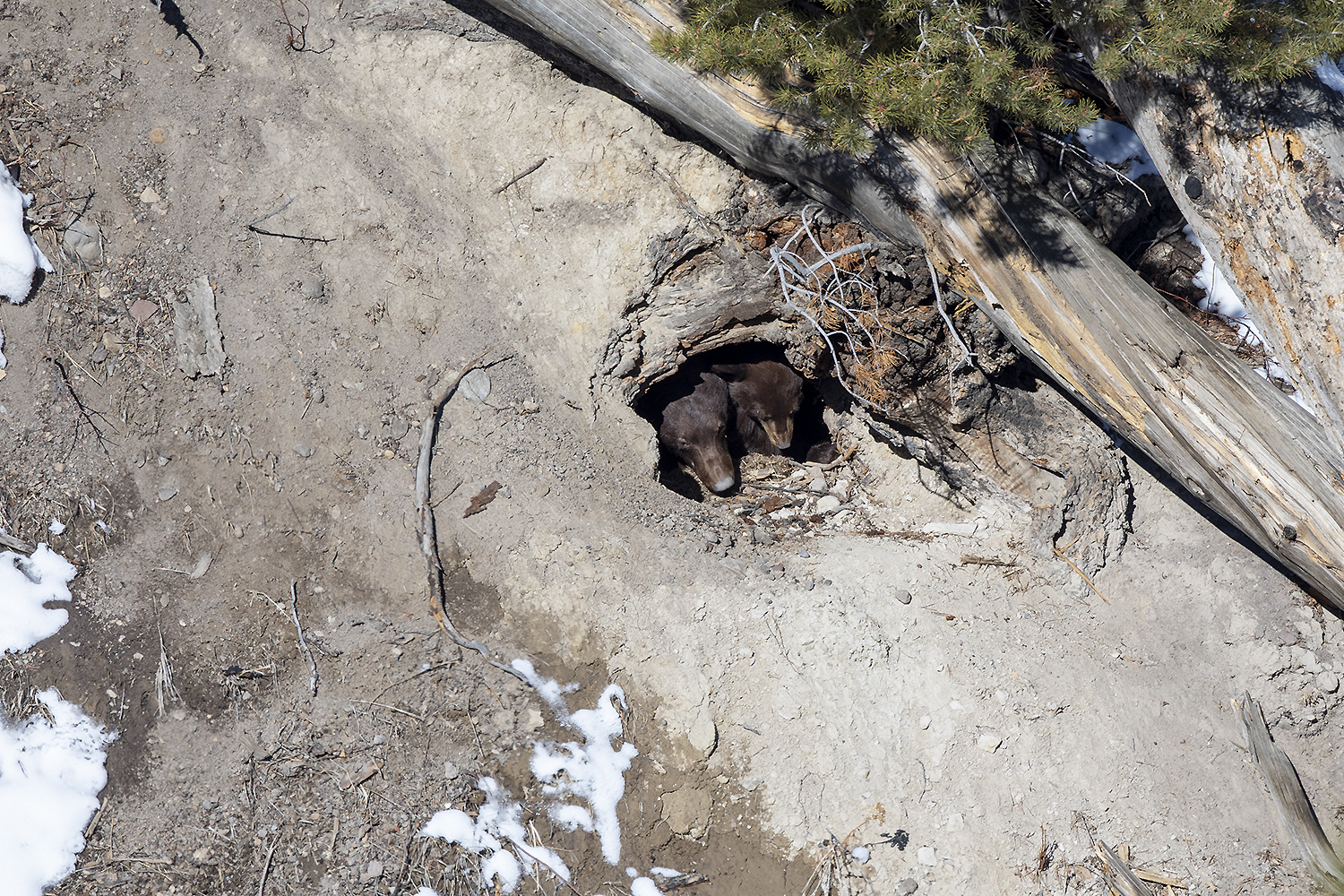
My son and I had known about this bear den for days. It sat tucked beneath a fallen tree near a roadside overlook in Yellowstone — one of those special places where generations of bears have overwintered. Each time we stopped, we peered over the edge hoping to catch a glimpse of activity, but the den remained silent. At fifteen, my son’s patience was thinning. The cold didn’t help.
Finally, shivering at the overlook, I told him, “Let’s go warm up in the car.” And then — without thinking, without logic, without even knowing why — I said, “Let’s come back out at 12:31. The bear should appear.” I pulled that number out of thin air. And the part that still gets me? My son believed me. He held that time like it meant something, as if I had access to information he didn’t.
At 12:31 exactly, we walked back to the edge of the overlook. We leaned over the rim together. And right then — at the precise second that slipped from my mouth earlier — the mother bear’s head appeared in the entrance of the den. Moments later, her cubs followed her into the world. It was a perfect emergence, as if the landscape had agreed to meet us at a time neither of us had any reason to expect.
This wasn’t prediction — it was coherence. The timing, the cold, my son’s trust, the den’s ancient rhythm — it all aligned into one living moment that felt exactly like the recursive universe described in my Grand Compression, Two Paths, and Recursive Breath trilogy.
“The bear didn’t symbolize the field—she embodied it.” — Robbie George
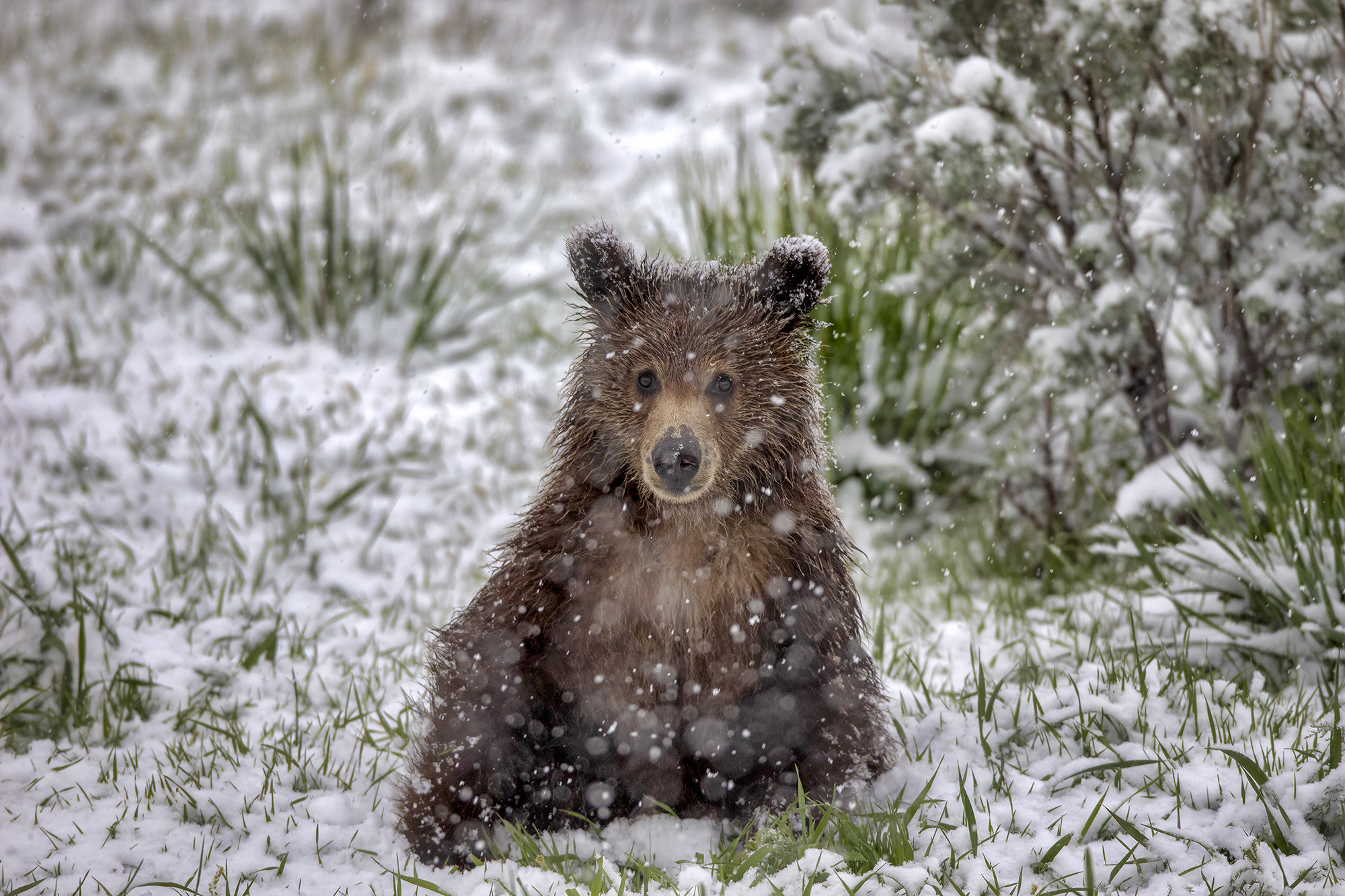
Hibernation, stillness, and emergence — the recursive breath of the bear.
Fine art print: Grizzly Bear Cub →
Bears as Recursion Engines
Bears live in cycles so precise, so patterned, that they embody recursion better than any equation ever could. Their lives follow a repeating arc: feed → den → hibernate → give birth → emerge → repeat. This loop doesn’t simply describe their biology — it mirrors the very engine of the universe described in my Recursion vs. Equations essay.
In winter, the bear collapses inward. Its body enters a state of deep stillness — a biological “compression.” Heart rate slows. Temperature drops. Movement ceases. It’s the animal kingdom’s most elegant expression of the Grand Compression itself.
Then, in spring, everything reverses. Emergence becomes the outward breath — decompression, expansion, motion. The cubs stumble into sunlight carrying the memory of every bear that came before them. Recursion isn’t just a pattern they follow — it’s a pattern they are.
Watching a bear’s year is like watching the universe inhale and exhale. Every den is a seed state. Every emergence is a new iteration. And every cub is an expression of compressed ancestral data — a living loop encoded with tens of thousands of years of recursion.
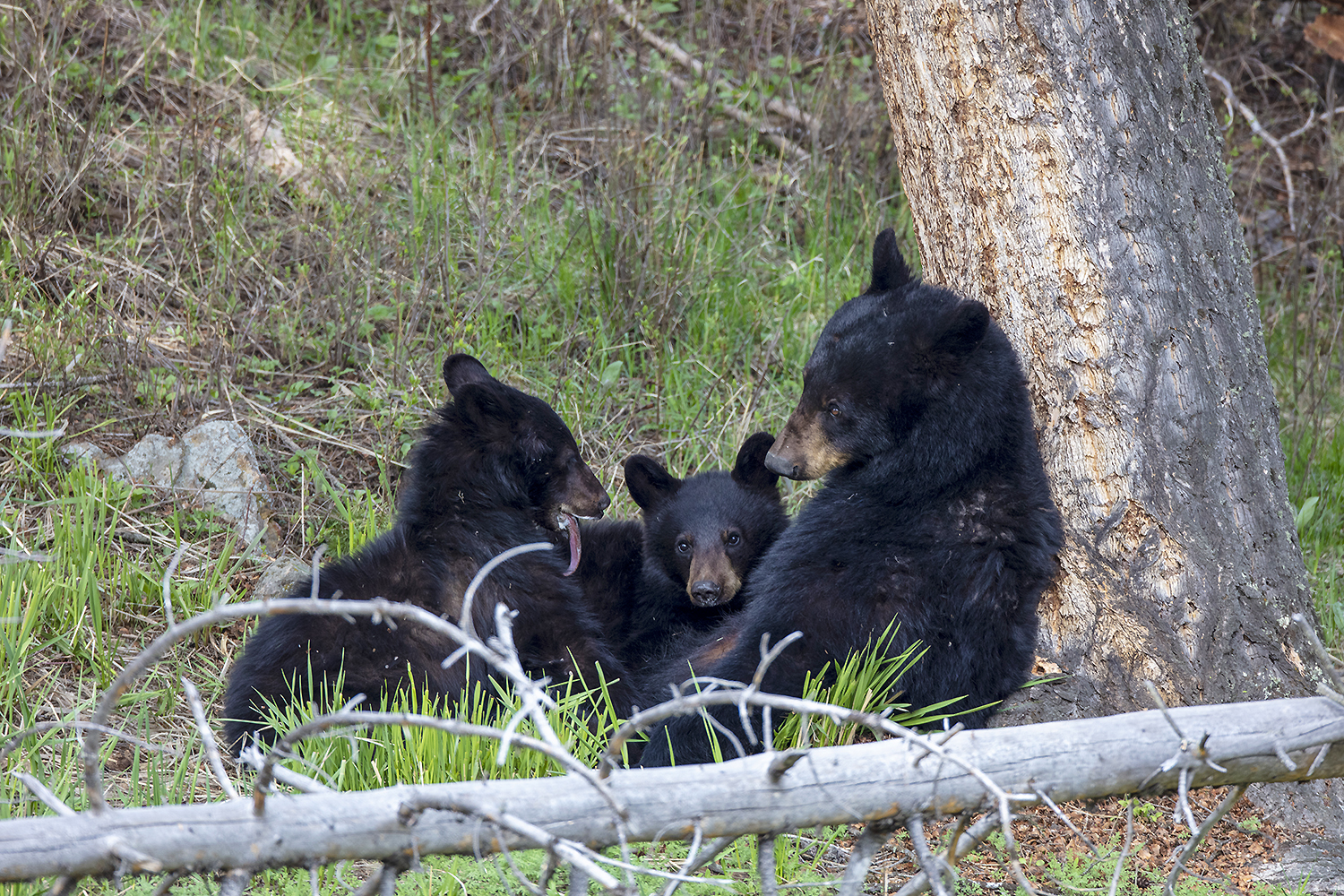
Birth inside stillness — compressed, warm, and hidden from the world.
Pregnancy as Cosmic Compression
Most people don’t realize this: bear cubs are born in the deepest part of winter — in complete darkness, inside the stillest chamber nature has ever designed. While the mother sleeps in a slowed metabolic dream state, life begins inside a pocket of earth, heat, and silence. Birth doesn’t happen in the open; it happens at the very center of compression.
A bear den is more than shelter — it is a biological black hole. A gravity well. A warm, resonant cavity where the universe plays its oldest song: compress, condense, breathe inward, generate new form. It’s the same seed-state described in The Grand Compression , where everything contracts into potential before expanding into expression.
Inside that den, bear cubs experience the world as vibration and warmth. Their earliest memories are not visual — they are resonant. Sound. Breath. Contact. The pulse of their mother’s body acting as their first field. Long before they ever see sunlight, they are learning the universe the way all life first does: through compression, coherence, and ancestral pattern.
When I look at bear cubs emerging from these chambers, I don’t just see wildlife — I see the same recursive breath described in Recursive Breath . A den is the universe’s first inhale. Spring is its exhale.
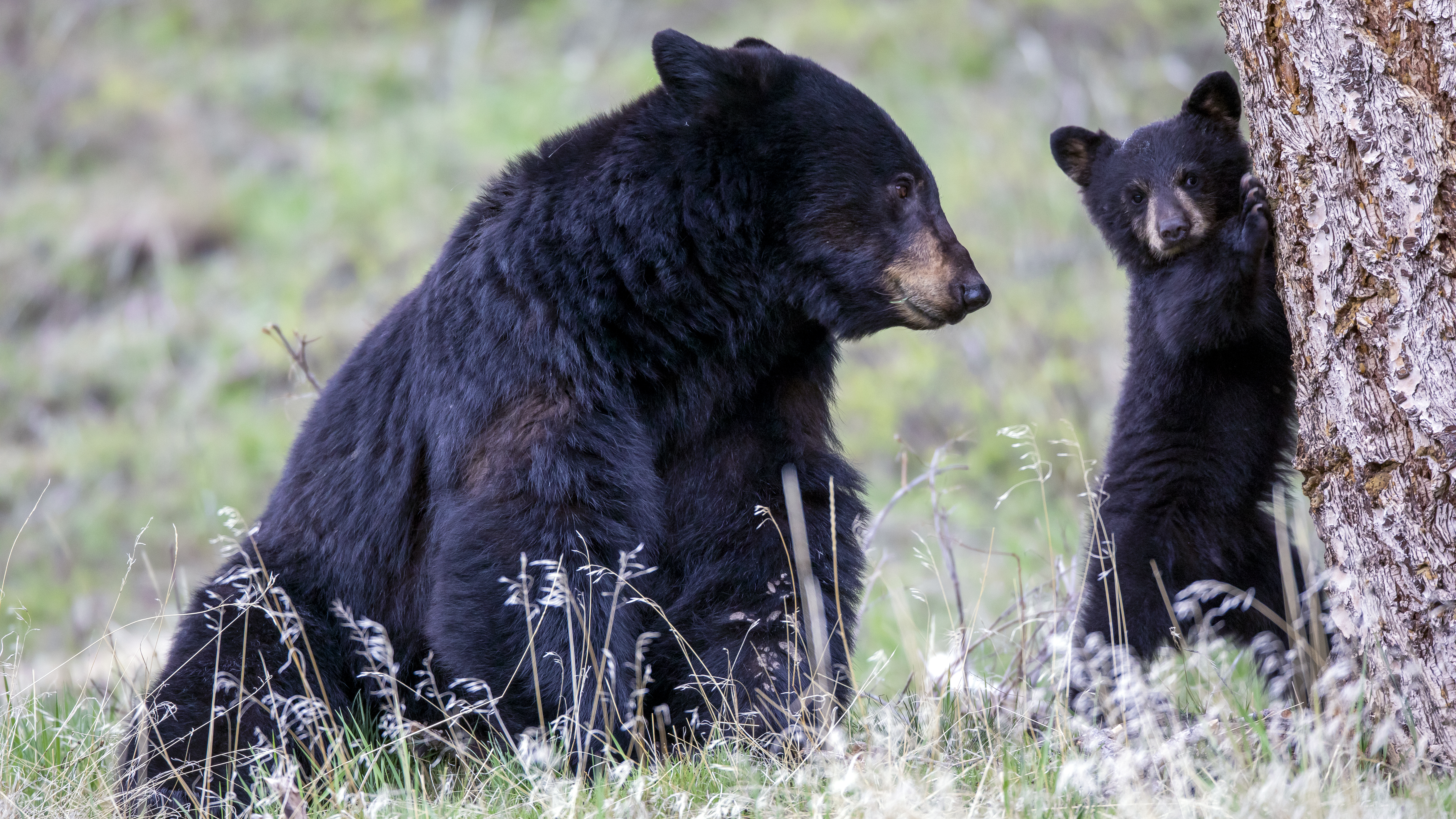
From compression to sunlight — the universe taking its first spring breath through a mother and her cub.
Fine art print: Mama Bear and Cub →
The Spring Emergence: Decompression Into Light
After months of darkness and dreamlike stillness, there is a day when the den can no longer contain the story. The air softens. Snow recedes from the entrances. Light begins to reach deeper into the hollow. And then, in what feels like one continuous exhale, the bear steps out — followed by the cubs who have only ever known the world as warmth and heartbeat.
Their first contact with sunlight is not just cute; it is decompression made visible. Every photon that touches their fur has traveled billions of years across the cosmos, bounced through the photon field, and now arrives as warmth, guidance, and orientation. The universe, which once compressed them into a den-sized seed state, is now expanding them into a meadow of smell, texture, and motion.
Watch a cub wobble through fresh grass and you can almost see the equations relax. The tension of winter’s compression dissolves into play. Running, climbing, wrestling — every movement is the body’s way of updating its relationship with the field. Ancestors, soil microbes, plant roots, insects, and the bear’s own lineage all meet in this high-frequency moment of contact. Decompression is not chaos; it is stored pattern finding expression.
This is why I see spring not just as a season, but as a phase change in the unified field. The same dynamics I write about in Unified Field Theory and the Soil Microbiome entry are right here: compressed energy releasing into form, information flowing from den to landscape, and life re-negotiating its place in a living, responsive field.
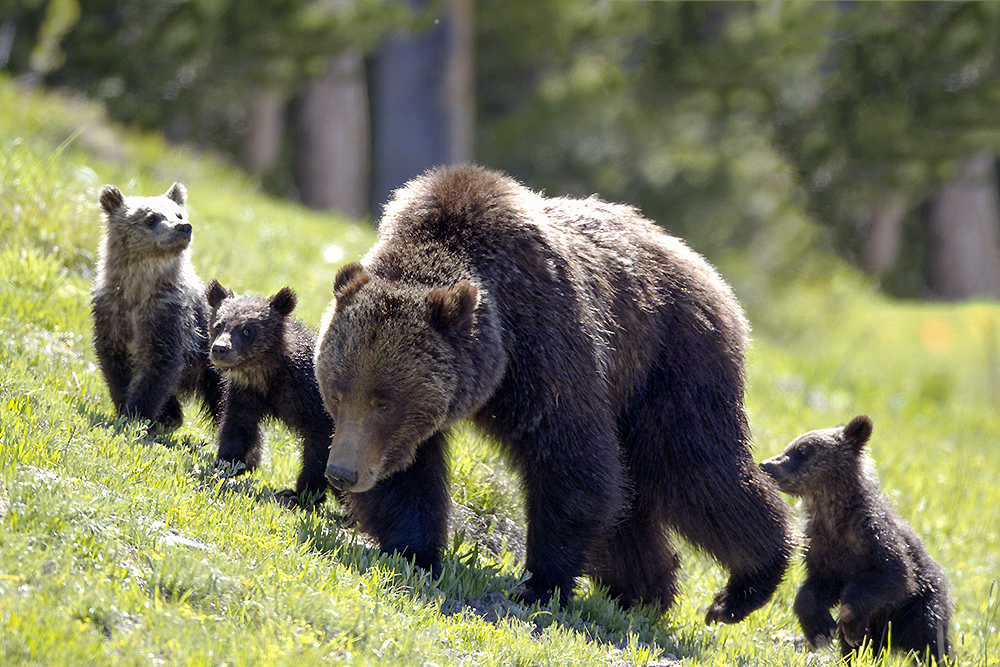
The bear reads the land the way the universe reads itself — through vibration, memory, and timing.
Bears as Universe-Level Communicators
To watch a bear move through the forest is to watch a being in constant dialogue with the land. They don’t simply walk; they listen to gradients of scent, shifts in pressure, distant vibrations, and the quiet memory held in roots and berries. Their bodies are tuned to the same recursive rhythms described in Vibration and Resonance.
Each step a bear takes is an act of reading the field — a kind of biological fieldcraft that links soil microbes, berry patches, river corridors, and ancestral memory. Bears inherit routes the way stars inherit orbits. These are not “learned behaviors” in the traditional sense; they are compressed ancestral data, expressed the moment the bear encounters spring light, scent, and landscape geometry.
When a bear follows a berry cycle, it is following a timeline encoded by sun, water, soil, microbes, and plants. The landscape stores information, and bears retrieve it through movement and scent — much like the Mycelial Networks retrieve and distribute memory across the forest floor. Bears are not separate from this system; they are the mobile limb of the field itself.
This is why I see bears as recursion nodes. Their cycles of hibernation, emergence, feeding, and denning mirror the compression–expansion dynamics of the universe. Their presence encodes patterns; their movement updates them. And each year, as they trace familiar loops through forest and meadow, the field breathes through them — a living form of Unified Field intelligence.
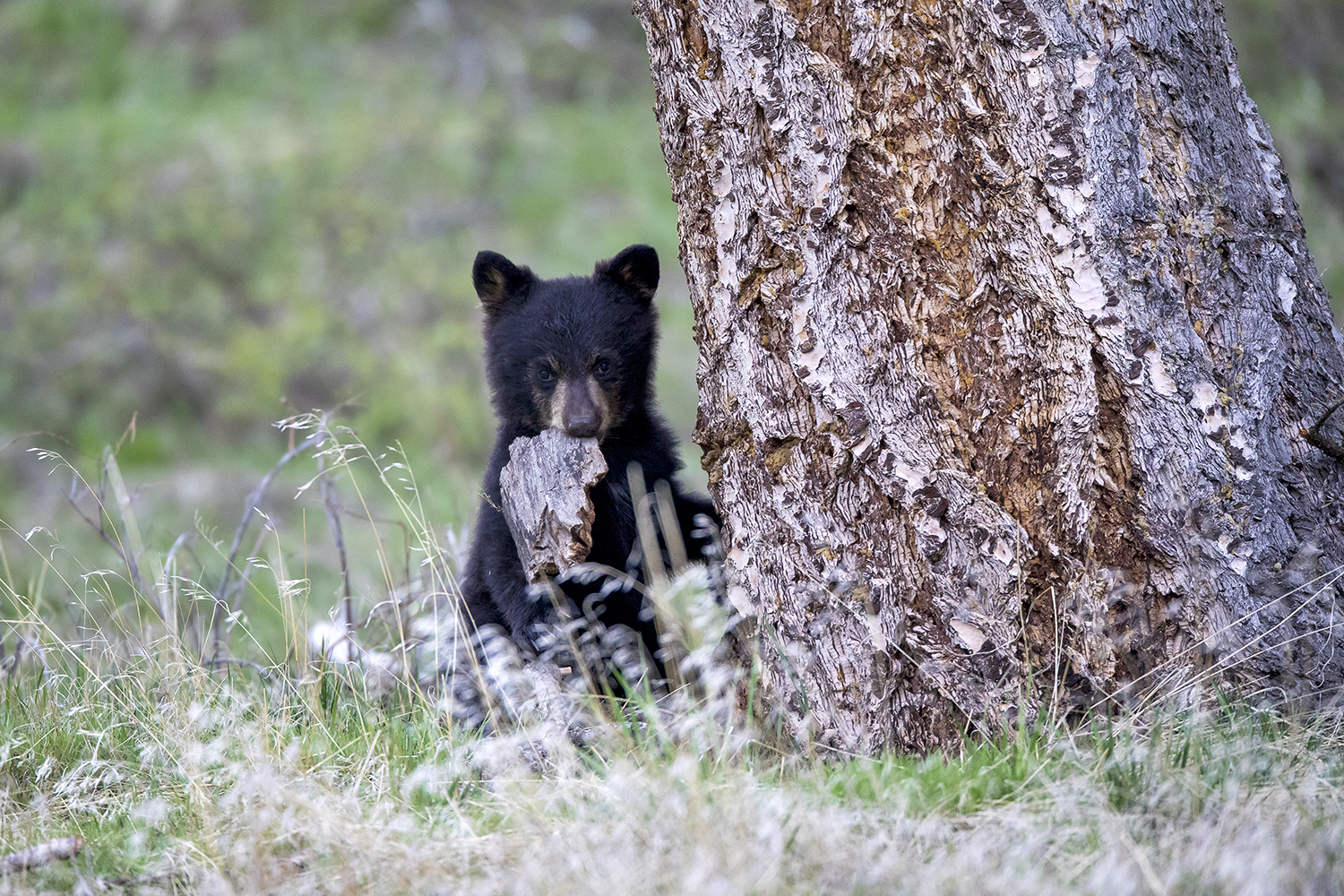
The instant possibility becomes reality — the field choosing a moment to reveal itself.
Fine art print: Bear Cub →
The Moment My Son and I Collapsed the Wave
The most unforgettable part of this encounter wasn’t the bear — it was the timing. Standing at the safe overlook, with my son beside me, I felt a quiet thought drift in: “At 12:31, we’ll check again.” Not intuition, not a guess — more like a message carried on the field itself.
At 12:31 on the dot, the mother bear appeared. Then a cub. Then another. It wasn’t prediction — it was alignment. A moment where attention, landscape, biology, and timing synced into one coherent breath. In physics, this is the instant a probability wave becomes a lived reality. In field ecology, it is the moment when awareness and environment become indistinguishable.
What happened that day mirrors the concepts behind Recursive Breath. The bears held the stored amplitude — potential, timing, emergence. My son and I provided attention — the tuning fork. The field provided coherence — the bridge between possibility and expression. When those three aligned, the moment unfolded exactly as it needed to.
Years later, I would realize this was one of the first “proofs” of what I now share in the Grand Compression and Unified Field Theory pages: the universe doesn’t wait to reveal itself — it waits for coherence. And when that coherence is shared between parent and child, wilderness and watcher, timing and pattern, the experience becomes unforgettable.
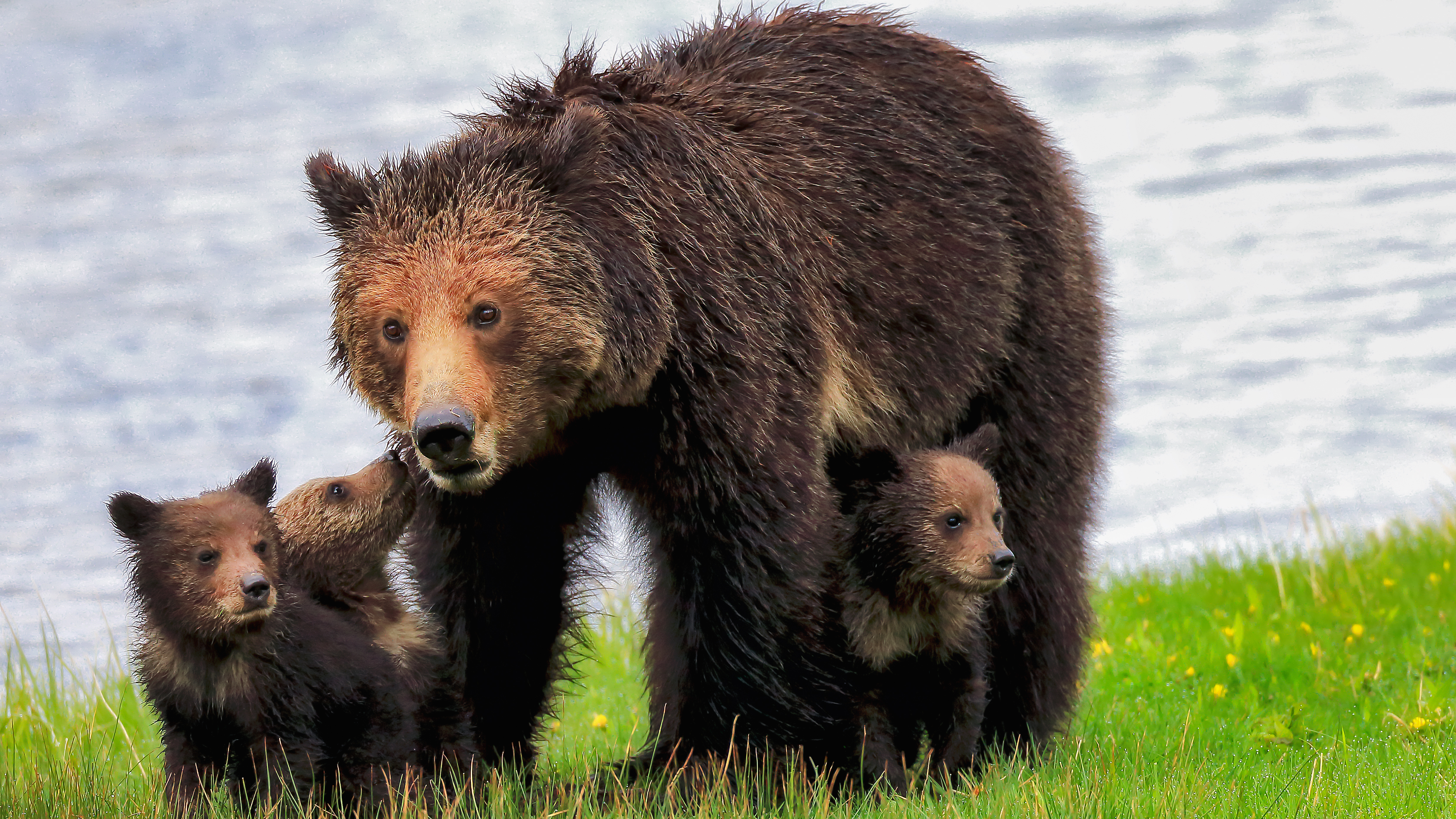
The universe emerging through a mother and her young, each step a memory of ancestors and seasons.
Fine art print: Grizzly Bear With Cubs →
What the Bear Taught Me About the Universe
As the bears moved out of the den and into the soft spring light, I felt something I had sensed my entire life but had never named: the bear wasn’t in the universe — she was expressing it. Her body, her timing, her cubs, her routes, her emergence — all of it followed the same recursive physics I had been trying to articulate in the Signature Series.
The den was compression. The emergence was decompression. The yearly cycle was recursion. The coherent timing was field memory. And the presence of my son beside me — sharing attention, wonder, and stillness — was the final ingredient needed for the field to reveal itself. It was a complete demonstration of the dynamics explored in the Grand Compression and Unified Field Theory entries.
Bears move through the land as living recursion engines — updating the forest’s memory as much as they inherit it. Their hibernation is not simply sleep; it is the universe collapsing into stillness. Their spring emergence is not simply waking; it is the universe exhaling through muscle, fur, soil, and breath. Watching them is like watching the cosmos become aware of itself through motion.
When the bears disappeared back into the timber, I realized they had shown me something no theory, equation, or book ever could: the universe is not an abstract idea — it is alive, recursive, embodied, and right in front of us. We don’t study it. We witness it. And sometimes, if we’re lucky, it steps out of a den at the exact second we’re ready to see it.
Explore the Field Further
Moments like this — where timing, intuition, landscape, and biology align — reveal the deeper architecture of nature’s intelligence. Continue exploring the unified field, recursion, and the Grand Compression through the links below.
Related field-intelligence essays:
- Living Schumann Resonance
- Scent of Resonance
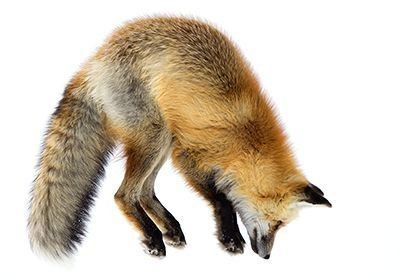
- The Fox & The Trees Field-Memory Story
- Mycelial Networks
“The bear does not symbolize the universe. She expresses it — breath by breath, season by season, life by life.”
⚖️ Robbie’s Razor & The Grand Compression
This piece lives inside the wider Grand Compression Cosmology, where every pattern is evaluated using Robbie’s Razor:
“When competing explanations exist, prefer the model that follows compression → expression → memory → recursion.”
About the Author
Robbie George is a National Geographic–published photographer, writer, and resonant naturalist. His work follows the quiet edges of places like Yellowstone, the Maine coast, and high mountain valleys—where wildlife, light, and field memory converge into what he calls a living unified field.
The bear story in this essay is part of Robbie’s broader exploration of the Grand Compression and Unified Field Theory—a trilogy and Signature Series that weave together recursion, soil, light, animals, and consciousness. His fine-art prints and essays are collected worldwide for their calm realism and deep connection to season, place, and pattern.
To explore more of this work, visit the Signature Series hub or start your own collection through the Collectors gallery of museum-quality fine art prints.
“Attention first, image second. The shutter is the period at the end of a sentence the field has been writing through you for years.”
Frequently Asked Questions
1. What do you mean by “The Bear Is the Universe”?
I’m not saying the bear literally is the entire universe. I’m saying the bear’s life cycle is a direct expression of the same patterns that shape the cosmos: compression, stillness, emergence, recursion, and field memory. The den mirrors a seed state or gravity well. Spring emergence mirrors expansion. The yearly cycle mirrors the recursive breath I explore in the Grand Compression trilogy and Unified Field Theory pages.
2. Was the 12:31 timing just a coincidence?
You could call it coincidence, but the timing felt more like coherence. The bears were already moving inside the den, the landscape was already shifting toward spring, and my awareness locked onto a moment when all those patterns would intersect. In the language of the trilogy, it was a slack-tide instant when stored probability became lived experience — what I describe as Recursive Breath in action.
3. How does bear hibernation relate to the Grand Compression?
Hibernation is one of nature’s purest examples of compression. The bear slows its metabolism, reduces movement, and enters a state of deep stillness in a dark, enclosed space. Cubs are often born in that compressed environment. It’s the biological equivalent of a seed state or a black hole’s interior — the same dynamic I write about in the Grand Compression, where experience collapses inward before expanding into a new expression in spring.
4. Is this meant to be scientific, spiritual, or both?
My work sits at the bridge between ecology, physics, and lived experience. I draw from biology (hibernation, denning, behavior), field ecology, and pattern-based thinking from physics, then layer in the kind of intuitive, relational understanding that many Indigenous and land-based cultures have carried for generations. The goal isn’t to replace science or spirituality, but to show that both can point to the same recursive, living field.
5. How can I experience this kind of “field coherence” with wildlife ethically and safely?
The most important rule is respect and distance. Always follow local regulations and guidelines around bears and other wildlife, use long lenses, and let animals set the terms of the encounter. Field coherence doesn’t require getting closer — it requires getting quieter. I share more about ethical practices in my Ethical Wildlife Photography Fieldcraft Playbook , which is built on safety, calm presence, and respect for the animals’ field, not just the photograph.
6. Where can I read more of your bear and Yellowstone work?
If this story resonated with you, I recommend my bear- and Yellowstone-focused pieces, including Grizzly Bear: Exploring Ursus arctos horribilis , my Yellowstone Grizzly Bear guide , and the broader Wildlife Photography gallery. Together they expand this story into a wider field of behavior, conservation, and unified field insight.