Machias Seal Island Seabird Wildlife System
Where ocean feeding cycles converge into nesting density and colony behavior
How to Use This Seabird Wildlife System
This is not a puffin viewing guide.
Machias Seal Island is an offshore seabird system where survival depends on compression—ocean feeding, nesting structure, colony density, and seasonal timing all converge into one highly concentrated environment.
This page is part of the larger Naturepedia system, and connects directly to the Seasonal Wildlife Calendar and Field Tools.
Instead of asking “Where are the puffins?”, the correct question is:
What species → what behavior → in what colony structure → under what ocean conditions → at what time?
This is a system driven by dependency:
- Ocean → food supply (fish availability and movement)
- Island → nesting structure (burrows, cliffs, ground density)
- Colony → compression (thousands of birds sharing limited space)
- Timing → survival (feeding cycles, breeding season, daylight windows)
Unlike inland or estuary systems, Machias is not driven by tides or water levels. It is driven by:
- Breeding season windows
- Feeding runs between ocean and colony
- Light cycles and visibility
- Ocean conditions and fish movement
You will use this page by following a system flow:
- Start with species (puffins, murres, razorbills, terns, gulls)
- Understand behavior (feeding runs, nesting, defense, flight patterns)
- Read the colony (density, spacing, interaction)
- Align timing (breeding cycles + daily feeding movement)
- Execute in the field (position, patience, ethical distance)
Machias is not random. It is a compressed, repeatable system—where ocean energy becomes visible as flight lines, feeding returns, and nesting behavior concentrated into one place.
Primary Species Signals at Machias Seal Island
Machias is best understood through seabird signals. Each species reveals a different layer of the offshore colony system: feeding pressure, nesting density, defense behavior, flight movement, and ocean dependency.
Atlantic Puffin
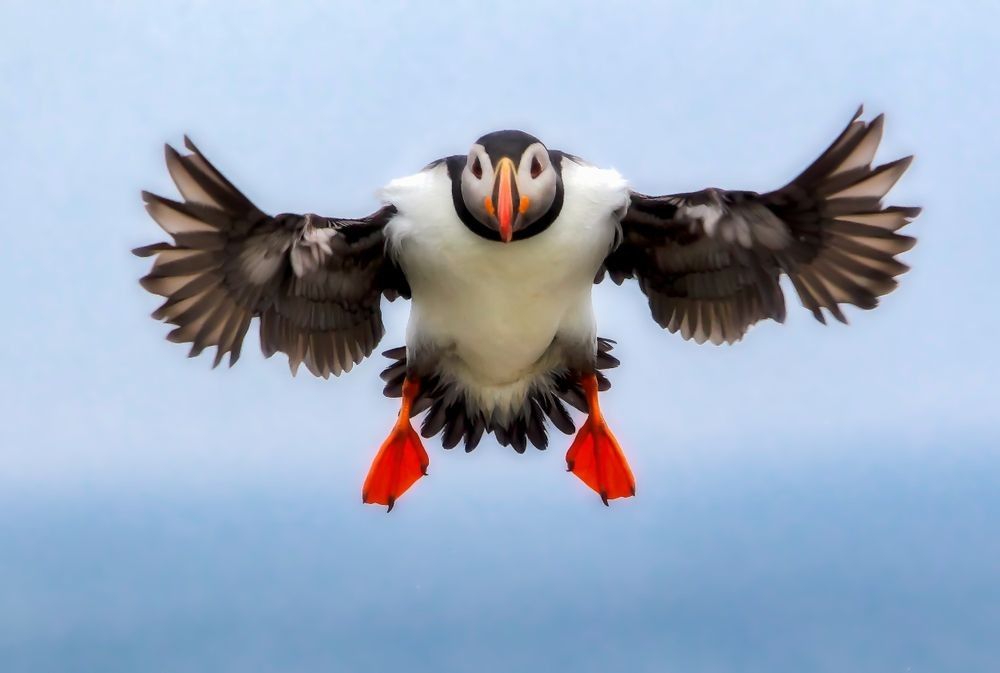
Behavior signal: burrow use, feeding returns, low flight lines, landing approach, bill-load delivery.
Timing window: strongest during breeding season when adults move repeatedly between ocean feeding grounds and nesting sites.
Field clue: watch flight approach angles, repeated landing routes, and food-carrying adults returning to burrow areas.
Razorbill
Behavior signal: cliff-edge posture, pair bonding, tight nesting structure, direct flight movement.
Timing window: strongest during nesting and chick-rearing periods when adults shift between ledges and ocean feeding routes.
Field clue: look for clean silhouettes, upright posture, and repeated movement along rocky nesting edges.
Common Murre
Behavior signal: dense colony structure, ledge nesting, group synchronization, vertical cliff compression.
Timing window: strongest when breeding activity concentrates adults into tight nesting zones.
Field clue: read density, spacing, posture, and how birds pack into limited cliff or rock surfaces.
Terns
Behavior signal: aerial defense, colony alarm response, diving aggression, fast directional flight.
Timing window: strongest during nesting and chick-defense periods when colony protection intensifies.
Field clue: watch alarm calls, flight agitation, and sudden defensive movements over nesting territory.
Gulls
Behavior signal: scavenging, opportunism, nest pressure, predator-scavenger overlap.
Timing window: visible throughout the breeding season, especially around food movement, eggs, chicks, and colony edges.
Field clue: watch edge zones where gulls patrol for openings created by disturbance, feeding, or unattended nests.
Field interpretation: puffins are the entry signal, but the colony is the real system. Machias works because many species compress into limited nesting space while depending on the surrounding ocean for food. Read the relationships first, then read the birds.
Habitat System: Island Structure and Ocean Interface
Machias Seal Island is not just land surrounded by water. It is a compression surface where nesting space, predator separation, ocean feeding access, and colony behavior all meet.
Burrow Zones
Puffins use burrow and ground-level nesting areas where the island surface provides concealment, structure, and protection. These zones are key to reading landing routes, food delivery, and repeated movement.
Rocky Edges
Rock edges and ledges create nesting pressure for species such as razorbills and murres. These areas reveal posture, spacing, density, and the physical limits of colony compression.
Open Colony Surface
The open colony surface concentrates movement, calls, alarm behavior, landing attempts, and social interaction. This is where density becomes visible as behavior.
Ocean Interface
The surrounding ocean is the feeding engine. Fish movement, surface conditions, distance from feeding grounds, and return flights all shape how the colony behaves on land.
Airspace Above the Colony
Machias must also be read vertically. Puffins, terns, gulls, murres, and razorbills move through layered airspace, creating flight lines between ocean, nesting zones, and defensive territories.
Predator-Reduced Isolation
Offshore isolation helps reduce some land-based predator pressure, allowing nesting density to build. That isolation is part of what makes the island function as a seabird compression system.
Habitat rule: do not treat Machias as a location alone. Treat it as an island-ocean interface. The strongest field understanding comes where burrows, cliffs, colony density, flight lines, and ocean feeding cycles overlap.
Machias Seal Island Timing Engine
Machias is not primarily a tide-driven field system. Its strongest rhythm comes from breeding season timing, ocean feeding runs, daylight cycles, colony pressure, and the repeated movement of seabirds between water and nest.
Seasonal Timing Patterns
Spring — Arrival & Nesting
Seabirds return to nesting areas, re-establish territories, pair bonds, burrow use, ledge spacing, and colony structure.
Summer — Feeding & Chick-Rearing
The system intensifies as adults make repeated ocean-feeding runs and return to nesting zones with food for young.
Late Summer — Departure Pressure
Colony activity shifts as chicks mature, adult movement changes, and the nesting cycle begins loosening from the island.
Fall & Winter — Ocean Dispersal
The island loses its nesting concentration while seabirds disperse into wider ocean systems beyond the colony surface.
Daily Movement Windows
- Early light: strong movement window as birds leave, return, reposition, and reactivate the colony.
- Midday: active feeding-run period, often revealing repeated ocean-to-island flight lines.
- Late light: strong for return movement, landing behavior, colony atmosphere, and directional flight.
Environmental Triggers
- Ocean conditions: wind, chop, fog, and feeding access influence flight behavior and return timing.
- Fish movement: food availability drives repeated feeding loops between open water and nesting sites.
- Light cycles: direction, brightness, and visibility change how flight lines and colony behavior can be read.
- Colony pressure: nesting density increases calls, defense, landing urgency, and social interaction.
Timing principle: Machias compresses seabird life into a narrow seasonal window. When breeding timing, ocean feeding, light, and colony density align, movement becomes predictable instead of random.
Movement & Flight: Ocean to Colony
At Machias, movement is the visible expression of the offshore system. Birds are constantly translating ocean feeding into colony survival through flight lines, landing patterns, defensive movement, and repeated feeding loops.
Movement Patterns to Watch
- Ocean-to-colony flight lines: repeated routes show where feeding runs connect back to nesting zones.
- Landing approaches: puffins often reveal predictable approach angles before dropping into colony structure.
- Feeding loops: adults move between open water and nest sites as the chick-rearing cycle intensifies.
- Colony density shifts: birds reposition, flush, settle, defend, and compress as pressure changes.
- Defensive airspace: terns and gulls reveal territorial tension through fast aerial movement and alarm behavior.
What Movement Reveals
- Food pressure: repeated returns can signal active feeding conditions offshore.
- Nesting urgency: bill-load deliveries and direct routes reveal adults supporting young.
- Colony stress: sudden lift-offs, alarm calls, or defensive diving indicate disturbance or threat response.
- Territory structure: repeated perches, ledges, and landing zones show how limited space is divided.
Field Application
The goal is not to follow birds randomly through the frame. The goal is to read repeated movement and position where behavior is already likely to happen.
- Watch the same flight corridor long enough to identify repetition.
- Study where birds slow, turn, drop, or commit to landing.
- Look for food-carrying adults returning from ocean feeding runs.
- Use colony sound, direction changes, and alarm behavior as early signals.
- Stay patient — flight patterns often become clearer after repeated observation.
Movement principle: Machias is written in flight lines. Ocean feeding becomes visible through repeated returns, landing patterns, colony spacing, and the constant movement between water and nest.
Machias Field Strategy
Field success at Machias comes from reading repetition, positioning within safe observation zones, and allowing colony behavior to unfold naturally. This is a high-density system where ethical distance and patience are critical.
Position for Flight Paths
Instead of chasing birds, position along predictable flight corridors where seabirds approach, turn, and commit to landing. Let the movement come to you.
Work the Landing Zone
Puffin and seabird behavior becomes most visible at the moment of landing. Watch for hesitation, wing flare, foot drop, and final approach angles.
Respect Ethical Distance
This is a protected nesting environment. Stay within designated observation areas, use long lenses, and never disrupt nesting, feeding, or defensive behavior.
Read the Colony First
Before photographing, observe how birds are moving, landing, interacting, and responding. The colony will reveal its patterns if you wait.
Use Light Direction
Low-angle light reveals feather detail, wing structure, and flight shape. Position with light direction in mind to capture depth and motion.
Stay Longer Than You Think
Patterns at Machias reveal themselves over time. The longer you stay in one position, the more predictable flight and behavior becomes.
Execution principle: Machias rewards restraint. The best images and observations come from reading patterns, holding position, and allowing repeated behavior to come into alignment with your frame.
Island Zones as Micro-Systems
Machias works best when broken into smaller zones. Each part of the island reveals different behavior patterns, nesting strategies, and movement dynamics.
Burrow Fields
Puffin-dominated areas where burrow nesting creates repeated landing patterns, food delivery behavior, and concentrated movement near the ground.
Cliff & Rock Edges
Higher-density nesting for murres and razorbills. These zones emphasize vertical compression, posture, spacing, and tight colony structure.
Colony Surface
Open areas where multiple species interact, move, call, defend, and reposition. This is where colony behavior becomes most visible.
Airspace Above
A critical but often overlooked layer. Flight lines, defensive patterns, and feeding returns all move through this vertical space.
Ocean Edge
The transition zone between feeding and nesting. This is where birds commit to landing or launch back into feeding cycles.
Location principle: even a small island contains multiple systems. The strongest field results come from understanding how these zones connect and where behavior concentrates.
Naturepedia Connections
Machias Seal Island is part of a larger coastal and ocean-connected system. These links expand your understanding of seabird behavior, water systems, seasonal timing, and related wildlife environments.
System Root
Naturepedia
The central system connecting species, behavior, habitat, and time.
Water Systems
Water Systems
The hydrological layer influencing feeding, movement, and habitat.
System principle: Machias completes the coastal system by representing offshore compression—where ocean energy, nesting structure, and colony density converge into one visible system.
About the Author
Robbie George is a National Geographic-published wildlife photographer, field observer, and the creator of Naturepedia — a system designed to connect species, behavior, habitat, timing, and field observation.
His work with seabird systems focuses on reading behavior as structure: flight lines, colony compression, nesting density, feeding cycles, and the relationship between ocean conditions and survival.
Rather than treating Machias Seal Island as a destination, Robbie approaches it as an offshore wildlife system where ocean feeding, seasonal timing, and colony behavior become visible through repeated observation.
Machias Seal Island Seabird Wildlife FAQ
What makes Machias Seal Island important for seabird behavior?
Machias Seal Island is important because ocean feeding, nesting structure, seasonal timing, and colony density all converge in one concentrated offshore system. It is one of the strongest places to understand how seabirds move between open water and nesting colonies.
Is Machias Seal Island mainly about Atlantic puffins?
Atlantic puffins are the primary entry signal, but the full system includes razorbills, murres, terns, gulls, and colony behavior. Puffins help introduce the page, while the deeper subject is how multiple seabird species compress into limited nesting space.
What drives wildlife timing at Machias Seal Island?
Machias is driven mainly by breeding season timing, ocean feeding runs, daylight cycles, food availability, and colony pressure. Unlike tide-dominant coastal systems, Machias depends more on the repeated movement between feeding grounds and nesting zones.
How should photographers approach Machias ethically?
Photographers should stay within designated observation areas, maintain ethical distance, use longer lenses, avoid disrupting nesting or feeding behavior, and let the colony’s natural rhythm unfold without pressure.
How does Machias connect to Naturepedia?
Machias functions as the offshore seabird node within Naturepedia. It connects coastal systems, water systems, seasonal timing, seabird behavior, colony density, and field execution into one applied wildlife system.