Bosque del Apache Wildlife System — Migration, Timing, and Field Execution
Where migration, light, and mass movement compress into one of the most predictable wildlife photography systems in North America
How to Use This Bosque del Apache Wildlife System
This is not a travel guide.
Bosque del Apache National Wildlife Refuge is one of the clearest migration-timing systems in North America—where snow geese, sandhill cranes, wetlands, agricultural fields, light, weather, and winter conditions interact in repeatable daily patterns. This page is designed to help you understand and work within that system, not simply visit it.
This page is part of the larger Naturepedia system, and works directly with the Seasonal Wildlife Calendar and Field Tools.
Instead of asking “Where should I go?”, the correct question is:
What species → what behavior → in what habitat → under what conditions → at what time?
That is how migration actually works—and that is how this system is structured.
Bosque del Apache operates differently across seasons, but its strongest field pattern is winter compression: birds concentrate into wetlands, roost ponds, farm fields, flight corridors, and predictable dawn and dusk movement windows. You should understand how timing changes using:
You will use this page by following a decision flow:
- Start with species — snow geese, sandhill cranes, ducks, raptors, and wetland birds
- Understand behavior — blast-offs, fly-ins, feeding flights, roosting, calling, staging, and flock movement
- Match habitat — wetlands, shallow ponds, farm fields, canals, desert edges, and open flight corridors
- Apply timing — winter migration, dawn lift-offs, dusk returns, weather shifts, fog, wind, and water conditions
- Execute in the field — light direction, ethical distance, position, patience, and repeated pattern recognition
Bosque del Apache is not random. It is a patterned, repeatable migration system—and once you understand the patterns, you stop chasing birds and start predicting movement.
Primary Species Signals at Bosque del Apache
Bosque del Apache is best understood through migration signals. Each bird group reveals timing, habitat, weather response, and movement behavior. The goal is not simply to see birds—it is to read the wetland system before the movement happens.
Behavior signal: mass roosting, dawn blast-offs, flock compression, synchronized movement, and feeding flights.
Timing window: strongest in winter, especially at sunrise when large flocks lift from wetland roosts.
Field clue: listen for rising flock noise and watch for sudden tension across the group before lift-off.
Behavior signal: calling, pair movement, slow takeoffs, evening fly-ins, landing patterns, and field-to-roost transitions.
Timing window: strongest at dawn and dusk during winter migration concentration.
Field clue: watch open flight corridors, shallow water, and field edges where cranes move between feeding and roosting zones.
Behavior signal: feeding, loafing, courtship movement, flock rotation, and wetland edge use.
Timing window: strongest during winter and migration periods when shallow water concentrates bird activity.
Field clue: scan calm water, pond edges, canals, and open wetland pockets for repeated movement patterns.
Behavior signal: hunting pressure, perch scanning, low flight, and response to bird concentration.
Timing window: strongest when waterfowl and field birds concentrate during winter.
Field clue: watch fence lines, snags, open fields, and wetland edges where prey density attracts predators.
Behavior signal: edge movement, seed feeding, cover use, and response to desert-wetland transitions.
Timing window: strongest around vegetation edges, trails, and refuge transition zones.
Field clue: work slowly near brush, field margins, and water-adjacent vegetation where smaller birds concentrate.
Behavior signal: arrival, staging, feeding, roosting, flight-line repetition, and seasonal concentration.
Timing window: strongest during winter when cranes and geese compress into predictable refuge patterns.
Field clue: identify where birds sleep, where they feed, and which direction they travel between those two zones.
Field interpretation: Bosque del Apache is not just a birding location. It is a migration system. Snow geese reveal mass timing. Sandhill cranes reveal flight rhythm. Wetlands reveal roosting structure. Farm fields reveal feeding pressure. Light, fog, wind, and water levels determine where the strongest behavior will unfold.
Habitat Zones Within Bosque del Apache
Bosque del Apache is not one habitat. It is a layered wetland, agricultural, desert-edge, and migration corridor system. Each zone changes how birds roost, feed, lift off, return, and respond to weather and light.
Wetland Roosts
Shallow wetlands and managed water areas create the core dawn and dusk system. Snow geese and cranes use these areas for safety, staging, calling, lift-offs, and evening returns.
Farm Fields
Agricultural fields shape feeding behavior. Cranes and geese often move between roosting wetlands and feeding zones, creating predictable flight corridors when timing and light align.
Open Flight Corridors
Open sky and broad refuge edges make flight behavior readable. These corridors are where lift-offs, fly-ins, flock turns, silhouettes, and backlit wing patterns become strongest.
Canals & Water Edges
Water edges concentrate tracks, reflections, smaller birds, ducks, feeding activity, and movement transitions. These zones are especially useful when large flocks are inactive.
Desert Edges
The surrounding desert creates contrast with the refuge wetlands. Raptors, songbirds, mammals, and edge species use these transitions where cover, prey, water, and open ground meet.
Refuge Roads & Viewing Loops
The refuge road system allows repeat observation of changing bird position, light direction, water levels, and flock movement. Repetition is what turns a visit into a readable field system.
Habitat rule: do not treat Bosque del Apache as one bird location. Treat it as a connected system of roosts, feeding fields, water edges, flight corridors, and desert transitions. The strongest photographs usually happen where timing, light, and movement overlap.
Bosque del Apache Wildlife Timing Engine
Bosque del Apache is driven by timing more than any other factor. Migration cycles, light, temperature, water levels, and weather conditions determine when birds move, lift off, return, and concentrate. If you understand timing here, you stop guessing and start predicting.
Seasonal Timing Patterns
Winter — Compression
Peak Bosque season. Snow geese and sandhill cranes concentrate into wetlands and fields. Behavior becomes dense, visible, and highly repeatable.
Spring — Transition
Migration begins to shift north. Flocks thin, but movement patterns remain visible as birds stage and depart.
Summer — Low Activity
Fewer migratory birds. Local species remain, but large-scale flock behavior is minimal.
Autumn — Build-Up
Migration returns. Early arrivals begin to re-establish patterns that will peak in winter.
Daily Movement Windows
- Dawn: Critical window — mass snow goose blast-offs and crane departures from roosts
- Mid-Morning: Flight lines stabilize as birds move to feeding fields
- Midday: Reduced movement — best for smaller birds, habitat work, and scouting
- Dusk: Crane fly-ins and goose returns — slower, more controlled landing behavior
Environmental Triggers
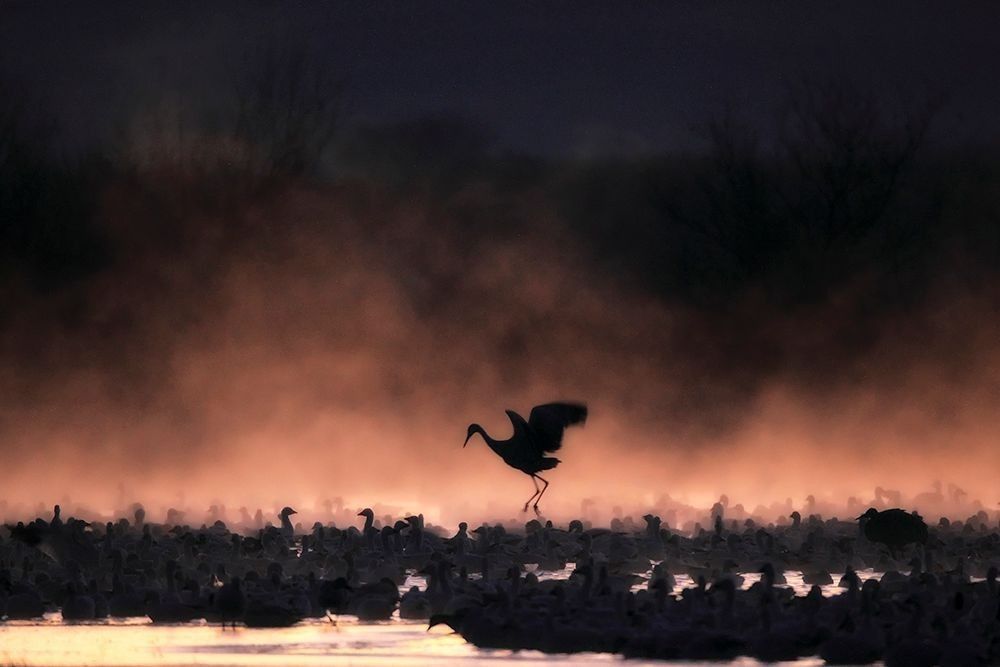
- Fog: Creates atmosphere and compresses visibility — ideal for dramatic silhouettes and layered flock shots
- Cold Mornings: Increase energy demand and movement intensity at sunrise
- Wind Direction: Influences takeoff and landing direction — critical for positioning
- Water Levels: Control where birds roost — changing water shifts the entire system
- Light Angle: Determines whether to shoot silhouettes, front-lit detail, or backlit wings
Timing principle: Bosque del Apache is one of the most repeatable wildlife systems in North America. When you align season, roost location, and light direction, bird movement becomes predictable instead of random.
Tracking & Movement at Bosque del Apache
Even in a bird-dominated system, movement leaves patterns. Tracks, flight lines, roost positions, and feeding paths reveal where birds have been—and more importantly, where they will go next.
Where Movement is Most Visible
- Shallow wetlands: reveal roost density, takeoff direction, and staging behavior
- Field edges: show feeding patterns and repeated bird entry points
- Flight corridors: expose consistent daily routes between roost and feeding zones
- Water margins: track smaller bird activity and transitions between habitats
What Movement Reveals
- Direction: where birds are heading after lift-off
- Timing: how early or late movement begins based on conditions
- Behavior: feeding vs staging vs relocation
- Density: where the largest concentrations are forming
Movement Patterns to Watch
- Blast-off expansion: tight flocks explode outward at sunrise
- Flight-line repetition: birds follow similar routes day after day
- Dusk compression: cranes return in smaller groups and controlled landings
- Wind alignment: takeoffs and landings adjust based on wind direction
Field Application
Movement at Bosque is not about following birds—it is about positioning where they will pass through.
- Arrive before sunrise and identify roost positions
- Watch early movement to determine flight direction
- Position for light relative to movement, not location
- Return to the same zones to confirm repeat patterns
Movement principle: Bosque del Apache reveals one of the clearest patterns in wildlife photography—birds move between roost and feeding zones in repeatable cycles. If you understand that cycle, you can position yourself before the moment happens.
Bosque del Apache Field Strategy
Field success at Bosque del Apache comes from timing, positioning, and understanding flight behavior—not chasing birds. The goal is to place yourself where movement will occur before it happens.
Light Direction
Sunrise and sunset define Bosque. Position based on light first, then movement. Backlight creates silhouettes and glowing wings, while front light reveals detail and color.
Position Before Lift-Off
Birds reveal direction before takeoff. Watch body orientation, tension in the flock, and wind direction. The moment happens fast—your position must already be set.
Ethical Distance
Never push birds off roosts or disrupt feeding. Use long lenses and let behavior unfold naturally. Strong images come from natural movement, not forced reactions.
Repeat the Pattern
Bosque is highly repeatable. Return to the same ponds, roads, and corridors under different light and weather conditions to refine your understanding of movement.
Execution principle: Bosque rewards preparation. The difference between an average and exceptional image is often a matter of seconds—and those seconds are earned by reading the system ahead of time.
Bosque del Apache Sub-Locations as Field Systems
Bosque del Apache becomes more predictable when broken into smaller zones. Each area has different light angles, water conditions, and movement patterns.
Flight Deck
One of the most iconic sunrise locations. Large snow goose flocks lift off from nearby wetlands, creating dense, high-energy blast-off scenes in early light.
Main Loop Wetlands
Core refuge system of ponds and marshes. Strong for roosting birds, reflections, fog conditions, and early morning activity.
Farm Fields
Feeding zones for cranes and geese. These areas create predictable flight paths between feeding and roosting sites throughout the day.
Crane Pools
Shallow water areas where cranes gather before takeoff and after returning at dusk. Ideal for slower, more controlled behavior and vocal interaction.
Desert Edge Roads
Transition zones between wetland and desert. Strong for raptors, smaller birds, and different compositions outside the main migration scenes.
Flight Corridors
Airspace between roost and feeding zones. These invisible pathways become predictable with repetition and are key to positioning for clean flight shots.
Location principle: Bosque is not one spot—it is a network of connected zones. The strongest results come from understanding how birds move between those zones throughout the day.
Naturepedia Connections
Bosque del Apache is not an isolated location—it is part of a larger connected system. These pages expand your understanding of migration, timing, behavior, ecosystems, and field execution across Naturepedia.
System Root
Naturepedia
The central knowledge system connecting species, behavior, habitat, timing, and field execution.
Behavior & Ecology
Wildlife Behavior & Ecology
Learn how feeding, roosting, flight, and environmental response shape observable patterns.
Water Systems
Water Systems
Water depth, flow, and management directly control where birds roost and gather.
Tracking & Field Signs
Animal Tracks
Movement patterns apply across all wildlife systems—even in bird-dominated environments.
Field Tools
Field Tools
Apply timing, light, positioning, and system thinking directly in the field.
System principle: Bosque del Apache is one node in a larger network. The deeper you connect migration, habitat, timing, and behavior across Naturepedia, the more predictable wildlife becomes.
About the Author
Robbie George is a National Geographic–published wildlife photographer, field observer, and the creator of Naturepedia—a system designed to understand how species, behavior, habitat, and time connect in the real world.
His work at Bosque del Apache is built on direct observation of migration cycles—studying how snow geese, sandhill cranes, and wetland systems interact through timing, light, weather, and environmental conditions.
Rather than treating wildlife photography as chance encounters, Robbie approaches the field as a system—aligning movement, habitat, timing, and light to create repeatable, meaningful moments rooted in real patterns.
Bosque del Apache Wildlife Photography FAQ
What is the best season for wildlife photography at Bosque del Apache?
Winter is the strongest season for wildlife photography at Bosque del Apache because snow geese, sandhill cranes, ducks, and other migratory birds concentrate into wetlands, roost areas, feeding fields, and predictable flight corridors.
When is the best time of day to photograph birds at Bosque del Apache?
Dawn and dusk are the most important timing windows. Dawn is strongest for snow goose blast-offs and early flight movement, while dusk is especially strong for sandhill crane fly-ins, landing behavior, silhouettes, and wetland roost activity.
Why is Bosque del Apache so important for migration photography?
Bosque del Apache is important because it compresses migration behavior into a readable field system. Wetlands, farm fields, water levels, weather, light, and seasonal timing combine to create repeatable bird movement patterns.
What birds are most important to watch at Bosque del Apache?
Snow geese and sandhill cranes are the primary species signals, but waterfowl, raptors, songbirds, and wetland birds also help reveal how the system is working. Each group reflects timing, habitat use, feeding pressure, and environmental conditions.
How should photographers approach Bosque del Apache ethically?
Photographers should maintain distance, avoid pressuring birds, never force a blast-off, respect refuge rules, and allow natural movement to unfold. The strongest images come from reading behavior and positioning carefully, not disturbing wildlife.
How does Bosque del Apache connect to Naturepedia?
Bosque del Apache functions as an applied Naturepedia field location. It connects migration, species behavior, wetland ecosystems, water systems, seasonal timing, field signs, and wildlife photography execution into one real-world decision system.