Blackwater National Wildlife Refuge Wildlife System — Wetlands, Tides, and Field Execution
Where water levels, light, and seasonal cycles shape one of the most dynamic wetland wildlife systems on the East Coast
How to Use This Blackwater Wildlife System
This is not a travel guide.
Blackwater National Wildlife Refuge is a water-driven wildlife system—where wetlands, tidal influence, seasonal migration, and light combine to shape bird and predator behavior. This page is designed to help you understand and work within that system, not simply visit it.
This page is part of the larger Naturepedia system, and works directly with the Seasonal Wildlife Calendar and Field Tools.
Instead of asking “Where should I go?”, the correct question is:
What species → what behavior → in what habitat → under what water conditions → at what time?
That is how wetland wildlife systems actually work—and that is how this page is structured.
Blackwater operates differently from western systems. Here, water levels, tides, wind, and seasonal bird concentration control movement. You should understand how timing shifts using:
You will use this page by following a decision flow:
- Start with species — eagles, waterfowl, herons, and marsh birds
- Understand behavior — hunting, feeding, roosting, flight, and tidal response
- Match habitat — marsh, open water, shoreline, and field edges
- Apply timing — seasonal cycles, water levels, wind, and light direction
- Execute in the field — position, patience, repetition, and observation
Blackwater is not random. It is a water-driven, repeatable system—once you understand how water, light, and movement interact, wildlife becomes predictable.
Primary Species Signals at Blackwater
Blackwater National Wildlife Refuge is best understood through species signals. Each bird group reveals timing, water conditions, habitat use, and movement behavior. The goal is not simply to see wildlife—it is to read how the wetland system is operating.
Bald Eagle
Behavior signal: hunting pressure, perch scanning, territorial movement, and response to waterfowl concentration.
Timing window: strongest during winter and early spring when visibility, prey concentration, and open water patterns align.
Field clue: watch snags, treelines, marsh edges, and open water where eagles can scan for prey.
Behavior signal: flock movement, feeding, resting, roosting, and response to wind and water levels.
Timing window: strongest during migration and winter concentration periods.
Field clue: scan open water, marsh pools, protected edges, and flight corridors between feeding and roosting areas.
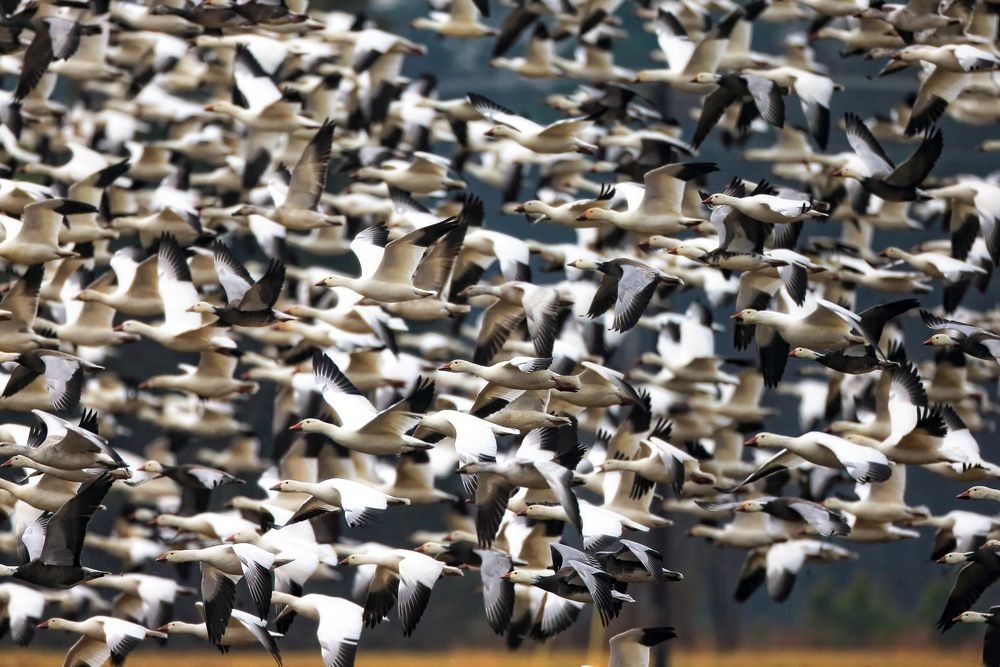
Snow Goose
Behavior signal: flock density, mass flight, feeding movement, and seasonal wetland concentration.
Timing window: strongest during winter and migration windows when large flocks use refuge wetlands and fields.
Field clue: watch for flock tension, rising sound, wind alignment, and sudden directional shifts before mass movement.
Great Blue Heron
Behavior signal: shoreline hunting, shallow-water stalking, patient feeding, and edge use.
Timing window: strongest near calm water, low light, and exposed feeding edges.
Field clue: work slowly along marsh edges, pools, and quiet water where herons hunt with minimal disturbance.
Behavior signal: perch hunting, low flight, marsh-edge scanning, and prey response.
Timing window: strongest when waterfowl, small mammals, and marsh birds are concentrated.
Field clue: watch dead trees, utility perches, woodland edges, and open marsh where predators monitor movement.
Behavior signal: arrival, staging, feeding, roosting, flock rotation, and seasonal concentration.
Timing window: strongest during autumn, winter, and early spring as wetland bird movement shifts through the Chesapeake system.
Field clue: identify how birds move between open water, marsh pools, fields, and roost zones.
Field interpretation: Blackwater is a wetland system first. Bald eagles reveal predator pressure. Waterfowl reveal water conditions. Snow geese reveal migration compression. Herons reveal feeding edges. Raptors reveal prey density. Read the species together, and the refuge becomes easier to predict.
Habitat Zones Within Blackwater
Blackwater is not one habitat. It is a layered system of tidal marsh, open water, forest edges, fields, roads, and Chesapeake Bay wetland transitions. Each zone changes how wildlife feeds, flies, hunts, rests, and responds to changing water levels.
Tidal Marsh
Tidal marsh is the core Blackwater system. Water levels, channels, grasses, and open pockets shape where birds feed, hide, fly, and concentrate throughout the day.
Open Water
Open water supports waterfowl, geese, herons, eagles, reflections, and flight movement. Wind direction and water surface conditions determine visibility and photographic opportunity.
Marsh Edges
Edges are where feeding, hunting, hiding, and movement overlap. Herons, raptors, waterfowl, and smaller birds use these boundaries where cover meets open water.
Forest & Snag Lines
Dead trees, forest edges, and elevated perches create hunting structure for bald eagles and other raptors. These zones often reveal predator presence before movement begins.
Fields & Upland Edges
Fields and upland transitions support geese, deer, raptors, and edge species. These zones connect wetland behavior with feeding pressure and seasonal movement.
Wildlife Drive & Observation Corridors
Road and viewing corridors allow repeated observation of changing water levels, light angles, bird movement, eagle perches, and marsh activity across the refuge.
Habitat rule: do not treat Blackwater as one wetland. Treat it as a connected water system. The strongest field results usually happen where tidal marsh, open water, edge habitat, bird concentration, and light direction overlap.
Blackwater Wildlife Timing Engine
Blackwater is driven by timing, but the timing is water-based. Season, tide, wind, light, temperature, and bird concentration all shape when wildlife becomes visible. If you understand the water, you begin to understand the movement.
Seasonal Timing Patterns
Winter — Compression
Waterfowl, geese, raptors, and bald eagles become more concentrated. Open water, marsh edges, and perch lines become easier to read.
Spring — Emergence
Nesting behavior, returning migrants, marsh activity, and feeding patterns increase as the wetland system wakes up.
Summer — Expression
Marsh life is active, but heat changes timing. Early morning and evening become the strongest windows for visible behavior.
Autumn — Transition
Migration builds again. Waterfowl, raptors, and marsh birds shift through the refuge as seasonal pressure increases.
Daily Movement Windows
- Dawn: Strongest for low-angle light, eagle activity, waterfowl movement, and quiet marsh behavior
- Midday: Useful for scouting water levels, perch lines, field edges, and distant bird concentration
- Dusk: Strong for return flights, silhouettes, marsh-edge movement, and evening feeding patterns
Water & Environmental Triggers
- Tide & Water Levels: Control exposed edges, feeding access, and where birds concentrate
- Wind Direction: Influences flight direction, water surface texture, and landing behavior
- Cold Fronts: Can increase raptor activity, waterfowl movement, and migration intensity
- Fog & Mist: Create atmosphere and simplify visual layers across marsh and open water
- Light Angle: Determines whether to work silhouettes, reflections, flight detail, or backlit wings
Timing principle: Blackwater is not only seasonal—it is hydrological. When you align season, water level, wind, light, and habitat edge, wildlife movement becomes easier to predict.
Tracking & Movement at Blackwater
In a wetland system, movement is recorded through flight lines, water edges, perch use, feeding zones, tracks, and repeated paths. Blackwater rewards observers who read movement before the subject enters the frame.
Where Movement is Most Visible
- Marsh edges: reveal feeding, hunting, and transition behavior
- Open water: shows waterfowl grouping, flight direction, and surface response to wind
- Snags and treelines: reveal eagle and raptor hunting structure
- Fields and upland edges: connect feeding pressure with refuge movement
- Roadside corridors: allow repeated observation of changing patterns throughout the day
What Movement Reveals
- Predator pressure: eagles and raptors change how waterfowl group, flush, or settle
- Water level response: birds shift as feeding edges appear or disappear
- Wind alignment: takeoffs and landings often organize into repeatable directions
- Seasonal concentration: flock density shows where the strongest timing windows are forming
Movement Patterns to Watch
- Perch-to-water movement: eagles scan from trees before dropping toward open water or marsh edges
- Flock rotation: waterfowl circle, settle, lift, and re-form depending on pressure and wind
- Edge walking and stalking: herons and marsh birds use shallow margins slowly and deliberately
- Dawn and dusk travel: birds move between roosting, feeding, and sheltered zones
Field Application
Movement at Blackwater is not about chasing wildlife. It is about reading water, wind, and edge behavior, then positioning before the action unfolds.
- Scout water levels before committing to a position
- Watch eagle perches and flight paths before the light peaks
- Use wind direction to predict takeoff and landing angles
- Return to the same marsh edges to confirm repeatable movement patterns
Movement principle: Blackwater’s wildlife follows water-driven pathways. Read the tide, edges, perches, wind, and flock behavior first—then the animals begin to make sense.
Blackwater Field Strategy
Field success at Blackwater comes from reading water, light, and movement patterns before the subject appears. The goal is not to chase wildlife—but to position yourself where behavior will unfold naturally.
Light Direction
Low-angle morning and evening light defines the Blackwater system. Use backlight for silhouettes and wing detail, and front light for texture, color, and behavior clarity.
Position Around Water
Water determines everything. Position relative to open water, marsh edges, and exposed feeding zones—not just where birds currently are.
Use Perch Structure
Dead trees and snags are key for eagle and raptor photography. Identify these locations early and wait for repeat behavior rather than reacting late.
Ethical Distance
Do not disturb birds on water or flush flocks. Strong images come from natural movement and calm behavior—not forced reactions.
Read Wind & Direction
Wind influences takeoff, landing, and flight direction. Align yourself so birds move into your composition rather than away from it.
Repeat & Refine
Blackwater reveals itself over time. Return to the same areas under different light, water levels, and weather to build pattern recognition.
Execution principle: Blackwater rewards patience and awareness. When you align water conditions, light, wind, and species behavior, the system becomes predictable—and the strongest moments follow.
Blackwater Sub-Locations as Field Systems
Blackwater becomes more predictable when broken into smaller field zones. Each area has different water depth, light angles, perch structure, and wildlife movement patterns.
Wildlife Drive Marshes
Core refuge system with open marsh, water channels, and bird concentration. Strong for waterfowl, eagles, and repeated observation across changing conditions.
Eagle Perch Zones
Dead trees and snags across the refuge create predictable eagle activity. These locations are key for flight, landing, and hunting behavior.
Open Water Pools
Open water areas concentrate ducks, geese, reflections, and flight activity. Wind and light direction strongly influence behavior here.
Marsh Edge Corridors
Where water meets grass and mud, feeding and hunting overlap. Strong for herons, raptors, and smaller bird movement.
Field & Upland Edges
Feeding zones for geese and other birds, connecting wetland behavior with broader movement patterns across the refuge.
Observation Pull-Offs
Strategic stopping points allow repeat scanning of water levels, bird movement, and changing light throughout the day.
Location principle: Blackwater is a network of water-driven zones. The strongest results come from understanding how birds move between marsh, open water, perch lines, and feeding areas across time.
Naturepedia Connections
Blackwater is part of a larger system. These pages expand your understanding of wetlands, water-driven ecology, migration, behavior, and field execution across Naturepedia.
System Root
Naturepedia
The central knowledge system connecting species, behavior, ecosystems, and timing.
Water Systems
Water Systems
Water depth, flow, and structure define wildlife behavior at Blackwater.
Tracking & Movement
Animal Tracks
Movement patterns apply across all wildlife systems—even in wetlands.
Field Tools
Field Tools
Apply timing, positioning, and system thinking in the field.
System principle: Blackwater is a water-driven node within a larger ecological network. When you connect wetlands, migration, behavior, and timing across Naturepedia, wildlife patterns become easier to read and repeat.
About the Author
Robbie George is a National Geographic–published wildlife photographer, field observer, and the creator of Naturepedia—a system designed to understand how species, behavior, habitat, and time connect in the real world.
His work at Blackwater is built on direct observation of wetland systems—studying how water levels, bird movement, predator behavior, and seasonal cycles interact across the Chesapeake ecosystem.
Rather than treating wildlife photography as chance encounters, Robbie approaches the field as a system—aligning water, light, movement, and timing to create repeatable, meaningful moments rooted in real ecological patterns.
Blackwater Wildlife Photography FAQ
What is the best season for wildlife photography at Blackwater?
Winter is the strongest season at Blackwater, with bald eagles, waterfowl, and migrating birds concentrated in visible areas. Autumn and spring are also strong during migration transitions.
What time of day is best for photography at Blackwater?
Dawn and dusk are the most productive. Early morning light reveals calm water, bird movement, and eagle activity, while evening provides strong silhouettes and return flight patterns.
Why is Blackwater good for bald eagle photography?
Blackwater has one of the highest concentrations of bald eagles on the East Coast. The combination of open water, marsh habitat, perch trees, and prey density creates consistent eagle activity.
How do tides and water levels affect wildlife at Blackwater?
Water levels determine where birds feed, rest, and move. As water rises or falls, feeding zones shift, which changes where wildlife concentrates throughout the refuge.
What species should photographers focus on at Blackwater?
Bald eagles, waterfowl, snow geese, herons, and raptors are key species. Each reveals something different about timing, water conditions, and habitat use.
How does Blackwater connect to Naturepedia?
Blackwater functions as a wetland system node within Naturepedia. It connects water systems, migration, species behavior, habitat structure, and timing into a real-world field execution model.